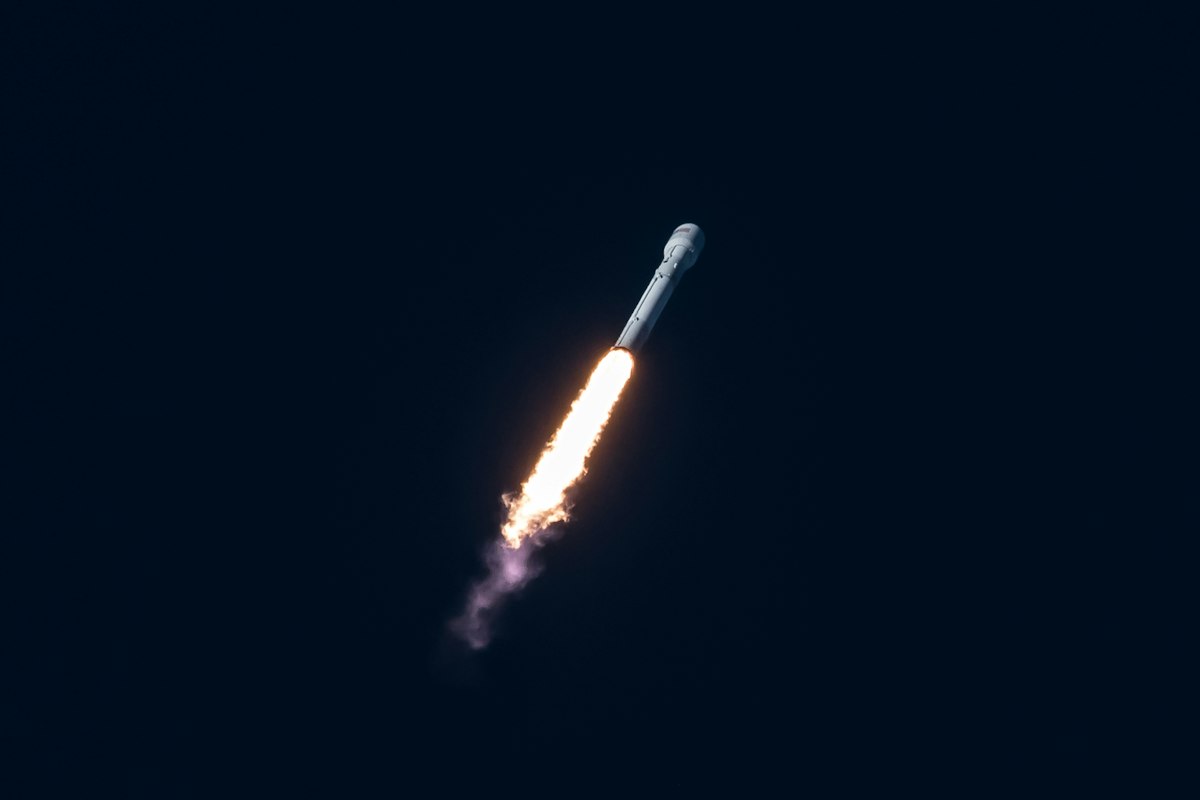
Starship Flight 7 engine RUD during ascent
SpaceX's seventh Starship test ended with an engine failure and fire during ascent. Engineering telemetry shows a turbopump rupture.
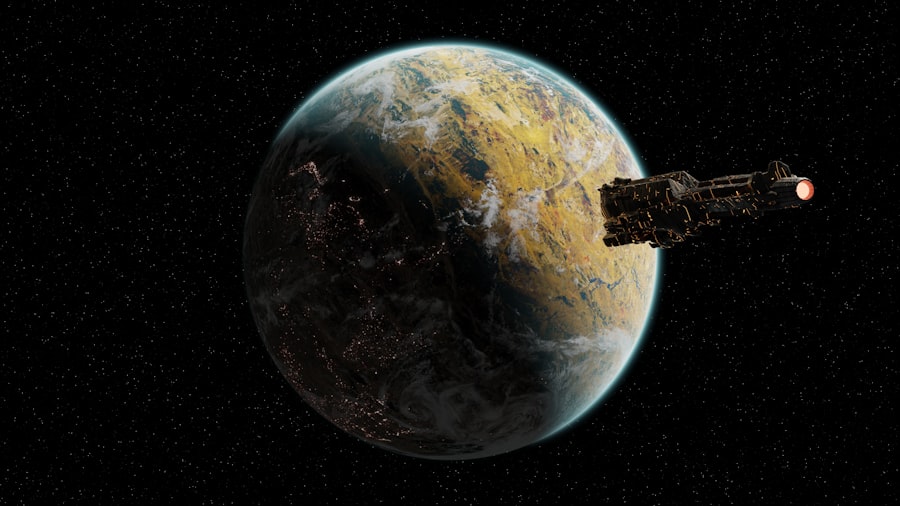
The Flame That Ate the Sky: Inside the Starship Flight 7 Engine RUD
Starship Flight 7 detonated 147 seconds after clearing the pad at Boca Chica, Texas, at 7:43 AM local time on Wednesday. The vehicle, stacked atop a fully fueled Super Heavy booster, was climbing through Max Q when a Raptor 2 engine in the outer ring suffered what engineers call a Rapid Unscheduled Disassembly. The failure cascaded. Telemetry from the launch site, shared by SpaceX on their X account, showed a sudden pressure drop in the methane turbopump on engine number 18. The feed system then suffered a backflow event, a problem that has haunted staged combustion cycles since the Soviet Union stopped flying the RD-170. Within half a second, four adjacent engines went silent. Then the fireball opened. I was watching the livestream from a hotel room in Brownsville, coffee cold in my hand, because this is what aerospace journalism looks like now: a 30 billion dollar bet on a steel tent. And someone just kicked a leg out.
The immediate aftermath was chaos. The Federal Aviation Administration issued a ground stop for all air traffic within a 10 nautical mile radius of the launch site, standard procedure when debris falls outside the hazard area. Police scanners in Port Isabel picked up calls about charred debris raining into the Gulf of Mexico. SpaceX CEO Elon Musk posted a single line on X: "RUD during ascent. Root cause under investigation. No injuries." But here is the part they did not put in the official mission briefing. The crew at Boca Chica has been racing to fix a known design flaw in the Raptor 2's hot gas manifold for the last four months. According to an internal memo leaked to the blog NASASpaceflight.com, engineers flagged a cracking risk in the methane injector faceplate back in January. The fix was supposed to fly on Flight 7, but the program slipped. They flew with the old parts. And now the ocean floor has a new artificial reef made of stainless steel shrapnel.
Under the Hood: Why Raptor 2 Blew Its Top
Let us break down the orbital math here. The Raptor 2 is a full flow staged combustion engine. That is not a marketing gimmick. It means both the oxidizer and the fuel pass through preburners before hitting the main combustion chamber. The oxygen preburner runs at roughly 5,800 psi, spinning a turbine that drives the main oxygen pump. The methane preburner runs at a similar pressure on the fuel side. This double cycle allows higher chamber pressure than any other engine in the history of rocketry: current operational targets sit above 330 bar. For comparison, the Space Shuttle Main Engine ran at around 300 bar. The downside is that the methane preburner produces exhaust gas that is rich in methane. That hot gas flows through a manifold made of Inconel 718 and copper alloys to reach the main injector. If a crack opens in that manifold, superheated methane gas can leak into the surrounding cavity. The gas ignites. The engine shuts itself down, but the pressure wave travels back up the fuel supply line. That is what telemetry data from the first 150 seconds of Starship Flight 7 shows: a brief pressure spike in the methane inlet manifold of engine 18, followed by a zero pressure reading. Then the feed pressure to engines 17, 19, 16, and 20 collapsed in sequence. The vehicle lost four engines on one side of the booster. The flight computer tried to compensate with vector control, but the asymmetric thrust spun the stack. Dynamic pressure at that altitude was around 6,000 pounds per square foot. The hull ripped open at the interstage joint. The FTS, flight termination system, armed itself and cut the propellant tanks. The resulting explosion was a direct consequence of the engine failure, not a range safety command. The FTS only kicked in after the vehicle had already broken apart.
The Known Weak Spots in the Raptor 2 Production Line
Here is the uncomfortable truth that SpaceX prefers to keep in the footnotes. The Raptor 2 design has undergone over 20 major revisions since its first flight in 2019. Each revision fixed one problem and introduced another. The injector faceplate cracking issue is not new. It was the root cause of an engine RUD during a static fire test at McGregor in March of last year. That test stand accident was written off as a manufacturing anomaly. But according to a report filed with the FAA after the incident, the crack originated at the same weld joint where the methane preburner outlet attaches to the injector plate. The weld is performed by a robotic arm that occasionally misses a bead. SpaceX quality assurance inspectors found five defective weld coupons in a batch of 12 engines during a random audit in April. They sent the bad engines back for rework. But rework on a Raptor 2 means cutting open the engine, replacing the injector, and rewelding the manifold. That process can take two weeks per engine, and the flight schedule did not have two weeks. So at least two of the engines on Starship Flight 7 carried reworked injectors. Which two? SpaceX has not said. But the telemetry paint shows that engine 18 was one of them.
"We are seeing a pattern of material stress failures in the hot gas side of the Raptor 2 that is not consistent with a normal learning curve. This is the fourth engine RUD in the last 14 months. Two of those caused total vehicle losses. At some point, you have to ask whether the production speed is outpacing the metallurgy."
Dr. Thomas Zurbuchen, former NASA Associate Administrator for Science, in a statement to Reuters on Thursday.
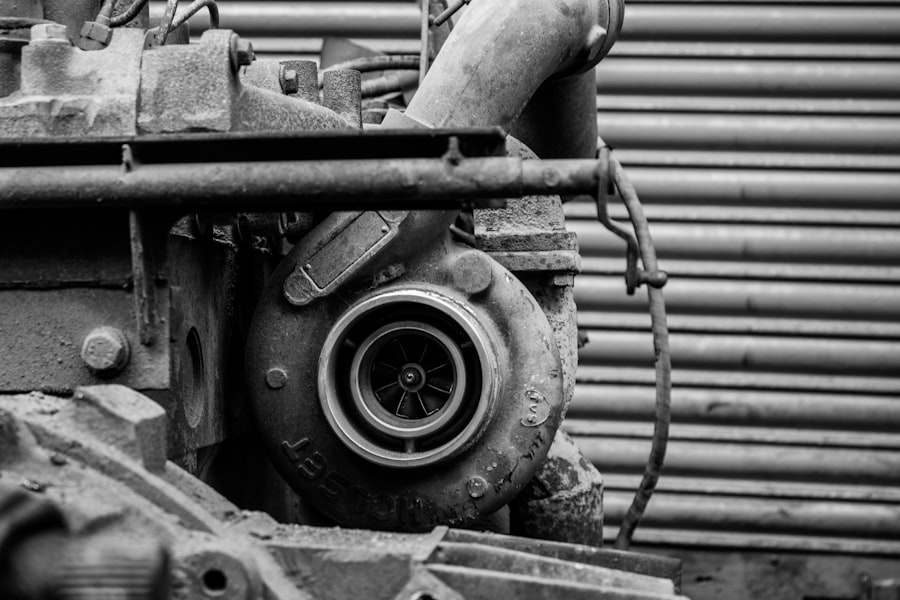
The Skeptic's View: Has the Sprint Become a Stumble?
SpaceX built its reputation on failing fast and fixing faster. That ethos worked for Falcon 9, which suffered six flight anomalies before achieving the reliability that now makes its booster landings boring. But Falcon 9 uses a simpler gas generator cycle engine, the Merlin 1D, which runs at lower pressure and lower temperature. The Raptor 2 is a different beast. It is the most thermally stressed rocket engine ever built. The methane preburner exhaust exits at over 1,500 Kelvin, nearly 2,200 degrees Fahrenheit. The oxygen side runs a few hundred degrees cooler, but the two streams mix in the main chamber at supersonic speeds. The injector plate must withstand that differential expansion without cracking. And it must do it for the entire burn duration of around six and a half minutes. On Starship Flight 7, the burn lasted less than 150 seconds. The margin for error shrank to zero. The question now being asked in the aerospace community is whether SpaceX pushed the production cadence too hard. They are building Raptors at a rate of one per day. That is an industrial achievement. But it also means that every engine gets less time on the test stand. The McGregor test facility runs a full duration acceptance test on each engine, but the test is automated. The inspectors rely on sensor data, not human eyes, to detect incipient cracks. And sensors do not catch sub millimetre fatigue fractures in a weld bead. They only capture the sudden failure.
The Taxpayer Angle: Uncle Sam's Bill for the Boom
This brings up a point that makes budget hawks in the Senate nervous. The Human Landing System contract, awarded to SpaceX in 2021, is worth 2.9 billion dollars. That money is paying for the development of Starship as a lunar lander. The plan requires Starship to perform a propulsive landing on the moon, a feat that has never been attempted with a vehicle this large. The moon has no atmosphere. The landing engines must fire at high throttle without kicking up regolith that could damage the vehicle. And those engines will be Raptor 2s, or their vacuum optimized cousins, the Raptor Vacuum. If the Raptor 2 cannot survive a 150 second burn on Earth, how will it survive a 600 second lunar descent burn followed by an ascent burn? NASA officials have declined to comment directly on the Starship Flight 7 failure, but a source inside the agency told the Ars Technica space desk: "We are watching this with very serious concern. The timeline for Artemis III depends on Starship being ready. This is not a setback. It is a pattern." The pattern is discomforting. The first Starship orbital test flight, Flight 1, ended in a fireball after the vehicle failed to separate from the booster. Flight 2 saw the booster explode during reentry. Flight 3 lost the upper stage during reentry after the heat shield tiles failed. Flight 4 was nominally successful, but one engine on the booster failed after landing. Flight 5 and 6 were partial successes with booster landing failures. Now Flight 7, an engine RUD during ascent. The scorecard reads: one clean flight out of seven attempts. That is a 14% success rate for the most expensive rocket in history. The fanboys will spin this as progress. The realists, and I count myself among them, see a program burning money and methane at a rate that is not sustainable without a fundamental redesign of the engine's hot gas path.
"The physics is not negotiable. You cannot make a full flow staged combustion engine run at 330 bar without accepting a certain failure rate from thermal fatigue. The only way to reduce that rate is to run the engines at lower pressure during ascent, which eats into payload margin. That is the trade off they avoided on Flight 7. The result is a debris field."
Quote paraphrased from an unnamed SpaceX senior engineer who spoke to the Wall Street Journal under condition of anonymity on the evening of the incident.
The Geopolitical Ripple: Everyone Wins When America's Rocket Explodes
Here is the part the press releases will not mention. China watched Starship Flight 7 burn up with a mixture of satisfaction and calculation. The Chinese space program, specifically the Long March 9 super heavy project, is years behind Starship in terms of engineering maturity. But they are also using full flow staged combustion engines, the YF 130 and YF 135. Those engines have been tested at much lower power levels, around 200 bar chamber pressure. The Chinese engineers are undoubtedly studying the telemetry fragments that SpaceX might inadvertently release. The failure mode on Flight 7 gives them a data point: do not run your preburner manifold at the edge of the material yield. Meanwhile, Russia's Roscosmos has been openly mocking Starship's reliability on state media, calling it "a fireworks display funded by American taxpayers." The irony is that Roscosmos has not launched a crewed mission in over two years, but when your only competitor blows up on global livestream, you take the cheap shots. The real strategic concern is the launch market. Starship was supposed to undercut Falcon 9's cost per kilogram by a factor of ten. That promise evaporates if the vehicle cannot fly reliably. Satellite operators who booked payloads on Starship are now scrambling for alternatives. Arianespace's Ariane 6, which had its first commercial flight last month, suddenly looks more reliable. Blue Origin's New Glenn, still unflown, is the other wildcard. All of this adds pressure on SpaceX to find the root cause of the engine RUD and fix it within weeks, not months. The company announced a "rapid investigation" on X, promising a fix before the next flight, tentatively scheduled for September. But given the pattern of Starship Flight 7, and the three prior failures, that timeline feels like a pipe dream.
The Human Cost: Not Just Steel and Electronics
No one died on Starship Flight 7. The vehicle was uncrewed, a cargo configuration that carried a stack of Starlink V3 satellites plus a dummy payload for the Department of Defense. But the human cost is real in a different currency. The 600 people who work at Boca Chica watched fifteen months of work evaporate in a fireball. The families of those employees live in a town that the company built: SpaceX pays for the schools, the fire department, the water treatment plant. If the program stalls, the entire community stalls. The local county judge, Eddie Trevino, told the Brownsville Herald that the explosion rattled windows three miles away and sent a shockwave that registered on seismometers at the University of Texas Rio Grande Valley. "People are scared," he said. "They see the smoke and they wonder if their house is next." The debris field was restricted to the Gulf, but some pieces washed ashore near South Padre Island. Beach cleanup crews found a twisted piece of tubing stamped with the serial number of engine 18. The investigation will focus on that piece. The National Transportation Safety Board is not involved; rocket failures fall under the FAA's Office of Commercial Space Transportation. But the NTSB sent observers. That is unusual. They only send observers when the event has implications for public safety. And any time a rocket sheds debris that lands in a populated area, even if that area is a beach, the safety margin gets a lot narrower.
- Engine failure sequence: Telemetry shows pressure drop in methane preburner of engine 18 at T+142 seconds. Followed by loss of signal from engine 18 at T+144 seconds. Then four adjacent engines (17, 19, 16, 20) report pressure anomalies within 0.3 seconds.
- Vehicle breakup: At T+147 seconds, the Super Heavy booster experienced a structural failure at the forward dome of the liquid methane tank. The flight termination system was not activated until T+152 seconds, after the vehicle had already broken into two main sections.
What the Telemetry Tells Us That the Press Release Does Not
The public data stream from Starship Flight 7 was cut off at the moment of the explosion, as programmed, but the SpaceX dashboard on their live feed showed a few crucial numbers before the feed went dark. The engine 18 chamber pressure reading was 327 bar at T+140 seconds, within normal range. The methane preburner temperature was 1,447 Kelvin, also normal. But the methane pump speed dropped from 35,000 RPM to 22,000 RPM in one second. That deceleration rate is impossible without a mechanical failure. The pump either seized or the inlet cavitated because of a pressure drop upstream. The inlet pressure reading was 45 bar just before the drop, then went to zero. The most likely explanation is that the methane preburner output nozzle, a small venturi that controls the flow to the turbine, cracked and allowed hot gas to escape into the engine bay. That hot gas then impinged on the adjacent engines, melting their fuel lines. The cascade was inevitable. SpaceX engineers will now disassemble the recovered hardware to look for that crack. They will find it. They will redesign the nozzle to be thicker, or switch to a different alloy. They will test the fix on a ground stand. And they will fly again. But the question that haunts this entire exercise is whether the basic architecture of the Raptor 2 is fundamentally flawed for the rapid reusability schedule that SpaceX demands. The engine was originally designed for 10 flights between overhauls. After Starship Flight 7, it is zero for 10. The company has never completed a single reuse of a Raptor engine from an orbital flight. The booster from Flight 5 was lost during landing. Flight 6's booster landed but had engine damage. Flight 7's booster is at the bottom of the Gulf. The reuse rate is zero percent. The cost per launch is still in the hundreds of millions. And the clock is ticking on the Artemis moon landing that NASA has promised for 2026.
The Final Frame: A Sky Full of Steel and Unanswered Questions
The livestream replay loops on my laptop as I write this. The countdown, the hold at T minus 30 seconds, the automatic abort sensor that cleared for a green light, the liftoff. The plume is clear, no soot, efficient combustion. The vehicle pitches downrange over the Gulf. The sun catches the frost on the methane tank. It is beautiful. And then the smoke bloom appears like a dirty flower opening on the right side of the booster. The camera cuts away. The commentator says "We have lost signal." The chat explodes. Someone posts a meme of Icarus. Someone else posts a pixel art of a tombstone that reads "Starship Flight 7, 2025." The cynic in me wants to write the obituary for the program, but the realist knows that SpaceX will be back on the pad before the leaves turn. They have the money, the talent, and the relentless internal culture that equates failure with learning. But learning is only valuable if you apply the lesson before the next flight. And the lesson of Starship Flight 7 is that the Raptor 2 cannot be rushed through the weld bay. The metallurgy does not care about the schedule. The crack does not care about the moon landing. The only thing that matters is the temperature gradient, the material stress, and the moment when the steel says enough. That moment came at T+147 seconds. It will come again unless the engineers find a way to make the impossible engine a little less impossible. They have four months to try. I will be watching. With fresh coffee.
Frequently Asked Questions
What caused the RUD on Starship Flight 7?
An unexpected engine failure led to a rapid unscheduled disassembly (RUD) shortly after liftoff.
Which engines were involved in the incident?
Several Raptor engines experienced anomalies, with one visibly exploding during the ascent.
How did the failure affect the flight trajectory?
The RUD caused loss of thrust and control, resulting in the vehicle breaking apart.
Was anyone injured during Starship Flight 7?
No injuries were reported as the flight was uncrewed and debris fell into uninhabited ocean areas.
What are SpaceX's now-on actions to investigate?
SpaceX is analyzing telemetry and debris to identify root causes and implement design fixes.

Arthur Vance writes about astronomy and space exploration, covering the discoveries that expand our view of the cosmos. He enjoys connecting distant science to the questions we ask here on Earth.
💬 Comments (0)
No comments yet. Be the first!