Find funding and save Jodrell Bank, stars say
More than 150 public figures sign letter urging government to reverse 'foolish' decision and fund Jodrell Bank, which faces closure by 2028.
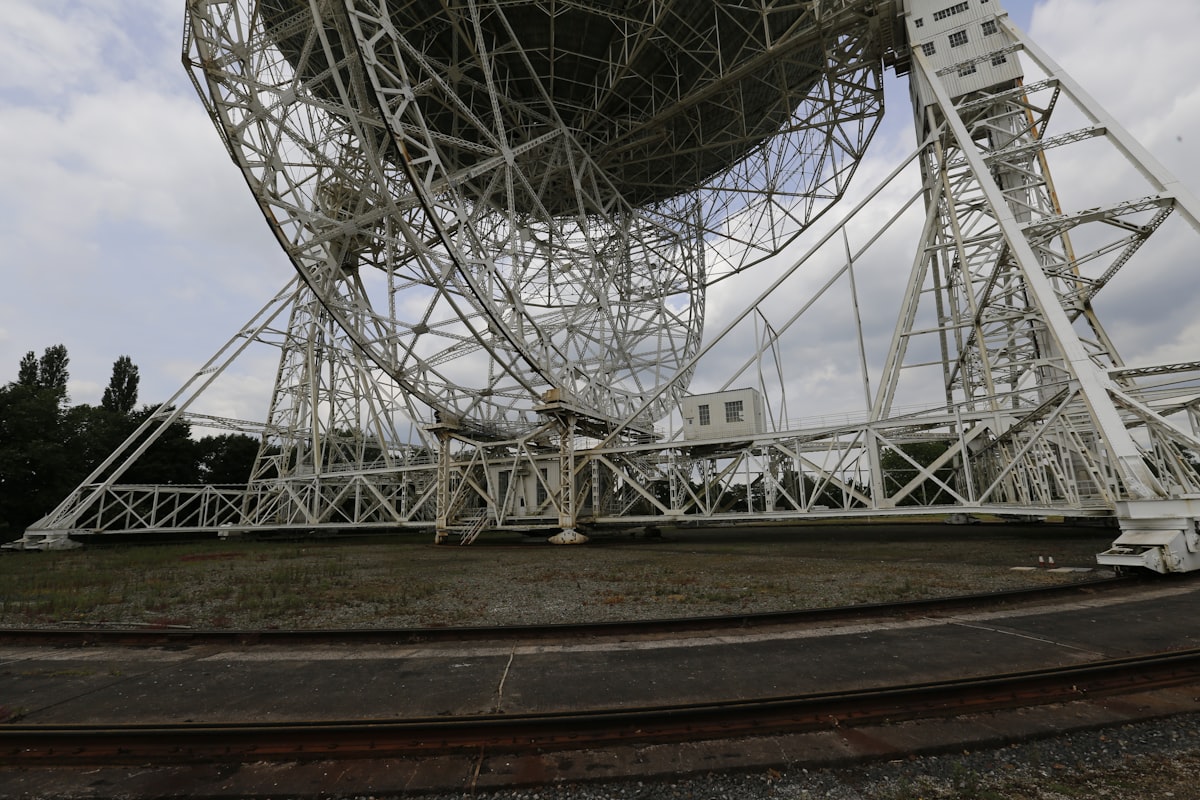
Save Jodrell Bank is the urgent demand from more than 150 public figures, including astronauts, rock stars and leading physicists, who have signed an open letter calling on the government to reverse what they describe as a "foolish" decision and "find funding immediately".
The letter carries the names of Tim Peake, Sir Brian May, Jarvis Cocker, Prof Brian Cox, Prof Jim Al-Khalili, and Judy Spence, who is the daughter of founder Sir Bernard Lovell, and it lands at the exact moment UK Research and Innovation confirms all scientific observations at the Cheshire site will cease on 1 April 2028 unless alternative money surfaces. That's a brutal deadline. Twenty-eight jobs hang directly in the balance, but the ripple effect is far larger, since nearly 3,000 scientists rely on the observatory for their research, and they can't just pivot overnight. So the clock is ticking.
A cultural and scientific icon under threat
The signatories frame Jodrell Bank as far more than a collection of radio telescopes. It's the "thriving, thumping heart of space observation, research and education in the UK," they insist. That description is bold. But the letter goes further, calling the site "an icon in UK cultural and scientific history," and the language carries real weight, especially coming from figures who've performed or broadcast from the grounds. Those names include Johnny Marr, Ralf Hütter of Kraftwerk, New Order, Elbow, Doves, Dara Ó Briain, and poet laureate Simon Armitage. So the message lands.
The site has long hosted concerts and festivals alongside its scientific work. It's a rare bridge between laboratory research and public culture, one that lets lab coats and loudspeakers share the same ground without either side losing its purpose. But the letter argues its value goes much deeper than nostalgia or event space. That's a shallow read. We've got a place where discovery and celebration don't just coexist, they reinforce each other, and that's not something you can casually set aside for a booking fee or a tribute show.
The biggest astronomical project on Earth
Jodrell Bank now anchors the Square Kilometre Array Observatory, described in the letter as "the biggest astronomical project in the world," a role that its signatories say places the UK squarely at the center of global space science. It's a heavy weight to carry. But they also stress the facility's vital work monitoring space debris, destructive solar flares, satellites, and asteroids, tasks with direct consequences for safety worldwide, and that's a responsibility we can't ignore. So the stakes are clear. That position, they argue, isn't just prestige,it's practical protection for everyone on Earth.
The educational footprint is equally large. More than 25,000 schoolchildren visit the site every year, making it "the birthplace of future UK science pioneers" according to the letter. The signatories make a blunt economic case: all these national and global benefits could be secured for an investment of just £2.8m a year.
"If you were offered the opportunity to realise all of these huge national and global benefits, for an investment of just £2.8m a year, you'd be foolish not to seize it."
Why the funding was cut
UKRI, which manages an annual budget of roughly £10bn, says it had no choice. The agency claims planned research costs for physics and the running of its laboratories had escalated, forcing it to trim the observatory's £2.8m annual allocation. That decision forms part of a broader round of cuts affecting astronomy, nuclear and particle physics research over the next four years.
The impact extends well beyond Jodrell. It's a brutal blow. The UK will no longer participate in research at the James Clark Maxwell Telescope in Hawaii, and funding has also been cut for UK involvement in two instruments on the Extremely Large Telescope under construction in Chile, a project that promised to rewrite our understanding of the cosmos. Even upgrades to experiments at the Large Hadron Collider will go unpaid by the agency. So the damage is total.
Political response and the road ahead
The funding cut hit. Business Secretary Jonathan Reynolds stepped forward with a defence of the UK's research ambitions, arguing that the country's world class science remains "absolutely central to creating a better future for the UK" even as budgets tighten and labs face hard choices. He pledged to work with UKRI to sustain world-leading capabilities, and that means investing in next-generation facilities too, so the long game stays intact. But that's a tall order. And he didn't dodge the tension, he just framed it as a balancing act between protecting what we've built and building what we'll need next.
That framing misses something. The letter's signatories are not asking for new money or expanded programmes. They are asking for the status quo to be preserved, pointing out that the annual cost of running Jodrell Bank is a rounding error in UKRI's £10bn budget.
The current crisis, though, is different. The funding decision is not a temporary squeeze but a planned wind-down, with a deadline of 1 April 2028.
What happens now
UKRI maintains its focus must remain on projects delivering "the greatest long-term impact". The letter's signatories clearly believe Jodrell Bank fits that description, pointing to its central role in the Square Kilometre Array and its educational reach. The agency has not indicated any willingness to reverse course.
The next few months will determine whether public pressure shifts the political calculus. The letter carries names with genuine cultural reach, from Kraftwerk to Tim Peake, and the case it makes is straightforward: the science is world-leading, the public engagement is enormous, and the price is small. Whether that argument lands with UKRI remains the open question.
For now, the telescope keeps scanning the sky. The 28 jobs remain, for the moment, secure. But the clock is ticking toward April 2028, and save Jodrell Bank has become more than a slogan; it is now a formal demand from some of the most prominent figures in British science and culture. The government has been told, in the clearest terms, that letting this facility close would be a mistake it would regret for decades.
Frequently Asked Questions
What is the main demand of the open letter signed by over 150 public figures regarding Jodrell Bank?
The open letter demands that the government reverse a decision they describe as 'foolish' and find funding immediately to save Jodrell Bank. The signatories urge the government to secure the facility's future.
Why does the article say Jodrell Bank is considered more than just a collection of radio telescopes?
The article states that Jodrell Bank is described as the 'thriving, thumping heart of space observation, research and education in the UK' and 'an icon in UK cultural and scientific history.' It also bridges laboratory research and public culture by hosting concerts and festivals.
What specific deadline is mentioned for the cessation of scientific observations at Jodrell Bank?
The article says that all scientific observations at the Cheshire site will cease on 1 April 2028 unless alternative money is found. This deadline is confirmed by UK Research and Innovation.
How many jobs are directly at risk according to the article, and what is the broader impact on scientists?
Twenty-eight jobs hang directly in the balance at Jodrell Bank. The ripple effect is larger because nearly 3,000 scientists rely on the observatory for their research and cannot easily pivot to other facilities.
What is the annual cost to run Jodrell Bank, and how does it compare to UKRI's budget?
The annual cost to run Jodrell Bank is £2.8 million. This is described as a 'rounding error' in UKRI's £10 billion annual budget, making it a relatively small investment for the benefits it provides.

Astrid Berg covers space and astronomy, from missions and launches to the science of the universe. She follows the ongoing effort to explore beyond our planet.
💬 Comments (0)
No comments yet. Be the first!