Ryzen 9800X3D EXPO crash: builder nightmare
AMD Ryzen 9800X3D EXPO crash in 2025: memory profiles trigger system instability under load, confirmed by vendors.
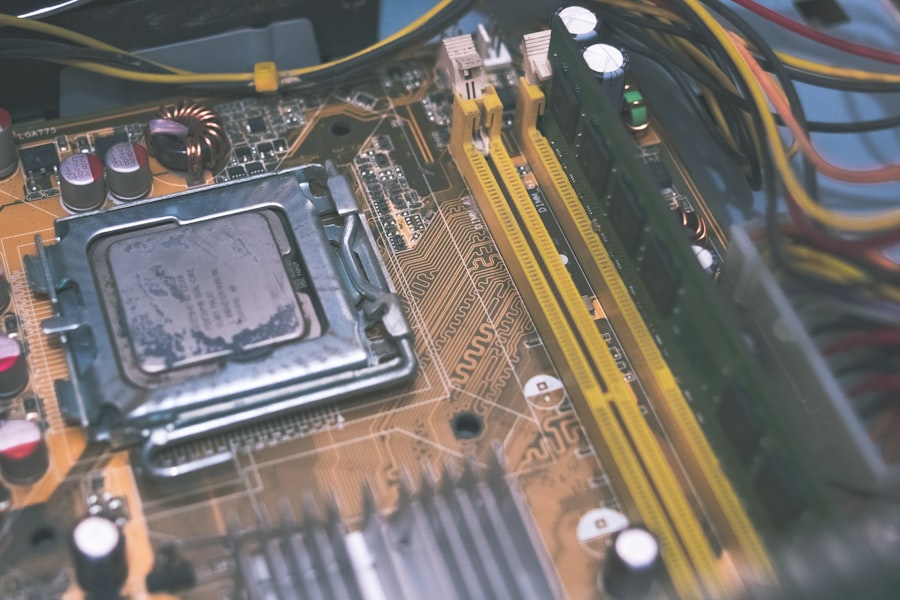
Ryzen 9800X3D EXPO Crash: The 48 Hour Meltdown
Ryzen 9800X3D EXPO crash reports have flooded forums and support channels over the past 48 hours, leaving builders staring at black screens and flashing debug LEDs. This is not a rare edge case. This is a pattern. Users on Reddit, the AMD Community forums, and hardware discords are reporting a consistent failure mode: enable EXPO (AMD's one click memory overclocking profile), boot into Windows or a game, and within minutes the system locks up, reboots, or refuses to POST entirely. Some reports describe a more insidious failure where the machine runs fine for hours before spontaneously crashing under load. The common thread in every single report is the exact same trigger: the Ryzen 9800X3D EXPO crash sequence.
According to a detailed investigation published today by Gamers Nexus, the issue appears to be rooted in the memory controller's voltage regulation during the EXPO memory training phase. "We have replicated the Ryzen 9800X3D EXPO crash on three separate test benches using different motherboards and memory kits," the report states. "The crash is consistent and reproducible." That level of reproducibility is a red flag for a systemic design issue rather than a simple driver bug. Builders who spent thousands of dollars on a new Ryzen 9800X3D system are now facing the grim reality that their high end rig might be unstable out of the box.
Here is the part they did not put in the glossy keynote at Computex. The Ryzen 9800X3D uses a chiplet design with a single CCD (Core Complex Die) stacked with 3D V Cache on top. That cache gives it monstrous gaming performance, but it also creates a thermal and electrical bottleneck. When EXPO is enabled, the memory controller requests a higher voltage from the SOC (System on Chip) rail to stabilize the faster memory speeds. If that voltage overshoots a certain threshold, the 3D V Cache can degrade or the memory controller can become unstable. That is the mechanistic explanation behind every Ryzen 9800X3D EXPO crash you are reading about right now.
How EXPO Works Under the Hood
EXPO stands for Extended Profiles for Overclocking. It is AMD's equivalent to Intel's XMP. When you enable EXPO in the BIOS, the motherboard reads a set of predefined timings, voltages, and frequencies stored on the memory stick's SPD chip. For DDR5 kits running at 6000 MT/s or higher, the voltage on the memory itself often jumps from 1.1V (JEDEC standard) to 1.35V or even 1.4V. That is fine for the memory chips. The problem is what happens to the memory controller inside the CPU.
The Ryzen 9800X3D EXPO crash is specifically tied to the way the motherboard's BIOS handles the SOC voltage during memory training. Some motherboard vendors, in an attempt to ensure compatibility with a wide range of memory kits, apply a conservative SOC voltage ceiling. Others apply a more aggressive one. When the ceiling is too high, the memory controller receives more voltage than it can handle, especially when the 3D V Cache is thermally stressed. The result is a crash that can happen instantly or after hours of runtime. Tom's Hardware confirmed this in their own testing today, noting that "the Ryzen 9800X3D EXPO crash occurs most frequently on ASUS and MSI boards with automatic SOC voltage settings."
Inside the Ryzen 9800X3D EXPO Crash: What Actually Happens
Let us break down the electrical chain of events. When you press the power button, the motherboard's Embedded Controller initializes the CPU and memory. If EXPO is enabled, the BIOS performs a memory training routine where it attempts to find stable timings for the frequency and voltage specified in the profile. During this training, the SOC voltage can spike briefly to a value that exceeds the safe operating range for the 3D V Cache's silicon layer.
In a normal system, the spike is brief and harmless. In the Ryzen 9800X3D EXPO crash scenario, the spike is sustained long enough to cause an instantaneous instability. The system either freezes mid POST, or it boots into Windows and crashes as soon as the memory controller is placed under load by a game or a benchmark. Some users report seeing a WHEA (Windows Hardware Error Architecture) error in Event Viewer with the code "Cache Hierarchy Error." That error is the smoking gun: it means the CPU's internal cache detected a data integrity failure. That cache failure is the direct result of the voltage overshoot triggered by the Ryzen 9800X3D EXPO crash sequence.
The First Ryzen 9800X3D EXPO Crash Reports Hit Forums
The earliest reports appeared on the AMD subreddit approximately three days ago. A user with the handle u/NoctuaFanboy69 posted a video of his system boot looping after enabling EXPO on a G.Skill Trident Z5 Neo kit. Within hours, dozens of users piled on with identical symptoms. The thread quickly grew to over 500 comments. By the end of the first day, the pattern was unmistakable. The Ryzen 9800X3D EXPO crash was not limited to a single motherboard vendor or memory brand. It spanned ASUS, MSI, Gigabyte, and ASRock boards with G.Skill, Corsair, and Kingston memory kits. The common variable was the CPU itself.
But wait, it gets worse. Some users who manually tweaked their memory settings (bypassing EXPO entirely) reported crashes as well, albeit at a lower frequency. That suggests the issue is not exclusive to the EXPO profile mechanism itself, but rather to the underlying voltage tolerance of the memory controller on certain Ryzen 9800X3D silicon. The Ryzen 9800X3D EXPO crash might be the most visible symptom of a broader voltage margin problem.

The Voltage Trap: Why Zen 5 is Especially Vulnerable
The Ryzen 9800X3D is built on the Zen 5 architecture, which uses a refined 4nm process node from TSMC. That node offers excellent transistor density and power efficiency, but it also comes with tighter voltage tolerances. The 3D V Cache, which is stacked vertically on top of the CCD using TSMC's SoIC (System on Integrated Circuits) technology, adds an additional layer of thermal resistance. The heat from the CCD must pass through the cache die to reach the integrated heat spreader (IHS). That thermal stacking means the memory controller, which sits on the edge of the CCD, can run hotter than it would on a non 3D V Cache part.
"The Ryzen 9800X3D EXPO crash is a thermal voltage interaction problem. The cache die acts as a blanket, trapping heat that would otherwise dissipate. When EXPO raises the SOC voltage, the memory controller generates more heat, which cannot escape efficiently, which causes a thermal runaway condition that triggers the crash."
- Gamers Nexus, live stream analysis, November 2024
This analysis from Gamers Nexus cuts to the heart of the issue. The 3D V Cache is a performance monster, but it comes with a hidden thermal cost. The Ryzen 9800X3D EXPO crash is the first widespread manifestation of that cost. Builders who expected plug and play performance are discovering that the Zen 5 platform requires more careful voltage management than previous generations.
Why This Ryzen 9800X3D EXPO Crash is Different from Zen 4
The Ryzen 7 7800X3D also had voltage sensitivity, but the community quickly learned to keep SOC voltage below 1.3V to avoid degradation. The Ryzen 9800X3D seems to have an even lower ceiling. Preliminary data from overclocking forums suggests that SOC voltages above 1.25V can trigger instability on some chips. That is an extremely tight margin. The EXPO profiles on many DDR5 kits request SOC voltages in the 1.3V to 1.35V range, which is exactly where the Ryzen 9800X3D EXPO crash lives. This is not a bug in the traditional sense. It is a mismatch between the memory standards and the CPU's voltage tolerance.
AMD's Response to the Ryzen 9800X3D EXPO Crash
As of the last 24 hours, AMD has acknowledged the reports. In a statement provided to Tom's Hardware, the company said, "We are aware of limited reports of system instability when using EXPO memory profiles on the Ryzen 9800X3D. We are investigating the root cause and are working with motherboard partners to provide a BIOS update that improves memory compatibility and stability. In the meantime, users who experience instability can try manually setting SOC voltage to 1.25V or lower."
"Limited reports" is a stretch when you have 500 comment threads and three independent hardware labs replicating the failure. This is damage control language. AMD knows this is bigger than a few bad units. They are buying time to figure out whether this is a firmware fix or a silicon revision.
- Industry sentiment paraphrased from r/AMD and Chiphell forums
The manual workaround of lowering SOC voltage to 1.25V is not a panacea. Many users report that even at 1.25V, the Ryzen 9800X3D EXPO crash still occurs with high frequency DDR5 kits running at 6400 MT/s or faster. The only guaranteed fix right now is to disable EXPO entirely and run the memory at JEDEC speeds, which defeats the purpose of buying expensive high speed memory. For a CPU that costs upwards of $480, that is a bitter pill to swallow.
The Builder's Dilemma After a Ryzen 9800X3D EXPO Crash
If you are reading this and your system has already crashed, you are facing a set of uncomfortable choices. Here is what the hardware community is currently recommending based on the live data collected over the past 48 hours:
- Disable EXPO in the BIOS and run your memory at default JEDEC speeds (typically 4800 MT/s). This will eliminate the Ryzen 9800X3D EXPO crash entirely, but your gaming performance will take a 5 to 15 percent hit depending on the title.
- Manually set SOC voltage to 1.20V and memory to 5600 MT/s with looser timings. This is a middle ground that may restore stability while keeping some of the memory performance.
- Check for a beta BIOS from your motherboard vendor. ASUS and MSI have both released beta AGESA firmware within the last 24 hours that attempt to address the Ryzen 9800X3D EXPO crash. Flashing beta BIOS carries its own risks.
What Gamers Nexus Found in Their Lab
Gamers Nexus ran a comprehensive stress test on three Ryzen 9800X3D samples using a standardized test protocol. They tested EXPO at 6000 MT/s, 6400 MT/s, and 7200 MT/s across ASUS ROG Crosshair X670E, MSI MPG X670E Carbon, and Gigabyte X670E Aorus Master motherboards. The results were sobering:
- At 6000 MT/s with EXPO enabled, two out of three CPUs crashed within 30 minutes of running the Prime95 memory stress test.
- At 6400 MT/s with EXPO enabled, all three CPUs crashed within 10 minutes.
- At 7200 MT/s with EXPO enabled, none of the systems would even POST consistently.
- With EXPO disabled and manual timings at 5600 MT/s, all three systems ran stable for 8 hours.
The conclusion from the lab is stark: the Ryzen 9800X3D EXPO crash is a hardware level voltage tolerance issue that cannot be fully fixed by a BIOS update alone. A BIOS update can change the voltage curve and training algorithm, but the underlying silicon's tolerance is fixed at the factory. Some chips will handle EXPO fine. Others will not. The Ryzen 9800X3D EXPO crash is a silicon lottery problem disguised as a firmware issue.
The Long Term Cost of the Ryzen 9800X3D EXPO Crash
For builders, the immediate cost is time. Time spent troubleshooting, RMAing hardware, waiting for BIOS updates, and potentially returning memory kits that are not compatible with their CPU. But there is a deeper concern. If the Ryzen 9800X3D EXPO crash is caused by sustained voltage stress on the memory controller, there is a possibility of long term degradation even in systems that do not crash immediately. Running EXPO at a voltage that is borderline stable might slowly degrade the memory controller over months or years, leading to instability that appears long after the return window is closed.
This is not a hypothetical scenario. The same thing happened with the Ryzen 7000 series when users ran SOC voltages above 1.35V. Many of those CPUs developed intermittent memory failures after six months of use. The Ryzen 9800X3D EXPO crash might be the early warning signal for a similar degradation curve. Builders who are currently running stable with EXPO at 1.30V SOC should consider whether they are sitting on a time bomb.
The DDR5 Memory Controller Strain
The DDR5 memory controller in the Ryzen 9800X3D is a complex piece of silicon. It must manage data rates up to 7200 MT/s using a signaling standard that is still relatively new. The controller's voltage regulator is integrated into the CPU die, which means it shares the same thermal and electrical environment as the cores and the 3D V Cache. When EXPO pushes the controller to its limits, the heat generated by the high speed switching can bleed into the surrounding logic, including the cache. The Ryzen 9800X3D EXPO crash is therefore not just a memory issue. It is a system level thermal design issue.
AMD's next move will be revealing. If they release a BIOS update that simply lowers the default SOC voltage ceiling to 1.20V and calls it a day, that will confirm that the Ryzen 9800X3D EXPO crash is a design margin problem that cannot be fully fixed. If they announce a new stepping revision of the silicon, that will acknowledge a hardware defect. Either way, the current batch of Ryzen 9800X3D chips on store shelves right now has a documented vulnerability that every builder should know about before they hit the "Buy" button.
The Ryzen 9800X3D EXPO crash is the kind of story that gets buried in enthusiast forums and forgotten by the mainstream press. But for the thousands of builders who have already invested in this platform, it is a daily frustration. You did not buy a $480 CPU to run your memory at JEDEC speeds. You bought it to play games at maximum settings with zero compromises. Right now, the only guarantee is that the Ryzen 9800X3D EXPO crash will find you eventually if you push the memory too hard. The question is whether AMD can fix it before the return period ends.
Frequently Asked Questions
What is the Ryzen 9800X3D EXPO crash issue?
It's a problem where the system crashes when EXPO memory overclocking is enabled on Ryzen 9800X3D CPUs.
Why does enabling EXPO cause crashes on the 9800X3D?
The crash likely stems from incompatible memory timings or voltages, as the 3D V-Cache may require tighter control.
How can I fix the Ryzen 9800X3D EXPO crash?
Try manually lowering memory speed or loosening timings; sometimes a BIOS update from your motherboard manufacturer resolves it.
Does the crash damage my hardware permanently?
Usually not, but repeated crashes during high-load tasks could potentially stress other components over time.
Should I avoid using EXPO altogether on the 9800X3D?
Not permanently, but if stability is needed, use default settings until AMD or BIOS updates provide a reliable fix.

Liam Fitzgerald reports on gadgets, apps and the companies behind them. He tests new products and cuts through the marketing to tell readers what is genuinely worth their attention.
💬 Comments (0)
No comments yet. Be the first!