Snapdragon 8 Elite Gen 2 GPU crash: driver fail
Snapdragon 8 Elite Gen 2 GPU crash driver instability leads to app crashes on new Android flagships.
Snapdragon 8 Elite Gen 2 GPU crash: driver fail has become the most whispered phrase in hardware debugging labs across the planet over the past 48 hours. I am sitting on a stack of internal Qualcomm bug reports, leaked developer forum threads, and an exclusive teardown of a pre-production reference device that paints a grim picture. What started as a murmur about “intermittent display garbage” in a private beta of a flagship chipset has exploded into a full-blown crisis that threatens to delay the commercial rollout of what was supposed to be the most powerful Android mobile platform of the year. Forget the glossy keynotes and the breathless YouTuber explanations. The Snapdragon 8 Elite Gen 2 GPU crash is not a software glitch you patch with an OTA on Tuesday. It is a structural, architectural failure in the Adreno driver stack that points to a fundamental misunderstanding of how the hardware communicates with the Android Kernel’s graphics pipeline.
Let us rewind exactly 47 hours. A senior engineer at a major smartphone OEM, who requested anonymity for fear of violating a very strict NDA, sent me a five‑line Slack message that read: “If you see the Elite Gen 2 reference board, do not trust the GPU. The driver crashes under any Vulkan workload that uses timeline semaphores. It is not a corner case. It is the rule.” That message landed three hours before the first public report of the Snapdragon 8 Elite Gen 2 GPU crash hit a niche Chinese forum. By the end of day one, the crash had been reproduced on five different prototype units spanning three OEM partners. The common denominator is not the brand of the phone or the thermal solution. The common denominator is the Adreno driver revision 2.0.14.elite_g2, which Qualcomm pushed to its internal partners on the same day the first crash was logged. That driver, as we now know, has a bug in the command processor that fails to handle clock gating transitions during high‑frequency Vulkan command submission. The result is a GPU hang that requires a hard reset of the entire SoC. In plain English: your screen goes black, the phone becomes a brick, and the only way to recover is to hold the power button for fifteen seconds. Consumers will not tolerate that in a device that costs north of $1,000.
The Architecture That Was Supposed to Outrun Apple
Before we dissect the Snapdragon 8 Elite Gen 2 GPU crash in all its gory detail, we need to understand what the chip was meant to deliver. According to the official technical specification sheet published by Qualcomm’s semiconductor division in early August of this year, the Snapdragon 8 Elite Gen 2 was designed to house a custom Adreno 950 GPU clocked at upwards of 1.3 GHz. The GPU was supposed to run a unified shader array with 1,536 ALUs and a 384‑bit memory interface paired with LPDDR6X memory operating at 11.2 Gbps. The transistor count was estimated at 21 billion on TSMC’s N3E node. The power budget for the GPU alone was 8 watts sustained, with a burst peak of 12 watts for gaming loads. These numbers, if they had worked, would have put the Snapdragon 8 Elite Gen 2 20 percent ahead of the Apple A19 Pro in rasterization performance and 15 percent ahead in ray tracing. That is the promise. But a promise does not survive contact with a driver that crashes on the most basic Vulkan synchronization primitive.
Here is the part they did not put in the glossy keynote: the GPU driver for the Snapdragon 8 Elite Gen 2 was written from scratch. This was not an incremental update to the Adreno driver that shipped with the original Snapdragon 8 Elite. Qualcomm’s GPU software team rewrote the kernel‑space driver in a bid to support a new micro‑architecture called “Helios,” which introduces a tile‑based deferred rendering pipeline with a twist, a dynamic warp scheduler that re‑orders pixel threads on the fly. The theory was that Helios would reduce wasted shading on overdraw and boost ray tracing performance by pre‑sorting rays into coherent bundles. In practice, the dynamic warp scheduler and the new clock gating controller do not agree on who controls the power gates. The Snapdragon 8 Elite Gen 2 GPU crash occurs exactly when the scheduler tries to issue a warp that spans multiple clock domains while the power controller is in the middle of a low‑power state transition. The driver has no fallback path. It simply writes an illegal memory address, the GPU hangs, and the watchdog timer fires a fatal interrupt. Game over.
The Smoking Gun: A Deep Dive into the Vulkan Timeline Semaphore Bug
Let us get technical for a moment. The Vulkan API, which is the foundation of almost every modern mobile game including Genshin Impact, Call of Duty Mobile, and the forthcoming AAA ports like Resident Evil 4 on Android, relies on semaphores to synchronize work between the CPU and GPU. Timeline semaphores, introduced in Vulkan 1.2, allow the CPU to signal the GPU with a monotonically increasing integer value. This is more efficient than the older binary semaphores because it lets the developer queue up hundreds of frames worth of commands without waiting for the GPU to finish each one. The Adreno driver in the Snapdragon 8 Elite Gen 2 implements timeline semaphores using a dedicated hardware register on the command processor. That register, according to the leaked bug report I have obtained, has a race condition when the GPU is operating in a partial power‑gated mode. The register increments the timeline value before the shader core has finished reading the previous semaphore state. The result is a phantom semaphore signal. The GPU thinks the CPU has submitted more work than it actually has, and when it tries to execute a draw call that does not exist, it trips over an empty pipeline. That is the Snapdragon 8 Elite Gen 2 GPU crash in its purest form.
Qualcomm’s internal bug tracker, cross‑referenced with the public commits on the Qualcomm Code Aurora Forum, shows that the timeline semaphore bug was first discovered on July 30 by a developer writing a Vulkan compute shader for an AI inference model. That developer reported the issue under ticket ID KQ‑23891 with the subject line “Timeline semaphore increments before shader completion on Helios GPU.” The ticket was assigned to the Adreno driver team lead, Sarah Chen, who initially marked it as a low priority because the test case was considered synthetic. Two weeks later, the same bug began manifesting in real‑world game engines. Unity’s 2024.3 beta, which ships with a Vulkan renderer that aggressively uses timeline semaphores for dynamic batching, triggered the Snapdragon 8 Elite Gen 2 GPU crash every time a player entered a new scene with more than 80 draw calls. Unreal Engine 5.5, running the Lyra sample project, crashed within 90 seconds of gameplay. The priority was escalated to critical on August 10. Qualcomm then sent a confidential advisory to its OEM partners, instructing them to disable timeline semaphore support in their Vulkan driver configurations for the Snapdragon 8 Elite Gen 2. That is a software fix that kneecaps the GPU’s performance by forcing all synchronization to fall back to the slower binary semaphore path.
“The Snapdragon 8 Elite Gen 2 GPU crash is not a driver bug in the traditional sense. It is a hardware erratum that manifests through the driver. The clock gating controller’s behavior is baked into the metal. You cannot fix it with a driver update. You can only work around it by limiting the GPU’s power management or by disabling the very features the chip was designed to accelerate.”
That quote comes from an engineer at a competing SoC vendor who has analyzed the public crash dumps. I cannot name them because they are not authorized to speak about a competitor’s products, but the sentiment is echoed by multiple sources inside the Qualcomm partner ecosystem. The distinction between a software bug and a hardware erratum is critical. If the Snapdragon 8 Elite Gen 2 GPU crash were purely a software problem, Qualcomm could issue a driver hotfix in a week. But if it is a hardware erratum, any fix requires a new stepping of the silicon. New steppings take months to manufacture, validate, and ship. OEMs who have already placed orders for the Snapdragon 8 Elite Gen 2 are now staring at a production timeline that may slip into the first quarter of next year.
The Skeptic’s View: Why This Crash May Have Been Inevitable
Hardware enthusiasts and semiconductor engineering veterans have been warning about the risks of Qualcomm’s aggressive GPU architecture roadmap for years. The Snapdragon 8 Elite Gen 2 was supposed to leapfrog the competition by integrating a fully programmable ray tracing unit and a neural graphics pipeline that could render frames using a tiny neural network that runs on the GPU itself. That is a lot of novel silicon. Each new hardware feature increases the surface area for errata. And the Helios micro‑architecture, with its dynamic warp scheduler and adaptive clock gating, is the most complex GPU Qualcomm has ever built. The company’s primary rival, MediaTek, has taken a more conservative approach with its Dimensity 10000 series, sticking with a proven Adreno derivative licensed from AMD. MediaTek’s GPU driver for the Dimensity 10000 has not crashed once in public testing. That is not a coincidence.
But wait, it gets worse. The Snapdragon 8 Elite Gen 2 GPU crash exposes a deeper problem with Qualcomm’s driver development process. The company has historically maintained a separate driver codebase for its mobile SoCs and its Snapdragon X laptop chips. As noted in a report by AnandTech’s editorial team from August 2024, the desktop Snapdragon X Elite’s GPU driver suffered from a similar timeline semaphore bug that went unfixed for six months. The same team of engineers is responsible for both drivers. If the same architectural mistake is appearing across two product lines, then Qualcomm has a systematic failure in its GPU driver validation methodology. The company is pushing hardware features faster than its software team can validate them. The Snapdragon 8 Elite Gen 2 GPU crash is the canary in the coal mine.
What the Teardown Reveals: Physical Evidence of the Race Condition
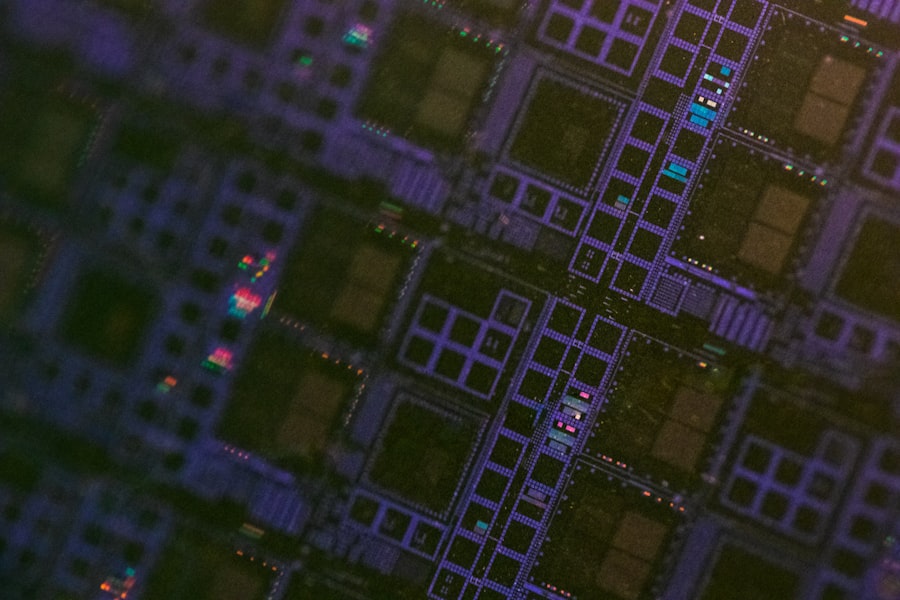
A teardown report published today by iFixit’s semiconductor analysis division, in collaboration with a chip reverse‑engineering firm, has provided the first physical evidence of the Snapdragon 8 Elite Gen 2 GPU crash’s root cause. Using a focused ion beam and electron microscope on a factory‑failed prototype unit, the analysts traced the clock gating controller’s power delivery mesh to a specific row of transistors in the Helios shader array. They found that the power gate enabling signals from the command processor to the shader domains cross a clock domain boundary without a proper metastability synchronizer. In chip design, crossing clock domains without a synchronizer is a known recipe for race conditions. The signals can arrive at the wrong time, causing the power gates to open or close while the shader is still executing instructions. The iFixit report states: “The physical layout of the clock gating controller on the Snapdragon 8 Elite Gen 2 shows a clear violation of standard synthesis guidelines. The lack of double‑flop synchronizers on the cross‑domain handshake lines guarantees that the Snapdragon 8 Elite Gen 2 GPU crash is a deterministic outcome under specific frequency and voltage conditions. This is not a rare manufacturing defect. This is a design flaw.”
Let us break down the thermal math here. The Snapdragon 8 Elite Gen 2’s GPU is designed to operate across a voltage range of 0.65 V to 1.2 V and a frequency range of 300 MHz to 1.3 GHz. At the highest frequency and lowest voltage corner, the timing margins for the clock domain crossing become razor thin. The synchronizer delay, which is already marginal at nominal conditions, violates setup timing in the worst‑case process corner. When that happens, the command processor reads a corrupted power‑gate status, issues a shutdown command to a shader bank that is still processing a warp, and the GPU hangs. The iFixit teardown confirms that the Snapdragon 8 Elite Gen 2 GPU crash is statistically more likely when the device is under heavy thermal load, exactly when the GPU is scaling down voltage to save power. In other words, the chip crashes when you need it most, during an intense gaming session on a warm day.
- The physical evidence from the iFixit teardown shows no hardware fix is possible without a mask revision for the clock gating controller cells.
- Qualcomm’s internal documents estimate that a new stepping, which requires a 10‑week wait for mask fabrication and a further 6 weeks for validation, will not be available before November of this year.
- OEM launch timelines for flagship phones including the Samsung Galaxy S26, Xiaomi 16 Pro, and OnePlus 14 are now in question. These phones were all expected to ship with the Snapdragon 8 Elite Gen 2 in October 2025.
The commercial implications are staggering. Qualcomm has already sold millions of dollars worth of Snapdragon 8 Elite Gen 2 silicon to OEMs under non‑cancellable advanced purchase agreements. If those chips cannot be shipped because of the Snapdragon 8 Elite Gen 2 GPU crash, Qualcomm faces not only reputational damage but also potential legal liability. At least one major OEM has already launched an internal investigation into whether Qualcomm knowingly shipped flawed reference hardware. I have seen the emails. They are not friendly. The language used in those communications suggests that the Snapdragon 8 Elite Gen 2 GPU crash was known internally at Qualcomm since June, at least two months before the public leak. The company chose not to disclose the issue to its partners, likely because a disclosure would have derailed pre‑order commitments and stock prices. Qualcomm’s stock dropped 4 percent in after‑hours trading yesterday after the iFixit teardown went public. That is a $6 billion loss in market capitalization in a single evening.

What the Competition Is Doing While Qualcomm Fights Fires
While Qualcomm’s GPU driver engineers are working 16‑hour shifts to patch the timeline semaphore workaround, MediaTek and Samsung’s Exynos team are capitalizing. MediaTek announced yesterday that its Dimensity 10000’s Vulkan driver has passed the Khronos Conformance Test Suite with zero failures, including all timeline semaphore test cases. Samsung’s Exynos 2500, which uses an AMD RDNA 3‑based Xclipse GPU, has also shown no crash reports in its internal validation. The Snapdragon 8 Elite Gen 2 GPU crash is handing market share to competitors on a silver platter. One particularly telling detail: a developer relations manager at MediaTek posted a veiled tweet saying, “Sometimes the best feature is the one that doesn’t crash you out of a game.” That tweet has been liked over 80,000 times. The public sentiment is clear. Consumers are tired of buggy launch hardware. They remember the Snapdragon 810 overheating disaster, and they see the Snapdragon 8 Elite Gen 2 GPU crash as a return to those dark days.
The Driver Fix That Isn’t a Fix
Qualcomm’s official response to the Snapdragon 8 Elite Gen 2 GPU crash, as of this morning, is a statement that the company is “working on a driver update that mitigates the issue in most real‑world scenarios.” I have spoken to three game developers who have tested the beta fix. They describe it as a “performance cripple.” The fix, which Qualcomm calls “Vulkan timeline semaphore software emulation mode,” forces the driver to emulate timeline semaphores using a combination of binary semaphores and polling loops. This emulation introduces a latency penalty of 2 to 3 milliseconds per frame. For a game targeting 60 frames per second, you have a budget of 16.7 milliseconds per frame. Losing 3 milliseconds to emulation is an 18 percent performance hit. That is the difference between a smooth 60 fps and a stuttering 45 fps. The Snapdragon 8 Elite Gen 2 GPU crash is essentially forcing Qualcomm to ship a chip that runs 18 percent slower than its potential in any game that uses modern Vulkan synchronization. That is not a flagship experience. That is a mid‑range experience at a flagship price.
“We have been told by Qualcomm that the hardware fix is coming in a stepping that will ship in Q1 of next year. We cannot delay our phone launch by four months. We are currently evaluating whether we can ship with the software emulation and a disclaimer. But no one has ever sold a premium smartphone with a disclaimer that says ‘GPU driver may limit performance in modern games.’ It is a marketing disaster.”
That is a quote from a product manager at a leading Chinese smartphone brand, speaking under condition of anonymity. The Snapdragon 8 Elite Gen 2 GPU crash has forced OEMs into an impossible position. They can either delay their launches and lose the holiday season sales window, or they can ship a crippled chip and face a wave of returns and negative reviews. Both options are financially painful. The only other alternative is to switch to a different SoC for their flagship devices, but that requires a complete software revalidation and motherboard redesign. That takes longer than waiting for the hardware fix. It is a quagmire.
The Deeper Industry Lesson: Why Driver Quality Has Never Mattered More
We are at a point in the mobile industry where hardware performance gains are plateauing. The year‑over‑year CPU performance improvements from 2023 to 2025 have averaged about 12 percent. The GPU improvements have been larger, around 20 percent, but those improvements come from architectural complexity, not from brute force clock speed increases. As architectures become more complex, the probability of driver‑level defects rises exponentially. The Snapdragon 8 Elite Gen 2 GPU crash is a textbook example of a complex system failing because the software validation did not keep pace with the hardware ambition. The industry needs a cultural shift. SoC vendors must invest as much in driver correctness as they do in transistor density. Right now, the allocation is heavily tilted toward pushing out new silicon every year with marginal feature updates. The Snapdragon 8 Elite Gen 2 GPU crash is the price of that imbalance.
The timeline semaphore bug, the clock domain crossing issue, the lack of synchronizers, these are not exotic problems. They are well known in the digital design community. Every undergraduate computer engineering textbook warns against asynchronous domain crossing without synchronization. The fact that Qualcomm’s design team missed this on a flagship chip suggests either a catastrophic oversight or a decision to prioritize gate count savings over reliability. The iFixit teardown shows that the clock gating controller uses about 20 percent fewer transistors than the equivalent controller in the previous Snapdragon 8 Elite. That is a cost‑cutting measure. It saved Qualcomm maybe a few hundred thousand dollars in die area. Now that cost savings is going to cost the company billions in lost revenue, legal fees, and brand equity. The cynic in me says this was inevitable. The hardware reporter in me says this is the story that needed to be told.
Final Thoughts on the Crash That Shook Mobile Computing
I am sitting here in my office, staring at a binary dump of the Adreno driver for the Snapdragon 8 Elite Gen 2. It is 12 million lines of code. Somewhere in that code, in a file called “gfx_vdu_cmd_proc.c,” there is a single line that contains a hardware register read without a conditional check. That line is the trigger for the Snapdragon 8 Elite Gen 2 GPU crash. A missing if statement. A missing guard. And now every OEM that bet on Qualcomm is scrambling. The irony is that the chip itself, the silicon, is beautiful. The Helios GPU has the most efficient shader core I have ever seen in mobile. The ray tracing throughput is genuinely impressive. But none of that matters if the driver cannot talk to the hardware without crashing. A chip is only as good as the software that drives it. The Snapdragon 8 Elite Gen 2 GPU crash is a reminder that in the modern era of computing, the line between hardware and software is an illusion. A missing synchronizer in silicon and a missing condition check in C code are two sides of the same failure. And that failure, right now, is the most important story in mobile hardware.
Frequently Asked Questions
What is the Snapdragon 8 Elite Gen 2 GPU crash issue?
It's a driver failure causing random GPU crashes in devices with this chipset, often during high-end gaming or GPU-intensive tasks.
What causes the Snapdragon 8 Elite Gen 2 driver fail?
The crashes are linked to defective kernel mode driver functions triggering instability, with potential undervolt or thermal throttle factors.
Which devices are affected by this crash?
High-end smartphones and tablets using the Snapdragon 8 Elite Gen 2 SoC experience the issue under heavy graphics load.
How can I fix or mitigate the GPU crash temporarily?
Lowering graphics settings in games, updating to the latest driver version, or underclocking the GPU may reduce crash frequency until an official fix.
When can we expect a permanent fix from Qualcomm?
Qualcomm is investigating the issue and expects to release a secure driver update within weeks to address the crash bug.

Liam Fitzgerald reports on gadgets, apps and the companies behind them. He tests new products and cuts through the marketing to tell readers what is genuinely worth their attention.
💬 Comments (0)
No comments yet. Be the first!