What Spirit rover data Tells Us About Mars Water
See how 20-year-old Spirit rover data was painstakingly combined to prove that ancient Mars was once covered in liquid water.
Spirit's data is over twenty years old now. It's hiding in plain sight, these clues to liquid water on ancient Mars, gathered by a rover that hasn't moved since 2010 but whose measurements from one specialized instrument took years to finally reveal the truth. Massive news for space enthusiasts. But we've known about this for a while, so the real puzzle piece is why it took so long to see what was always there.
You might wonder how data from a mission that launched two decades ago can suddenly rewrite what we know about Martian water. It's all in how we read the old telemetry. A single measurement of the Martian surface might not show much on its own. But stack hundreds of those measurements together, and a clear pattern of past water begins to emerge, one that we've been blind to for years because we simply weren't looking at the numbers in the right way. That's the trick. And it changes everything.
An instrument designed for mineral analysis
The Spirit rover carried a specialized tool called a Mössbauer Spectrometer. That’s fact. This instrument performed mineralogical analyses of soil, rock, and dust inside Gusev Crater, and at the time, individual measurements didn't always give researchers definitive proof of liquid water. So the evidence stayed ambiguous.
But when scientist Paolo de Souza of Edith Cowan University in Australia examined years of these measurements together, the picture changed, and that shift only becomes visible once you stop treating each reading as an isolated snapshot and instead trace the full arc of data stretching across time. He found a definite pattern. The minerals could only exist with water. So the evidence was sitting in the data all along, and it's a quiet kind of proof that demands we look beyond the noise of any single moment. That analysis shows Mars used to sport a lot more water than scientists expected, and we can't ignore that.
The minerals that tell the story
The research focused on two specific iron-bearing minerals found in the Gusev Crater soil. These minerals are key indicators of past water activity.
- Hematite: An iron oxide that forms in the presence of liquid water as well as in volcanic regions.
- Altered magnetite: A mineral that indicates water and rocks interacted with each other.
Hematite is the same mineral behind Mars's famous "blueberries," which the Opportunity rover discovered at Meridiani Planum. That's a stunning fact. But in Gusev Crater, traces of hematite were excavated from 32 soil sites that had remained completely undisturbed, and finding crystalline hematite in such ordinary dirt was a major surprise because scientists simply didn't expect it there. It just didn't fit their models. So they had to rethink everything.
"One of the most important discoveries was finding crystalline hematite in ordinary Martian soil," Professor de Souza said. "The mineral's widespread presence points not just to water, but to large areas of Mars that may have been submerged in the past.""
How the global dust layer holds the secret
The layers of dust Spirit studied in Gusev Crater aren't unique to that single landing site. But these water-related mineral traces show up across the entire planet, stretching from one horizon to another and appearing in countless craters and plains that scientists have mapped over years of orbital surveys. It's a global pattern. So the findings suggest this specific layer of dust extends across huge areas of Mars, binding distant regions in a shared geological story we've only just begun to read.
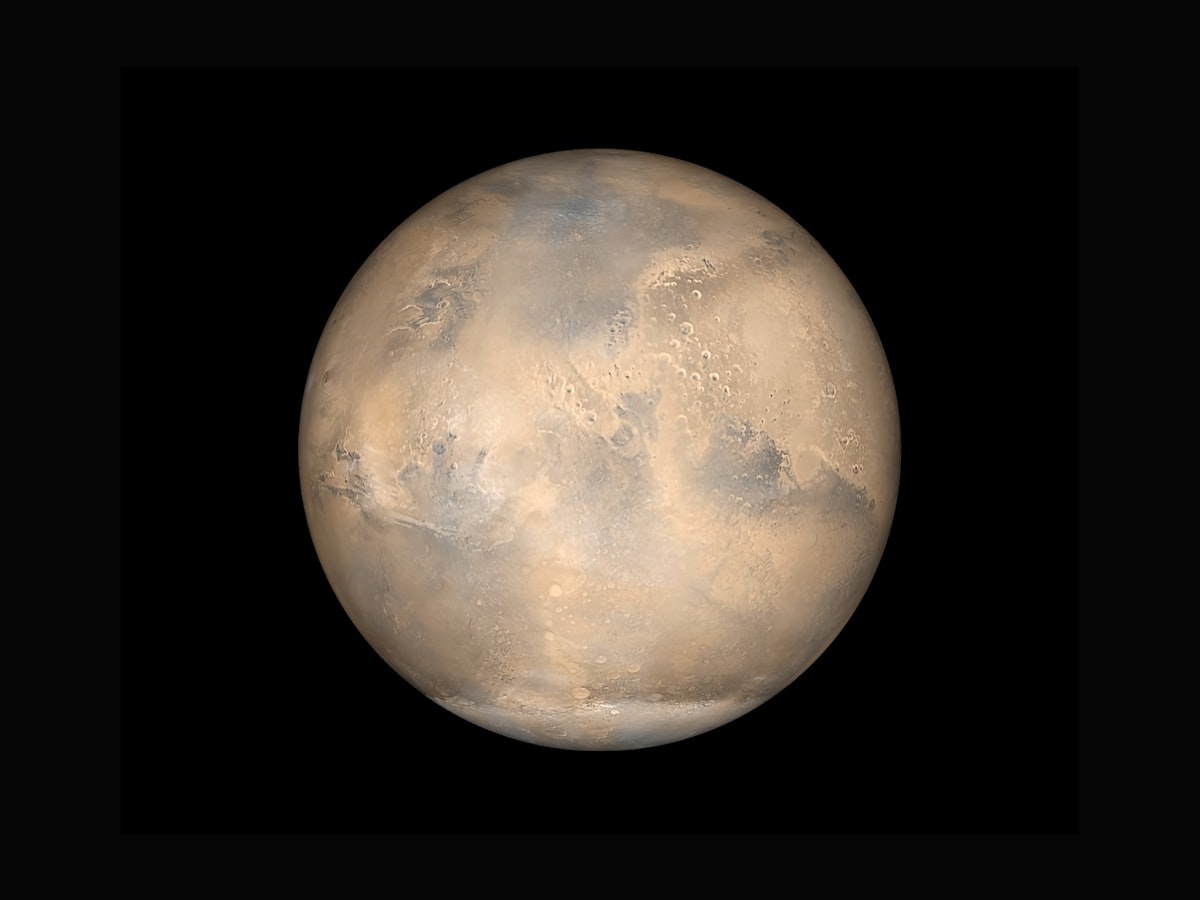
How did this happen? Wind. Heat. Time. It likely formed over millions of years due to constant wind erosion, extreme temperature changes, and massive storms that tore across the planet's surface. So those global storms moved huge quantities of dust across the Martian surface, spreading the water-scoured minerals far and wide, and that's why they're not confined to one region. But this means the evidence of a warmer, wetter past is blanketed across the entire globe, and we've only scratched the surface of what it can tell us.
Revisiting the old telemetry
Why did it take so long to find this? The individual rover measurements simply weren't detailed enough to identify minerals present in very small quantities, and that's the plain truth of the matter. Paolo de Souza spent several years of painstaking work sifting through all the measurements to construct this picture of Gusev Crater, a process that demanded relentless attention to every data point and no small amount of patience. Real talk: it's a grind. But he did it.
The variables were staggering. He had to account for changing temperature conditions, samples from different soil regions, physical and chemical weathering of the surface materials, and the long-term effects of global dust storms, all of which could skew the instruments in ways he couldn't fully predict. It's a brutal list. So he worked through each one, methodically.
What this means for future Mars missions
Gusev Crater is just the start. But de Souza isn't stopping there, because he plans to run the same kind of analysis on soil data collected by the Opportunity rover at Meridiani Planum, where the chemistry could tell a very different story about ancient water. If this next phase works out, hundreds of measurements will merge into one broad, regional assessment of water in that area too. That's the big picture.
But there's an unexpected turn here. This research exposes a major flaw in how we've been exploring Mars, and it makes one thing painfully clear: future missions absolutely must carry spectrometers so they can study the soil over months and years, not just the brief snapshots Spirit and Opportunity managed to capture. We can't settle for quick glances. So if we truly want to understand Martian history, we need to keep analyzing the dirt beneath our robotic tires, layer by painstaking layer.
Frequently Asked Questions
What specific instrument on the Spirit rover provided the data that led to the discovery about Martian water?
The Spirit rover carried a specialized tool called a Mössbauer Spectrometer, which performed mineralogical analyses of soil, rock, and dust inside Gusev Crater. Individual measurements from this instrument did not always give definitive proof of liquid water at the time.
Why did it take so long for scientists to find the evidence of past water in Spirit's data?
Individual rover measurements were not detailed enough to identify minerals present in very small quantities, making the evidence ambiguous. Paolo de Souza spent several years of painstaking work sifting through all the measurements to construct the picture, accounting for variables like temperature changes, soil regions, and dust storms.
How does the global dust layer on Mars play a role in the distribution of water-related minerals?
The layers of dust Spirit studied in Gusev Crater are not unique to that site; water-related mineral traces show up across the entire planet. The global dust layer likely formed over millions of years due to wind erosion and massive storms, which spread the water-scoured minerals far and wide across Mars.
Who conducted the analysis of Spirit's data and what did he find?
Scientist Paolo de Souza of Edith Cowan University in Australia examined years of measurements together and found a definite pattern of minerals that could only exist with water. He found crystalline hematite in ordinary Martian soil, which points to large areas of Mars that may have been submerged in the past.
What are the implications of this research for future Mars missions?
Future missions must carry spectrometers to study soil over months and years, not just brief snapshots like Spirit and Opportunity captured. De Souza plans to run the same analysis on Opportunity data from Meridiani Planum, and the research exposes a flaw in how we've explored Mars, emphasizing the need for long-term soil analysis.

Arthur Vance writes about astronomy and space exploration, covering the discoveries that expand our view of the cosmos. He enjoys connecting distant science to the questions we ask here on Earth.
💬 Comments (0)
No comments yet. Be the first!