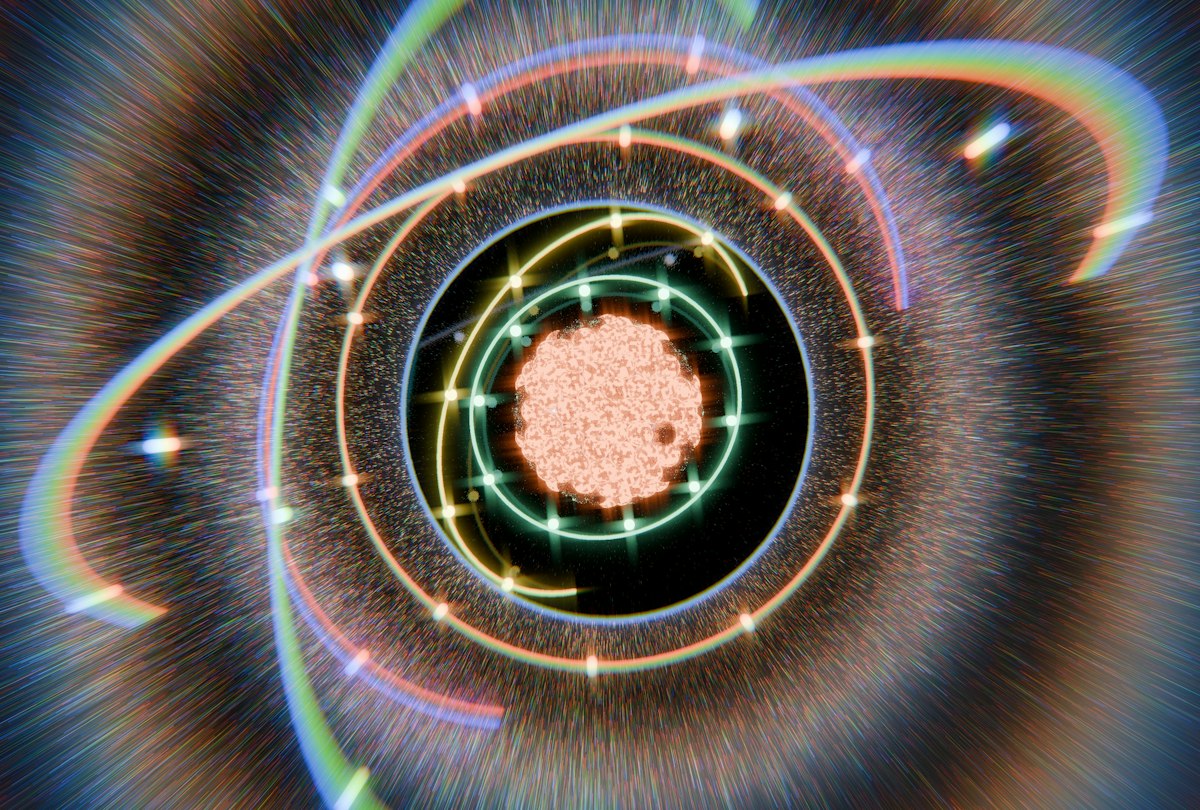
How Webb's archive Transforms Space Research
How Webb's archive is driving independent breakthroughs by allowing researchers to find hidden data.
Webb's archive is systematically reshaping how astronomical discoveries are made, shifting the frontier of space science from active observation to data mining. The old paradigm demanded securing highly competitive observation windows on premier space telescopes, a brutal scramble for scarce time. But that bottleneck is gone. Today, a quiet revolution unfolds inside public data repositories, where massive volumes of deep space imaging now sit open to anyone. The crunch isn't telescope time anymore. It's the analytical capacity to process the vast amounts of information already captured, a sheer wall of pixels and photons waiting for someone clever enough to dig through it. So independent researchers can make fundamental discoveries from their own desks. They never need to operate a telescope directly. Not once.
No issue
The strategic value of this public data repository was recently demonstrated by astrophysicist Homer Dávila Gutierrez, the founder and director of SKYCR.ORG and a Fellow of the Royal Astronomical Society. By systematically searching through 54 public Near-Infrared Camera fields and evaluating 1,591 possible candidates, Dr. Gutierrez identified a new gravitational arc candidate, designated A1, in the galaxy cluster MACS J0308.9+2645. This cluster had been imaged previously by older observatories, but the high-resolution infrared capabilities of the newer platform revealed details that had gone unnoticed for years. No issue
This move sits within a broader pattern in modern astrophysics where archival data yields discoveries that rival new observational campaigns. It marks a major shift in the competitive landscape. But from a competitive standpoint, this demonstrates that access to raw data is democratizing space research, and independent researchers can now access the same high-caliber data as major institutions, changing how scientific prestige and discovery are distributed across the global scientific community. So the playing field is leveling. We've seen this before. It's not just about telescopes anymore.
The mechanics of gravitational lensing
Einstein's Theory of General Relativity predicts gravitational lenses. That's the simple truth. When massive objects bend the spacetime around them, light from a distant background source intersects that curved field and traces its path, which amplifies and distorts the image in ways we can observe. Astronomers use these natural cosmic magnifying glasses to study faint, distant galaxies that would otherwise stay hidden.
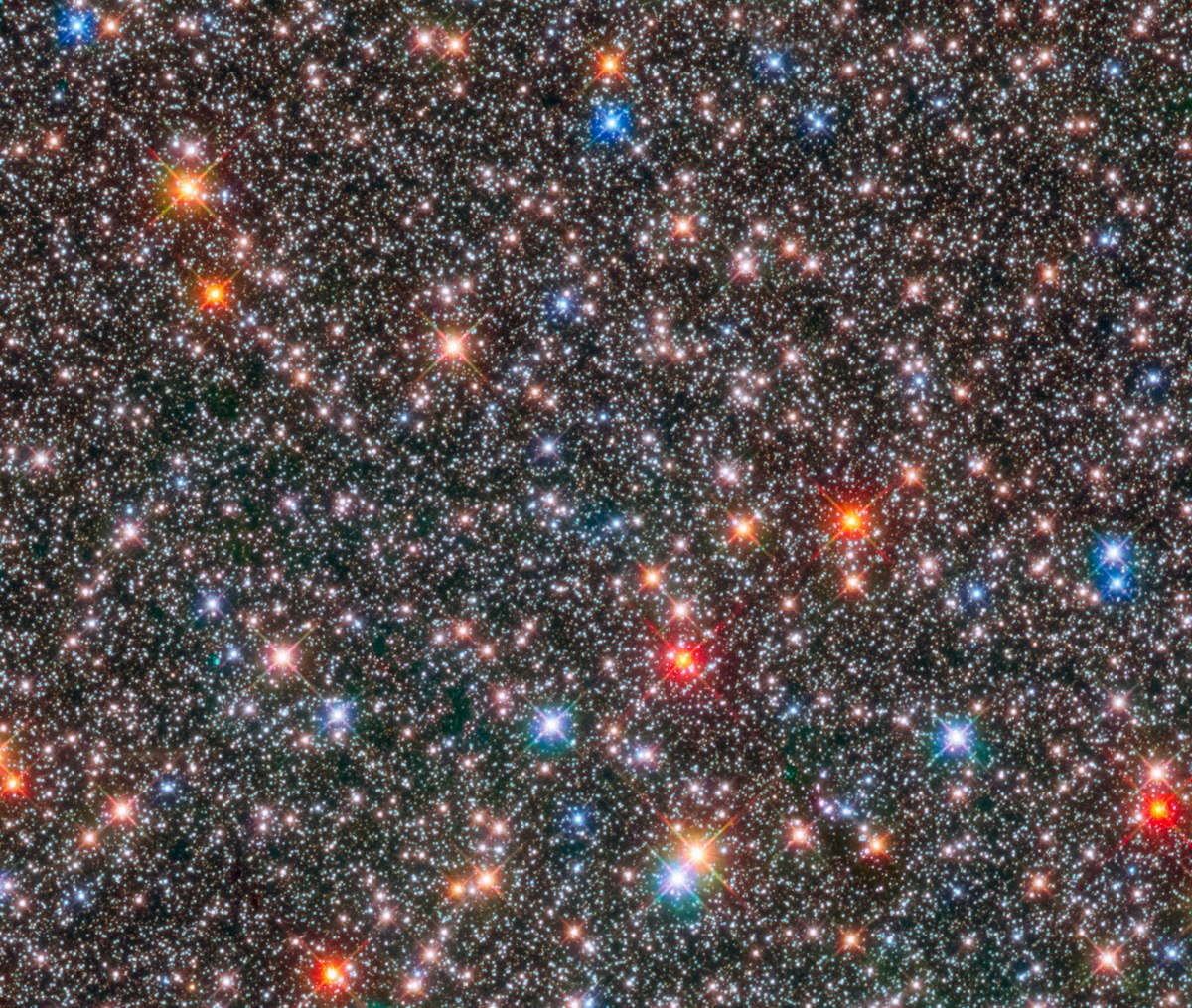
Using specialized analytical tools, Dr. Gutierrez was able to characterize the physical properties of the newly discovered arc candidate:
- Extreme geometry: The object has an axis ratio of approximately 6.5, making it highly elongated.
- Precise alignment: It is aligned tangentially with respect to the cluster center to within about a degree, which matches the exact orientation produced by gravitational lensing.
- High brightness: It is the brightest of the highly elongated sources at that radius, allowing for precise measurement.
- Absence from catalogs:.
Photometric analysis and cluster mass constraints
Dr. Gutierrez ran a multi-band analysis using the EAZY photometric tool to determine the candidate's distance and age. That initial pass gave a redshift of z ≈ 4.4. It's a figure that would place the object within the universe's first billion years, a staggeringly early epoch. He then turned to a mass reconstruction tool developed by astrophysicist Ana Acebron and her collaborators in 2018. That model put constraints on the MACS J0308.9+2645 cluster's total mass. And the result was striking. The background galaxy, according to this modeling, faced a magnification factor of seven, which boosted its visibility enormously. So we've got a clear picture now.
Refining the redshift models
We refined the photometry again. The corrected data painted a starkly different picture. It's not what we first thought. The updated analysis placed the galaxy at z ≈ 1.4, meaning we see it as it existed roughly 9 billion years ago, lying behind the massive cluster, and that single shift in distance changes everything about how we read its light. So the working interpretation now is that A1 is a singly lensed image, stretched and modestly magnified by the cluster gravity, but not multiply imaged, which keeps the geometry simpler than we'd hoped. But we also spotted a second, fainter candidate, A2, with similar geometry, though its photometry remains highly unconstrained due to its faintness, and that's a problem we can't solve yet.
Webb's archive as a collaborative platform
Standard automated catalog photometry can miscalculate the properties of extended sources, and that's exactly what happened here, since it initially led to an inflated redshift estimate for A1. That error is the root of the problem. But human verification, independent remeasurement, and direct communication with the original observation teams remain necessary to validate these archival discoveries, and they can't be skipped if we want the science to hold up. So we've learned our lesson.
No issue, but there's another equally important takeaway: automated catalog photometry can seriously mislead you for extended sources, so it's vital to verify, remeasure independently, and contact the original program team.
Dr. Homer Dávila Gutierrez
Read alongside recent announcements, the picture clarifies. No issue When Dr. Gutierrez contacted the original General Observation campaign team, they confirmed the object was uncatalogued. This initiated a collaborative effort to use an updated lens model of the cluster to establish the nature of A1 definitively. No issue
The future of archival space science
The space sector is producing data at a rate that far outpaces the scientific community's current capacity to analyze it, and that gap keeps widening with every new sensor and satellite. That's a problem. But it's also a highly strategic opportunity for researchers, institutions, and funding bodies, one that rewards those who can move first and build the tools to turn raw streams into insight before the backlog buries them. So don't wait.
Look at the wider sector, and you'll see this trend will likely accelerate as more public surveys release their data. It's inevitable. The discovery of candidates like A1 and A2 proves that major cosmic structures are waiting to be identified in existing datasets, hidden in plain sight among the numbers we've already collected but haven't fully examined yet. So don't call it a dead end.
Frequently Asked Questions
What is the primary shift in space research described in the article, and how does Webb's archive contribute to it?
The article describes a shift from active observation to data mining, where the bottleneck is no longer telescope time but analytical capacity. Webb's archive contributes by providing massive volumes of deep space imaging open to anyone, allowing independent researchers to make discoveries without operating a telescope.
Who is Homer Dávila Gutierrez, and what discovery did he make using Webb's archive?
Homer Dávila Gutierrez is the founder and director of SKYCR.ORG and a Fellow of the Royal Astronomical Society. By searching through 54 public Near-Infrared Camera fields and evaluating 1,591 candidates, he identified a new gravitational arc candidate, designated A1, in the galaxy cluster MACS J0308.9+2645.
How does the gravitational lensing effect described in the article explain the appearance of arc A1?
Gravitational lensing occurs when massive objects bend spacetime, amplifying and distorting light from distant background sources. In MACS J0308.9+2645, the foreground cluster's gravity warped the light of background galaxies, creating distorted gravitational arcs like A1, which is highly elongated with an axis ratio of approximately 6.5 and aligned tangentially to the cluster center.
What were the initial and revised redshift estimates for A1, and what caused the change?
Initially, a multi-band analysis using the EAZY tool gave a redshift of z ≈ 4.4, but after refining the photometry, the estimate was revised to z ≈ 1.4. The change was due to the fact that standard automated catalog photometry can miscalculate properties of extended sources, leading to an inflated redshift estimate for A1.
Why is human verification important in archival discoveries, according to the article?
Human verification is important because automated catalog photometry can mislead for extended sources, as seen with A1's inflated redshift. The article states that human verification, independent remeasurement, and direct communication with original observation teams are necessary to validate archival discoveries, and they cannot be skipped if the science is to hold up.

Arthur Vance writes about astronomy and space exploration, covering the discoveries that expand our view of the cosmos. He enjoys connecting distant science to the questions we ask here on Earth.
💬 Comments (0)
No comments yet. Be the first!