Ekpyrotic Universe: A Quick Reality Check
Could the universe be part of an eternal cycle? We explore the ekpyrotic universe theory and its bouncing branes.

Ekpyrotic universe: A quick reality check
Ekpyrotic models are a wild alternative. They challenge the Big Bang story. So if you've ever felt that the idea of a single point of infinite density sounds a bit suspicious, you are not alone, because this theory suggests that our reality is not a one-time event born from a singularity but instead proposes a cycle of cosmic collisions.
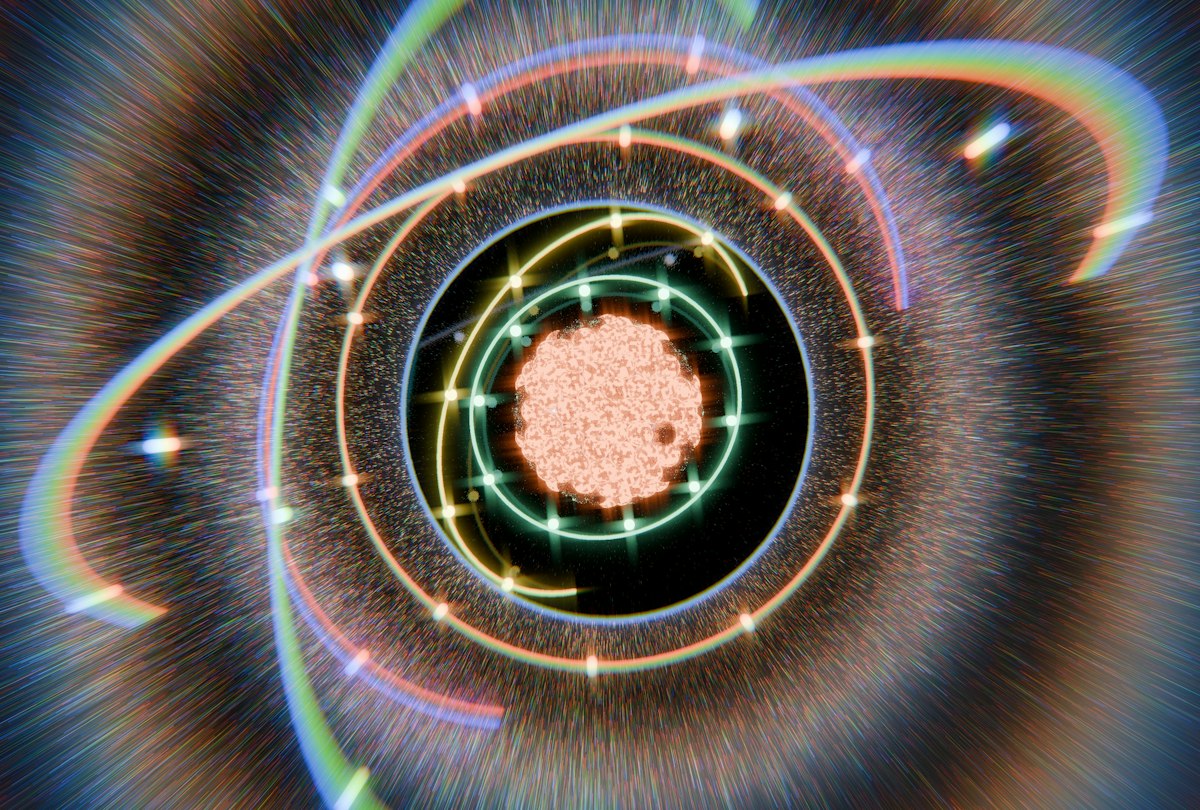
Let me break down the basics. Imagine our three-dimensional universe as a sheet, or a brane, floating in a higher-dimensional space that's often called the bulk. Most of the time, our sheet drifts along quietly. It doesn't interact with anything else.
The mechanics of a cosmic bounce
So two branes drift too close. Things get interesting when another brane drifts too close, and the two sheets eventually collide, releasing a massive burst of energy that we call the Big Bang. But the theory argues there's no singularity here. It's just a mechanical bounce between two sheets.
This process repeats.
How the theory replaces inflation
Standard cosmology relies on inflation to explain the structure of the universe. But this model claims to bypass that entirely. The slow approach of these sheets creates ripples in spacetime, and those ripples act as the seeds for galaxies and stars, so the model also handles the flatness of the cosmos. It's simple. As the sheets approach, the energy density increases, which irons out any curvature.
Here is why this matters for your understanding of physics:
- It removes the need for a singular point of infinite density.
- It explains the horizon problem through the long, slow drift before the collision.
- It accounts for dark energy as the long period of expansion between bounces.
- It resets entropy by avoiding a total crunch and spreading energy over a vast volume.
The search for a perfect cycle
The name itself comes from an old Greek Stoic concept. It translates roughly to out of fire. This refers to the belief that the world is consumed by a great blaze and then reborn, and the theory mirrors this by using the energy of the collision to reset the entire system. But you might wonder if this means the universe is eternal. According to this model, it has always been doing this, and it always will.
Paul Sutter offers a grounded perspective. He's a cosmologist and NASA advisor who highlights that we are wading into deep waters with this logic about the math behind the concept. But we can't ignore the risks.
The math behind ekpyrotic theory is beyond gnarly, and it is also, in all likelihood, not entirely trustworthy, because it lives inside some of the more esoteric branches of string theory.
Why the beautiful math might fail
Even if the math creates a clean, logical picture, it doesn't mean nature follows the script. But we're stuck on the brane. This theory lives on the edge of what we can currently prove or observe, and we can't look outside to see if another sheet is actually headed our way.
Dark energy drives expansion. It's the force that pushes the cosmos toward the next cycle, but the theory assumes it'll eventually shut off. That's expected a hundred trillion years from now. So the sheets of matter fall back toward each other long after the last star dies out.
So, is the ekpyrotic universe a winner? It solves the problems of flatness and structure without needing an initial explosion from nothing, and it provides a clever way to dump entropy by turning the birth of the universe into a repetitive, manageable event. But is it? That's the question.
But there's a catch. The theory runs into major hurdles when tested against the reality of nature, and it remains a fascinating intellectual exercise that cannot explain our actual cosmos. It faces a very steep climb.
Frequently Asked Questions
What is the ekpyrotic universe theory in simple terms?
The ekpyrotic universe theory suggests that our reality is not a one-time event born from a singularity but instead proposes a cycle of cosmic collisions. It imagines our three-dimensional universe as a sheet, or brane, floating in a higher-dimensional space, and the Big Bang is caused by two such sheets colliding.
How does the ekpyrotic model avoid the need for a singularity?
The theory argues that the Big Bang is not a singularity but a mechanical bounce between two sheets, or branes. This process repeats, with branes pulling apart, drifting, and then returning for another collision, allowing the universe to continue forever without a beginning or end.
Why does the ekpyrotic theory face major hurdles according to the article?
The article states that the math behind the theory is beyond gnarly and likely not entirely trustworthy, as it lives inside esoteric branches of string theory. Additionally, we cannot observe whether another sheet is headed our way, making the theory an intellectual exercise that cannot explain our actual cosmos.
How does the ekpyrotic model explain the flatness of the cosmos?
As the sheets approach, the energy density increases, which irons out any curvature. This simple mechanism in the model handles the flatness of the cosmos without relying on inflation.
Who is Paul Sutter and what perspective does he offer in the article?
Paul Sutter is a cosmologist and NASA advisor who highlights that we are wading into deep waters with the logic behind the ekpyrotic concept. He notes that the math is not entirely trustworthy and that the theory lives on the edge of what we can currently prove or observe.

Arthur Vance writes about astronomy and space exploration, covering the discoveries that expand our view of the cosmos. He enjoys connecting distant science to the questions we ask here on Earth.
💬 Comments (0)
No comments yet. Be the first!