Cosmic Collision Debris Alters Understanding of Nucleosynthesis
A rock sample from the Pacific Ocean floor has provided crucial evidence of a neutron star collision over 100 million years ago, offering new insights into the r-process of element creation.

{focusKeyword} Discovery Reshapes Stellar Nucleosynthesis Timeline
Ancient Cosmic Collision Clues Emerge
A tiny rock fragment was pulled from the Pacific floor in 1976. But we're skipping that. It's now revealing secrets about a massive cosmic explosion from over a hundred million years ago, when two neutron stars collided in an event so violent it birthed a kilonova, seeding the universe with long-lived elements like plutonium isotopes that eventually settled on Earth, becoming trapped inside this ferromanganese sample. And the analysis found plutonium radioisotopes, providing strong evidence about the stellar event's origin and timing. These findings aren't just about one past occurrence. They're fundamentally changing how we understand heavy element formation through the r-process.
Revisiting the R-process Chronology
The scientific team meticulously examined the rock's composition, focusing on the presence and absence of specific radioactive isotopes. They identified Plutonium-244 (Pu-244), an isotope with a half-life of 81.3 million years. That's old. The abundance of Pu-244 within the rock layers allowed researchers to pinpoint the cosmic explosion to approximately 100 million years ago, but the sample lacked another element expected from such a merger: Curium-247 (Cm-247), which has a much shorter half-life of 16 million years. This absence is a critical piece of evidence.
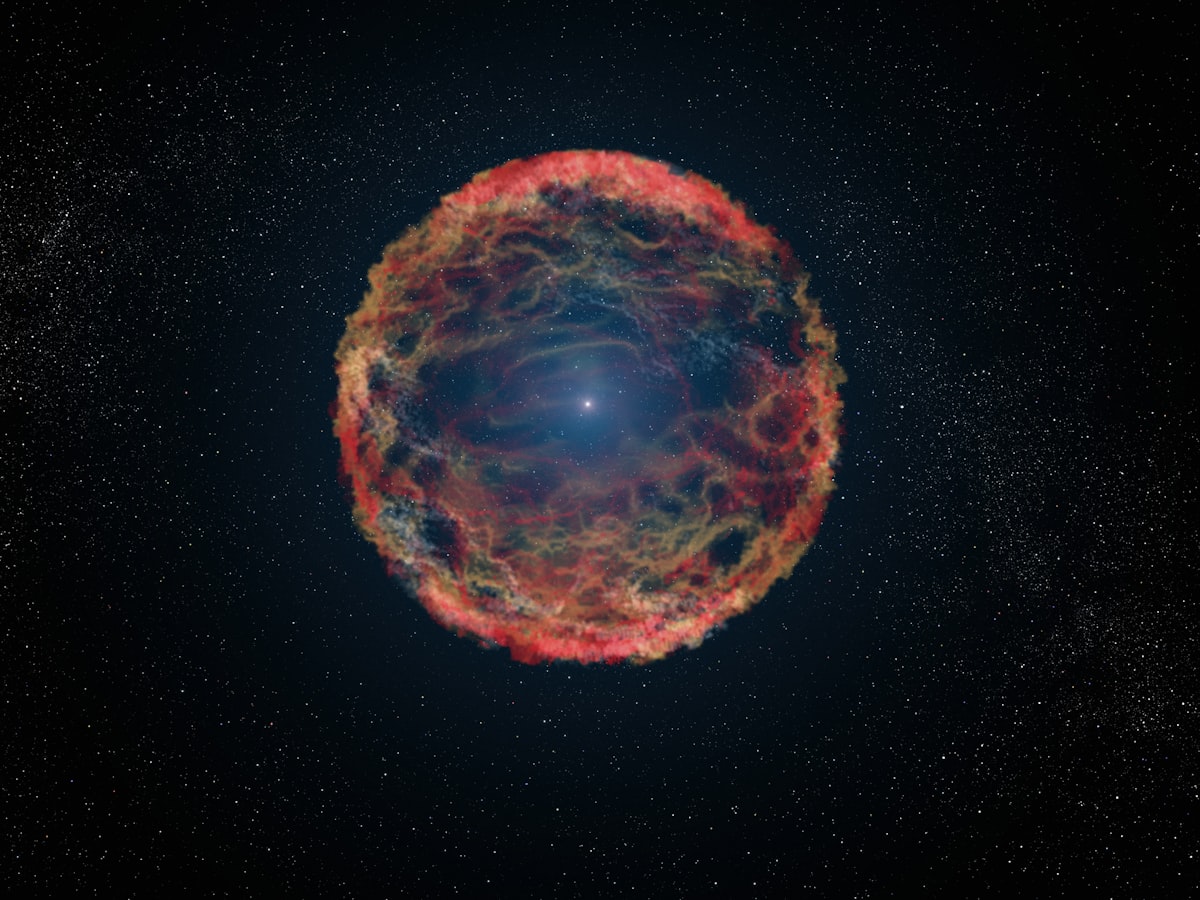
Dr. Michael Hotchkis of ANSTO stated, "The absence of the curium radioisotope Cm-247, which was also produced in the explosion, tells us it happened a very long time ago." But he added, "Not more than about 1 billion years ago; otherwise the Pu-244 would also be undetectable." So that's the key contrast. This comparison between Pu-244 and Cm-247 provides a sophisticated method for dating such rare cosmic events, and it suggests the explosion predates the decay of the less stable curium isotope.
Geological Archives and Stellar Debris
The plutonium extraction was an intricate undertaking. Researchers carefully drilled three cores from the rock sample, each measuring up to 3 centimeters, and these cores represented over ten million years of geological growth showing the slow deposition rates of Earth's crust. So they used the Beryllium-10 isotope, which has a half-life of 1.5 million years, to date these cores. But traces of the iron isotope Fe-60 were detected in one core, indicating other cosmic events like supernovae. They imaged the remaining crust. It was then encased in resin for precise cutting of thin layers, each representing roughly one million years of accumulation. Each processed sample underwent chemical analysis to isolate the plutonium. It was a slow process.
Implications for Element Formation
This research tackles a long-standing cosmic mystery. How are elements made beyond iron? Stellar nucleosynthesis, the process where stars fuse lighter elements into heavier ones, primarily generates elements up to iron, but it can't produce the heavier stuff like gold, platinum, or uranium. Those require more extreme conditions. So they're forged during catastrophic events like supernovae and, significantly, neutron star mergers. The latter are theorized to be the dominant source for certain heavy elements, particularly through the rapid neutron capture process, or {focus_keyword}.
Theories of {focus_keyword} nucleosynthesis posit that both Pu-244 and Cm-247 are produced concurrently in neutron star mergers. But their decay rates differ. This differential allows scientists to constrain the event's age, since Pu-244's much longer half-life points to an older origin while the absence of the more rapidly decaying Cm-247 suggests the event happened long enough ago for this isotope to have largely decayed into undetectable quantities. So this geological sample acts as a cosmic time capsule.
Broader Sector Read and Future Prospects
Debris from ancient cosmic collisions can persist in geological archives on Earth. But it's not just a curiosity. This discovery carries major implications for astrophysics and planetary science because it suggests that evidence of past {focus_keyword} events may be far more widespread than we've assumed and could potentially exist on other celestial bodies as well. So the consistent presence of Pu-244 throughout the analyzed rock layers points to a continuous influx over the 100 million years since the merger. That's not a singular, sharp impact. This continuous flux offers a new perspective on how interstellar material is distributed, and it's a perspective we can't ignore.
This finding aligns with broader efforts within the space and aerospace sector to understand the origins of matter and the universe's evolution. It's a major advancement. Companies and institutions are increasingly focused on deciphering these fundamental questions, so the research team is actively seeking additional geological samples, such as ancient crusts from Earth or lunar samples from the Apollo missions, that might contain products of past focus_keyword events. The potential for future space missions to collect and analyze similar extraterrestrial dust further highlights the long-term strategic importance of this field of study. Advanced observational platforms are already detecting neutron star mergers, but the direct chemical analysis of their aftermath, as demonstrated by this rock sample, represents a major step in our ability to study and date these powerful cosmic phenomena. But we've only scratched the surface.
Frequently Asked Questions
What is the r-process and how does the article connect it to neutron star mergers?
The r-process is the rapid neutron capture process that forges heavy elements like gold, platinum, and uranium in extreme conditions. The article states that neutron star mergers are theorized to be the dominant source for certain heavy elements through the r-process.
Why was the absence of Curium-247 (Cm-247) significant in the rock sample?
The absence of Cm-247, which has a half-life of 16 million years, compared to the presence of Pu-244 with an 81.3 million year half-life, allowed scientists to constrain the age of the cosmic explosion. It suggests the event happened long enough ago for Cm-247 to decay to undetectable levels.
How did researchers date the rock layers and determine the timing of the neutron star merger?
Researchers used Beryllium-10, with a half-life of 1.5 million years, to date the cores representing over ten million years of geological growth. The abundance of Pu-244 within the layers pinpointed the cosmic explosion to approximately 100 million years ago.
What does the consistent presence of Pu-244 across rock layers indicate about the influx of material from the merger?
The consistent presence of Pu-244 throughout the analyzed rock layers points to a continuous influx of material over the 100 million years since the merger, rather than a singular sharp impact. This offers a new perspective on how interstellar material is distributed.
Who is Dr. Michael Hotchkis and what key statement did he make about the dating of the event?
Dr. Michael Hotchkis of ANSTO stated that the absence of Cm-247 tells us the explosion happened a very long time ago, but not more than about 1 billion years ago, otherwise Pu-244 would also be undetectable. This contrast provides a sophisticated method for dating rare cosmic events.

Astrid Berg covers space and astronomy, from missions and launches to the science of the universe. She follows the ongoing effort to explore beyond our planet.
💬 Comments (0)
No comments yet. Be the first!