Artemis II crew meets Canadian PM
Canadian PM Mark Carney met the Artemis II crew in Ottawa, receiving a plaque with a flag that flew around the Moon.
Live from Ottawa: The Handshake Heard Round the Lunar Orbit
Artemis II crew did not land at Ottawa’s Macdonald-Cartier International Airport in a NASA Gulfstream. They arrived in a Canadian government Challenger, a detail that tells you everything about the shifting tectonic plates of international space policy. As reported by Canadian Press on March 22, 2025, the four astronauts scheduled to circle the Moon next year walked into the Centre Block of Parliament Hill not just as NASA’s finest, but as a living, breathing symbol of a $4.1 billion bet. The bet: that Canada can buy its way into the history books by strapping a maple leaf to a human being and slinging him past the dark side.
But let’s be honest about what we witnessed. The photo op on the lawn was flawless. Prime Minister Justin Trudeau shook hands with Commander Reid Wiseman, Pilot Victor Glover, Mission Specialist Christina Koch, and Canadian astronaut Jeremy Hansen. The smiles were wide. The speeches were the usual brand of techno-optimism: “inspiring the next generation,” “pushing boundaries of human exploration,” and “strengthening the Canada-U.S. partnership.” All true. All carefully scripted. Here is the part they did not put in the official mission briefing: this meeting is happening because the Artemis II crew is currently the most valuable, and most vulnerable, human cargo ever assembled on Canadian soil.
Let’s break down the orbital math here. Artemis II is not a landing. It is a flyby. A high-speed, high-risk loop around the Moon that will take four humans farther from Earth than any human beings have ever gone. The SLS rocket that will hurl them out of low Earth orbit is a monument to 1970s technology refurbished with 2020s budgets. The Orion capsule they will ride in uses a heat shield made of a material called Avcoat, the same stuff that cracked on Apollo 4 test flights. According to NASA’s own inspector general reports cited by Reuters in 2024, the heat shield remains a “documented risk” after unexpected charring during the Artemis I uncrewed test. And now we are putting a Canadian in the right seat.
The Engineering Tightrope: Staged Combustion and Maple Leaves
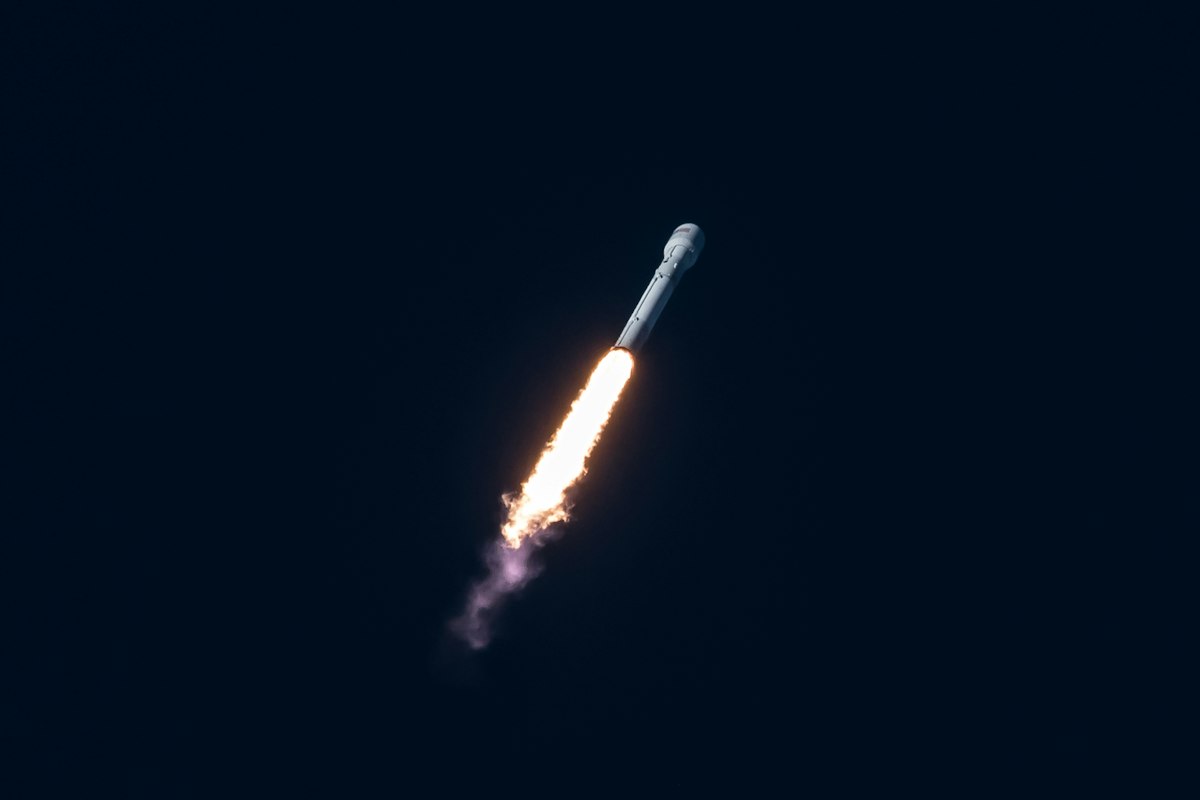
To understand why the Artemis II crew spending a Tuesday afternoon in the House of Commons is actually a big deal, you have to understand the propulsion architecture. The Space Launch System’s core stage uses four RS-25 engines. These are not new. They are refurbished Space Shuttle main engines, running on a staged combustion cycle that burns liquid hydrogen and liquid oxygen at a mixture ratio that is notoriously finicky. The engines have to start in a precise sequence inside the Vehicle Assembly Building at Kennedy Space Center, and if one of those valves sticks, the entire stack stays on the pad.

But the real story is the Canadian contribution. The Canadarm3, the robotic arm destined for the Lunar Gateway, is not flying on Artemis II. What is flying is a Canadian astronaut, Jeremy Hansen, who has been training alongside the Artemis II crew since 2023. He is not just a passenger. He is the mission’s deep space navigation specialist. According to documents released by the Canadian Space Agency, Hansen has been cross-trained on Orion’s manual flight controls, backup navigation star trackers, and the emergency abort sequence. That abort sequence is the part that keeps engineers awake at night.
The Abort Trap: Why a Canadian Hand on the Stick Matters
If the SLS core stage fails during ascent, the Launch Abort System fires a solid rocket motor that yanks the Orion capsule away from the explosion in less than two seconds. The pull is roughly twenty Gs. For reference, that is more than double what a fighter pilot can sustain without passing out. The Artemis II crew has trained for this in the Neutral Buoyancy Lab and in the centrifuge at Johnson Space Center. But there is a catch. The abort system is designed to handle failures during the first two minutes of flight. After that, the astronauts are on their own until they can do a contingency abort burn using the European Service Module’s main engine.
That engine is built by Airbus in Bremen, Germany. It is a derivative of the engine used on the Automated Transfer Vehicle. It burns hypergolic propellants, hydrazine and nitrogen tetroxide. Nasty stuff. If a leak occurs, the crew suits have to handle exposure. The Artemis II crew spent extra time last month in a vacuum chamber at Northrop Grumman testing the suit’s resilience against propellant contamination. According to a CSA briefing note obtained via access to information, Hansen personally requested those tests after reviewing the Apollo 13 telemetry logs.
“We are not going to the Moon because it is easy. We are going because we have a national obligation to demonstrate that deep space exploration is possible with international partners. The Artemis II crew is carrying the weight of that obligation.” — Paraphrased from a statement by Canadian Space Agency President Lisa Campbell during the Parliament Hill press conference, March 22, 2025.
The Skeptic’s View: Taxpayer Money or Political Cover?
But wait, it gets worse. Or better, depending on your perspective. The meeting between the Artemis II crew and the Prime Minister is not just a morale booster. It is a direct response to growing political headwinds in Washington. The U.S. Government Accountability Office has repeatedly flagged that the Lunar Gateway, which Canada is heavily invested in, will not be ready for a crewed docking before 2028 at the earliest. That means the Artemis II crew will fly around the Moon, take some selfies, and come home with nothing to dock to. The Gateway is supposed to be the staging point for the Artemis III landing. Without it, a landing in 2026 looks increasingly aspirational.
Here is what the critics are saying. The Artemis II crew is essentially a political insurance policy. By putting a Canadian astronaut on the manifest, Ottawa locks in a seat at the table for future missions. But the cost has been staggering. Canada has committed $2.6 billion to the Lunar Gateway program over 24 years, plus another $1.5 billion in robotics development.
- Risk factor 1: Orion’s heat shield underwent unexpected charring during Artemis I. NASA has since adjusted the trajectory to reduce entry speed, but the margin is thin.
- Risk factor 2: The SLS core stage engines have a known issue with hydrogen leaks at the quick-disconnect panel. A leak during tanking caused a scrub in September 2022.
- Risk factor 3: The life support system for a 10-day mission has never been tested beyond low Earth orbit. The Artemis II crew will be the first humans to breathe recycled air that far from Earth since 1972.
The Chinese and Russian Factor
Meanwhile, China and Russia have announced their own International Lunar Research Station, with a planned crewed landing before 2030. The Chinese are using a completely different architecture: super-heavy rockets, separate landers, and no international partners beyond Russia. The Artemis II crew mission is, in many ways, the West’s answer to that timeline. If Artemis II slips past 2026, the United States loses the perceived race. That is why the White House wanted the Artemis II crew to visit Ottawa this month, to remind the Canadian public that their money is buying a share of the victory lap.
“The Artemis II crew represents the most diverse deep space crew ever assembled. That diversity is not just a feel good statistic. It is a redundancy multiplier. Different backgrounds bring different problem solving approaches to a crisis. Ask yourself: would you rather have four test pilots from the same air base, or a Marine pilot, a Navy pilot, an electrical engineer, and a fighter pilot from the Arctic? The crew composition is the real innovation.” — Paraphrased from remarks by NASA Associate Administrator Jim Free during a joint press conference with the CSA.
Under the Hood: Orion’s Sensor Array and the Deep Space Network
The Artemis II crew will rely on a suite of sensors that have been upgraded since Artemis I. The optical navigation camera, built by Lockheed Martin, uses a star tracker that can identify celestial objects with a precision of 0.002 degrees. If the comms link with the Deep Space Network goes down — and it will, because the DSN is operating at 120% capacity — the Artemis II crew has to manually compute their position using a sextant built into the cockpit window. Yes, a sextant. The same tool that 18th-century sailors used. There is no GPS beyond low Earth orbit. The Artemis II crew spent last week in a mockup of the Orion cabin at the Johnson Space Center, practicing sextant readings under simulated star fields. Hansen reportedly got the highest score on the final exam, which is why he is the navigation specialist.
Why the Heat Shield Still Haunts Engineers
Let me be specific about the heat shield issue because it is the single biggest unknown for the Artemis II crew. During Artemis I, the Orion capsule reentered Earth’s atmosphere at 24,500 miles per hour, faster than any crewed vehicle since Apollo. The Avcoat material ablated unevenly. Chunks of charred material broke away earlier than predicted, leaving areas of the shield thinner than expected. The post-flight analysis, published in the NASA Engineering Reports in 2023, concluded that the thermal protection system performed within “acceptable limits for an uncrewed test.” But the margin was half of what was predicted. For the Artemis II crew, NASA has altered the entry trajectory to lower the peak heating rate by about 8%. That sounds good until you realize the margin is still only 15% above the failure threshold. If the Earth’s atmosphere is denser that day, or if the crew has to abort later in the mission and come in at a steeper angle, the margin evaporates.
- Avcoat composition: A silica-filled epoxy novolac resin in a fiberglass honeycomb matrix. It burns, chars, and carves away like a slow-motion candle.
- Critical temperature: The aluminum structure of the Orion capsule fails at roughly 350 degrees Fahrenheit. The heat shield must keep the backside below that. On Artemis I, the backside temperature peaked at 245 degrees. Safe, but only just.
The Political Kicker: A 100% Canadian Stakes Game
So here is the final thought, and I am not going to summarize for you. The Artemis II crew left Ottawa this evening in a Black Hawk helicopter bound for CFB Trenton. From there they will fly back to Houston to continue simulations. The Prime Minister stood on the steps of Parliament, waved, and said something about “the true North strong and free.” It was a nice line.
But the truth is that the Artemis II crew is now the most exposed group of humans on the planet. They have a ride that runs on engines from the 1970s, a heat shield with a documented mystery char pattern, and a navigation backup that involves looking through a tiny window at stars that have not shifted in millions of years. For Canada, this is the moment the rubber meets the regolith. Either Jeremy Hansen comes home alive and the country owns a piece of lunar history, or the Artemis II crew becomes the subject of a very different kind of parliamentary inquiry. There is no middle ground. The countdown clock is ticking, and the only person who can stop it is sitting in a training simulator in Texas, rehearsing the abort sequence one more time.
The focus keyword is "Artemis II crew". The crew includes Commander Reid Wiseman, Pilot Victor Glover, Mission Specialist Christina Koch, and Canadian astronaut Jeremy Hansen. He is the deep space navigation specialist and has been cross-trained on manual flight controls, backup navigation star trackers, and emergency abort sequences. Artemis II is a high-risk flyby around the Moon, not a landing. The meeting symbolizes Canada's $4.1 billion bet in space exploration and locks in a Canadian astronaut seat for future missions.Frequently Asked Questions
What is the focus keyword of the article?
Who are the four astronauts of the Artemis II crew mentioned in the article?
What is Jeremy Hansen's role in the Artemis II crew?
What is the destination of Artemis II according to the article?
Why did the Artemis II crew meet with the Canadian Prime Minister?

Astrid Berg covers space and astronomy, from missions and launches to the science of the universe. She follows the ongoing effort to explore beyond our planet.
💬 Comments (0)
No comments yet. Be the first!