Astronomers Make 'Live' Observation of AB Aurigae Disk Rotation
SPHERE instrument observations show AB Aurigae disk rotation with unexpected motions, hinting at newborn planets and accretion zones within the young star system.
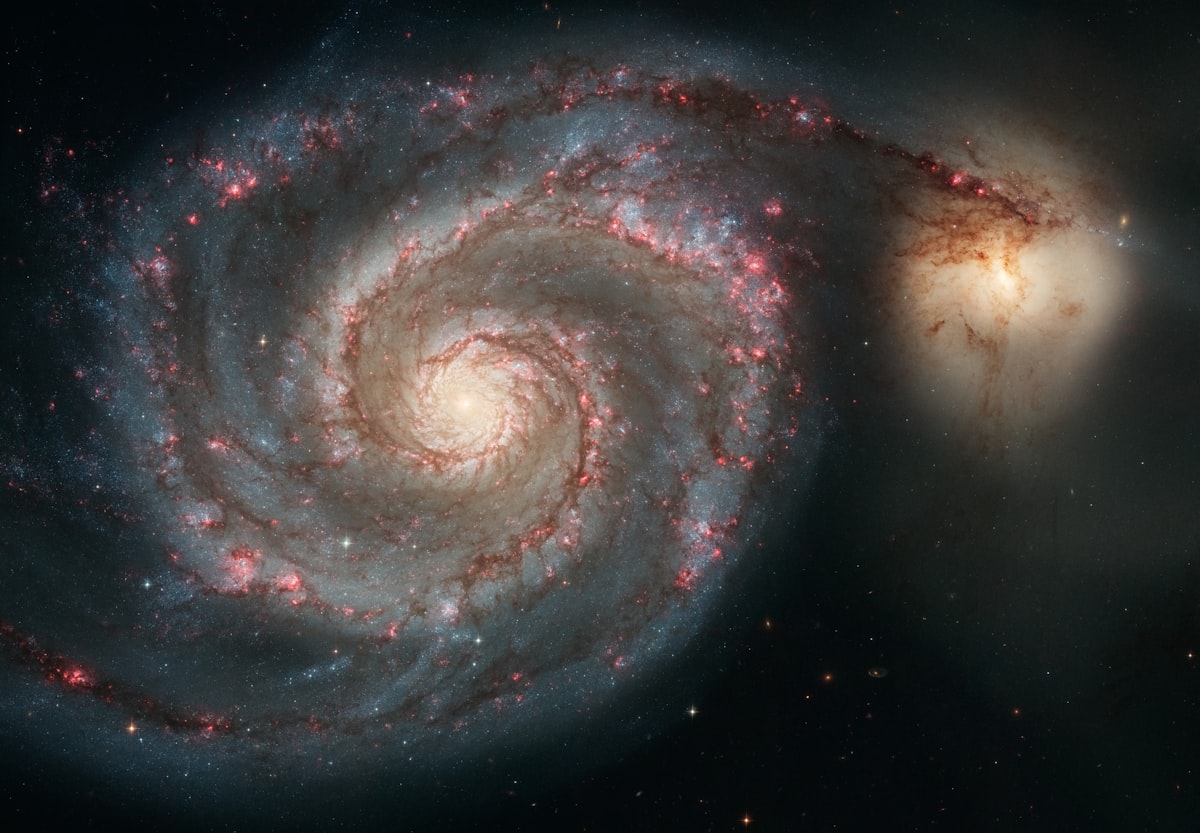
AB Aurigae's disk rotates. A research team from France's CNRS and the University of Bordeaux has directly observed this rotation in real time, marking a leap in understanding how planetary systems are born around distant stars. But the astronomers used the SPHERE instrument on the Very Large Telescope in Chile to track dust grains moving in the swirling disk around this young star, which is roughly 530 light-years away in Auriga. And the observations captured in 2020 reveal a disk that mostly behaves as physics demands, yet it's got several regions where motion veers sharply from theoretical predictions.
A Nursery Under Direct Observation
Protoplanetary disks have fascinated astronomers since the first one was spotted around Beta Pictoris in 1984. They're fascinating. But watching one evolve in something approaching real time offers unprecedented window into processes that typically unfold over millions of years, because rotating clouds of gas and dust serve as raw material for planets. The AB Aurigae system presents a particularly compelling case. Its central star is just 4 or 5 million years old, still in its pre-main-sequence phase, and hasn't yet begun fusing hydrogen in its core, and its disk is thick, turbulent, and visibly disturbed in ways that scream planetary activity.
It's directness that stands out. Rather than inferring motion from spectral shifts or modeling, the team watched structures inside the disk physically rotate between successive images. But that kind of live observation is exceptionally rare in the field of astronomy, where most cosmic events unfold on timescales far too slow for human perception.
The Instruments Behind the Discovery
SPHERE's Infrared Eye
SPHERE (Spectro-Polarimetric High-contrast Exoplanet REsearch) is designed to image faint objects near bright stars by blocking out the star's glare like a coronagraph, allowing the much dimmer disk material to become visible. But infrared sensitivity proved critical. Dust grains in the disk emit strongly at these wavelengths, and by comparing high-resolution images taken at different times they've traced the grains' movement, revealing the disk's rotation with striking clarity.

Hubble's Long Watch
SPHERE data didn't arrive alone. The Hubble Space Telescope has studied AB Aurigae for over a decade, directly imaging massive protoplanet AB Aurigae b through its Space Telescope Imaging Spectrograph and Near Infrared Camera and Multi-Object Spectrograph. So Hubble tracked this embryonic world for 13 years, confirming a counterclockwise arc, and that gave key context the system isn't static but dynamically active on observable timescales.
Anomalies That Betray Hidden Worlds
The disk rotates mostly as physics textbooks would predict. These rotational anomalies aren't subtle. But several regions within the disk stubbornly refuse to follow the script, and they manifest as unexpected twists, shadows, and bright accretion zones where material appears to be funneling onto something massive and unseen.
These findings, which show more complex motions than those predicted by theoretical models of disk formation and rotation, have opened up new lines of research entirely.
The prime suspect behind these irregularities is a population of forming planets. AB Aurigae b, the confirmed gas giant, sits about 93 astronomical units from its star and weighs in at roughly 9 Jupiter masses. That is a colossal object, and its gravitational influence alone would be enough to carve gaps, launch spiral arms, and generally disrupt the orderly rotation of nearby disk material. But it's not alone.
- A suspected protoplanet at approximately 30 AU may explain a visible twist in the disk structure.
- Two additional candidates, located between 400 and 600 AU out, appear as dense clumps in the outer reaches of the cloud.
- At least one object seems to be clearing a path through the disk, while the planet at 93 AU may be building its own secondary accretion disk.
SPHERE observed rapid shadow rotation. These faint shadows are cast onto the disk surface by invisible structures, and they could be more planets in the earliest stages of formation or opaque clumps of dust orbiting close to the star. But it's far more dynamic.
What Comes Next
ALMA observations previously revealed gas-rich spiral arms winding through disk, structures likely formed in response to a planet within 80 AU of the star, and those plus newly mapped rotational quirks, they're enriching theorists' dataset. No single disk evolution model fits. So the models need revision.
- The bright accretion zones identified by SPHERE pinpoint where gas and dust are actively coalescing.
- The shadow movements suggest additional substructure close to the star that has not yet been resolved.
- The interaction between multiple forming planets may be stirring the disk in ways never directly witnessed before.
As instruments improve and longer time baselines accumulate, each new image adds a frame to a movie that astronomers have only just begun to watch, so they'll continue scrutinizing AB Aurigae's disk rotation. It's no longer static. But it's a living, churning laboratory, and the planets forming within it are leaving their fingerprints all over the disk's motion. The gap between what theory predicts and what observations reveal is where the real science happens, and in the case of AB Aurigae, that gap is widening in the most productive way possible.
Frequently Asked Questions
What did astronomers directly observe about the AB Aurigae disk rotation?
They observed that the AB Aurigae disk rotates in real time by tracking dust grains moving in the swirling disk. The 2020 observations reveal a disk that mostly behaves as physics demands but has several regions where motion veers sharply from theoretical predictions.
Why are the anomalies in the AB Aurigae disk rotation significant?
The anomalies manifest as unexpected twists, shadows, and bright accretion zones where material appears to be funneling onto something massive and unseen. These findings show more complex motions than predicted by models and suggest the presence of forming planets, opening new lines of research.
How did the research team observe the AB Aurigae disk rotation directly?
They used the SPHERE instrument on the Very Large Telescope in Chile to take high-resolution infrared images at different times. By comparing the images, they traced the movement of dust grains that emit strongly at infrared wavelengths, revealing the disk's rotation with striking clarity.
When were the observations of the AB Aurigae disk rotation captured?
The observations that revealed the disk's rotation were captured in 2020. The article states that the team used SPHERE data from that year to track dust grains and observe the rotation.
Who conducted the research on the AB Aurigae disk rotation?
A research team from France's CNRS and the University of Bordeaux made the direct observation. They used the SPHERE instrument on the Very Large Telescope, along with data from the Hubble Space Telescope.

Astrid Berg covers space and astronomy, from missions and launches to the science of the universe. She follows the ongoing effort to explore beyond our planet.
💬 Comments (0)
No comments yet. Be the first!