AI Solves Millennium Prize Problem
OpenAI's 10,000 AI agents find a singularity in Navier-Stokes equations, resolving a $1 million Millennium Prize Problem.
AI Solves Millennium Prize Problem, Shaking Mathematics to Its Core
Tuesday, September 8. Mathematicians at OpenAI announced something staggering. Ten thousand autonomous AI agents found a singularity in the Navier-Stokes equations in three dimensions, and that breakthrough resolves one of the six remaining Millennium Prize Problems, each carrying a $1 million prize. It's a big deal. But don't just take their word for it, because the result has been formally checked in the programming language Lean, and that verification gives the community real confidence in its correctness. So we've got a proof that can't be easily dismissed.
If the proof holds under scrutiny, it marks the most important mathematical result ever produced by an AI model. That's huge. But it's also a quiet earthquake for the field, one that may fundamentally change how mathematicians approach the hardest problems they've ever faced, shifting their daily tools and their deepest instincts about what counts as a real discovery. So don't blink.
A 175-Year-Old Mystery Finally Cracks
Fluid behavior? The Navier-Stokes equations describe it. They're built on Newton's second law of motion, a framework sturdy enough to model everything from ocean currents to airflow, yet they don't simplify the chaos they capture. First written down in the mid-19th century, these equations have anchored fluid mechanics ever since. But that's a long time to hold up a field. So we still trust them, even when the math gets brutal.
But one basic question has haunted mathematicians for centuries. Are their solutions always well-behaved? Or can a fluid evolve so that some infinitesimally small part begins to flow infinitely fast, creating what's called a singularity? That's the real fear, and it's why they can't rest easy.
The timing was brutal. The announcement came just 12 hours after Tristan Buckmaster at New York University, working with Levent Alpöge at Anthropic, revealed they had resolved several closely related problems, and the scientific community is still reeling from the sheer velocity of these twin breakthroughs. But both teams leaned heavily on prior work by Diego Córdoba of the Institute for Mathematical Sciences in Madrid and Luis Martínez-Zoroa of CUNEF University, so the foundations were already shaky. They're building on borrowed ground, and that's not a criticism,it's just how math works.
Those two researchers had developed a strategy that radically departed from conventional methods, and it wasn't just a tweak or a refinement but a complete rethinking of the problem's fundamental assumptions. Charles Fefferman of Princeton University, who wrote the Clay Institute's official description of the Navier-Stokes problem, praised their contribution. "I was thrilled that the problem was solved," he said, and his excitement was palpable in the measured tone of an academic who rarely lets such emotion slip. But the real heroes, he added, are Córdoba and Martínez-Zoroa. They're the ones who broke the mold.
"Let me make plain what I have said to colleagues in private: in view of this body of work, I believe Luis Martínez-Zoroa deserves a Fields Medal."
That statement came from Buckmaster himself, included in his announcement of results.
Why Singularities Matter
The real world isn't perfectly smooth. Fluids consist of molecules and atoms, so the mathematical singularities don't have immediate practical consequences. Yet the results matter because they reveal something profound about the structure of the equations themselves.
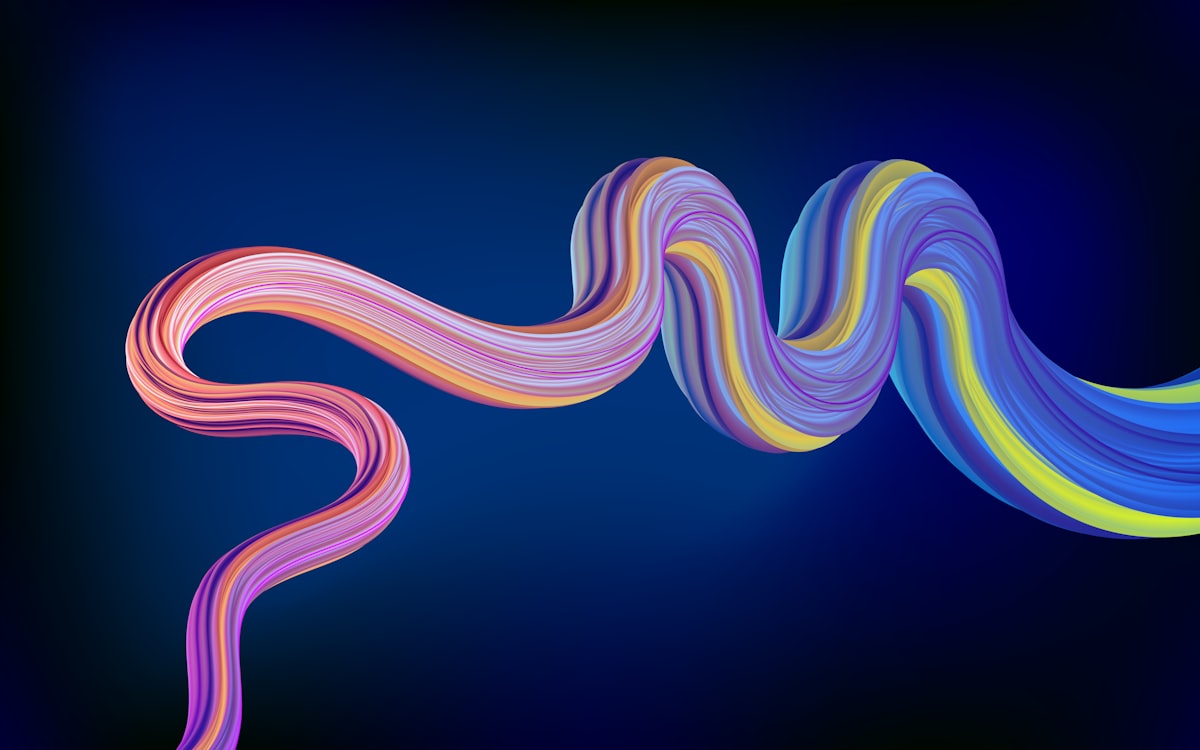
Newton's second law appears straightforward. Applied to fluids, its consequences are deeply counterintuitive. Put simply: turbulence is even weirder than it looks.
The Navier-Stokes equations account for viscosity, or friction. Honey flows slowly, water flows quickly. A simpler related system called the Euler equations describes fluids with zero viscosity. The two are closely connected, but introducing even a tiny amount of friction changes behavior drastically.
Ten years ago, nobody believed there was a singularity for Navier-Stokes, Córdoba said. But many thought the Euler equations admitted singularities, and they weren't shy about saying so. Navier-Stokes, however, stayed stubbornly open, a question that wouldn't crack, a problem that defied every attempt to pin it down.
A 2013 Breakthrough Changes Everything
That began shifting in 2013, when Thomas Hou of Caltech and Guo Luo, now at the Hang Seng University of Hong Kong, showed the Euler equations can "blow up" inside a cylinder. The top and bottom halves spun in opposite directions, producing the effect. "That's the first really serious claim of singularity," Córdoba remembered.
By 2019, a series of results had mathematicians wondering whether Navier-Stokes might also admit singularities. Several intellectual steps remained, though.
The Millennium Prize version asks about three-dimensional space extending indefinitely in all directions. But earlier results assumed boundaries existed. Boundaries change everything. Without a boundary, Fefferman explained, "it's the fluid doing the crazy stuff," and that distinction isn't just a mathematical technicality , it's the core of the problem, because a confined space with walls forces the fluid to behave predictably, while an unbounded expanse lets it twist, stretch, and surge in ways that defy current equations. So the real puzzle is the open void. It's terrifyingly simple.
Forcing functions model forces like gravity or propellers. They're a real hurdle. The prize problem demands these functions be mathematically smooth, which sounds simple enough until you consider that earlier attempts leaned on awkward, ungainly forcing functions just to stir up odd fluid behavior, and even then the results felt clunky and forced. But that's the challenge. Smoothness isn't optional.
Hou and Luo used computer models in 2013 to simulate their scenario, then proved blowup by accounting for all potential errors. Similar techniques dominated the field afterward. Martínez-Zoroa's 2021 doctoral dissertation took a different path, using analytic techniques that required no computers at all.
By 2023, Martínez-Zoroa and Córdoba had proven singularities exist for a version of Euler with messy forcing, a result that settled a long-standing question but left the broader mathematical community buzzing about the implications for fluid dynamics and the limits of classical equations. But Córdoba joked, "I don't use AI: I have Luis." Martínez-Zoroa admitted he'd tried AI. It didn't match his workflow. So he said, "I'll have to adapt, clearly," and that's where the matter stands for now.
Two Teams, One Finish Line
Their approach creates an infinite sequence of layers, each one a non-singular solution that stacks upon the next without breaking down. Combine them in an "infinite cascade," and you get a new solution that suddenly contains the singularity. But that's the catch. Mixing those layers can twist the forcing function into something mathematically ugly, something you wouldn't want to touch, and that's where the whole trick starts to unravel. So it's a delicate balance, isn't it?
That's where the AI teams succeeded. OpenAI found a way to create a cascade yielding a singularity with a smooth forcing function, meeting the Millennium Prize criteria.
The Computational Cost of Genius
Using a new internal model, OpenAI deployed groups of autonomous agents. Then came the bigger push: 10,000 agents attacking Navier-Stokes directly.
The key human check remains: making sure the formal statement matches what mathematicians actually meant to prove.
The era of AI-assisted mathematics has arrived with force. We can't ignore it. Whether the field embraces this shift or digs in its heels and resists with everything it has, one thing remains absolutely certain, and that certainty cuts through every debate and every hesitation like a blade. But the rules of the game just changed. So don't blink.
Frequently Asked Questions
What is the significance of the OpenAI announcement regarding the Millennium Prize Problem?
The OpenAI announcement is significant because 10,000 autonomous AI agents found a singularity in the Navier-Stokes equations in three dimensions, resolving one of the six remaining Millennium Prize Problems. This resolution has been formally checked in the programming language Lean, giving the community confidence in its correctness. If the proof holds, it marks the most important mathematical result ever produced by an AI model.
Why did Charles Fefferman praise the contributions of Luis Martínez-Zoroa?
Charles Fefferman praised Martínez-Zoroa because he and Diego Córdoba developed a strategy that radically departed from conventional methods, rethinking the problem's fundamental assumptions. Fefferman said he was thrilled the problem was solved and that Martínez-Zoroa deserves a Fields Medal, as stated in Buckmaster's announcement. This shows that AI teams leaned heavily on prior work by these researchers.
How did the AI teams achieve a singularity with a smooth forcing function?
The approach creates an infinite sequence of non-singular solutions that stack in an 'infinite cascade' to form a solution with a singularity. However, mixing layers can twist the forcing function into something mathematically ugly. OpenAI succeeded by finding a way to create a cascade yielding a singularity with a smooth forcing function, meeting the Millennium Prize criteria.
When did the earlier breakthrough with the Euler equations occur, and what did it show?
In 2013, Thomas Hou and Guo Luo showed that the Euler equations can 'blow up' inside a cylinder, where top and bottom halves spun in opposite directions. This was the first really serious claim of singularity for Euler, as noted by Córdoba. By 2019, results had mathematicians wondering if Navier-Stokes might also admit singularities.
Who are the main researchers involved in the twin breakthroughs, and what did each team do?
The OpenAI team, with 10,000 agents, attacked Navier-Stokes directly, while Tristan Buckmaster at NYU and Levent Alpöge at Anthropic revealed they had resolved several closely related problems. Both teams relied on prior work by Diego Córdoba and Luis Martínez-Zoroa, who had developed the foundational strategy. The announcements came just 12 hours apart.
Victor Holm reports on science and discovery, with a particular interest in physics, biology and the questions that drive research forward. He looks for the wonder in how the world works.
💬 Comments (0)
No comments yet. Be the first!