Slime Moulds and the Bitter Debate on Intelligence
Scientists argue if slime moulds are intelligent, reshaping biology and our place in nature.
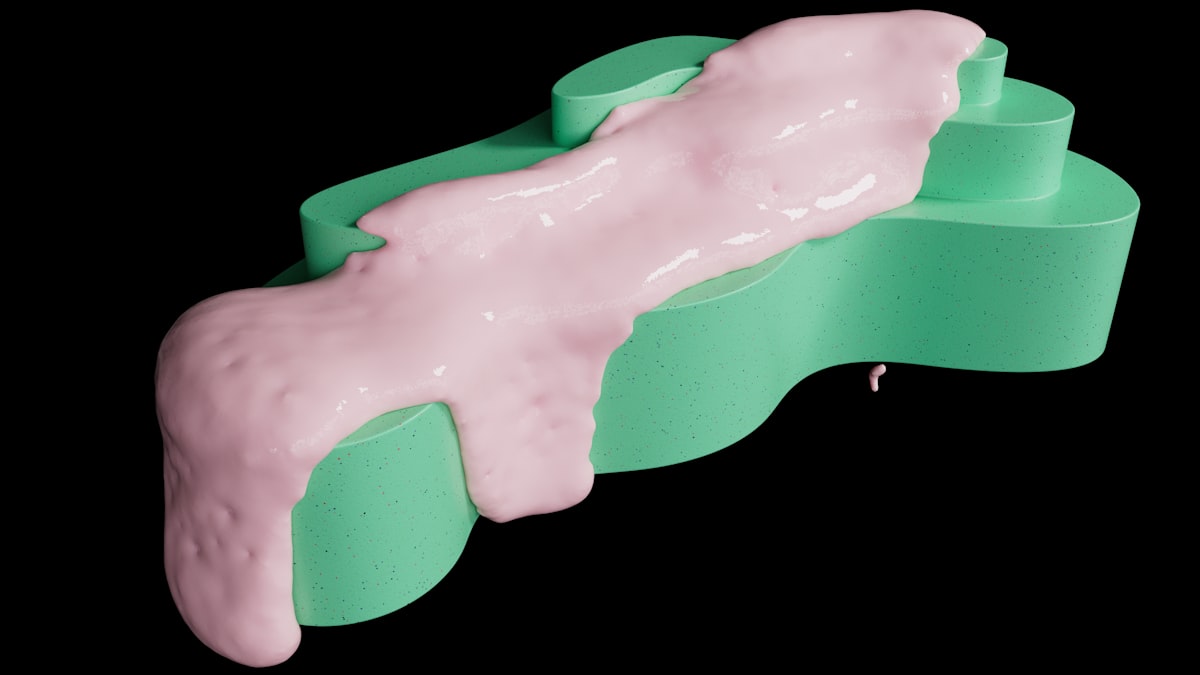
Slime moulds are forcing a reckoning in biology that has been simmering for four decades, and the fight over a single word is getting personal.
It began with a lemon-yellow stain in a petri dish in Hokkaido. Toshiyuki Nakagaki was an undergraduate when he saw it, and the encounter set him on a path that would challenge the very definition of intelligence. Before his work, the scientific consensus on slime moulds was blunt. A 1895 description called the organism "a simple mass of protoplasm." Another called it "among the most simple of organisms." The mould itself seemed to agree, drifting across leaf litter in forests as a glistening patch, earning the nickname "dog vomit mould."
But Nakagaki saw something else. "I was just impressed with how fast it moved," he said of that first meeting, recalling the sheer surprise of watching a creature that most people would never even notice, let alone time with a stopwatch. The species in question, Physarum polycephalum, tops out at 1cm an hour. That's an Olympic sprint. For an amoebic organism, it's a blistering pace, and you can't help but marvel at the sheer momentum packed into that tiny, creeping body.
What followed was a series of experiments that turned the field upside down, and a bitter academic war over whether we have been looking at life all wrong.
The Maze Solver That Broke Biology
In 2000, Nakagaki published an experiment that made headlines around the world. He induced a Physarum to find the shortest route through a maze in search of food. The mould had no neurons. It had no brain. It solved the puzzle anyway.
"I thought we'd have to rewrite the dictionary," Nakagaki said after the maze experiment.
The most famous test came in 2010, when the New York Times covered what scientists now casually call "the Tokyo railway one." Nakagaki placed oat flakes to mimic the map of Tokyo and 35 satellite towns. He released the mould from the centre of "Tokyo" and let it forage. The result was staggering. The mould stretched out tubules, linked up with itself, and produced a network that nearly retraced the actual railway system of the greater Tokyo area.
Nearly, but not exactly. Nakagaki noted that Physarum, free of human bias, may have actually improved the rail network design.
That mould earned Nakagaki two Ig Nobel prizes. The first one cited the maze paper in cognitive science, a quiet nod to the strange power of slime. But the second, delivered with a cheeky wink, hailed that Tokyo study as a genuine breakthrough in "transportation planning," and honestly, it's hard to argue with the joke's clever core. So there you go.
What Makes a Cell Remember?
The mystery is profound. Physarum is a single cell containing many nuclei, a structure technically called a "syncytium." It has no nervous system. Yet it makes decisions, keeps time, and appears to remember.
Back in 2008, Nakagaki's team hit a slime mould with cold, dry air at regular hourly intervals, and the organism responded by slowing its movement each time. But here's the strange part. After just three gusts, the mould spontaneously slowed at the top of the fourth hour,even when the air stayed perfectly still, as if it already knew the schedule. No one can explain how it keeps time.
Chris Reid at Macquarie University led another experiment, and it suggests Physarum uses its own slime as an external memory, a sticky trick that keeps the organism from wasting energy on revisits. That yellow discharge? It's a soup of sugars and proteins. It tells the mould where it has already foraged. In tests, moulds nearly always chose dry, un-slimed routes over ones coated in their own trail, which shows a clear preference for fresh ground over familiar gunk. But more impressively, they could tell their own slime apart from that of other species. So the slime isn't just a trace. It's a private map.
That is not mechanical response. That is recognition.
The Neuropurists Strike Back
Not everyone is convinced. Far from it.
For over a century, the scientific establishment held that cognition requires neurons. That's a heavy assumption. The cells that make up brains and nervous systems form and reform connections to create thought and memory, and this elaborate dance of electrochemical signals was seen as the only possible engine for any kind of mental life. But this view placed animals in a special category, separate from plants and microbes, with humans at the very top.
The biogenic school challenges that hierarchy. Pamela Lyon, a philosopher at Adelaide University, argues that cognition is intrinsic to all life, and that's a claim which ripples far beyond the usual neuroscience labs. Some scientists in this camp claim plants communicate through underground fungal networks. Others suggest even bacteria can make memories. And slime moulds, they insist, are intelligent. But don't take that on faith.
Lincoln Taiz, a veteran plant physiologist, dismisses these theorists as having "brain envy." It’s a sharp jab. In 2007, a few dozen neuropurists signed a declaration arguing that plant neurobiology was a pretty catchphrase and nothing more, a stance that reduced a decade of speculative research to what they saw as little more than a linguistic stunt. But one signatory called the letter "the last serious confrontation between the scientific community and the nuthouse on these issues." That’s harsh. So the battle lines were drawn, and they’ve never really faded since.
The battle has gotten dirty. Michael Levin, a Tufts University professor and a polarising figure among biogenic theorists, believes every individual cell is cognitive in its own way.
"One reviewer told us, in effect: 'This is the greatest thing since sliced bread.' Another said: 'This looks interesting, but I've got my qualms.' And the third said: 'This is dangerous. You must not dignify this idea in a journal of this stature.'"
Levin told the author he regularly receives hate mail. One letter called him "dangerously insane." Anthony Trewavas, a biologist in Levin's camp, wrote that the 2007 declaration was framed "as though plant biology would collapse if people did not sign up." He called it an attempt "to strangle it at birth."
The Blob Has a Personality
Physarum has become a laboratory darling. Google Scholar returns more than 10,000 publications about it in the last quarter-century. Part of the appeal is scientific. Part of it is charm.

Audrey Dussutour, a scientist in Toulouse, has filled her office with paper cut-outs of a yellow blob with eyes, and she talks about them as if they're old friends who've each got their own quirks and memories. Her books carry titles like *Everything You Wanted to Know About the Blob But Were Afraid to Ask*. She speaks of past Physarums as if each had its own personality. And they do.
"If you cut one slime mould into four pieces, those pieces are all the same," Dussutour said. "They're clones of each other, so you'd expect them to behave the same way. But they act differently. In an experiment, one piece will pick option A, and another will pick option B. This is something I love."
Reid echoed the sentiment. "It's good to have a mould with a strong will to live. You go away for the night, come back the next morning, open the drawer, and find that it has spilled out of its petri dish. The really vigorous moulds escape frequently in this way."
Slime moulds first emerged 600 million years ago. That's ancient. They have been around roughly 2,000 times longer than Homo sapiens, and they make their homes in the Sonoran desert soil, on Sahara dung, and even inside Antarctic moss, thriving where we can't. Their folk names range from wolf's milk to demon droppings to witches' butter, which tells you something about how people have always viewed them. But some books even speculate that The Blob, the 1958 film about an extraterrestrial amoeba, was inspired by Physarum. It's a weird connection, isn't it?
The Copernican Shift We Didn't Ask For
After the mould wakes from dormancy, Nakagaki describes a "contemplation phase" where it seems to sense its surroundings. It can detect proteins, salts, acidity, light, heat, humidity, and possibly even gravitational and magnetic fields, pulling all that raw data into some silent internal calculus. How thousands of tiny oscillators manage this remains unclear. But it's a mystery worth watching.
But the debate is not really about slime moulds. It is about us.
Human beings have long considered themselves the "crown of creation" because of intelligence. Lyon believes that framing is collapsing.
The human paradigm no longer holds the seat of intelligence and cognition, she said, because that locus is finally shifting, and we are standing right at the edge of a change so vast it feels like watching the earth stop being the center of everything. It's barreling towards us. We're on the cusp of a Copernican turn, and it can't be stopped.
That revolution is uncomfortable. If a single cell without a brain can solve mazes, keep time, and remember where it has been, then intelligence is not a ladder with humans on top. It is a spectrum that includes everything from bacteria to blue whales.
The neuropurists see danger in that idea. But the moulds keep moving, 1cm an hour, patient as evolution itself, and they've been waiting 600 million years for this moment, so they aren't about to rush now. They can wait a little longer.
Frequently Asked Questions
What experiment did Toshiyuki Nakagaki conduct in 2000 that challenged the definition of intelligence?
In 2000, Nakagaki published an experiment where he induced a Physarum slime mould to find the shortest route through a maze in search of food. The mould had no neurons or brain, yet it solved the puzzle, leading Nakagaki to think they would have to rewrite the dictionary.
How did slime moulds demonstrate memory according to the article?
In 2008, Nakagaki's team exposed a slime mould to cold, dry air at hourly intervals, and the mould slowed its movement each time. After just three gusts, it spontaneously slowed at the top of the fourth hour even when the air stayed still, suggesting it kept time.
Who are the neuropurists mentioned in the article, and what is their stance?
The neuropurists are scientists who hold that cognition requires neurons, placing animals in a special category separate from plants and microbes. They signed a declaration in 2007 arguing that plant neurobiology was a catchphrase and nothing more, dismissing such research as a linguistic stunt.
What did Chris Reid's experiment reveal about slime moulds' use of their own trail?
Reid's experiment showed that Physarum uses its own slime as an external memory, with the yellow discharge containing sugars and proteins. In tests, moulds nearly always chose dry, un-slimed routes over ones coated in their own trail, and they could distinguish their own slime from that of other species.
Why does the article suggest the debate about slime mould intelligence is ultimately about humans?
The article states that humans have long considered themselves the crown of creation because of intelligence, but if a single cell without a brain can solve mazes and remember, intelligence is a spectrum, not a ladder. Pamela Lyon believes this framing is collapsing, and we are on the cusp of a Copernican turn where the human paradigm no longer holds the seat of intelligence.

Nadia Petrov covers science and research across disciplines, from the laboratory to the field. She enjoys making discovery accessible and showing why new findings matter.
💬 Comments (0)
No comments yet. Be the first!