South Dakota Mine Hosts Search for Universe's Secrets
A mile beneath South Dakota's Black Hills, scientists are building giant detectors in a former gold mine to analyze neutrino particles and probe the deepest mysteries of the universe.
South Dakota Mine Shifts From Gold to Cosmic Secrets
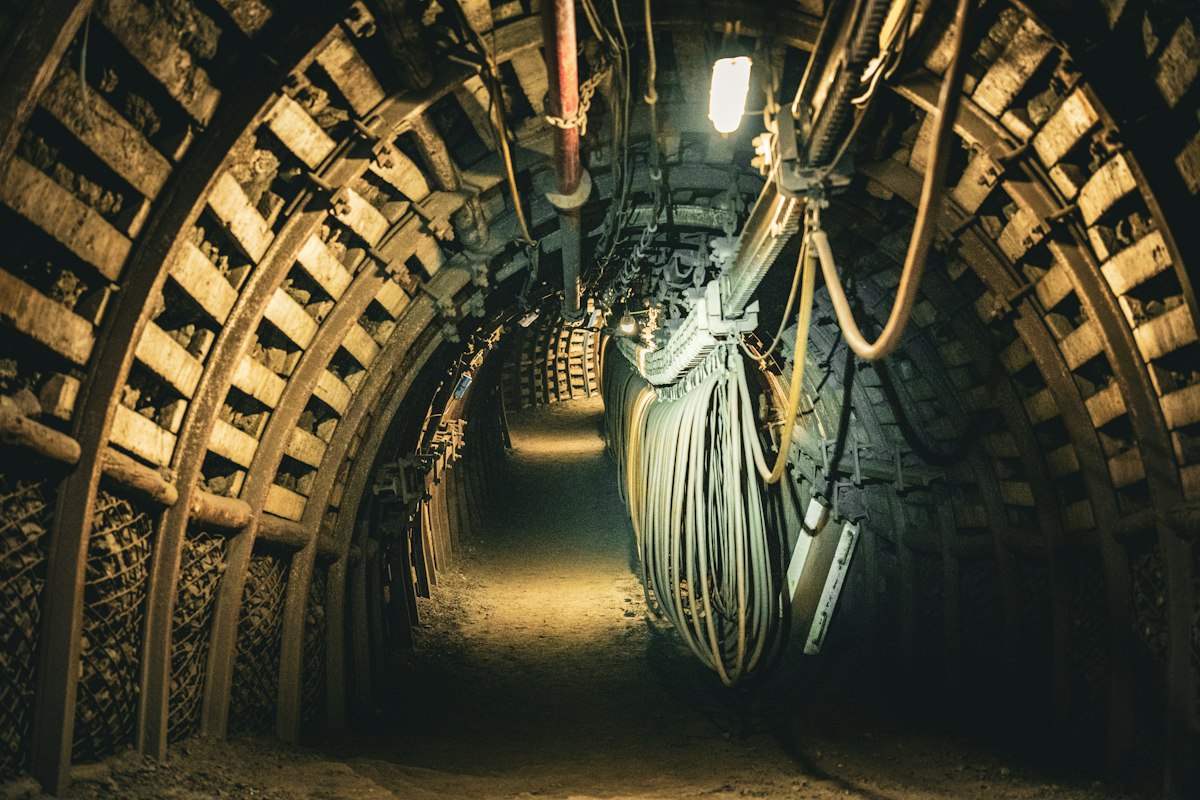
A mile beneath the Black Hills, a former gold mine is undergoing a profound transformation. The historic Homestake mine in Lead, South Dakota, once a hub for gold prospectors, is now the site of a major scientific undertaking: the construction of the Deep Underground Neutrino Experiment (Dune). Scientists are assembling colossal detectors deep within the earth, aiming to unravel the universe’s most profound mysteries by studying elusive neutrino particles.
The Neutrino Hunt Begins
Construction of the Dune facility is set to commence, marking a new era for the Sanford Underground Research Facility (Surf). Engineers will meticulously construct four immense detectors within caverns excavated a mile underground. These detectors are designed to capture the fleeting interactions of neutrinos, subatomic particles that are among the most abundant in the universe, second only to photons. Neutrinos originate from various sources, including the sun, distant stellar explosions, and carefully orchestrated beams sent from distant laboratories.
The significance of this undertaking extends far beyond mere particle detection. By observing the behavior and properties of neutrinos, researchers hope to unlock new scientific understanding and gain insights into celestial phenomena such as the life cycle of stars and the formation of black holes. A primary objective is to address a fundamental question in physics: why does the universe appear to be composed almost entirely of matter, with virtually no antimatter present? The answer to this could explain our very existence.
"It’s a super exciting time to be working on this," shared Dr. Kate Shaw, an experimental particle physicist involved in the Dune project from the University of Sussex. "Neutrinos do not make sense yet and they could open a door to new physics."
The Enigmatic Nature of Neutrinos
Neutrinos are peculiar particles. They possess no electric charge and interact so weakly with other matter that trillions pass through our bodies every second, completely unnoticed. These particles also exist in three distinct types, each with a tiny but different mass. Perhaps their most intriguing characteristic is their ability to transform from one type into another as they travel, a phenomenon known as oscillation. Dr. Shaw likens this behavior to an unexpected transmutation: “It’s like me throwing you an apple and it turns into a banana.”
Lead, South Dakota, has a prior connection to neutrino research. In the 1960s, physicist Ray Davis Jr. utilized a detector filled with 100,000 gallons of dry-cleaning fluid deep within the Homestake mine. Shielded by the rock above, this detector was the first to register neutrinos emanating from the sun, which transformed chlorine atoms into argon upon impact.
From Earth’s Riches to Cosmic Discoveries
The Homestake mine ceased gold extraction in 2001 but was repurposed, through foresight, into the Sanford Underground Research Facility. Surf already hosts other experiments, including the Lux-Zeplin (LZ) experiment, which recently announced the potential first detection of dark matter. This transition represents a remarkable shift in the town's identity.
“We’ve gone from mining the Earth to helping scientists explore the universe,” remarked Robin Lucero, Lead’s city administrator. His family has been rooted in the area for generations. “We’re incredibly proud and lucky that Dune is happening here, and Surf, which has other experiments like LZ. Having world-class science brings new opportunities, new people and new possibilities for our local businesses and especially our young people.”
A Monumental Engineering Feat
In contrast to earlier detectors, the Dune experiment is of immense scale. The detectors, constructed from over 4,000 tons of steel, will reach heights of up to five stories. They will house a combined 70,000 tons of liquid argon, maintained at a frigid -200 degrees Celsius. The assembly process for these detectors is projected to take nearly three years, with an additional year required to fill them with the cryogenic liquid argon.
“This is a heavy duty engineering operation,” stated Professor David Newbold of the UK’s Science and Technology Facilities Council and a spokesperson for Dune, emphasizing the collaboration with the skilled local workforce. “It’s like building a ship underground.” The UK is a leading international collaborator on this U.S.This project has contributed detector components, vital computing infrastructure for event analysis, and the graphite target needed for neutrino generation at Fermilab in Illinois.
Unveiling Nature's Secrets
Dune is on its way. It'll scrutinize an intense neutrino beam, blasting 800 miles from Fermilab, through Earth's crust and mantle. Most neutrinos, naturally, will just keep going. But sometimes, they'll interact with argon atoms, creating subtle light and electrical whispers. Scientists believe that by meticulously analyzing these faint signals, they can unlock profound truths about the very nature of these enigmatic particles, which we've only just begun to truly understand.
- The experiment will investigate the relative masses of different neutrino types, aiming to determine which is the lightest and which is the heaviest.
- This research could potentially unveil previously unknown fundamental forces of nature.
- A key focus involves searching for subtle distinctions between neutrinos and their antimatter counterparts, antineutrinos, to understand the matter-antimatter asymmetry in the universe.
In addition to the Fermilab beam, Dune will also study neutrinos originating from space, gathering data on cosmic events like stellar explosions and black hole formation. This scientific exploration echoes previous pioneering efforts, such as the Antarctic cubic kilometer detector used to capture high-energy neutrinos from deep space, an endeavor that contributed to a recent Nobel Prize in Physics.
"This really is going to be a golden era," Professor Newbold commented. "There’s a lot more of that to come."
The ambition of the Dune experiment in this South Dakota mine signals a new chapter in humanity’s quest to understand the universe, moving from extracting earthly treasures to uncovering cosmic truths.
```Frequently Asked Questions
What is the primary purpose of the South Dakota mine mentioned in the article?
The mine has been repurposed into a deep underground laboratory to host sensitive scientific experiments. Scientists are using it to search for elusive particles like dark matter and neutrinos.
Why is a deep underground mine an ideal location for these universe-related experiments?
The immense rock above the mine acts as a natural shield, blocking interfering cosmic rays and other background radiation. This allows detectors to operate with extreme sensitivity without disruption.
What specific types of scientific research are being conducted at this South Dakota site?
Researchers are primarily engaged in particle physics experiments, including the search for dark matter particles and studying the fundamental properties of neutrinos. These investigations aim to unravel the universe's most profound mysteries.
Is the South Dakota mine still active for commercial mining operations?
No, the mine is no longer used for commercial mining. It has been transformed into a dedicated, world-class underground laboratory for cutting-edge scientific research.
What makes the South Dakota mine unique for hosting these searches for the universe's secrets?
Its significant depth and stable geological environment make it one of the premier underground laboratories globally. This unique combination allows for unparalleled sensitivity in experiments searching for elusive particles and phenomena.

Eva Koch writes about scientific research and the people behind it, covering the studies and breakthroughs shaping our understanding of the world. She values curiosity and careful evidence in equal measure.
💬 Comments (0)
No comments yet. Be the first!