Fossil shells flip spirals worldwide, study finds
Fossil shells flip spirals globally every few millennia, a new study of foraminifera chirality hypothesizes a cryptic species sweep, not temperature.
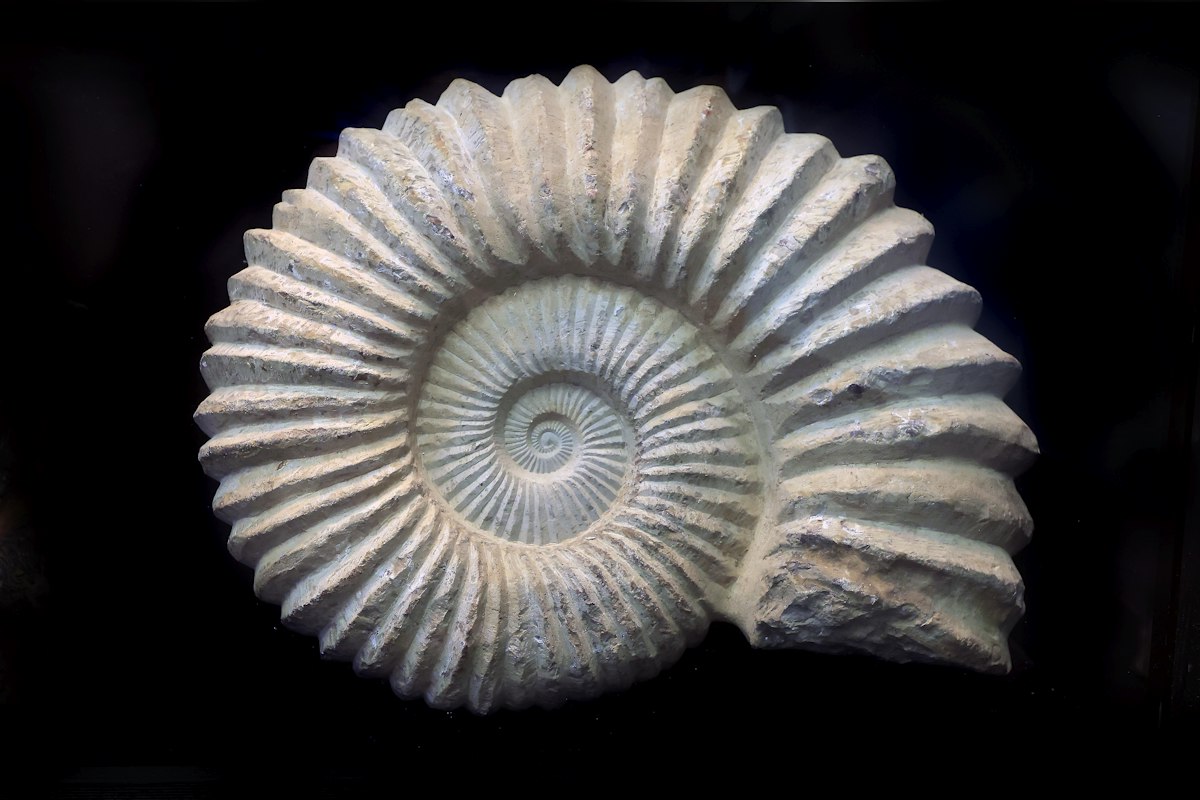
Fossil shells flip spirals in a pattern. It's puzzled scientists for more than seventy years. A sweeping new analysis finally offers an explanation. For thousands and sometimes millions of years, marine plankton across the world built their coiled shells in one direction, and then, suddenly, the spirals switched direction at the same time, everywhere, only to switch back again later. These microorganisms are types of foraminifera, or forams.
A Global Archive Beneath the Waves
Forams live in all oceans. From the tropics to high latitudes, they rank among the most abundant eukaryotic organisms on Earth. These single-celled protists secrete a hard shell perforated with many small holes. Most species live on the seafloor. Some are planktonic, at the mercy of currents. When they die, their shells blanket the seafloor across the world, forming a natural archive of Earth's history that goes back some 560 million years. It's a long record. Scientists use accumulated foram shells to reconstruct past climates and ocean conditions by studying the composition of species or measuring isotopes and trace elements, and they don't need anything more than that.
They've noticed something strange. Among the many planktonic forams with snail-like coiled shells, some species strongly prefer one spiral direction, left or right, with as many as 97% of individuals in a species coiling the same way. And sometimes, a new coiling direction dominates seemingly everywhere across the oceans at once in the fossil record. It's odd. Ever since the 1950s, when this curiosity was observed, scientists have been trying to figure out what might cause shell direction to change in quadrillions of microorganisms in unison, and they're still working on it.
The Temperature Theory Falls Apart
The phenomenon was first described in the early 1950s. Advances in seafloor coring techniques let researchers analyze accumulated layers of shells. The Swiss micropaleontologist Hans Bolli first noted that among forams with coiled shells, several species had a directional preference, and that sometimes this preference changed through time. Then came an explanation. It's from a seminal 1959 study, for which the marine geologist David Ericson, a core specialist at Columbia University's Lamont Geological Observatory, sifted through hundreds of coiled shells from the species Neogloboquadrina pachyderma collected from the North Atlantic. Ericson observed that in cold climates during the ice ages, the shells tended to coil left, while during warmer periods they turned right. He speculated that temperature was this species' determining factor.
More cores came from around the globe. Genetics advanced. The temperature hypothesis didn't hold up. In 2006, Kate Darling, now an honorary professor at the University of Stirling, published genetic work showing that the variants of N. Pachyderma are, in fact, two distinct species, each with its own coiling direction. Then, in 2013, the evolutionary paleobiologist Yurika Ujiié, now a professor at Kochi University in Japan, found that shell chirality in different foram species, collected from multiple oceans, did not correspond to temperature. Half a century after Ericson's initial observation, the driving force behind the flips once again became a mystery.
A Pattern Too Big for One Ocean
Bridget Wade is a micropaleontologist at University College London. She'd been studying sediment cores for decades when her team noticed a curious pattern. Several foram species seemed to flip their shell direction around the same time at different latitudes in the Atlantic, Indian, and Pacific oceans. In one species, the flips seemed almost instantaneous in the tropics as well as in higher latitudes. So the phenomenon wasn't local. This evidence that the phenomenon extended far beyond a single ocean basin, showing up across three oceans and many latitudes, suggested a global process with more than temperature at work, and it's a process they don't yet fully understand.
Wade's team wanted to sate that curiosity. So they synthesized data from five decades of studies and analyzed changes in coiling patterns in several planktonic foraminifera species from the past 56 million years, a span that covers an enormous stretch of the planet's history and gives their work real weight. For each species, they found evidence of flipping across multiple ocean basins and climate belts. Paragloborotalia siakensis changed from mixed to left-handed coiling 15 million years ago. Globorotalia scitula flipped twice. It went from mixed to left-handed 15 million years ago, and then to right-handed 10 million years ago, a shift that shows just how restless these tiny shells can be over time.
"It seems truly puzzling that a species could exist for millions of years coiling one way, and then suddenly reverse, for no apparent reason," the authors wrote."
Pulleniatina obliquiloculata proved an especially useful example, Wade said. It's exceptionally well documented. Its fossil record is detailed, it's still living today, and it occurs throughout tropical oceans worldwide, which makes it a rare and valuable window into deep time. For the past 860,000 years, its shell has coiled almost exclusively to the right. But before that, it went through a sequence of rapid shell-coiling flips that occurred globally every few thousand years. Those shifts were far too sudden and widespread to be explained by gradual evolution, and they're the kind of pattern we've come to expect when something other than slow, steady change is at work.
Hidden Species, Hidden Advantage
What explains a worldwide chirality switch? Wade knew oceans look uniform. But they're not. They hide habitats that differ in temperature, currents, ultraviolet light, chemistry, and oxygen, and an apparently global population of a foram species can hide cryptic species. Genetic studies have revealed that often what was considered a single species, based on shell shapes including coiling direction, was in fact more than one.
What if one of these cryptic species developed a broad adaptive advantage? That's the hypothesis. It's simple enough on its face, but the implications, if you follow them all the way through, are enormous. This cryptic species might spread across the globe, carried by ocean currents and its own success, in a gigantic population sweep, bringing a single coiling direction to dominance along the way. And that event would then be preserved in the fossil record.
Whether the flipped forams are a new species or a genetic variant, they would need a big advantage over other forams to sweep all around the world.
What Remains Unknown
Not everyone is ready to draw that line. Ujiié cautioned against assuming any simple relationship between a species' genetic identity and its shell chirality, urging caution rather than certainty. "Coiling direction appears to have a genetic basis," she said, "but it does not necessarily mean that dextral and sinistral individuals represent separate genetic populations." And that's the catch. It's a genetic basis, yes, but it doesn't prove separate populations. We've got a pattern, but we can't just assume two groups.
It's still unclear why an entire population would coil the same way in the first place. It happens only in a subset of planktonic foram species with coiled shells. In other species, shells coil in both directions. So why do some have a strong chiral bias? The only thing the scientists seem to agree on, after all this careful study of shells that twist one way in some species and both ways in others, is that they don't know yet.
Julie Meilland is a researcher at the Cerege. That's a research institute in France. She wasn't involved in the work. And she called it a rare bridge between disciplines, one that connects people who usually don't talk to each other at all. "It's probably one of the first times that people who usually do more biostratigraphy, basically deep-time research, on foraminifera are approaching such a question," she said. It was refreshing. "It was very refreshing to see these worlds connect because very often people doing more modern research don't necessarily connect to people doing deep-time research.
She thinks the drivers could be complex. "I think there could be something with genes, with the recombination, with them trying to evolve, with the environment, and also with luck and just life," she said.
A Window Into Deep Time
It looks puzzling. It's not. Darling and Ujiié pointed out that what appears instantaneous in the fossil record might unfold over 1,000 years or more in real time, a span so vast that it's easy to see why a near synchronicity across the globe can't be taken at face value. Over that period, ocean waters circulate around the entire globe. And water masses change and move. They're shifting constantly. That could speed up the spread of a new variant, because a water mass that's already on the move doesn't need to wait for the current to carry a new form everywhere on its own.
Other marine organisms might sweep the globe too. But we can't see it easily. It's hard to observe without a clear fossil marker. The forams' shell chirality gives us that marker, a signal that lets scientists track these shifts across oceans and eras. So these coiling flips are a rare window. They show how evolutionary processes can play out on a global scale.
That's a remarkable legacy. For a group of single-celled organisms smaller than a millimeter, that is a remarkable legacy. Fossil shells flip spirals in a rhythm that spans oceans and epochs, and the story they tell is still being written.
Frequently Asked Questions
What are foraminifera, or forams, and where do they live according to the article?
Forams are single-celled protists that secrete a hard shell perforated with many small holes, and they live in all oceans from the tropics to high latitudes. Most species live on the seafloor, while some are planktonic and at the mercy of currents.
What did David Ericson observe in his 1959 study, and why did his temperature hypothesis eventually fall apart?
Ericson sifted through hundreds of coiled shells of Neogloboquadrina pachyderma from the North Atlantic and observed that in cold climates during the ice ages the shells tended to coil left, while during warmer periods they turned right, leading him to speculate temperature was the determining factor. The hypothesis didn't hold up: in 2006 Kate Darling published genetic work showing the variants of N. pachyderma are two distinct species each with its own coiling direction, and in 2013 Yurika Ujiié found that shell chirality in different foram species did not correspond to temperature.
What pattern did Bridget Wade's team find when they synthesized five decades of studies covering the past 56 million years?
They analyzed changes in coiling patterns in several planktonic foraminifera species and found evidence of flipping across multiple ocean basins and climate belts for each species. For example, Paragloborotalia siakensis changed from mixed to left-handed coiling 15 million years ago, while Globorotalia scitula flipped twice, going from mixed to left-handed 15 million years ago and then to right-handed 10 million years ago.
What is the hypothesis Wade's team offers to explain a worldwide chirality switch?
The hypothesis is that an apparently global population of a foram species can hide cryptic species, and one of these cryptic species might develop a broad adaptive advantage. This species could then spread across the globe in a gigantic population sweep, bringing a single coiling direction to dominance and leaving that event preserved in the fossil record.
Why does Pulleniatina obliquiloculata serve as an especially useful example for studying coiling flips?
It is exceptionally well documented, with a detailed fossil record, it is still living today, and it occurs throughout tropical oceans worldwide, making it a rare and valuable window into deep time. For the past 860,000 years its shell has coiled almost exclusively to the right, but before that it went through a sequence of rapid shell-coiling flips that occurred globally every few thousand years.

Eva Koch writes about scientific research and the people behind it, covering the studies and breakthroughs shaping our understanding of the world. She values curiosity and careful evidence in equal measure.
💬 Comments (0)
No comments yet. Be the first!