Indonesian Foragers Chewed Mind-Altering Nuts 25,000 Years Ago
Analysis of two skeletons from Sulawesi reveals tooth wear and arecoline traces, possibly the earliest known evidence of human drug taking by Indonesian foragers.
Indonesian foragers mind-altering nuts were on the menu far earlier than anyone suspected. Two skeletons pulled from caves on the island of Sulawesi have pushed the story of human drug use back to a startling threshold: as long as 25,000 years ago, people were deliberately sucking on hard, abrasive seeds to get high.
The finding, laid out in Science Advances, rests on something almost absurdly simple. Teeth. Not tools, not residues in pottery, not cave paintings of people in altered states. Just two sets of adult teeth, worn in a pattern that made researchers stop and stare.
A Wear Pattern That Made No Sense
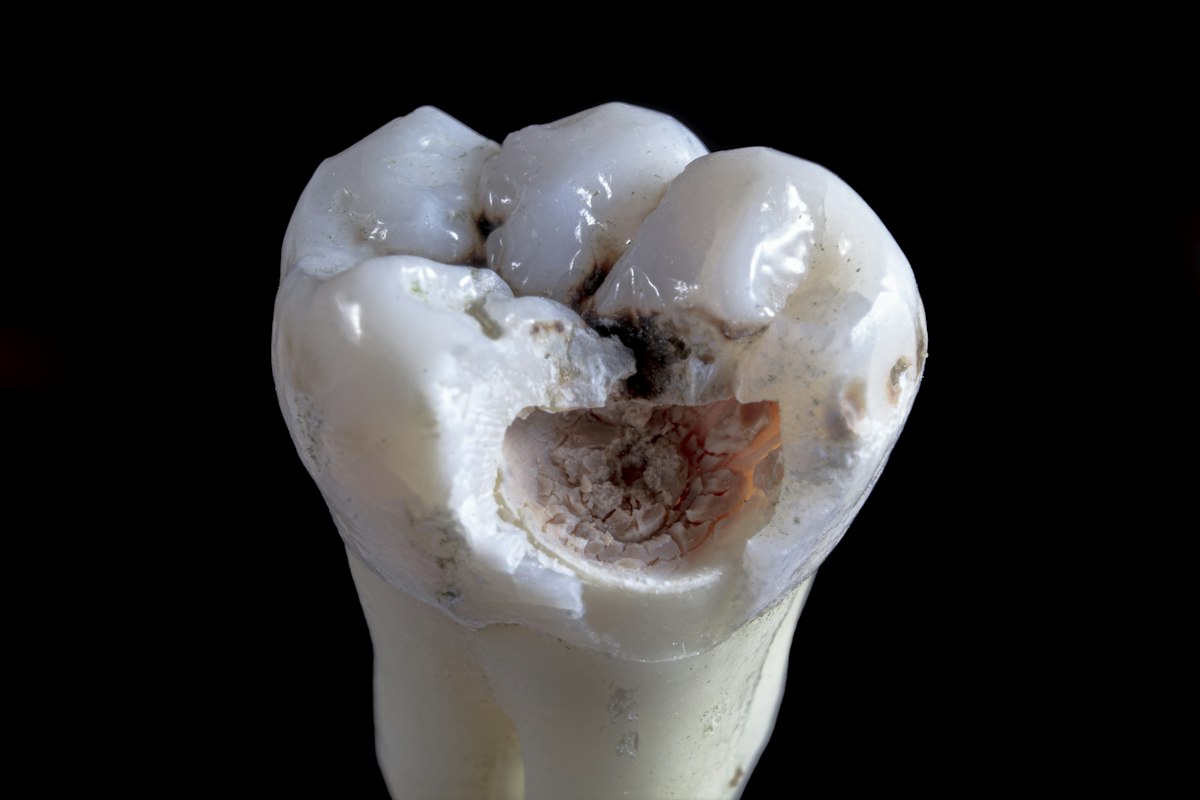
One skeleton came from a site dated to roughly 7,000 years ago. The other was far older, somewhere between 16,000 and 25,000 years. Both belonged to pre-agricultural foragers. Both had deep, rounded grooves carved into their teeth, and some of those grooves ran so deep they would have opened the dental pulp straight to the air.
Adam Brumm, a professor at Griffith University's Australian Research Centre for Human Evolution in Brisbane, did not hide his reaction. "I was thinking, what the hell were these people doing?" he said. "It's like someone had a drill head shaped like a gobstopper and wore away the inner part of the tooth."
That image is worth sitting with. Something round. Something hard. Something abrasive enough to grind through enamel, the toughest tissue the human body makes, over years of daily use.
Why Betel Nuts Fit the Grooves
The answer the team landed on was betel nuts, the seeds of the Areca catechu palm. The name is a misnomer. They are not true nuts and they are not betel, which is actually the vine leaf people often wrap them in. But the seeds are hard, round, and abrasive, exactly the shape and texture needed to sculpt those grooves.
Brumm's working theory is almost cinematic. "Imagine you kept a stone in your mouth and you moved it from one part of your mouth to another, and if you did that day after day, hour after hour," he said. "Eventually it would wear down your extremely hard dental tissue to form these grooves."
Betel nut use is not a fringe curiosity. It ranks as the fourth most widely used psychoactive substance on Earth, behind alcohol, caffeine, and nicotine. Roughly a tenth of the global population chews the seeds.
The Chemistry Test
The researchers had one question. Can you get high by sucking a nut instead of chewing it? So they soaked betel nuts in artificial saliva, sat back, and watched, because that's what you do when you don't know the answer and the only way to find out is to let chemistry run its course in a jar on a lab bench. Before long, the mixture held enough arecoline, the psychoactive compound, to induce a high. It's a milder one than chewing produces. But it's a high nonetheless.
Then came the clincher. Analysis of the foragers' teeth turned up traces of arecoline in the dental tissues. The grooves and the chemistry pointed the same direction.
A Nasty Taste and a Numb Mouth
Brumm did not just theorize. He tried it himself. "I've sucked on a nut as an experiment and it's a really bitter, astringent taste," he said. "It makes your mouth go numb and I think that's what they were interested in."

Numbness matters here. It opens a second possible motive, one that has nothing to do with getting high. Betel nut could have been a traditional remedy for toothache. Important. The remedy and the harm were the same act.
"These individuals were seemingly caught in a self-perpetuating cycle where they were continually sucking on the nuts to treat the tooth pain caused by this nut-sucking habit."
That is Brumm's description of the trap. Suck the nut to dull the pain. Wear the teeth down further. Feel worse. Suck again. A feedback loop written into the jaw.
Rewriting the Timeline of Getting High
The conventional story says the oldest traditions of psychoactive drug use emerged around 13,000 years ago. That's tied to fermented drinks. Barley beer, they say. But this discovery undercuts that timeline by thousands of years, and it does so without any brewing or agriculture in the picture at all, which means we've got a much older story than anyone expected.
Elisa Guerra-Doce, an associate professor in European prehistory at the University of Valladolid in Spain, framed the significance plainly. The work offers "direct evidence of the antiquity of human drug use," she said. She went further, calling the findings not only the earliest known evidence of psychoactive plant use anywhere in the world, but also proof that consuming Areca nuts is a millennia-old tradition stretching back to prehistoric times.
What the Nuts Tell Us About Us
There is a temptation to read this as a story about ancient people doing something reckless. These foragers were not experimenting on a whim. They were repeating a habit, day after day, for years, enough to reshape their own skeletons. That is not curiosity. That is culture.
Brumm's own summary captures why the discovery resonates beyond archaeology. "We've found evidence for how this very common drug use habit, which is found throughout a lot of the Asia-Pacific region today, might have evolved," he said.
Put another way, the Indonesian foragers mind-altering nuts habit is not a dead end from the deep past. It is the opening chapter of a behavior that never went away. The same impulse that drove someone 25,000 years ago to hold a bitter seed against a sore tooth and wait for the numbness is still shaping human mouths today, across a region where betel chewing remains woven into daily life.
These two skeletons didn't survive this long to settle a prehistoric argument. They're here because of burial conditions that preserved them, a rarity so uncommon that researchers call the remains exceptional, and this survival, while remarkable in itself, isn't even the most interesting thing about them. What they carried in their teeth is a record of a decision made over and over, at two different sites, separated by thousands of years. And that's the real story.
- Two adult foragers from separate Sulawesi sites showed identical deep, rounded tooth grooves.
- Betel nuts soaked in artificial saliva produced enough arecoline to induce a high.
- Traces of arecoline were found in the foragers' dental tissues.
- Betel nuts rank fourth worldwide among psychoactive substances, after alcohol, caffeine, and nicotine.
What comes next is more digging. More teeth. More caves. The team's method, reading behavior from the shape of wear and the chemistry left behind, offers a way to interrogate other skeletons that might otherwise tell us nothing about what their owners put in their mouths.
For now, the takeaway is blunt. The Indonesian foragers mind-altering nuts evidence stands as the earliest known sign of human drug use, and it was not a moment of wild abandon. It was a routine. A grind. A habit that wore grooves into bone and, in all likelihood, kept its users coming back for more.
Frequently Asked Questions
What evidence led researchers to conclude that Indonesian foragers were deliberately sucking on mind-altering nuts?
Two adult skeletons from caves on Sulawesi had deep, rounded grooves carved into their teeth, some running so deep they would have opened the dental pulp to the air. Analysis of the foragers' teeth also turned up traces of arecoline, the psychoactive compound in betel nuts, in the dental tissues.
How did the researchers test whether sucking rather than chewing a betel nut could produce a high?
They soaked betel nuts in artificial saliva and watched to see whether the mixture would produce the psychoactive compound. Before long, the mixture held enough arecoline to induce a high, though a milder one than chewing produces.
When did the two Sulawesi skeletons date to, and what kind of people were they?
One skeleton came from a site dated to roughly 7,000 years ago, while the other was far older, somewhere between 16,000 and 25,000 years. Both belonged to pre-agricultural foragers.
Why might the foragers have kept sucking on betel nuts even as the habit wore their teeth down?
Brumm described a self-perpetuating cycle in which the individuals continually sucked on the nuts to treat the tooth pain caused by the nut-sucking habit. The numbness the nuts produced could have served as a traditional remedy for toothache, so the remedy and the harm were the same act.
How does this discovery change the conventional timeline of human psychoactive drug use?
The conventional story says the oldest traditions of psychoactive drug use emerged around 13,000 years ago, tied to fermented drinks such as barley beer. This discovery undercuts that timeline by thousands of years, and it does so without any brewing or agriculture in the picture at all.

Eva Koch writes about scientific research and the people behind it, covering the studies and breakthroughs shaping our understanding of the world. She values curiosity and careful evidence in equal measure.
💬 Comments (0)
No comments yet. Be the first!