Why the Torani AI approach protects employees
As companies automate, the Torani AI approach prioritizes career mixology and trust to avoid laying off its 500 employees.

Torani's AI approach redefines how a modern enterprise values human labor amid rapid technological disruption. It's a bold bet on people. While many corporate leaders view generative and agentic systems as tools to reduce headcount and trim operational costs, the century-old syrup manufacturer is using this technological pivot to strengthen its long-standing commitment to its workforce. So this philosophy sits within a broader pattern of organizational resilience that prioritizes employment stability over short-term financial engineering. Decoupling technological adoption from staff reductions shows that operational modernization doesn't require a toll in human capital. But the proof will come in the next quarter's numbers.
Strip away the marketing, and the calculation is straightforward. It's simple math, really. For decades, major shifts in industrial automation and globalization have prompted companies to treat headcount as a variable expense, something to be dialed up or down like a thermostat when the quarterly winds shift. When economic downturns or new efficiencies emerge, layoffs typically follow. But the deeper question is positioning. That's the hard part. An organization can choose to view its workforce either as a costly overhead to be minimized or as the primary engine of its long-term value, and that choice reveals everything about its actual priorities. The choice to protect staff during major transitions establishes a foundation of organizational trust that is rare in the current corporate environment, so don't underestimate its power.
A century of employment stability
To understand how this philosophy operates, one must look at the historical record of the San Leandro, California-based company. Since the Great Depression, the business has maintained a strict no-layoffs streak. This record survived the economic contraction of 2008, the globalization wave that altered American manufacturing, and the recent pandemic that forced the closure of many primary customers. Melanie Dulbecco, who has run the company for 35 years since joining in 1991, has maintained this commitment even as the organization scaled from a nine-employee operation generating about 700,000 dollars a year to an enterprise expected to bring in more than 800 million dollars this year with a workforce of 500 employees.
That's 20 percent annual revenue growth, averaged over three and a half decades. Instead of using technology to shrink the payroll, the company focuses on how its existing staff can generate more value, and that focus has paid off in ways that pure cost-cutting never could. Read alongside recent announcements, the picture clarifies. It's a clear pattern. The organization has consistently chosen path-dependent decisions that favor community and employee retention over low-cost optimization, and those choices compound over time. For example, when deciding whether to manufacture private-label syrups for a growing coffee chain decades ago, the team chose to preserve its unique brand identity and ingredients rather than shift to low-cost production methods, so they kept their own recipe intact. That decision still shapes them. But it's not the only one.
Building trust to accelerate adoption
The Torani AI approach protects employees by directly addressing the anxiety that typically stalls corporate technology deployments. Workers fear job loss, so they resist. But when an organization guarantees job security, employees are far more willing to experiment with and integrate new technologies into their daily workflows, and that willingness turns a would‑be threat into a simple, practical tool. Fear can't survive that promise. So the dynamic shifts, and artificial intelligence becomes an administrative aid instead of an enemy.
"What we find is our team is more likely to embrace new technologies also because there's confidence and an openness to learning new things because they know we've got their backs and they've got ours," says Melanie Dulbecco, Chief Executive Officer.
This mutual trust isn't merely a cultural sentiment. It's backed by concrete financial structures that align the success of the business with the financial well-being of every worker, so when employees understand that technological efficiency gains will improve the top-line and bottom-line metrics that dictate their own compensation, resistance to modernization evaporates. So the enterprise operates several programs designed to distribute this collective value. But those programs matter only if workers feel the connection daily.
- A unique wealth sharing plan that functions on top of standard salaries and 401(k) matching.
- Annual bonuses for every single employee tied directly to top-line revenue and bottom-line profits.
- An employee stock ownership plan that begins after a worker completes one year of service.
- An annual valuation process that increases the worth of the shares distributed to the workforce.
The concept of career mixology
They don't hire specialized talent externally for every new tech need. Instead, they rely on internal mobility, a practice called career mixology that nudges employees to move across departments and gain a full grasp of how the business operates, so they see the whole picture rather than just their own corner of it. An entry-level employee starting in inventory or the supply chain can transition into procurement or other specialized corporate roles over time. That internal fluidity keeps the hiring pipeline active. And it reduces the recruitment challenges that plague other manufacturing and distribution businesses, since they don't face the same constant scramble for outside candidates. It's a smart fix.
Fostering the next generation
The company’s commitment to the local workforce extends to employees’ families, too, with dedicated summer internships for their college-age children and specialized first-job programs for newcomers. It’s a smart bet. So this approach keeps entry-level roles as genuine career pathways, even as automation reshapes the specific tasks within them, and it does so without a hint of favoritism. Every position gets equal value. That’s the trick. The organization maintains high retention rates and sidesteps the recruitment bottlenecks that plague modern industry, because they’ve learned that treating people like people, not cogs, pays off in loyalty you can’t buy. And that’s not just talk.
Strategic lessons for the wider market
The sector's wider story offers a counter-narrative to the tech-driven downsizing trend, one where corporate strategy prioritizes people over immediate margin gains, and that choice carries real weight. But it's not without cost. This approach often triggers a loss of institutional knowledge, damages employee morale, and creates operational friction that can quietly erode the very stability it seeks to protect.
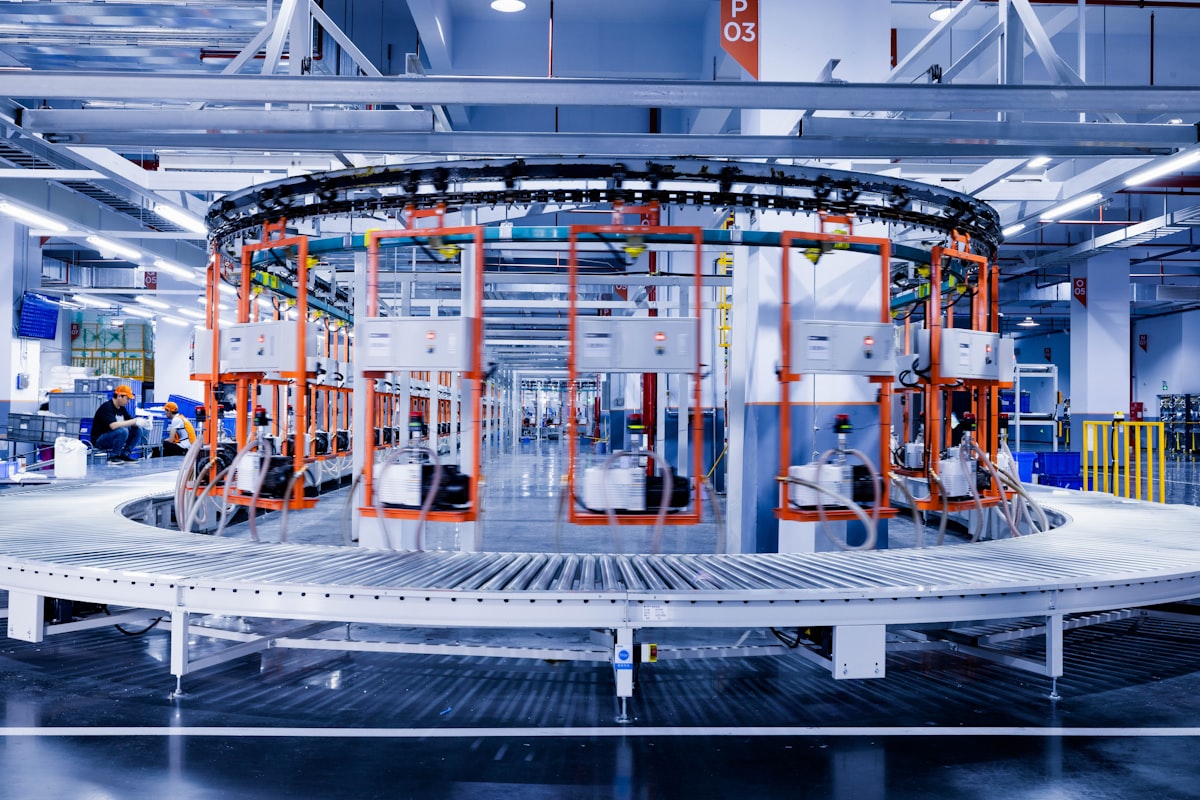
Organizational resilience is the real payoff. When the pandemic slammed cafe business in April 2020, the company didn't resort to layoffs, and that decision proved to be the foundation of everything that followed. Instead, the team focused on rapidly completing a relocation to its current San Leandro campus to get new equipment running. The workforce stayed intact. So the business was fully staffed and positioned to capture the subsequent surge in e-commerce and retail sales, while also supporting cafe customers as they began to reopen, and that readiness turned a potential crisis into a competitive advantage. It's that simple.
The long-term outlook on automation
Generative tools keep advancing. But the enterprise plan stays anchored in its historical principles, with the company continuing to evaluate new software and machinery through the lens of human enablement rather than human replacement. Employees share in the wealth created by technological efficiencies. That secures the internal alignment needed to navigate future economic cycles. It's a simple calculus. The strategic focus remains on finding new ways for its 500 employees to add value to a business that has expanded its portfolio from five original syrups to over 150 flavorings today. So they're not chasing novelty; they're reinforcing a foundation that's proven resilient.
So the next phases of technological integration will test this model on a larger scale, even as the business keeps expanding, and that pressure won't disappear anytime soon. But the leadership team insists the underlying formula won't change. It's simple. By treating technology as a partner to labor rather than its substitute, the organization positions itself to sustain its decades-long growth trajectory without sacrificing the workforce that built its operational foundation, and they're confident that balance holds.
Frequently Asked Questions
What is the Torani AI approach and how does it protect employees?
The Torani AI approach protects employees by guaranteeing job security, which reduces the anxiety that typically stalls technology adoption. This allows workers to experiment with and integrate new technologies into their workflows, turning AI into an administrative aid rather than a threat.
Why does Torani prefer internal mobility over hiring specialized talent externally?
Torani relies on internal mobility, called career mixology, to move employees across departments and give them a full understanding of the business. This keeps the hiring pipeline active and reduces recruitment challenges that plague other manufacturing businesses.
How does Torani's wealth sharing plan support employee adoption of new technologies?
Torani's wealth sharing plan ties technological efficiency gains directly to employee compensation through annual bonuses, an employee stock ownership plan, and an annual valuation process that increases share worth. When employees see that AI improvements boost their own pay, resistance to modernization disappears.
When did Torani maintain its no-layoffs streak during a major crisis, and what was the outcome?
During the pandemic in April 2020, Torani didn't resort to layoffs and instead focused on completing its relocation and getting new equipment running. This kept the workforce intact, positioning the company to capture the surge in e-commerce and retail sales while supporting cafe customers as they reopened.
Who is Melanie Dulbecco and what is her role in Torani's employee-focused philosophy?
Melanie Dulbecco has run Torani for 35 years since joining in 1991 and serves as its Chief Executive Officer. She has maintained the company's strict no-layoffs commitment even as the organization scaled from a nine-employee operation to an enterprise with 500 employees, and she emphasizes that employee trust and openness to learning are key to embracing new technologies.

Adrian Zeller writes about startups, funding and the markets that shape the technology industry. He looks for the story behind the numbers, tracking how young companies scale and where the next opportunities lie.
💬 Comments (0)
No comments yet. Be the first!