Singapore Overhauls Baby Bonus Scheme to Boost Record-Low Birth Rates
Singapore's new SG Child Support Package offers nearly $55,000 per child, but experts doubt it can reverse record-low fertility rates.

Singapore overhauls its baby bonus scheme. That’s the headline. But the city-state is staring down a demographic crisis that has pushed births below 30,000 for the first time since independence, and the numbers don’t lie. The fertility rate has sunk to 0.87 per woman. It’s a record low. And it carries existential weight for a nation squeezed into a territory smaller than New York City, where every square mile of housing, schools, and jobs now feels the pressure of a population that simply can’t replace itself.
The Numbers That Forced Change
The 2025 figures are stark. Fewer than 30,000 babies were born across the entire year, and the fertility rate now sits well below the level needed to sustain a population without immigration. For a country with no natural resources to fall back on, the math is brutal.
"The country does not have the natural resources to finance the costs of supporting an aged society, including both care and medical expenditures," said Tan Poh Lin, a senior research fellow at the National University of Singapore's Institute for Policy Studies. Immigration alone won't save the day, in his view. Raising the fertility rate is key to slowing down the pace of change and giving society time to adjust both economically and institutionally."
What's in the New Package
Prime Minister Lawrence Wong used the Aug. 23 National Day Rally to unveil the "SG Child Support Package," an overhaul of the baby bonus scheme, which was first introduced in 2001. It's a big deal. The new offering bundles expanded childcare leave, stronger financial support, cheaper caregiving options, and additional access to subsidized housing, so parents can finally feel some breathing room in a system that's been stretched thin for years. But that's not all. The package replaces a dated framework with one that actually matches today's costs, and it does so without asking families to jump through more hoops. We've waited long enough for this.
By the time a child turns 17, the total support works out to nearly 70,000 Singapore dollars, roughly $55,000. That's a major step up from past efforts. But how it's structured matters just as much as the total amount, and that distinction can't be overlooked when families weigh the real value of each benefit. So we've got a bigger number, yet the design still calls for scrutiny. It's not just about the sum.
Demographic experts see reason for measured hope. Really, it's a quiet kind of optimism. Bussarawan Teerawichitchainan, a social demographer and sociologist at NUS, notes that Singapore's family policies had become increasingly complicated, with benefits varying by birth order and across different schemes. But the new approach changes that. Support is attached more clearly to each child and is provided over a longer period of childhood rather than being concentrated primarily around birth, which means families can plan ahead without juggling so many confusing rules. That's the shift. And it's a meaningful one.
Why Previous Efforts Fell Short
Here's the uncomfortable truth: Singapore has tried this before. Financial incentives have been a cornerstone of family policy for over two decades, and yet the fertility rate has kept sliding, stubbornly refusing to budge despite every dollar thrown its way. It's not working. But we keep pretending it might. So here we are, stuck with the same failed playbook, watching the numbers fall anyway.
Singapore has progressively expanded financial support for marriage and parenthood over many years, yet fertility has continued to decline, Teerawichitchainan admitted. The concerns she hears from parents have shifted. It's not just money anymore. Concerns voiced by parents increasingly involve not just money but time, work-family pressures, childcare, housing and other demands associated with raising children, and those pressures don't seem to ease no matter how much the state offers. So the old fixes can't keep up.
Cash alone never solved that equation. But the new scheme's focus on long-term family well-being, rather than a one-time payout at birth, represents a genuine shift in approach. Whether it shifts behavior is another question.
The Economic Stakes
This isn't abstract demographic anxiety.
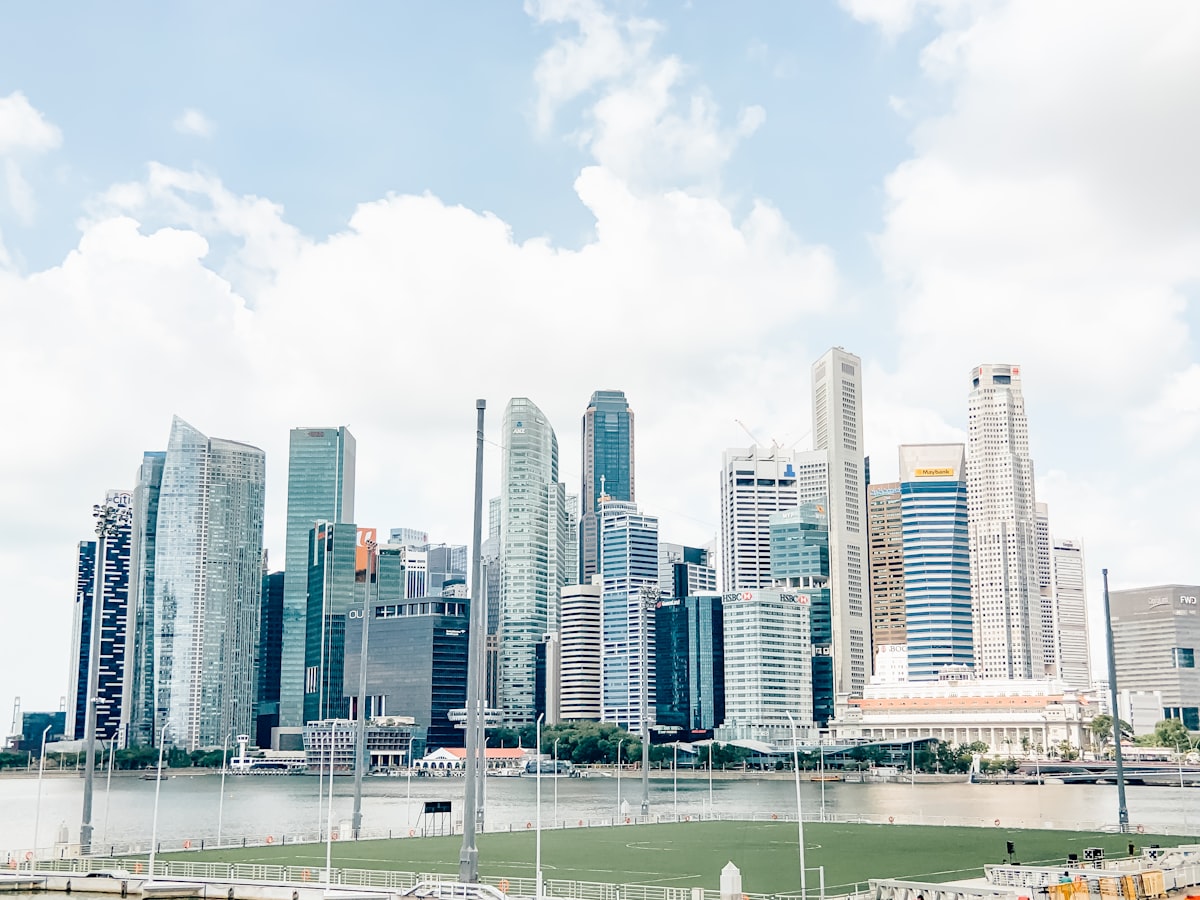
Singapore's reliance on foreign workers isn't new,it's a long-standing strategy. But the numbers today are staggering. As of 2025, the country hosts nearly 1.6 million foreign workers, a figure that represents 40% of the total labor force and stands as the highest share in Asia outside the Middle East, according to the Migration Policy Institute. That's a huge dependency. And it's not shrinking anytime soon.
But foreign labor is a stopgap, not a solution. That's the blunt truth. Teerawichitchainan explained that the relationship between demography and economic growth is complicated, and economies can adapt through productivity growth, technology, longer and healthier working lives, higher labor force participation, and immigration. So don't mistake a patch for a cure.
The Corporate Responsibility
Part of the burden falls on employers. Government policy can set the framework, but it's workplace culture that decides whether any of it truly takes hold. “There is a limit to what government policy can do directly, and employers have an important role,” Chua said. But a generous leave entitlement has less value if employees believe that using it will make them appear less committed or affect their advancement, and that's a reality no regulation can fix on its own. So the real test isn't the law. It's the daily judgment call.
Singapore currently provides 16 weeks of paid maternity leave and four weeks of paternity leave, plus 10 weeks of parental leave shared between both parents, which must be used within a year of birth. Those benefits only matter if people feel safe using them.
Tan Poh Lin echoed that sentiment. "Cash gifts have a positive impact on births, but the effect tends to be short-lived as many beneficiaries do not increase their final family size," he noted. "Tangible change can only be achieved by adjusting parenting expectations, including the notion that parenthood involves sacrificing personal wellbeing."
The Limits of Policy
There's a deeper problem that no government can legislate away: economic uncertainty. "These days, folks will have children only if they are confident that they could ease their children's journey ahead and help them access a good life in the future," said Tan Ern Ser, an adjunct principal research fellow at Singapore's Lee Kuan Yew School of Public Policy. "Unfortunately, the world we live in today does not leave much room for optimism, notwithstanding the government's relentless efforts."
Even Wong acknowledged the boundary. "The decision to have children is a deeply personal one. Policies alone cannot make this happen," the prime minister said. "But what we can do is make it easier for Singaporeans who want children to start and raise a family."
Singapore may simply have to learn to live with fewer people. "The economic challenge is not simply to restore some particular fertility level," Teerawichitchainan concluded. "It is also to build institutions, labor markets, and technologies that allow Singapore to prosper under a demographic reality that may remain one of low fertility and population aging."
That's not a surrender. It's an adaptation. The SG Child Support Package is the latest attempt to bend the curve, but even its architects seem to know that the ultimate test isn't policy design. It's whether a generation of Singaporeans, staring down rising costs and uncertain futures, decide that having children is worth the gamble. The country has bet heavily that the answer is yes. The data so far suggests otherwise.
Frequently Asked Questions
What is the SG Child Support Package and when was it unveiled?
The SG Child Support Package is an overhaul of Singapore's baby bonus scheme, first introduced in 2001. Prime Minister Lawrence Wong unveiled it during the National Day Rally on Aug. 23.
Why did Singapore decide to overhaul its baby bonus scheme?
Singapore faced a demographic crisis with births falling below 30,000 for the first time since independence and a fertility rate of 0.87 per woman, a record low. Previous financial incentives failed to raise fertility rates, so the new scheme aims to provide more comprehensive support.
How does the new baby bonus scheme differ from past efforts?
The new scheme provides support attached more clearly to each child and over a longer period of childhood, rather than being concentrated primarily around birth. Total support by age 17 amounts to nearly 70,000 Singapore dollars, and it includes expanded childcare leave, stronger financial support, cheaper caregiving options, and additional subsidized housing access.
What are the concerns of parents that the new scheme attempts to address?
Parents' concerns increasingly involve not just money but time, work-family pressures, childcare, housing, and other demands associated with raising children. The new scheme focuses on long-term family well-being rather than a one-time payout at birth to address these pressures.
Who are the experts quoted in the article, and what do they say about the scheme's potential impact?
Experts include Bussarawan Teerawichitchainan, a social demographer at NUS, who sees measured hope because the new approach simplifies support and extends it over childhood. Tan Poh Lin notes cash gifts have short-lived effects, and Chua Yeow Hwee emphasizes employers' roles in making leave usable.

Beatrice Novak covers the business of technology, from enterprise software and cloud platforms to the strategy behind the biggest deals. She follows how companies adopt new tools and what it means for the wider economy.
💬 Comments (0)
No comments yet. Be the first!