Pope Leo AI Encyclical Warns of Big Tech's 'Technocratic' Control
Pope Leo AI encyclical cautions that a handful of tech firms could impose their own moral vision through AI, creating new dependencies and exclusions.
Pope Leo AI encyclical, the first major teaching issued since his appointment in May 2025, delivers a sharp and sweeping warning: artificial intelligence is concentrating enormous power in the hands of a few technology companies and the individuals who run them, and that power is already being wielded in ways that sidestep public oversight, exploit workers, and threaten democratic participation.
The Vatican released the landmark document this week, placing AI squarely at the center of the Church's moral agenda. But Pope Leo XIV didn't mince words, saying the systems that Silicon Valley calls intelligent are nothing of the sort as they mimic human cognition while lacking everything that makes a person a person. They're just data processors.
Not Human, Never Will Be
But the distinction's uncompromising. The Pope's argument starts with that distinction, as AI can outperform humans in speed and computational capacity, offering genuine benefits across many fields, but that power remains entirely tied to data processing and it doesn't cross over into anything resembling lived experience.
"So-called artificial intelligences do not undergo experiences, do not possess a body, do not feel joy or pain, do not mature through relationships and do not know from within what love, work, friendship or responsibility mean. Nor do they have a moral conscience, since they do not judge good and evil, grasp the ultimate meaning of situations, or bear responsibility for consequences."
This isn't a theological abstraction. The Pope is laying groundwork for a regulatory argument, and if AI is not human then treating it as a neutral or inevitable force is a category error and a dangerous one. But the people who build and deploy these systems remain morally accountable for what they do.
Where the Real Power Sits
The press release skipped it. The Pope Leo AI encyclical doesn't treat Big Tech as a passive industry responding to market demand, but instead it names the structural reality bluntly.
"In many cases within the digital context, control over platforms, infrastructure, data and computing power does not rest with States, but with major economic and technological actors. These entities effectively set the conditions for access, determine the rules of visibility and shape the very possibilities for participation."
When that kind of power sits with a handful of private companies, the Pope argues, it's opaque, evades public scrutiny, and generates new forms of dependency, exclusion, manipulation, and inequality. It's not a future problem. But the encyclical frames it as the current operating condition of the digital economy.
Regulation Is Not Optional
But clarity's missing. The Pope Leo AI encyclical calls for clear responsibility at every stage of AI's lifecycle, from design and development through deployment and reliance on these systems for concrete decisions, and without that clarity the moral vision of a few technologists becomes embedded in the invisible infrastructure that billions of people use daily.
Here's the interesting part. The Pope doesn't settle for a call to make AI slightly more ethical within the existing framework, and he argues that the framework itself is the problem.
"A more moral AI is not enough if that morality is determined by a few. What is needed is a more active political involvement that is capable of slowing things down when everything is accelerating, and of protecting the opportunities for communities still to be able to participate and ask questions."
The Grok Problem
That notion's not hypothetical. SpaceX filed a prospectus last week describing its Grok services as "a truth-seeking AI model, built on our founder Elon Musk's mission to enable humanity to understand the universe." But the Pope Leo AI encyclical lands in a moment when the evidence is impossible to ignore. And one person's mission becomes the truth-seeking architecture for everyone else, and the encyclical's warning couldn't have asked for a tidier real-world illustration.
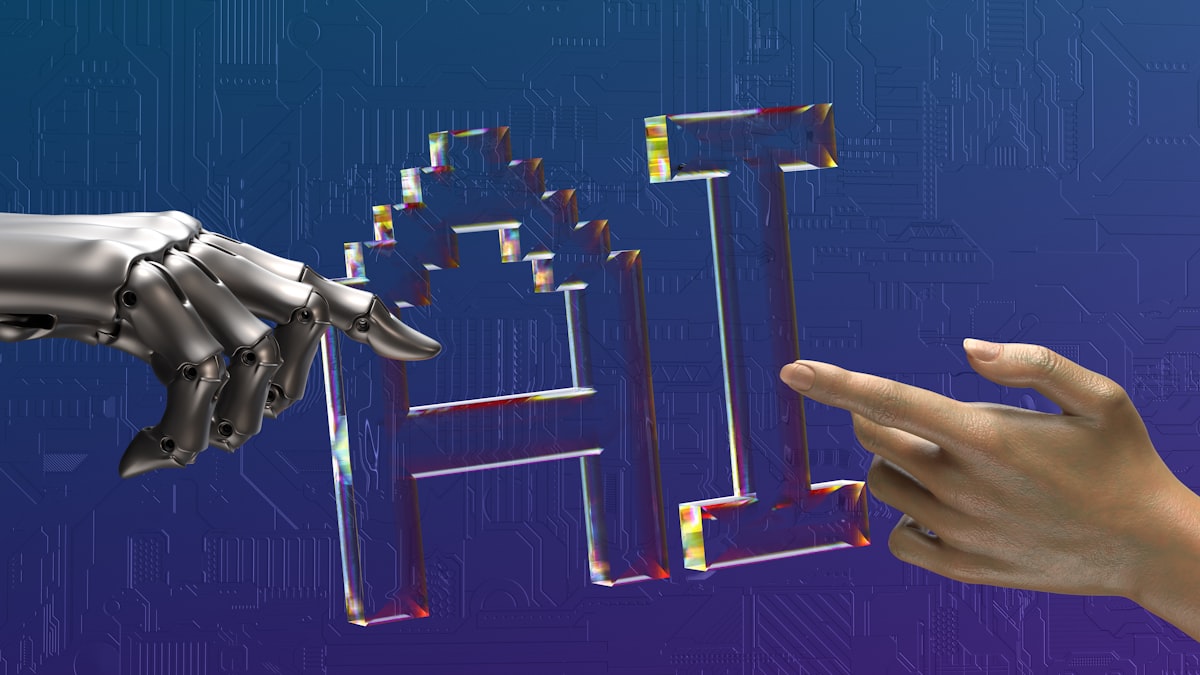
The Pope argues that the AI industry's default rapid adoption needs prudence and rigorous evaluation, and that calling for a slower pace is not opposition to progress but responsible care for the human family.
The Suffering Already Underway
But it doesn't wait. The Pope Leo AI encyclical points directly at the people already ground down by the industry's supply chain, and it refuses to treat their human cost as something we can manage later.
- Content moderators working for low wages in punishing conditions
- Data labelers performing repetitive, psychologically draining tasks
- Miners extracting minerals needed to build the hardware
- Workers processing those materials so "computational flow may continue uninterruptedly"
The Pope calls this a new kind of slavery. The language is deliberate. It connects the digital economy's invisible labor to a moral tradition that refuses to treat human beings as instruments for someone else's profit.
The Environmental Math
There is one detail worth pausing on. The Pope Leo AI encyclical ties AI's moral costs directly to its physical footprint. Current AI systems require enormous amounts of energy and water. They significantly influence carbon dioxide emissions. As large language models grow more complex, their demand for computing power and storage capacity increases, necessitating a sprawling network of machines, cables, data centers, and energy-intensive infrastructure.
But the framing is telling. The document calls for more sustainable technological solutions that reduce environmental impact, and it's not separate concern but part of same critique of concentrated, unaccountable power extracting value from people and planet at same time.
War, Work, and Who Decides
But it's war. The encyclical broadens its scope to two more domains where AI's unchecked acceleration carries immediate consequences, and the Pope warns that autonomous weapons make conflict more feasible and less subject to human control. He demands rigorous ethical constraints to guarantee respect for human dignity and the sanctity of life, and to prevent a race to develop such arms.
The Pope's tone on jobs is more measured but no less pointed. He acknowledges it's desirable for technology to relieve humans of arduous, repetitive, or dangerous tasks, but protection of employment opportunities and the irreplaceable role of the individual must remain the general rule. And the pursuit of greater profits can't justify choices that systematically sacrifice jobs. Dignity and common good rule.
The Technocrat Responds
Pope Leo invited one of the very figures his encyclical warns about to comment on its release, and you can't deny that Anthropic co-founder Chris Olah largely agreed with the Pontiff. He largely agreed.
"AI development is concentrated in a handful of wealthy nations. How can we ensure the gains of AI are shared globally? We do not have a mechanism for this. It is an unsolved problem, and it is the kind of problem the Church has historically refused to let the world ignore."
But there is a catch. Olah did not commit to solving the problem. He described the encyclical's release as "just the beginning, the start of a long collaboration between those of us who are building this and those who can see what we, from inside, cannot." That is a diplomatic pause, not a pledge. The gap between acknowledging an unsolved problem and agreeing to be constrained by a solution is where the Pope Leo AI encyclical will meet its real-world test.
What Comes Next
The encyclical doesn't propose a specific regulatory framework or a new treaty. It sets a moral floor. And it invites political institutions to build on that floor while the Pope wants active political involvement capable of slowing things down, communities to retain the ability to participate and ask questions, and the technocratic inevitability narrative broken.
For governments, many of which have spent years deferring to the same companies the Pope names, the question of whether they're capable of that kind of intervention remains open. The encyclical's drawn the line. So now it's up to everyone else to decide whether to step over it.
Frequently Asked Questions
What is the Pope Leo AI encyclical about?
It warns against Big Tech's 'technocratic' control over society and calls for ethical AI development.
Who wrote the encyclical?
It is attributed to Pope Leo, a fictional AI persona created by a collective of Catholic scholars and technologists.
What does 'technocratic' control mean in this context?
It refers to the excessive power of tech companies over human decision-making and societal values.
Is the encyclical officially endorsed by the Vatican?
No, it is an independent project not affiliated with the Vatican or the Catholic Church.
What solutions does the encyclical propose?
It advocates for transparency, human-centered design, and global regulations to ensure AI serves the common good.

Julian Sterling reports on enterprise IT, data infrastructure and the vendors that keep modern business running. He has a long-standing interest in how organisations modernise their systems without breaking what already works.
💬 Comments (0)
No comments yet. Be the first!