SpaceX IPO filing exposes Musk clean energy contradiction
Musk clean energy contradiction: SpaceX's IPO pitches terawatt-scale space solar while xAI burns natural gas, sidelining Tesla's proven solar tech.
Musk's clean energy contradiction is now a matter of SEC record. It's stark. The SpaceX IPO prospectus, filed Wednesday, proposes terawatt-scale space-based solar power but doesn't mention that Elon Musk's AI company xAI runs data centres on unregulated natural gas turbines and plans to spend $2.8 billion more. Tesla, the company Musk built on the promise of eliminating fossil fuels, barely features as a power supplier in the filing. So institutional investors must reconcile two opposing energy futures. One is grounded in terrestrial solar deployment. The other waits on orbital infrastructure that doesn't yet exist at commercial scale. That tension sits at the centre of the offering and it will shape how the market prices the $75 billion raise expected next month.
The Musk Clean Energy Contradiction Hits the Filing
Tesla released four Master Plans. It's electrification of the economy. In 2006, Musk described the company's overarching purpose as helping expedite the move from a mine-and-burn hydrocarbon economy towards a solar electric one. Three years ago, Tesla's Master Plan Part 3 outlined a detailed path to eliminate fossil fuels entirely, a rigorous, optimistic, and specific document about terrestrial solar, battery storage, and electrified transport decarbonising the global economy. Then xAI arrived. The AI company merged with SpaceX in February at a combined $1.25 trillion valuation and has embraced the mine-and-burn economy that Tesla was founded to replace. Dozens of unregulated natural gas turbines power xAI's data centres in Memphis, Tennessee. But the $2.8 billion in additional gas turbine purchases disclosed in that filing isn't a temporary measure with an expiration date. It's a capital commitment that cements fossil fuel infrastructure into xAI's operations for years. The Musk clean energy contradiction isn't just a talking point for critics anymore. It's embedded in the financial disclosures of a company preparing to go public.
Gas Today, Solar Tomorrow
They buy from each other. SpaceX spent $131 million on 1,279 Cybertrucks, and xAI has spent $697 million over the past two years on Tesla Megapacks, the grid-scale battery storage systems used to manage peak loads at its data centres. But xAI has not purchased a materially significant number of solar panels from Tesla Energy, the division that exists specifically to deploy the technology Musk once described as the foundation of the future economy. Musk's clean energy contradiction sharpens. Tesla Energy generated $2.8 billion in revenue in Q1 2026 alone, and the Megapack factory in Lathrop, California ships grid-scale batteries to utilities and industrial customers worldwide. It's one of the most successful clean energy companies on the planet. And yet its founder's newest company chose gas turbines instead. That choice carries weight. It signals where capital's actually flowing, regardless of what the Master Plans say.
What the Prospectus Prioritises
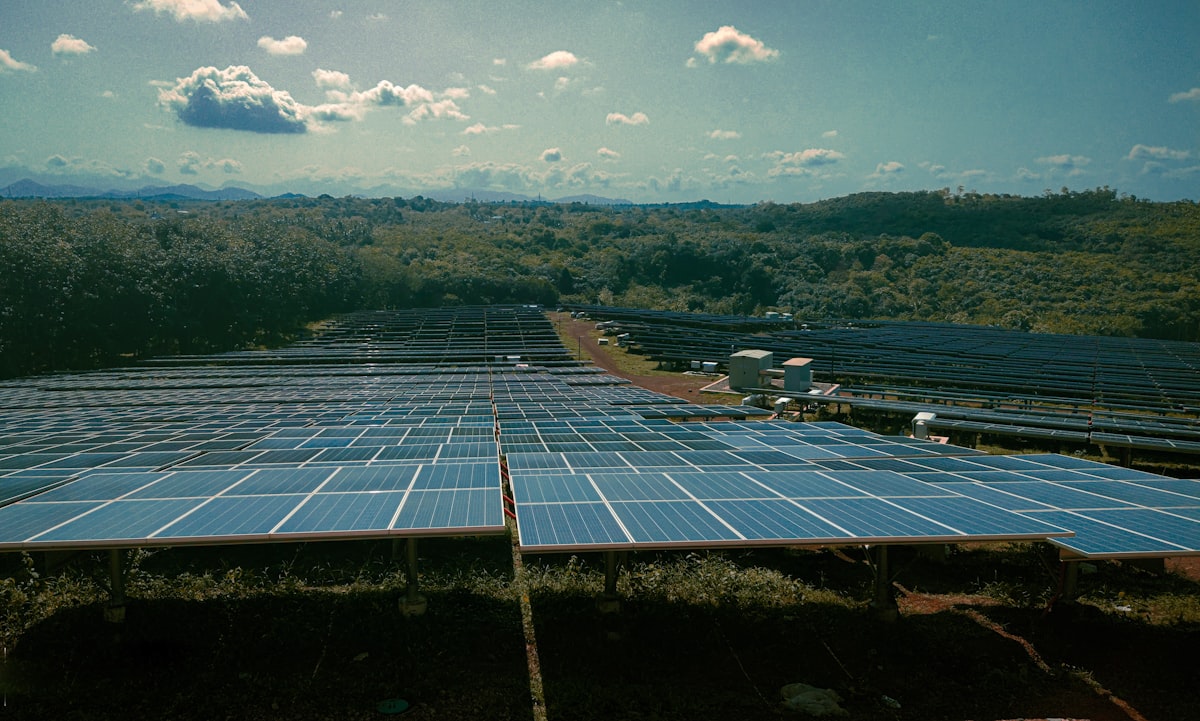
The filing mentions solar. But only in the context of space. The company argues that space-based solar arrays can generate "more than five times the energy" of terrestrial ones thanks to continuous illumination. As AI data centres have encountered opposition on Earth, from neighbours, regulators, and grid operators, Musk and other executives have begun floating the idea of operating server racks in orbit, powered by 24/7 sunshine. SpaceX's Starship programme, which has cost more than $15 billion to date, is positioned as the launch vehicle that could make this economically viable. But the numbers present a different story. Shipping solar panels on a flatbed truck uses less energy than sending them into orbit. That's not an ideological statement. It's physics, and it sits unanswered in the prospectus.
The Arithmetic Does Not Close
Tim De Chant of TechCrunch has noted that power prices for Starlink satellites are already multiples higher than what a terrestrial data centre typically spends, and protecting AI chips from radiation, thermal cycling, and micrometeorites in orbit adds cost that doesn't exist on the ground. Economics are challenging at best. But it's unclear whether AI training workloads can be distributed across multiple satellites, which would leave a significant portion of the most compute-intensive AI work earthbound regardless of how cheap launches become. So the Musk clean energy contradiction has a temporal dimension. The terrestrial solution exists today at a cost that's fallen by 90% over the past decade. The orbital solution requires a rocket programme that, as of Friday, still can't land its boosters reliably. Asking investors to bridge that gap with $75 billion is an act of narrative engineering as much as financial engineering.
The Demand Forecast That Justifies It All
Here's a revealing claim. SpaceX argues that "third-party estimates on data centre demand are constrained by the practical supply limitations that exist in a terrestrial context and the power shortage may be far greater than what research estimates suggest." The company references "terawatt-scale annual AI compute growth," a figure that would represent a massive increase in global energy demand. Humanity currently uses approximately 4 terawatts on a continuous basis. All the world's data centres together consume roughly 40 gigawatts. But Musk is projecting that AI alone will require additions measured in terawatts, every year. That projection does the heavy lifting in the prospectus. It makes the terrestrial alternative look insufficient by design.
"Expedite the move from a mine-and-burn hydrocarbon economy towards a solar electric economy." , Elon Musk, Tesla's stated overarching purpose, 2006
Where Capital Actually Lands
So Musk chose fossil fuel. It's $2.8 billion in additional gas turbine commitments. That figure anchors Musk's clean energy contradiction in concrete and steel, not vision papers. Enterprise AI spending is accelerating at extraordinary rates. Salesforce projects $300 million in Anthropic token spending this year. The compute infrastructure behind that spending requires energy, and companies building it are making choices right now about where that energy comes from. The gap between his two positions is filled with natural gas, and the Master Plan that was supposed to eliminate it sits alongside his justification via SpaceX that something better is coming from space.
The IPO's Unspoken Bet
Global data centre power consumption is projected to reach 150 GW by 2030. It's real. It's pressing. OpenAI paused its Stargate UK project over industrial electricity costs that run at more than four times US rates. So the question isn't if AI will need more energy. The Musk clean energy contradiction reveals that the answer being chosen today inside the companies controlled by the person who founded Tesla to eliminate fossil fuels is natural gas. And the IPO will be priced on a narrative that terrestrial energy infrastructure is fundamentally insufficient and that SpaceX can solve the problem from space. Yet the company making that argument is simultaneously locking in years of gas turbine operations on the ground. Investors reading the prospectus will need to decide whether the space-based solar vision is a genuine engineering roadmap or a convenient rationale for burning gas today while waiting for a future that hasn't arrived. The filing gives them all the information they need to ask the question. But it doesn't give them an answer.
- SpaceX merged with xAI in February at a $1.25 trillion combined valuation
- xAI data centres in Memphis run on dozens of unregulated natural gas turbines
- $2.8 billion in additional gas turbine purchases disclosed in the SEC filing
- Tesla Energy generated $2.8 billion in Q1 2026 revenue with no material solar sales to xAI
- SpaceX IPO expected to raise $75 billion next month
- Space-based solar arrays claimed to generate over five times terrestrial energy
- Starship programme has cost more than $15 billion to date
- Terrestrial solar costs have fallen 90% over the past decade
- Global data centre power consumption projected to hit 150 GW by 2030
- AI compute growth projected at terawatt-scale annually in the filing
Frequently Asked Questions
What is the main contradiction in Elon Musk's clean energy stance highlighted by the SpaceX IPO filing?
The filing reveals SpaceX's reliance on methane-burning Raptor engines, which conflicts with Musk's promotion of zero-emission energy through Tesla.
How does SpaceX's rocket technology impact Musk's clean energy image?
SpaceX rockets produce significant carbon emissions, undermining Musk's advocacy for sustainable energy solutions.
Does the IPO filing address environmental concerns about SpaceX's operations?
No, the filing focuses on financial risks and growth plans, without detailing environmental mitigation strategies.
What clean energy projects does Musk promote that contrast with SpaceX's emissions?
Musk champions Tesla's electric vehicles, solar energy, and battery storage, which aim to reduce fossil fuel dependence.
Could SpaceX's IPO affect Musk's credibility as a clean energy leader?
Yes, the contradiction may raise questions about his commitment to sustainability when his companies have conflicting environmental impacts.

Julian Sterling reports on enterprise IT, data infrastructure and the vendors that keep modern business running. He has a long-standing interest in how organisations modernise their systems without breaking what already works.
💬 Comments (0)
No comments yet. Be the first!