Lab-grown minibrains show skewed sense of time
New research shows lab-grown brain organoids may not follow the same developmental timing as real brains, which could affect how they model disorders.
Lab-Grown Minibrains March to Their Own Beat
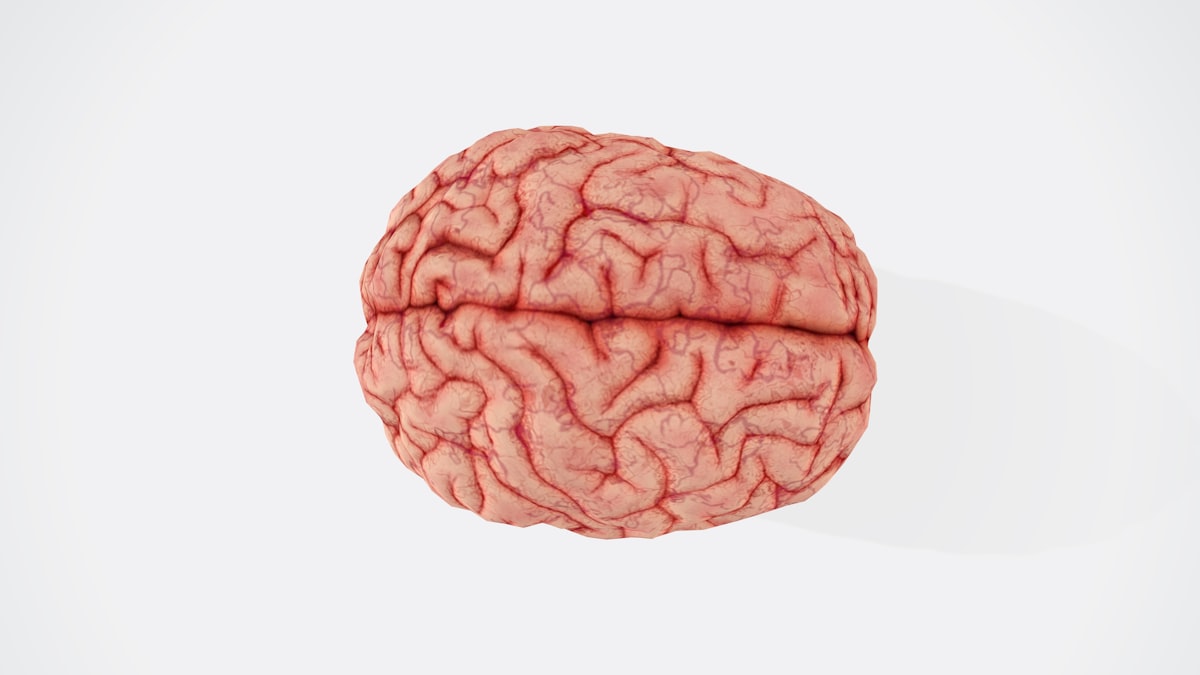
Lab-grown minibrains don't keep the same developmental schedule as the real thing, and that's a problem for scientists who rely on them to study brain disorders. A new study published Aug. 12 in the journal Nature reveals that these tiny organoids, clusters of neurons grown in a dish, lose the precise timing that governs how a real brain builds itself.
The finding matters. Brain organoids have become a go-to tool for studying conditions that arise during fetal development, and that's exactly why these new results demand our attention. Disorders like macrocephaly and microcephaly, where the brain grows abnormally large or small, trace their roots to the kind of missteps these models are meant to reveal. But if the models themselves can't replicate the clockwork order of brain development, the insights they offer may be limited. So we've got a problem.
A Matter of Timing
The brain doesn't build itself all at once. It develops in stages, and certain cells form before others so that precise neural connections can emerge later, a careful sequence that unfolds over time. Radial glial progenitors, or RGPs, are the stem cells that make neurons. So in a healthy brain, these cells first divide to increase their numbers, then differentiate into neurons and glial cells, which support and insulate the neurons. It's a stepwise process.
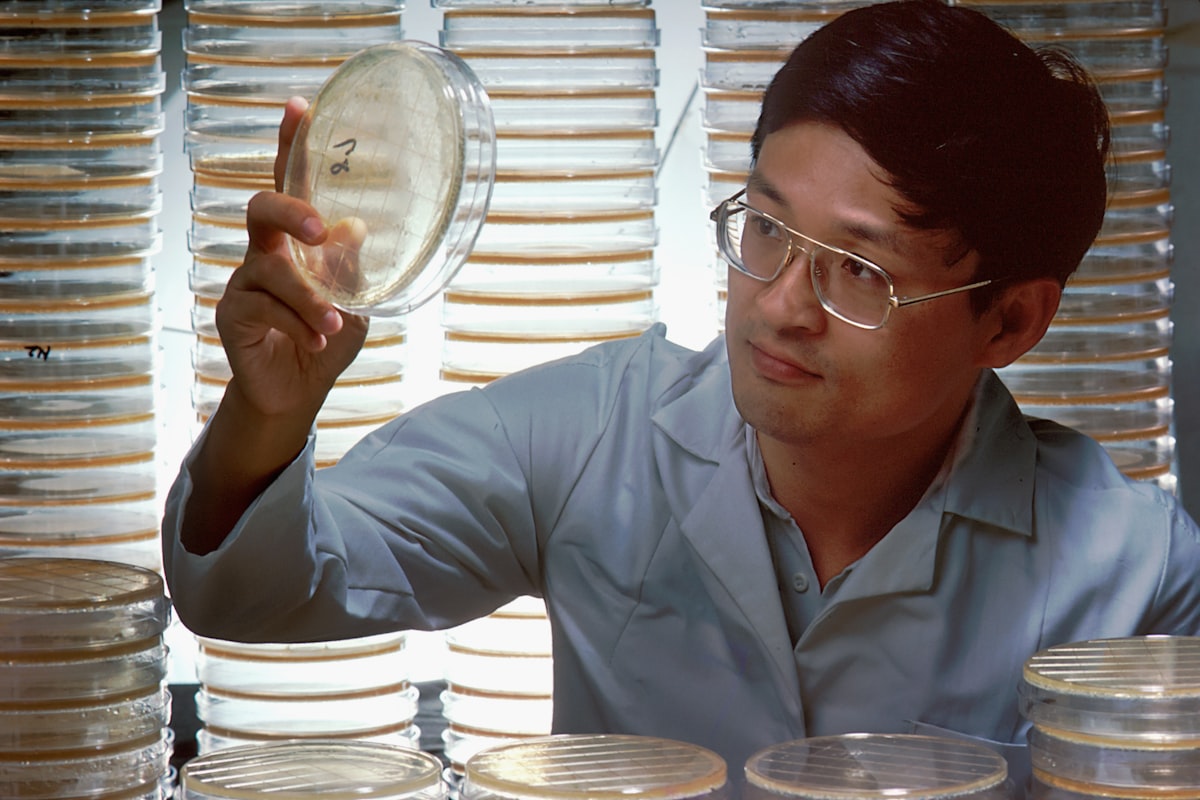
Simon Hippenmeyer, a neuroscientist at the Institute of Science and Technology Austria, has spent years tracking these cells in mice. His earlier experiments used a clever trick: giving pregnant mice a drug that activated fluorescent labels on individual stem cells. But that was just the start. After birth, his team traced those labeled lineages to see how many cells each progenitor produced and how that number shifted as development progressed, which meant watching the same families of cells unfold over weeks, a painstaking process that revealed patterns no one had predicted. It's precise work. And the results are striking.
The mouse data became their reference point. So they grew brain organoids from mouse embryonic stem cells, then compared that developmental sequence against what actually unfolds inside a real embryonic brain, tracing every step of the way. That's the key comparison. It's a direct look at how lab-grown tissue stacks up against nature's own blueprint.
Same Cells, Wrong Order
The organoids produced the same major cell types as real brains. That part worked. But the sequence fell apart.
In normal development, RGPs divide, then differentiate, and then produce fewer descendants as development advances. But in the organoids, something went wrong: some RGPs formed neurons too early, while others were still dividing, so the timing that usually keeps the process orderly got scrambled. It's a mess. And when later-stage RGPs did finally produce neurons, they made far more descendants than they should have, regardless of the developmental time frame, which means the brakes on cell production never engaged properly. That's not how it's supposed to work.
Then came an even stranger finding. The cerebral cortex has six layers of tissue. In a real brain, a single RGP can produce both deeper-layer neurons early on and upper-layer neurons later, which is how it maintains that delicate balance across development. But in the organoids, about one-third of the RGPs became locked into just one of those fates. They couldn't make the other type of neuron at all. That's a hard stop.
What's Missing From the Dish
Hippenmeyer points to what's absent in an organoid: blood vessels, extracellular structures, and metabolic signals that shape the developing brain. It's a critical gap. These external cues, he argues, may be what coordinates the timing of neuronal development and the subsequent formation of neural circuits, yet they simply aren't there, so the brain's timetable could be thrown off without them. But he doesn't claim certainty. Just that these missing factors might be the key.
"This suggests that there is something about the local environment of the cells [in the brain] that gives rise to the neurons," said Denis Jabaudon, a neurobiologist at the University of Geneva who was not involved in the study.
But Jabaudon admitted it plainly: scientists don't yet have a precise understanding of what those signals actually are. That's the rub. And that uncertainty cuts straight to the heart of the challenge, because without knowing exactly what the brain is saying, researchers can't even begin to decode the message, let alone trust the translation they're building.
Timing is everything. For neurons to connect, they have to be in the right place at the right time, and Jabaudon put it bluntly: if you shift the timing of development, you shift the opportunities for connections and the opportunities for specific circuits to form. So a skew in timing could ripple through the entire architecture of the brain. It's that simple. But that ripple isn't a small one, because it changes every possible synapse and every potential pathway that might have otherwise locked into place.
The Path Forward
Identifying what's missing will require tracking down those external signals neurons receive in a living brain, the ones that organoids simply don't get in their dish-bound isolation. But once scientists know the differences between real brains and organoids, they can begin to understand how the natural process actually works, piecing together the sequence of cues and responses that shape our most complex organ. That's the gap. It's a hard hunt. So we've got to watch the signals closely.
Hippenmeyer sees a clear next step. Once the missing ingredients are identified, it could "open the door" to systematically adding those signals back into organoids in a way that mimics the real brain closely. The team also plans to grow brain organoids from human cells and investigate the same questions.
"We are very keen on finding out how those radial glial stem cells would behave in a human system," Hippenmeyer said.
That human focus is what matters most. But the current work used mouse cells, and it's worth remembering that mouse brains differ from human brains in important ways, so we can't simply assume every detail translates perfectly. The core finding, that organoids lose the temporal coordination of real development, likely carries over. That's the real point.
The implications stretch beyond basic neuroscience. These lab-grown minibrains are already used to study disorders that hit during fetal development, and if the timing is off, the models might be showing scientists a distorted version of the disease, so we've got to wonder about the accuracy of every result. It's a risky assumption. But the stakes are high.
- Brain organoids produce the same major cell types as real brains, but the sequence of development is not preserved.
- About one-third of RGPs in organoids became restricted to producing only one type of neuron, losing their flexibility.
- The missing blood vessels, extracellular structures, and metabolic signals may be key to restoring proper timing.
None of this means organoids are useless. They're still the best tool scientists have for studying human brain development without experimenting on actual fetuses, and that's a fact worth holding onto. But the study draws a clear line. These models are approximations, and the approximation has a clock problem.
The next phase of research hinges on figuring out what signals the real brain uses to keep everything on schedule. That's the big question. Then, scientists can try to recreate those exact conditions in the dish, carefully mimicking the chemical and electrical cues they suspect are doing the heavy lifting. So if they succeed, the organoids might finally keep time with the brains they're meant to mimic. But it's a long shot. They can't assume the recipe is simple.
For now, the lab-grown minibrains remain a work in progress, a useful but imperfect stand-in for the most complex organ we know.
Frequently Asked Questions
What is the main finding of the study published in Nature about lab-grown minibrains?
The study found that lab-grown minibrains, or brain organoids, do not maintain the precise developmental timing that occurs in real brains. Specifically, the sequence of cell development is scrambled, with some radial glial progenitors forming neurons too early and others later producing too many descendants.
Why is the loss of developmental timing in organoids a problem for scientists?
The loss of timing is problematic because organoids are used to study brain disorders that arise during fetal development, such as macrocephaly and microcephaly. If the models cannot replicate the clockwork order of brain development, the insights they offer about these disorders may be distorted or limited.
How did the researchers compare organoid development to real brain development?
The researchers used mouse embryonic stem cells to grow brain organoids and then compared the developmental sequence of radial glial progenitors (RGPs) against what occurs in real embryonic mouse brains. They traced labeled cell lineages over weeks to see how many descendants each progenitor produced and when different neuron types formed.
What specific abnormality was observed in about one-third of radial glial progenitors in organoids?
About one-third of radial glial progenitors in organoids became locked into producing only one type of neuron, either deep-layer or upper-layer, and could not switch to produce the other type as normal development would require. This loss of flexibility disrupts the proper formation of the cerebral cortex's six layers.
What factors does the article suggest might be missing in organoids that contribute to the timing problem?
The article suggests that blood vessels, extracellular structures, and metabolic signals present in a living brain are absent in organoids. These external cues may be what coordinate the timing of neuronal development and circuit formation, and their absence could throw off the brain's developmental schedule.

Nadia Petrov covers science and research across disciplines, from the laboratory to the field. She enjoys making discovery accessible and showing why new findings matter.
💬 Comments (0)
No comments yet. Be the first!