S301: Closest Star to Milky Way's Black Hole
Astronomers discover S301, a star on an extreme orbit that comes closer to Sgr A* than any known star, potentially enabling spin measurement.
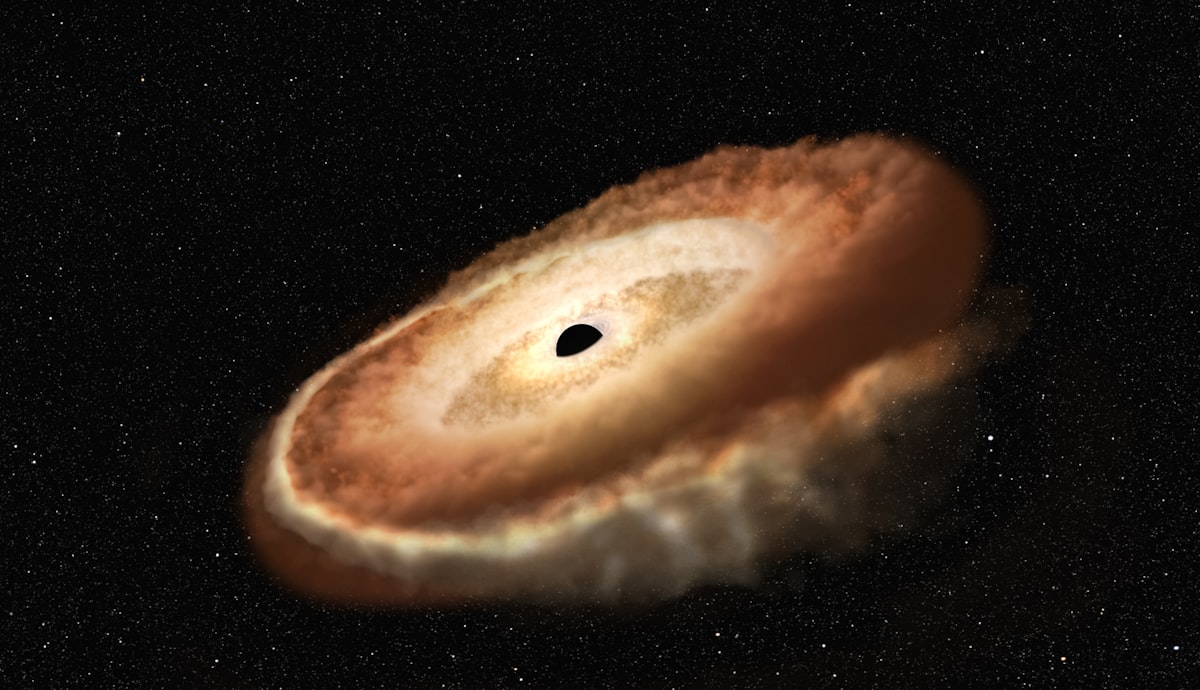
S301 has just become the closest known star to the Milky Way’s central black hole. It's already rewriting what we thought we knew about the galactic core. The star, discovered using the GRAVITY instrument on the Very Large Telescope, follows an orbit so extreme that it screams past Sgr A* at speeds that boggle the mind. And that's not even the most exciting part. It's a wild ride.
For decades, astronomers have studied the stars orbiting Sgr A* not because they care about the stars themselves, but because those stars act as a kind of gravitational probe. By tracking their movements, researchers have been able to pin down the black hole’s mass at nearly 10^37 kilograms. That’s impressive, but mass alone leaves a lot unexplained. General relativity tells us a black hole has only three properties: mass, charge, and spin. Charge is effectively off the table. Spin, however, is a different story.
The Spin Problem
Spin matters because it’s tied to the black hole’s formation history. When material collapses to form a black hole, its momentum has to go somewhere, and it becomes the spin of the resulting object. Gravitational wave detections from merging black holes have already hinted that spin is common in the universe. But measuring the spin of Sgr A* specifically? That’s proven stubbornly difficult.
The problem is geometry. A star's orbit precesses, or shifts its orientation, under the influence of the black hole's spin. But that effect falls off with the cube of the orbital radius, which means you need a star that gets very close, or you need to wait an absurdly long time, and for the stars previously known near Sgr A*, that absurd wait translates to thousands of years. That's not practical. It's not a timeline for anyone who wants results in their lifetime.
A Star on the Edge
S301 changes the calculus. Its orbit is a squashed oval with an eccentricity of 0.9832, which is staggeringly close to the escape threshold of 1.0. For context, Pluto’s eccentricity is a mere 0.25. This star is essentially riding the edge of gravitational capture.
S301 screams along at about 25,000 kilometers per second at its closest approach. That's more than 8 percent of the speed of light. The star passes just 11 Astronomical Units from the black hole, a distance that puts it only slightly beyond Saturn's orbit relative to our Sun, and that's ten times closer than the previous record-holder. It's a staggering leap. But so what? It's still a near miss.
The best orbital model suggests this star takes only 8.7 years to complete an orbit. That's very fast. The researchers note it's more than three years shorter than any other star in the region, and that short period means we can observe multiple orbits within a single human lifetime. So S301's value lies precisely in that speed. You can't watch most stars circle the galactic center even once. But here, we've got a front-row seat to repeat performances, and that's what makes it so precious.
How They Found It
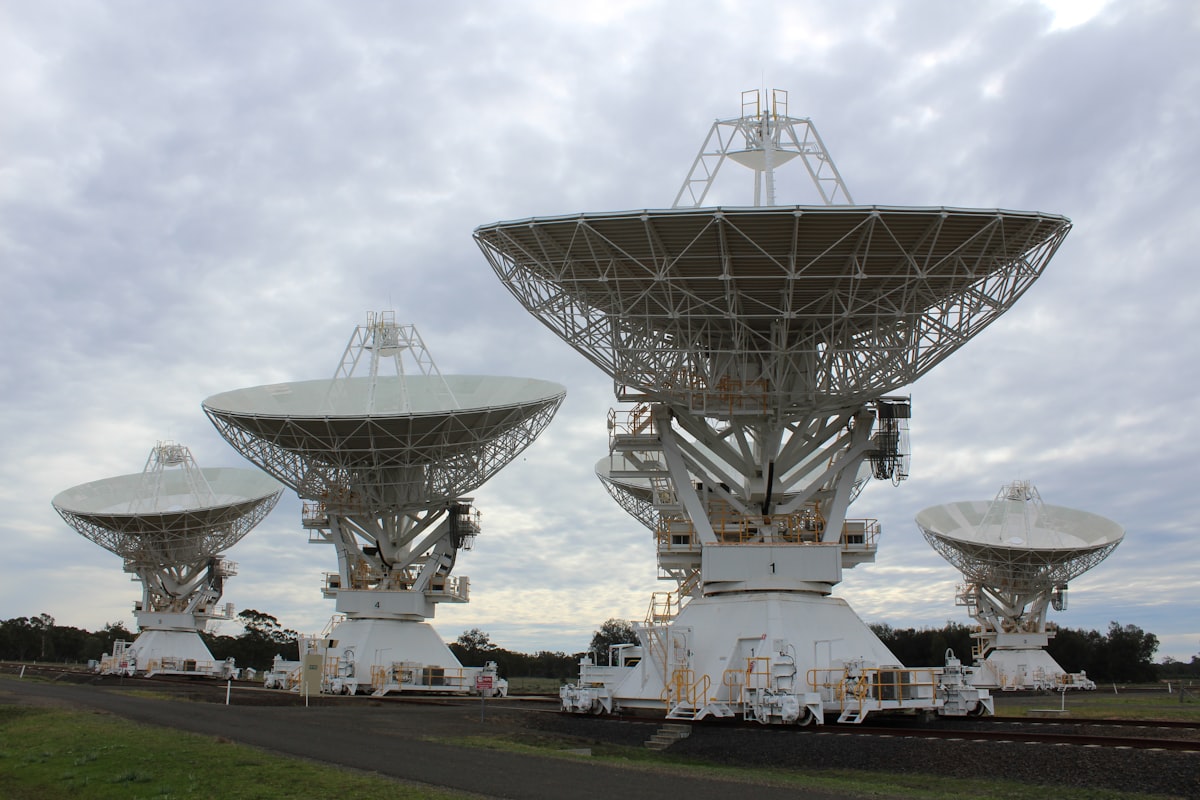
The discovery came from a program running since 2017, which uses GRAVITY to track stars in the immediate vicinity of Sgr A*. That instrument combines light from four separate telescopes, effectively creating a single device with a 130-meter diameter. Powerful, yes. But it doesn't natively produce images. So the team had to convert the data, a painstaking process that turned raw interferometric signals into a visual form they could actually analyze.
In 2023, that conversion paid off. They spotted a star moving away from the black hole, later designated S301, and after several months of observations, they estimated an orbit and used that model to predict where the star should have been in earlier data. The prediction matched. So they confirmed it was a genuine star, not an artifact. It's a real find.
The orbit suggests its closest approach happened early in 2023, which means we’ve already missed the first flyby. The good news is that 8.7 years is not a long wait.
A Binary Origin
How did S301 get into such a precarious orbit? Researchers suspect it was originally part of a binary system. But that system wandered too close to Sgr A*. The black hole's gravity would have ejected the companion star, flinging it away while S301 was captured into its current tight orbit, a process that leaves little room for error. So the culprit is clear. It's a cosmic hijacking.
That’s a neat story, but the real significance is what S301 can do for us going forward. So here’s the payoff. The researchers estimate that current instruments can track its orbit with enough precision to produce a spin estimate for Sgr A* with about a decade of data. A longer time series or better resolution could then reveal even finer details, and that’s where the real science gets interesting. It won’t be quick. But we’ve got the tools to start.
“Finding S301 may be like developing a higher-precision instrument to study a supermassive black hole.”
That higher precision opens doors. If Sgr A* deviates from a perfect sphere, or if it has any additional properties beyond spin that influence its behavior, S301’s orbit might reveal them. The star is effectively a natural test particle, one that gets close enough to feel the full gravity of the black hole without being torn apart.
What Makes S301 Special
The star appears to be about 1.5 times larger than the Sun. That size matters because if it were much bigger, it would be disrupted by the black hole’s tidal forces. It’s right at the edge, close enough to feel extreme gravitational effects but stable enough to survive.
That proximity is what makes S301 uniquely useful. The precession effect that we need to measure spin diminishes with the cube of the radius, so getting ten times closer than the previous closest star isn’t just a marginal improvement. It’s a massive jump in sensitivity, roughly a thousandfold in terms of the effect’s strength.
It's a reminder that the best discoveries don't always come from building bigger instruments. Sometimes they come from finding the right natural probe, one that happens to orbit exactly where we need it to. That's the whole trick. And it's a quiet kind of genius, this patience, this willingness to let the universe hand you the answer instead of forcing it with brute force. We've just got to watch.
The Road Ahead
Ten years of data might sound like a long time. But it’s nothing compared to the thousands of years we would have otherwise needed, and that’s a hard truth to swallow when you consider the sheer scale of what we’re trying to observe. And with continued improvements to observational capabilities, the timeline could shrink further. So we’re speeding up.
S301 is already a success story. It's proof our instruments can find and track stars in one of the most extreme environments in the galaxy, a chaotic region where gravity bends light and matter spirals at unimaginable speeds. But its real legacy could be the spin measurement it enables. That number would tell us something fundamental about how the Milky Way's supermassive black hole formed and evolved. And that's the kind of knowledge we can't afford to ignore.
For now, astronomers will keep watching. But they're already ticking the calendar for the next close approach, since this star follows an 8.7-year orbit, and when that moment finally arrives, we've got our instruments primed, our data pipelines ready, and our full attention fixed on the sky. We'll be ready.
Frequently Asked Questions
What is the significance of S301's discovery?
S301 is the closest known star to the Milky Way's central black hole, Sgr A*, passing just 11 Astronomical Units from it. This proximity makes it a unique natural probe that can help measure the black hole's spin with about a decade of data, which was previously impractical.
How was S301 discovered?
The discovery came from a program using the GRAVITY instrument on the Very Large Telescope, which combines light from four telescopes to create a 130-meter diameter device. The team converted raw interferometric signals into visual form, and in 2023 they spotted a star moving away from the black hole, later designated S301, confirming it as a genuine star after matching its predicted orbit with earlier data.
Why is S301's orbit considered extreme?
S301's orbit has an eccentricity of 0.9832, very close to the escape threshold of 1.0, and takes only 8.7 years to complete, which is more than three years shorter than any other star in the region. At closest approach, it travels at about 25,000 kilometers per second, over 8% of the speed of light, passing within 11 AU of Sgr A*.
How did S301 end up in its current orbit?
Researchers suspect S301 was originally part of a binary system that wandered too close to Sgr A*. The black hole's gravity ejected the companion star, flinging it away while S301 was captured into its current tight orbit, a process described as a cosmic hijacking.
What future observations are planned for S301?
Current instruments can track S301's orbit with enough precision to produce a spin estimate for Sgr A* with about a decade of data. The researchers are already preparing for the next close approach in 8.7 years, having their instruments and data pipelines ready to observe it.

Nadia Petrov covers science and research across disciplines, from the laboratory to the field. She enjoys making discovery accessible and showing why new findings matter.
💬 Comments (0)
No comments yet. Be the first!