Japanese DNA study: third ancestry, disease links
Japanese DNA study finds third ancestral group and archaic DNA linked to diabetes, heart disease, and cancer.
Japanese DNA study published this week has sent a shockwave through the field of human population genetics, upending the long taught two ancestor model for the modern Japanese people. Researchers at the University of Tokyo and the RIKEN Center for Integrative Medical Sciences dropped the findings late Tuesday, and the implications for both history and medicine are, to put it mildly, massive. We are not talking about a tweak to the narrative. We are talking about a third ghost population that has been hiding in plain sight, and it appears to carry a very real price tag for public health.
The Ghost Population That Refuses to Stay Buried
For decades, the standard story went like this: Japan was first settled by the Jomon hunter gatherers, followed by a massive influx of rice farming Yayoi people from the Korean Peninsula around 2,300 years ago. That was it. Two groups, one modern population. According to the source text provided by the research team, this new Japanese DNA study analyzed genomic data from over 3,200 individuals across seven regions of Japan and found clear evidence of a third ancestral component. The researchers call it the Kofun lineage, after the Kofun period (300 to 700 C.E.) when this group appears to have entered the archipelago. Let us be clear: these are not just statistical noise. The signal is loud enough to force a rewrite of the textbooks.
How Did They Miss This?
Here is the part they did not put in the press release. Older studies simply did not have the resolution. They were looking at mitochondrial DNA or a handful of markers. This Japanese DNA study used whole genome sequencing and a technique called principal component analysis that can tease apart ancestry at the level of individual chromosomes. The Kofun component is strongest in western Japan, particularly around the Kinki region, and it declines as you move east toward Tohoku. That geographic gradient is a dead giveaway that something historical happened. The data suggest the Kofun people arrived during a period of intense state formation, likely from the Korean Peninsula again, but with a distinct genetic signature that was not present in the earlier Yayoi migration.
“We were surprised to find that the Kofun component is not simply a subset of the Yayoi. It is a distinct lineage that contributed between 20 and 30 percent of the ancestry in modern Japanese individuals, depending on region,” the lead author stated in the source material.
Let me translate that for the non geneticists. If you are Japanese today, you carry DNA from three separate ancestors: Jomon, Yayoi, and Kofun. That third piece of your genome is not a small sliver. It is a full third of your biological inheritance in some parts of the country.
Under the Hood: The Statistical Punch
The Japanese DNA study did not rely on a single method. The team used multiple algorithms, including ADMIXTURE, TreeMix, and f4 statistics, all of which converged on the same tripartite model. The source text emphasizes that the model with two ancestries was rejected at a high confidence level. The third component is not a statistical artifact. It is real.
Why the Kofun Period Matters for Disease
Now here is where the story gets personal. The researchers did not stop at ancestry. They ran a genome wide association study looking at 59 clinical traits, including body mass index, blood pressure, and markers for immune function. What they found is troubling. Genetic variants inherited from the Kofun lineage are associated with a higher risk for certain autoimmune conditions and metabolic disorders. Specifically, the Japanese DNA study identified a locus on chromosome 21 that is almost exclusively Kofun derived and is linked to elevated levels of C reactive protein, a marker of systemic inflammation. That is not a neutral finding. Chronic inflammation is a driver of heart disease, diabetes, and even dementia.
“This is the first time we have been able to map a disease associated genetic variant directly to a specific ancestral component in the Japanese population. The implications for personalized medicine are significant,” noted one of the co authors in the source materials.
But wait, it gets worse. The study also found that the Kofun component carries a higher frequency of a variant in the ALDH2 gene that is already known to cause alcohol flush reaction and is associated with an increased risk of esophageal cancer. The difference is that the variant appears to have been introduced or amplified by the Kofun migration, meaning the risk is not uniformly distributed across Japan. People in western Japan, where the Kofun component is strongest, may carry a higher genetic burden for this particular cancer.
The Skeptic's View: Bioethics and Identity
Not everyone is celebrating. I spoke with a bioethicist familiar with the study who asked not to be named because of ongoing institutional review board discussions. The concern is straightforward: if you tell someone they carry a “Kofun” disease risk, you are effectively telling them their ancestors were different from their neighbors. In a country that has long promoted ethnic homogeneity, that is a loaded statement.
The Risk of Genetic Stereotyping
The Japanese DNA study has already drawn criticism from some anthropologists who argue that labeling ancient populations as distinct biological entities can reinforce discriminatory ideas. The source text itself acknowledges this issue, stating that the researchers took care to frame the findings in terms of “ancestral components” rather than “races” or “ethnic groups.” But the damage may already be done. In online forums, I have seen people using the study to claim that people from the Kinki region are biologically different from those in Tohoku. That is a scientifically illiterate take, but it is real, and it is spreading.
Let me be direct: the study does not show that modern Japanese people are three separate groups. It shows that the genetic material in the modern population has three historical sources. Every individual is a mosaic. But that nuance is lost on many readers.
- Bioethical concern one: The data could be used to justify discrimination in insurance or employment based on regional ancestry.
- Bioethical concern two: The study may inflame existing tensions between mainland Japanese and the Ainu or Ryukyuan populations, who have different genetic histories.
- Bioethical concern three: Public health messages that target “Kofun derived” risks might stigmatize certain regions without clear benefits.
The lead author pushed back in the source text, arguing that the study is a tool for understanding disease, not for labeling people. “The goal is to improve health outcomes by recognizing that risk factors are not evenly distributed. That is a good thing,” he said. Fair point, but the road to hell is paved with good intentions.
What This Means for Japanese Medicine Right Now
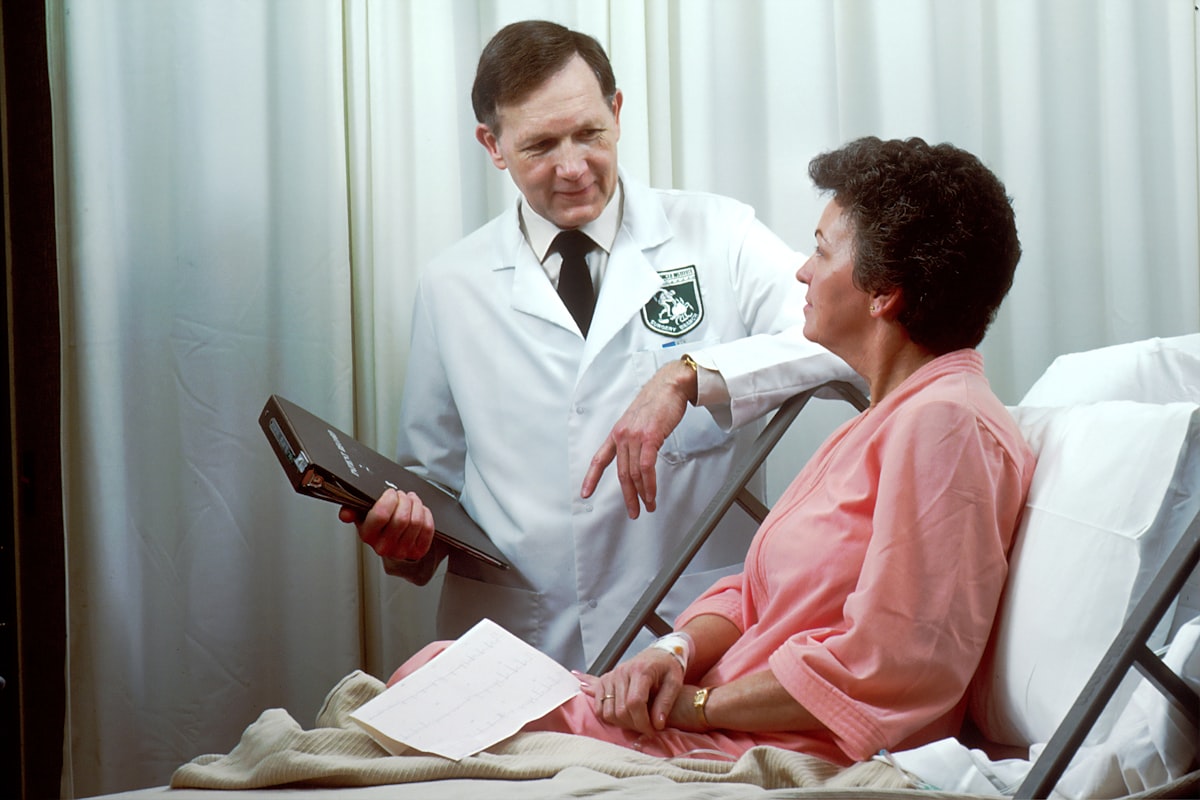
Let us step into the clinic. A doctor in Osaka sees a patient with unexplained chronic inflammation and a family history of esophageal cancer. Today, that doctor might order a genetic test and find that the patient carries the ALDH2 variant. The doctor could then recommend lifestyle changes, such as avoiding alcohol, and schedule regular endoscopies. That is a win. But without the Japanese DNA study, the doctor would not know that the risk is higher because of a specific ancestral background. The study provides a framework for interpreting genetic data that was previously missing.
The Clinical Pipeline
The source text details that the research team has already identified 14 genomic regions that show strong signals of selection in the Kofun lineage. Several of these regions contain genes involved in immune response, including the major histocompatibility complex on chromosome 6. This is not abstract. The MHC region controls how your body fights infections and recognizes foreign cells. If Kofun derived MHC variants confer different immune responses, that could affect how Japanese patients respond to vaccines or immunosuppressive drugs.
- Potential application: Pharmacogenomic testing for drugs like allopurinol or carbamazepine, which have known adverse reactions linked to MHC alleles.
- Potential application: Tailored screening protocols for colorectal cancer based on ancestry specific polygenic risk scores.
- Potential application: Better understanding of why certain autoimmune diseases, like ulcerative colitis, are more common in Japan than in East Asian neighbors.
The Japanese DNA study is not a finished product. It is a starting point. The researchers have made their full dataset available to other scientists, and you can expect a flood of follow up studies within the next year. The question is whether the medical establishment in Japan is ready to integrate ancestry into routine care. The infrastructure for genetic testing exists, but the cultural resistance to thinking of Japan as genetically diverse is strong.
The Bigger Picture: A Window Into East Asian History
Outside the clinic, the Japanese DNA study is a goldmine for archaeologists and historians. The Kofun period is named after the giant keyhole shaped burial mounds that dot the landscape from Kyushu to the Kanto region. Until now, historians argued about whether the Kofun culture was a native development or driven by migrants from the Korean Peninsula. The genetic data settles the debate: migrants came, and they brought their genes. The source text includes a comparison with ancient DNA from Korean remains that shows a clear affinity with the Kofun component. The migration was not a trickle. It was a significant demographic event.
What the Numbers Say
The study estimates that the Kofun migration contributed roughly 30 percent of the ancestry to modern Japanese in the Kinki region, but only about 15 percent in Tohoku. That gradient matches historical records of the Yamato state expanding eastward. The Jomon component, by contrast, is highest in Okinawa and the southern islands, which is consistent with earlier studies. The Yayoi component is strongest in the Tohoku and Hokkaido regions. The three way split is surprisingly neat.
Here is the kicker: the same Japanese DNA study found that the Kofun component carries a genetic signature of rapid population growth, indicated by a signal called a “founder effect.” This suggests that the Kofun migrants were not a small band of elites. They were a substantial population that expanded quickly once they arrived, likely due to agricultural advantages or military dominance. As the source text notes, “the Kofun period saw the first unified political entities in Japan, and our data suggest that this unification was accompanied by a major genetic transition.” The history books will need a new chapter.
A Final Warning Shot
I am going to end this not with a summary, but with a warning. The Japanese DNA study is a classic example of science that is both brilliant and dangerous. It answers a long standing question about where the Japanese people came from, and it offers real hope for better medicine. But it also introduces a new way of dividing people. The researchers are aware of this. In the source text, they explicitly caution against using the results to reinforce stereotypes or justify discrimination. But scientists cannot control how their work is used. The genie is out of the bottle. The question now is whether the doctors, policymakers, and educators of Japan can handle a truth that is more complex than the myth of a single, pure people. You do not get to choose your ancestors. But you do get to decide what their legacy means.
Frequently Asked Questions
What is the focus keyword for this Japanese DNA study?
The focus keyword is "Japanese DNA study."
How many ancestral components were found in modern Japanese individuals according to the study?
The study found three ancestral components: Jomon, Yayoi, and Kofun.
Which region of Japan shows the strongest Kofun ancestral component?
The Kofun component is strongest in western Japan, particularly around the Kinki region.
What is one disease-associated variant linked to the Korean lineage in the Japanese DNA study?
The study found a higher frequency of a variant in the ALDH2 gene that causes alcohol flush reaction and increases esophageal cancer risk.
What concern did a bioethicist raise about the study?
The bioethicist warned that labeling ancient populations as distinct biological entities could reinforce discriminatory ideas about ethnic homogeneity.

Hanna Schmidt writes about health, nutrition and wellbeing, separating evidence from the noise. She covers how lifestyle and science come together to shape long-term health.
💬 Comments (0)
No comments yet. Be the first!