Vast Space satellite bus diversification reshapes hardware market
Vast Space moves beyond private space stations into power-hungry satellite buses, leveraging $1B in existing clean-room facilities to compete for an estimated 50,000 commercial satellite orders.
But they're not easing in. The Long Beach, California, company announced plans to sell high-powered satellite buses built on technology proven during its Haven-1 station development. The demonstration mission launched in early November, completed dozens of test objectives, executed a controlled de-orbit three months later, and validated power, propulsion, tracking and other systems forming the backbone of a new product line. It's the clearest signal yet that the private space station builder intends to compete for a slice of the proliferated constellations market. And they've already signed a customer for four satellites, with an option to expand to 200, and they target a first multi-unit launch in the fourth quarter of 2027.
A 15-Kilowatt Bet on Power-Hungry Orbit
The first offering is a 15 kW-class satellite bus, roughly 3 meters long and 4 meters tall, with a mass of 700 kilograms and a payload capacity of at least 350 kilograms. It's a five-year design life. Vast's leadership frames this as a modular backbone for power-hungry applications spanning telecommunications, Earth observation, and data services. And in a notable specification, the company plans to offer an Nvidia Space-1 Vera Rubin Module, enabling orbital data center inferencing that could differentiate its buses in a market where raw compute in orbit is still nascent.
Inferencing in Orbit
The Nvidia module places Vast's satellite bus diversification at the intersection of two trends, the rapid growth of on-orbit compute and the shift toward proliferated architectures. It's not a generic payload. But it signals an intent to pursue inferencing workloads for customers who want to process data at the edge, without the latency of downlinking to terrestrial data centers.
Diversification Is Not Optional
Max Haot, Vast Space’s chief executive, put the rationale bluntly in an interview with Ars Technica.
“Every single successful space company is diversified in its products. So for us it really was a question of when, not if.”
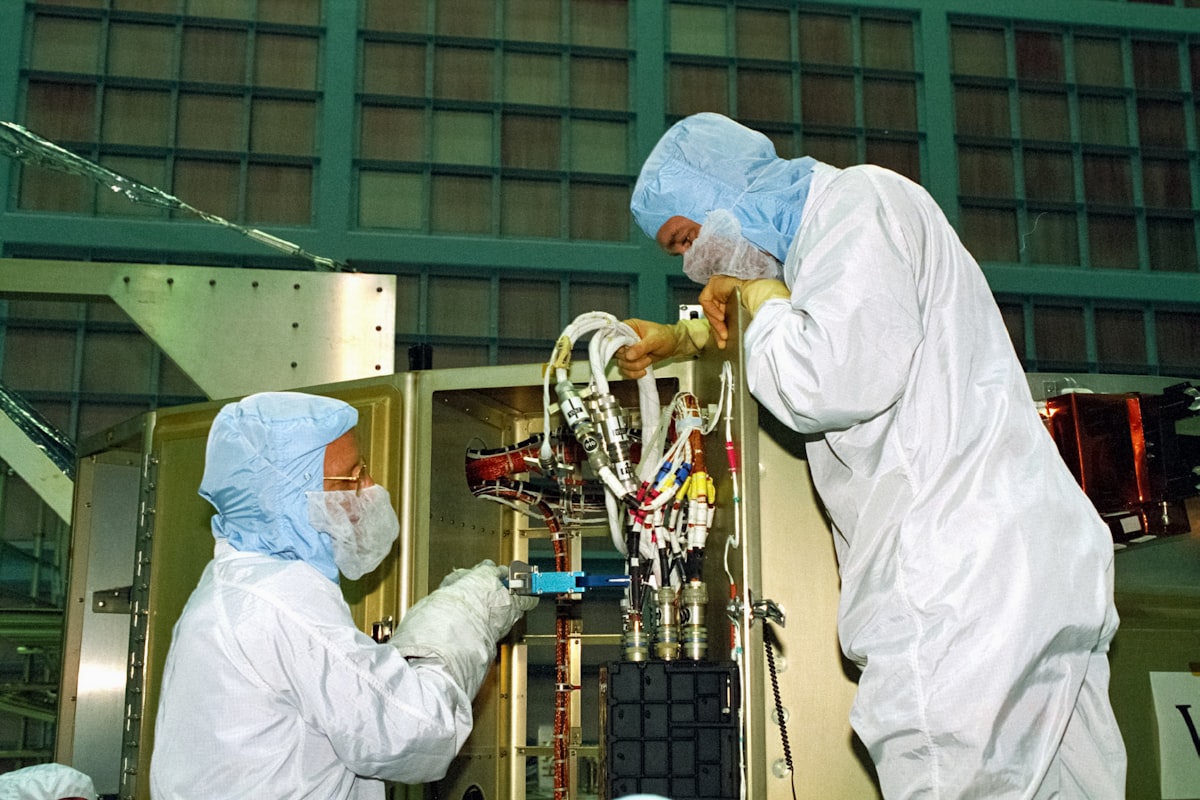
That logic's driven the company. It repackages technology developed for its Haven-1 space station, which is due to launch next year as the world's first private space station, into a satellite bus. The transfer is extensive. Power management, navigation, and structural elements migrate directly. But Haot noted that the satellite product requires some new components, and Vast's already moving forward with in-house development of electric propulsion and a deployable solar array. Tying the satellite effort to the station program lets Vast spread engineering costs and shorten development cycles, a calculation that becomes more compelling the closer Haven-1 gets to flight.
The Proliferated Constellations Tailwind
Read alongside broader space industry currents, the entry makes sense. The US government’s Space Development Agency has signaled a clear preference for proliferated constellations: many small and medium satellites that present a less concentrated target than a handful of bespoke billion-dollar spacecraft. Falcon 9’s accelerating launch cadence and rideshare missions have lowered the cost of reaching orbit, opening the door for new bus manufacturers backed by venture capital. A generation of companies has emerged offering modular, less expensive platforms that can be adapted across multiple missions. Historically, in the United States, a handful of large companies such as Boeing, Lockheed Martin, Northrop Grumman, Maxar, and Sierra Space manufactured medium and large satellites, often with price tags running into tens or hundreds of millions of dollars. That model is being reshaped.
Reading the Competitive Stance
On the surface, the satellite bus market looks crowded. New entrants include:
- K2 Space
- Rocket Lab
- True Anomaly
- Blue Canyon
- Millennium Space Systems
But that framing misses something. Haot argues most of these companies are still emerging, with products that are not yet mature, leaving space for a player with deep facilities investment to pull ahead, particularly in high-power segments.
“Most of these companies are still emerging, with products that are not yet mature.”
So Vast Space's satellite bus diversification isn't merely a product launch, it's a bet that timing and existing infrastructure can convert an undeveloped market into a dominant position. That head start matters. The company already invested $1 billion in spacecraft manufacturing facilities including clean rooms for both space stations and satellites. Scaling production to capture a slice of a potential 50,000-unit commercial bus market demands factory floor space and clean-room capacity many younger competitors don't have.
What $1 Billion Buys
Vast's billion-dollar outlay wasn't just for satellites because their facilities, designed for the ambitious Haven-1 program, also provide dual-use infrastructure that gives the satellite bus line an immediate manufacturing backbone. It shortens volume production time. But in a sector where capital expenditure on clean rooms, testing chambers, and integration bays can stall new entrants, Haot's confidence Vast can become market leader in power-hungry applications rests heavily on that installed base.
A Market Sized in Tens of Thousands
For decades the total number of satellites orbiting Earth hovered around 4,000, but in the last five years it's grown to about 14,000, largely driven by SpaceX's Starlink constellation. Don't misread them. We'll have roughly 500,000 satellites a decade from now, for communications, Earth observation, orbital data centers, and other applications. Haot expects that about 90 percent of those will be built by SpaceX, Amazon, Blue Origin, or other major players with their own internal satellite lines. So even the remaining 10 percent represents roughly 50,000 satellites for commercial bus manufacturers to compete for, and that arithmetic suggests a sizable addressable market even if the bus segment becomes intensely competitive.
Vast aims to serve customers across several verticals:
- Telecommunications
- Earth observation
- Data services
It's not a niche play. So the company's satellite bus diversification positions Vast to bid on a broad swath of future constellation builds by using a common platform that can be adapted to different payloads and orbits.
Looking Beyond the First Four Orders
Four satellites. That is the initial order Vast has secured, with an option that swells to 200. The company targets launching at least 10 of its own satellites in the fourth quarter of 2027, a goal that will test whether its in-house electric propulsion and deployable solar array can move from development to flight readiness on schedule. Haven-1 remains the flagship program, set to lift off next year, but the satellite bus line is no longer a side project. It has become a second pillar, built on the same engineering DNA and factory infrastructure.
Strip away the marketing. The calculation is straightforward: Vast Space's satellite bus diversification turns a successful station test campaign into a product family just as the industry's appetite for modular, power-dense buses is taking shape. Whether the company can convert its facilities advantage and propulsion work into a production cadence that outruns the emerging pack, it's the question the next eighteen months will answer.
Frequently Asked Questions
What is Vast Space's new satellite bus entry?
Vast Space has introduced a new satellite bus platform to diversify its space hardware offerings beyond crewed habitats.
How does this reshape the space hardware market?
It increases competition by offering a cost-effective, modular bus that challenges established players like SpaceX and Lockheed Martin.
What are the key features of Vast's satellite bus?
The bus features a scalable design, high power capacity, and compatibility with various payloads for LEO and beyond.
Who are the target customers for this satellite bus?
Target customers include commercial satellite operators, government agencies, and research institutions seeking flexible platforms.
When will Vast Space's satellite bus be available?
Vast plans to begin production by late 2024, with first deliveries expected in 2025.

Markus Heill writes about technology and the tools we use every day, from smartphones to the services that run in the background. He is interested in how good design makes technology easier to live with.
💬 Comments (0)
No comments yet. Be the first!