Starbucks AI Inventory Tool Retired After Nine Months
Starbucks AI inventory tool retired after NomadGo app couldn't tell oat milk from dairy, per an internal memo. Manual counts return
And Starbucks confirmed this week it's pulled its AI inventory tool, Automated Counting, from North American stores after nine months, meant to bring precision to a supply chain that bedevilled four CEOs across five years. It kept mixing the milks.
Nine Months, Then Out
The tool's rolled out across North American locations last September, billed as a headline operational fix under CEO Brian Niccol, who took top job in September 2024 as part of his 'Back to Starbucks' turnaround. As reported by Reuters and picked up by The Next Web, an internal newsletter shared the news in plain terms with store managers this week. But it's a fix.
"Starting today, Automated Counting will be retired," the Monday memo read. "Beverage components and milk will now be counted the same way you count other inventory categories in your coffeehouse."
So it's by hand. But baristas will go back to visually checking shelves of syrups, dairy, and non-dairy alternatives, the same low-tech method the algorithm was meant to replace.
Why the Algorithm Failed
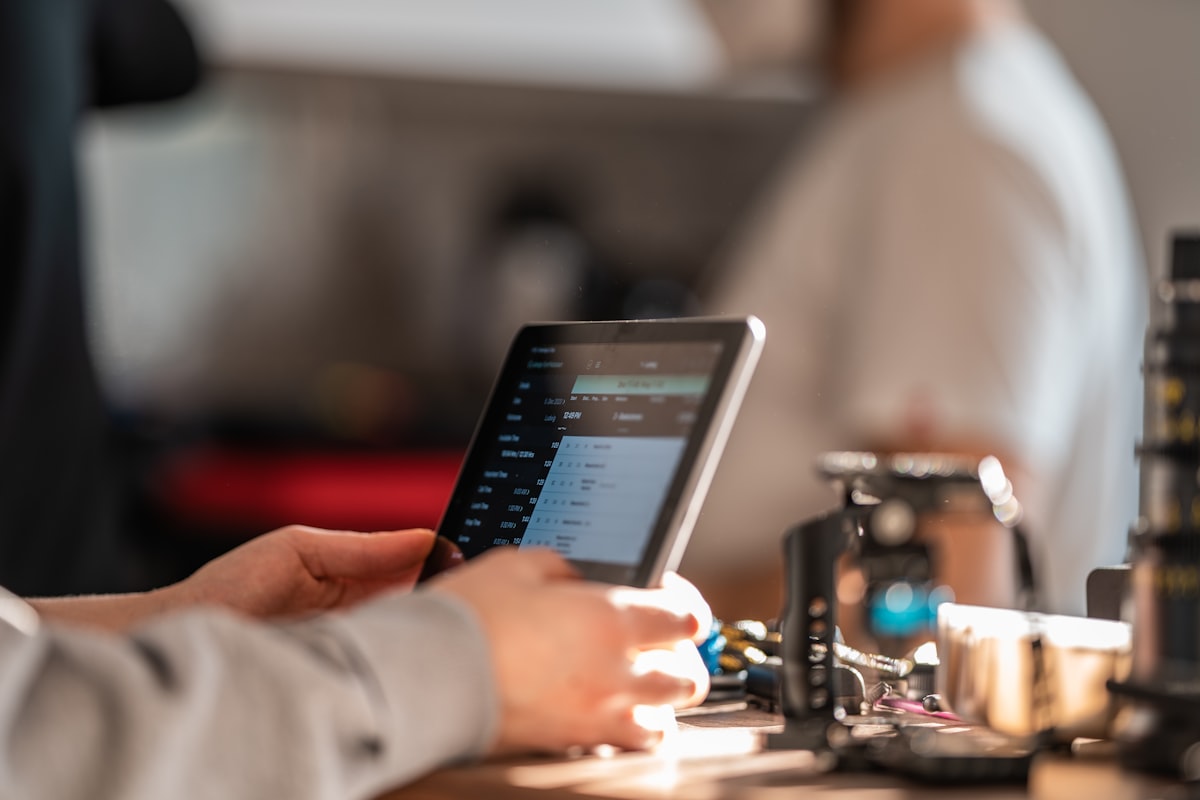
It failed almost immediately. Built by Seattle-based NomadGo, the Starbucks AI inventory tool used tablet-mounted cameras and LiDAR to scan store shelves and produce automatic counts, and it promised live, store-level visibility into stock levels that the chain had struggled to achieve for years. But it couldn't tell one white liquid from another, a deceptively simple task.
Reuters first flagged the problem in February since the app frequently miscounted or mislabelled similar-looking products, and oat milk and dairy, two cartons that look nearly identical on a shelf, were regular points of confusion. A promotional video Starbucks released at launch showed the system failing to register a bottle of peppermint syrup sitting in plain view as it counted the bottles next to it. It's sold the vision then. But now it reads like a warning that was hiding in plain sight.
A Camera's Confusion
It's not lack of sophistication. LiDAR and computer vision can map a room in three dimensions with millimetre precision. But inventory counting in a busy coffee shop introduces variables the demo reel can't show: hastily restocked shelves, baristas rearranging items mid-shift, and product packaging that changes with seasonal promotions. The tool had been in development for several years. It still wasn't ready for the real store.
How Starbucks Is Framing the Retreat
It's not a retreat. But Starbucks told Reuters the move is a standardisation exercise, and company's statement explained that the decision came from standardising inventory counting across coffeehouses as we're continuing to focus on consistency and execution at scale. And it's moving toward more frequent daily replenishments and continued supply chain improvements.
But that framing's missing something. Automated Counting wasn't some side experiment but one of Niccol's most visible technology bets aimed directly at a problem that had outlasted every recent occupant of the corner office. In early 2024, by the company's own admission, fewer than a third of deliveries to Starbucks distribution centres arrived on time and in full. Inventory gaps meant lost sales. And lost sales meant repeated public explanations from leadership. This tool was supposed to close the loop.
An Honest Employee Reaction
An internal note shared by the company quoted an employee who did not sugar-coat the experience.
"The thought behind it was great, but the execution was proving difficult."
That single sentence captures something the press releases tend to smooth over. Good intent does not survive contact with a busy Saturday morning rush.
The Bigger Picture on Enterprise AI
Only 5% reached production. The failure lands at a moment when the wider record on enterprise AI is starting to look less generous than the pitch decks, and MIT's NANDA initiative found last year that 95% of enterprise generative-AI pilots delivered no measurable impact on the profit and loss statement despite roughly $30 to $40 billion in spending. But the Starbucks AI inventory tool wasn't generative AI, and yet the shape of the failure's familiar.
- Deeply integrated, store-level workflows proved harder to automate than demos suggested.
- Real-world variability confounded a system trained on controlled environments.
- A multi-year development cycle ended with a return to manual processes.
NomadGo told Reuters it's "continuously learning from customer and user feedback" to improve its products, but the company didn't disclose specific changes planned in response to the Starbucks decision. But specific changes weren't disclosed.
What Comes Next
Starbucks posted its strongest quarterly sales growth in two and a half years last month, but operating margins in its core North American market fell to 9.9% from 18% two years earlier. And the stock's up 24% so far in 2026, while Niccol's still betting on other AI tools including systems to sequence orders and assist baristas during peak hours. Those remain in play.
The immediate test is simpler. But it's whether daily replenishments and human eyeballs can do what the algorithm could not, which is keep peppermint syrup on the shelf when someone orders it.
Frequently Asked Questions
What was the Starbucks AI inventory tool?
It was an AI-powered system designed to optimize inventory management and reduce waste at Starbucks locations.
Why was the AI inventory tool retired after nine months?
The tool failed to meet performance expectations, leading to inventory inaccuracies and operational inefficiencies.
How did the tool impact Starbucks operations?
It caused stockouts and overstock issues, frustrating store managers and staff.
Will Starbucks develop a new AI inventory system?
Starbucks plans to refine the technology and may reintroduce an improved version in the future.
What lessons did Starbucks learn from this experience?
The company learned the importance of rigorous testing and gradual rollout for AI systems in complex retail environments.

Chloe Dupont covers consumer technology, from the latest devices to the software shaping daily life. She focuses on how new tools fit into the real world and whether they live up to the promise.
💬 Comments (0)
No comments yet. Be the first!