SpaceX Starship V3 Mostly Successful on First Flight, Splashdown Achieved
SpaceX's Starship V3 launched on its first test flight Friday, splashing down in the Indian Ocean despite two engine failures.
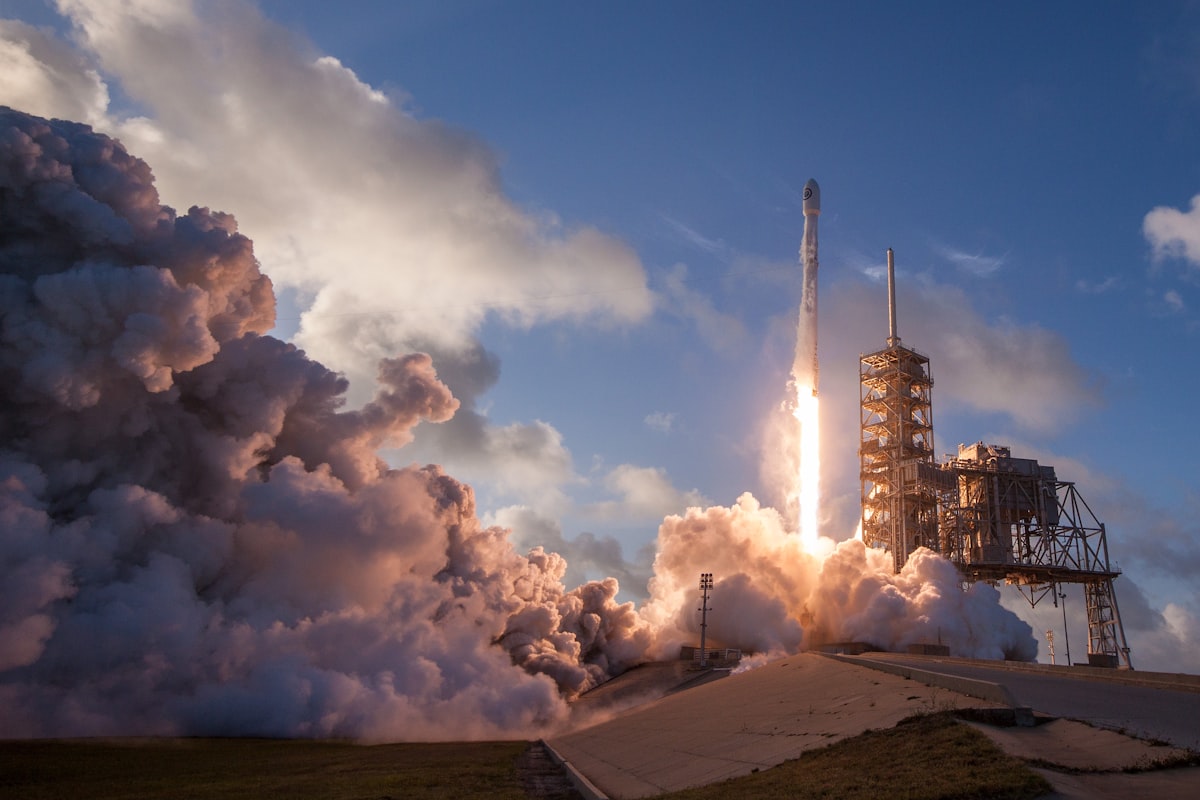
It's a first. Starship V3, the 408-foot-tall rocket the largest ever built, launched on its maiden test flight Friday from Starbase South Texas at 5:30 pm CDT and cleared tower turning east over the Gulf of Mexico. A little more than an hour later, the upper stage splashed down on target in the Indian Ocean. But unlike Starship V1 and V2, both of which broke apart during their inaugural flights in 2023 and 2025, this one came home.
A Long Wait, A Big Payoff
The gap between Starship test flights stretched more than seven months, making it the longest pause since the program's first full-scale launch in April 2023, and the last flight took off last October. SpaceX used the downtime to finish building and activating a second launch pad at Starbase while engineers put Starship V3 through ground testing. Ground testing didn't go smoothly. But when the rocket finally flew, the results justified the wait.
Initial inspections of the new launch pad, which debuted Friday, showed the facility's handled the intensity of liftoff with no notable problems. That matters beyond Texas. But the new Starbase pad serves as a design template for planned launch pads at Cape Canaveral, Florida, so a clean bill of health here bodes well for the road ahead.
What Worked: Heat Shield and Payload Deployment
It's a vindication. For a program that's wrestled with heat shield failures on past flights, the performance of Starship V3's thermal protection system was a vindication, and onboard cameras showed the vehicle's aerodynamic flaps intact throughout the fiery descent, which is the most encouraging news. So the ship executed a series of banking maneuvers on the way toward the splashdown zone northwest of Australia, simulating the path future ships will take when returning to landings at Starbase.
Sticking the Landing
It flipped. From horizontal to vertical. The ship's Raptor engines downshifted from three to two to one during a final landing burn, and it settled into a gentle water landing as drones and buoy cameras captured live views of on-target splashdown. But the ship, wider than and nearly as long as a Boeing 777 jetliner, tipped over and exploded in a fireball as expected. It's the exclamation point on a trip halfway around the world from the Texas Gulf Coast.
Pez Dispenser Delivers
SpaceX demonstrated Starship V3's upgraded payload deployment mechanism earlier in the flight; it's a system designed for releasing flat-packed Starlink satellites, and though the Pez-like dispenser has been tested before, upgrades allow a faster release. So on Friday, it deployed 20 next-generation Starlink mockups and two spacecraft with flashlights and cameras to inspect Starship's exterior in space, then soared to 121 miles in darkness over the South Atlantic Ocean. All worked perfectly.
Let's break this down. Here is what went right:
- The heat shield held up during reentry over the Indian Ocean.
- Aerodynamic flaps remained intact throughout the descent.
- Banking maneuvers simulating future return-to-launch-site profiles went as planned.
- The ship executed a controlled flip and landing burn, splashing down on target.
- Payload deployment system released all 20 Starlink mockups and two inspection spacecraft without issue.
- The new launch pad at Starbase sustained no major damage during liftoff.
Two Engines Lost, Booster Gone
33 Raptor engines lit the sky above South Texas. Two of them quit early. But one, in the outer ring of the Super Heavy booster, shut down shortly after liftoff, and another, on the Starship upper stage itself, cut off soon after stage separation high over the Gulf. It's the first flight of SpaceX's upgraded Raptor 3, a redesign with higher thrust, lighter weight, and improved efficiency. Collectively, the 33 booster engines produce up to 18 million pounds of thrust at full throttle, twice the power of NASA's Space Launch System rocket used on last month's Artemis II mission.
Both stages proved their engine-out capability. The ship compensated by burning its five remaining engines a little longer than usual and still reached its planned trajectory. The booster was not so lucky. It hurtled toward a high-speed impact in the Gulf after failing to complete maneuvers for a controlled splashdown offshore from Starbase. It was not immediately clear what caused the early end to the boost-back burn: an external problem during stage separation or a separate issue within the booster's propulsion system.
One detail stands out. So SpaceX officials elected to skip a planned restart of one of the ship's Raptor engines in space after the engine failure during ascent, and that relight test was a key objective, but its absence means engineers still don't have data on in-space engine restart for this new Raptor 3 design.
Voices From the Top
SpaceX officials appeared pleased despite the imperfections. Elon Musk, the company's founder and CEO, posted on X shortly after splashdown.
Congratulations SpaceX team on an epic first Starship V3 launch & landing! You scored a goal for humanity.
She struck a similar tone. She thanked the SpaceX team. On X, Gwynne Shotwell, SpaceX's second in command, congratulated the team that always delivers for an incredible first flight of a brand new vehicle, saying it's brought our collective future flying amongst the stars closer.
NASA leaders were watching closely. The agency is relying on SpaceX to provide Starship as a human-rated Moon lander. NASA Administrator Jared Isaacman was in Texas to witness the launch in person and lauded SpaceX for what he called a "hell of a V3 Starship launch."
Now for the awkward part. Here is what still needs work:
- One Raptor 3 engine on the Super Heavy booster shut down prematurely after liftoff.
- One Raptor 3 engine on the Starship upper stage failed after stage separation.
- The booster was lost to a high-speed impact in the Gulf, unable to complete a controlled splashdown.
- A planned in-space engine restart was skipped due to the ascent engine failure.
The Road to Orbit
Starship V3 can haul up to 100 metric tons into low-Earth orbit, double Starship V2's capacity, and it's the world's largest and most massive spacecraft other than the International Space Station. But all 12 have flown suborbital. It's a safety hold-up. Officials want to prove they can guide the ship back to Earth before putting it into orbit since an unguided reentry could endanger the public with falling debris.
A perfect performance on Friday might have given engineers the data needed to attempt an orbital flight on the next launch, perhaps even a return to the launch site in Texas for a catch by the giant mechanical arms on the launch tower. That did not happen. The engine failures and the skipped relight mean SpaceX still has boxes to check before going orbital.
But the heat shield worked. The ship survived. As reported by Ars Technica, the company has more ships and boosters on track for test flights later this summer. An orbital flight would move SpaceX closer to beginning critical refueling tests for NASA's Artemis program, along with deploying real Starlink satellites from Starship. Friday's flight showed there is still room for improvement. SpaceX will be ready to chase perfection again soon.
Frequently Asked Questions
What made the Starship V3's first flight mostly successful?
The flight achieved a successful splashdown, demonstrating key flight capabilities despite some anomalies.
What is a splashdown in the context of Starship V3?
A splashdown is a controlled landing in the ocean, which was the planned conclusion for this test flight.
What improvements does Starship V3 have over previous versions?
Starship V3 features upgraded engines and improved heat shield tiles for better performance and reusability.
Were there any issues during the Starship V3 flight?
Yes, some minor technical issues occurred, but they did not prevent the primary mission objectives from being met.
What does this test flight mean for future Starship missions?
This successful splashdown validates key systems, paving the way for orbital flights and eventual crewed missions.

Liam Fitzgerald reports on gadgets, apps and the companies behind them. He tests new products and cuts through the marketing to tell readers what is genuinely worth their attention.
💬 Comments (0)
No comments yet. Be the first!