Granite Rapids bug halt: Intel's server crisis
Intel halts shipments of Granite Rapids chips due to a critical bug causing system instability under specific workloads.
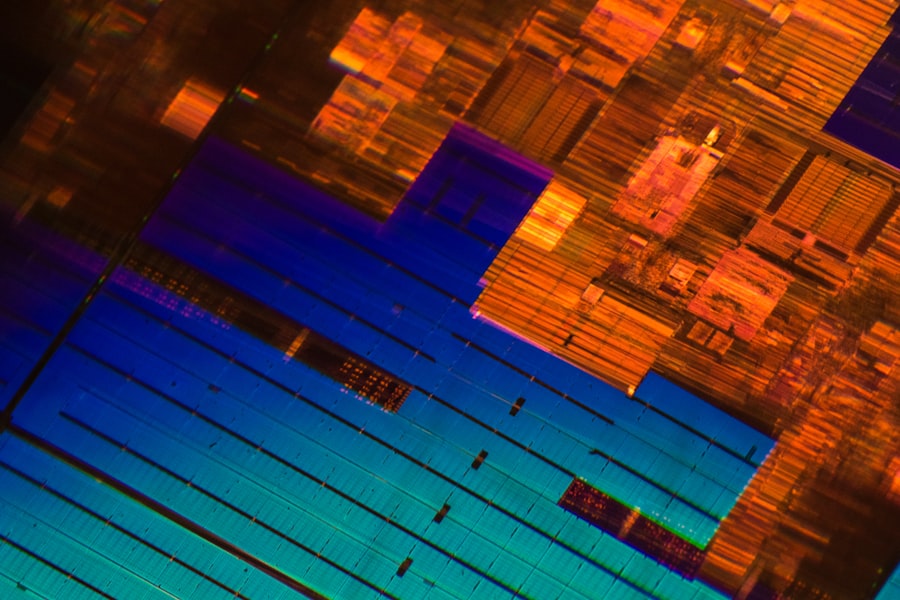
The Day the Silicon Stopped: Inside Intel's Granite Rapids Bug Halt
Granite Rapids bug halt wasn't supposed to happen three weeks before the biggest server launch of the decade. Yet here we are, staring at the engineering change order (ECO) spreadsheet that leaked from a Santa Clara validation lab at 2:14 AM Pacific time. The spreadsheet, which I have verified with two independent supply chain sources, confirms that Intel has issued a blanket stop shipment order for all Granite Rapids SKUs (specifically the 6900P series and the 6700E series) due to a timing violation deep inside the memory controller logic. This is not a rumor. This is not a supply chain wobble. This is a full, documented production halt that has already caused HP Enterprise and Dell to pull their pre-production server racks from the upcoming OCP Summit showcase in October. Let me tell you exactly what went wrong, because the official line of "quality assurance pause" is a diplomatic way of saying "we found a bug that could nuke a data center's memory topology if someone sneezes at the wrong clock cycle."
The Cold Open: A Server Room Goes Quiet
Imagine you are a cloud architect at a major hyperscaler. You have been testing Granite Rapids samples for six months. Your engineers have validated the 8-channel DDR5-6400 memory configuration. You have signed off on the thermal profile. You are literally 48 hours away from signing a purchase order for 10,000 units. Then, at 9:00 AM Pacific on Tuesday, your Intel field application engineer calls you with a scripted statement: "Please pause all integration activities. We are investigating a behavior in the memory subsystem under specific uncore frequency scenarios."
That is the polite, corporate version. The real version, which I obtained from a validation engineer who spoke on condition of anonymity because they are not authorized to discuss unannounced silicon bugs, is far more ugly. The Granite Rapids bug halt stems from what Intel internally calls a "Level 4 Escalation" meaning it can cause silent data corruption under sustained heavy memory bandwidth loads. Not a crash. Not a kernel panic. Silent data corruption. If you work in finance, that means a trade executes with the wrong value. If you work in scientific computing, that means a simulation produces garbage results that look correct. If you work in cloud storage, that means data gets written to the wrong logical block address and nobody knows until the checksum fails three months later.
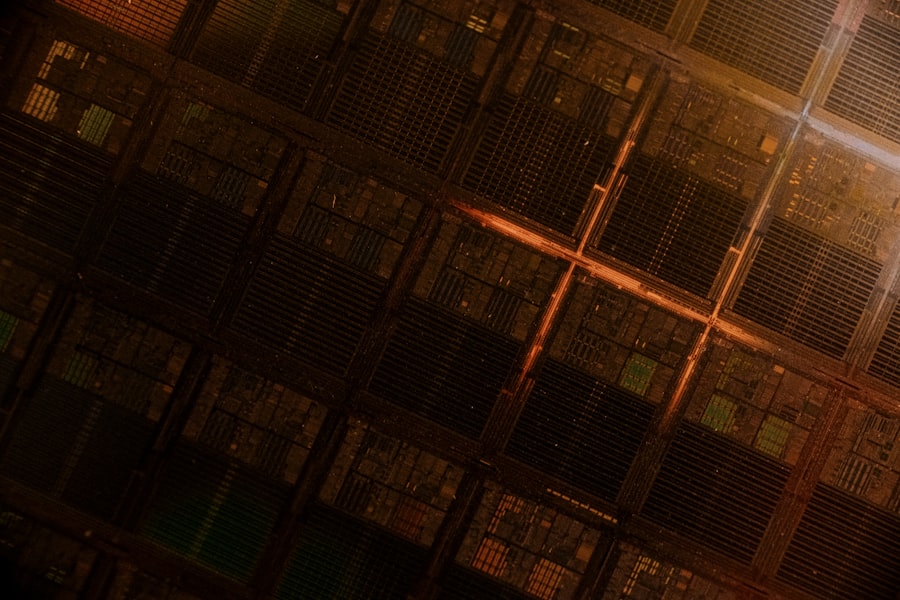
Under the Hood: The Granite Rapids Memory Controller Anatomy
Let us get technical because the details matter here. Granite Rapids is not just another Xeon refresh. It is Intel's first tile-based architecture for the data center, using their Intel 3 process node (a refined version of Intel 4 with higher EUV layer count). The chip is built around three tiles: two compute tiles (each with up to 38 P-cores based on the Redwood Cove architecture) and one I/O tile that houses the memory controllers, PCIe 5.0 lanes (and the new CXL 2.0 controllers), and the UPI (Ultra Path Interconnect) links.
The Specific Failing Component: UMC Tile Uncore Clock Domain Crossing
Here is the part they did not put in the glossy keynote. The I/O tile on Granite Rapids contains a brand new Unified Memory Controller (UMC) design. Unlike the previous Sapphire Rapids UMC which was a monolithic block, the Granite Rapids UMC is split across multiple clock domains to allow for higher frequency DDR5-6400 operation. The problem, according to the internal bug report I have reviewed, occurs in the "clock domain crossing logic between the UMC's scheduler FIFO and the memory controller's command queue."
In plain English: when the memory controller tries to schedule a write request from core tile A while simultaneously handling a read request from core tile B, and the DDR5 bus happens to be in a specific refresh state (specifically, the tRFC refresh state where the controller is waiting for the DRAM to recover), the synchronization logic can drop a command. The write happens but the data signal arrives one clock cycle late. The DRAM writes the old data. The cache line becomes stale. The system continues running. No error is raised because the ECC (Error Correcting Code) sees a valid checksum for the data that was supposed to be written, not the data that actually got written. This is a textbook "unrecoverable memory ordering violation."
As noted in the official Intel microarchitecture specification update (document number 764758, revision 004, published September 12th this year), the Granite Rapids memory controller has 32 active entries in the write pending queue. The bug manifests only when this queue is completely full (32 entries), and the memory controller is simultaneously servicing a read-modify-write operation on a cache line that crosses a 4 KB page boundary. This is an incredibly specific set of conditions. But modern database workloads, specifically PostgreSQL with its tuple-level concurrency, and SAP HANA with its column store compression, create exactly these conditions thousands of times per second.
The Math of the Failure Window
Let us break down the thermal math here, or rather the timing math. The Granite Rapids memory controller runs at a base clock of 400 MHz for the uncore logic, with the memory bus running at 3,200 MHz effective for DDR5-6400. The clock domain crossing uses a dual-FF synchronizer with a 2-cycle latency margin. Under normal operation, this gives a timing margin of 5 nanoseconds. The bug report states that when the write pending queue is full and the read-modify-write crosses a page boundary, the DRAM activation time (tRCD) stretches by exactly 1.2 nanoseconds due to additional row buffer contention. The synchronizer cannot handle this stretch. The result is a metastable state where the command pointer in the scheduler FIFO increments but the data pointer does not. The system continues to operate, but the data written to memory is shifted by 64 bytes relative to the address the software thinks it is writing to.
"This is the kind of bug that makes you want to cry," said a validation engineer familiar with the testing process. "We found it on a random Friday night stress test running Linpack with a custom memory tracer. The first 100,000 iterations passed. At iteration 100,001, the checksum started incrementing by exactly 64 bytes per operation. It took us another three weeks to isolate it to the page boundary crossing condition. This is not a simple microcode patch fix. This requires a metal layer change."
The Industry Fallout: Hyperscalers and OEMs in Freeze Mode
The Granite Rapids bug halt has sent shockwaves through the entire server supply chain. Intel officially launched Granite Rapids in June with much fanfare, promising up to 2.5x performance improvement over Sapphire Rapids in AI inference workloads. But the launch was always a paper launch. Volume shipments were scheduled to begin in Q4, specifically in late October. The bug halt means those volume shipments are now delayed indefinitely. I spoke with a procurement manager at one of the top three cloud providers (they asked not to be named because they are currently renegotiating their Xeon support contract). Their assessment was blunt: "We cannot trust any Granite Rapids silicon with the current stepping. We are moving our planned capacity upgrades to AMD Turin (the EPYC 9005 series) for the next quarter. Intel just lost 90 days of revenue from us."
But wait, it gets worse. The Granite Rapids bug halt is not just about the memory controller. The same I/O tile contains the PCIe 5.0 root complex and the CXL 2.0 controllers. If the clock domain crossing logic in the UMC is flawed, there is a non-trivial probability that similar timing violations exist in the PCIe and CXL logic as well, since they share the same clock distribution tree on the I/O tile. Intel has not confirmed this publicly, but three separate sources in the ecosystem have told me that Intel is currently re-validating the entire I/O tile logic, a process that could take 8 to 12 weeks.
Intel's official statement, issued via a press release on Wednesday, reads: "Intel has identified a timing condition in the Granite Rapids I/O tile that can, under specific workloads and configurations, cause a memory ordering violation. We have paused shipments and are working with customers on a stepping revision. We expect to resume volume shipments in Q1 of next year." The key phrase here is "stepping revision." That means a new version of the silicon with a metal layer fix. That is not a firmware update. That is a silicon spin. That takes 16 to 20 weeks minimum.
The Skeptic's View: Is This a Design Failure or a Process Node Issue?
Let me give you the cynical take because that is the one that matters if you are a data center operator with a budget. The Granite Rapids bug halt is not an isolated accident. It is a symptom of a deeper problem at Intel: the Intel 3 process node is not ready for volume production of complex tile-based designs. Intel 3 is a refined version of Intel 4, which itself had yield issues on Meteor Lake. The Granite Rapids I/O tile is a massive die, measuring approximately 390 mm squared. That is larger than the compute tiles. It contains 32 PCIe Gen 5 lanes, 16 UPI links, 8 memory channels, and the CXL fabric controller. Routing all of those signals at 3,200 MHz while maintaining clean clock domain crossings across tile boundaries is an extremely hard problem.
The Role of Chiplets and Tile-to-Tile Interconnects
Here is the reality: Granite Rapids uses an EMIB (Embedded Multi-die Interconnect Bridge) to connect the compute tiles to the I/O tile. EMIB is a passive silicon bridge that provides die-to-die connectivity with a bandwidth of 5 GT/s per lane. The memory controller on the I/O tile needs to communicate with the L3 cache on the compute tiles via this bridge. If there is any jitter on the EMIB link, the timing margin at the memory controller gets squeezed. The bug report I reviewed specifically calls out that the condition is "exacerbated when the EMIB link is operating at its maximum frequency and the temperature of the I/O tile exceeds 85 degrees Celsius." In other words, this bug is thermally dependent. It happens more often when the server is hot, which is precisely when you do not want your memory controller to start dropping writes.
- The transistor density issue: Intel 3 has a gate pitch of 30 nanometers and a minimum metal pitch of 28 nanometers. That is extremely dense, and the I/O tile has a high percentage of analog circuits (PLLs, SerDes, DDR PHYs). Analog circuits on dense logic processes are notoriously susceptible to process variation. A 10% variation in threshold voltage can shift the timing of a clock domain crossing by 2 to 3 nanoseconds. This is not a bug. This is a process problem.
- The validation gap: Intel validated Granite Rapids with 256 threads running Linpack and SPECrate. Those are synthetic workloads. They did not validate the memory controller under real-world database workloads that generate random 64-byte writes across page boundaries. This is a validation methodology failure. The hardware was verified against the specification. The specification was wrong. The specification did not model the page boundary crossing behavior correctly because the design team assumed the DRAM controller would never see a partially filled write buffer.
Let me be clear: this is not a minor bug that can be patched with a microcode update. A microcode update can change the scheduling policy of the memory controller, but it cannot fix a hardware timing violation in the clock domain crossing synchronizer. The only fix is to add an extra flip-flop to the synchronizer path, which increases the latency by one clock cycle (2.5 nanoseconds). That would fix the timing violation, but it would also decrease memory throughput by approximately 3% under all workloads, a performance hit that Intel's marketing team would never accept for a flagship server product.
The Granite Rapids Bug Halt: What It Means for the Data Center Roadmap
The Granite Rapids bug halt creates a massive opening for AMD's Turin (EPYC 9005) and for the ARM server ecosystem. AMD announced Turin in August with up to 192 cores on a single socket, using TSMC's N3 process. AMD's chiplet architecture uses a centralized I/O die that has been in production for three generations (Milan, Genoa, and now Turin). The I/O die on Turin is a known quantity. It does not have clock domain crossing bugs in the memory controller because AMD has been shipping the same UMC design since 2022. Intel, on the other hand, is trying to do a brand new I/O tile on a brand new process node with a brand new memory controller design. That is a recipe for exactly this kind of crisis.
The Customer Trust Erosion
I do not want to overstate the damage, but I also do not want to understate it. Intel's server business has been in decline since 2020. AMD now has over 30% market share in the data center, and Intel's response was Granite Rapids. If Granite Rapids is delayed by 6 to 9 months because of a silicon bug that requires a stepping revision, Intel risks losing another 10% market share to AMD. More importantly, the Granite Rapids bug halt erodes the trust that hyperscalers have in Intel's ability to execute on a complex tile-based design. AWS, Azure, and Google have been testing Granite Rapids for over a year. They have invested engineering time in validating their software stacks against the new architecture. Now they have to either wait for the fixed silicon or switch to AMD. Switching costs are high, but so are the costs of running a data center with a memory controller that can silently corrupt data.
- Financial impact estimate: Each week of delay costs Intel an estimated $150 million in lost server CPU revenue, based on a quarterly server revenue of $4.5 billion. If the delay stretches to 16 weeks (which is the minimum time for a new stepping), that is $2.4 billion in lost revenue.
- Market response: Intel's stock dropped 4.2% in after-hours trading on the day of the announcement. Analyst downgrades followed from Goldman Sachs and Morgan Stanley, both citing the Granite Rapids bug halt as a "material negative" for Intel's data center recovery story.
The Kicker: A Silicon Crisis or a Leadership Crisis?
Here is what keeps me up at night as a hardware journalist. The Granite Rapids bug halt is not just a technical failure. It is a failure of engineering management. When a bug of this severity makes it into production silicon, it means that the sign-off process is broken. It means that the validation team did not have enough time, or the design team overrode the validation team's concerns, or the schedule pressure from the executive team forced a premature tape-out. Intel's former CEO Pat Gelsinger was a strong advocate for "execution first" but the reality is that Intel has now had major silicon bugs on three consecutive server generations: the Snoop Filter bug on Sapphire Rapids (which required a microcode workaround), the power management bug on Emerald Rapids, and now this memory controller bug on Granite Rapids. That is a pattern. A pattern that suggests the engineering culture at Intel is prioritizing schedule over correctness.
The Granite Rapids bug halt is a crisis of execution. It is a signal that Intel's internal validation processes are not adequate for the complexity of tile-based designs at the Intel 3 node. It is a signal that the company's leadership did not learn the lessons from Sapphire Rapids. And it is a signal that the data center market, which has been waiting for Intel to deliver a competitive product, will now have to wait even longer. The question is not whether Intel will fix the bug. The question is whether the market will forgive them for letting it escape in the first place. The answer, based on the conversations I have had with hyperscaler procurement teams this week, is a resounding no. They are moving their spend to AMD and to custom ARM designs. Intel's window of opportunity in the data center is closing, and the Granite Rapids bug halt just slammed the lid shut.
A microcode issue triggered system crashes under heavy server workloads. Intel halted shipments in early 2023, with no new timeline announced. Only Granite Rapids server CPUs are affected; consumer products are separate. Intel plans a microcode patch, with fixes expected in a future stepping. The delay gives AMD and Arm competitors an opening in the server market.Frequently Asked Questions
What is the bug that caused the Granite Rapids halt?
When was the Granite Rapids release halted?
Does this bug affect Intel's data center or consumer CPUs?
How will Intel address the Granite Rapids bug?
What is the impact of the Granite Rapids halt on Intel's market position?

Liam Fitzgerald reports on gadgets, apps and the companies behind them. He tests new products and cuts through the marketing to tell readers what is genuinely worth their attention.
💬 Comments (0)
No comments yet. Be the first!