Code with Claude: Half of Devs Ship AI Code Unread
At Code with Claude, nearly half of devs admitted shipping AI-written code unread. Also: Enhanced Games, AI-driven science.

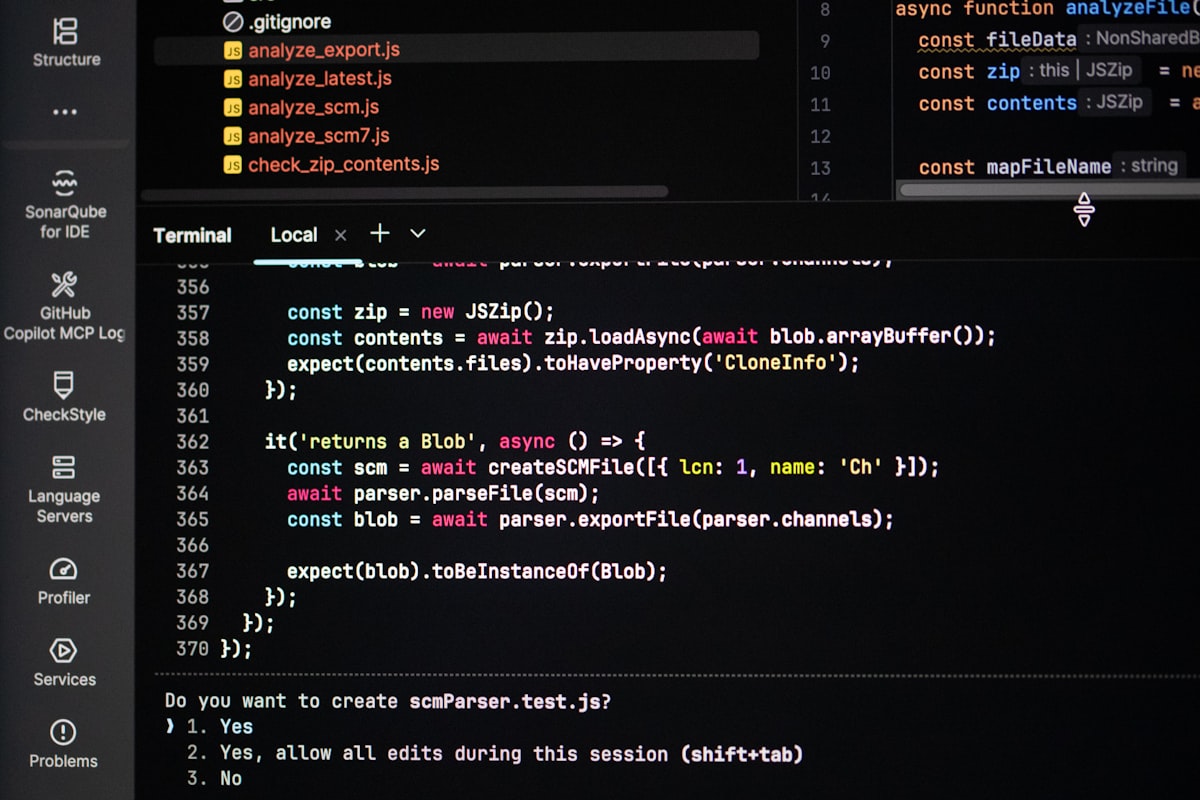
Code with Claude made clear at Anthropic's London developer event that plenty of software engineers let AI write production code without reading, and when asked if they'd shipped Claude-written code, almost half raised their hands. Many admitted they didn't read.
Half the Room Raised Their Hands
The scene at the event, as reported by MIT Technology Review, captured a moment of reckless trust. The demo wasn’t hypothetical. Anthropic’s tools are getting good enough that developers are comfortable handing off entire features to an AI. Code with Claude is what the company calls its broad push into automation, and the London crowd showed that plenty of engineers are already treating it as a set-it-and-forget-it service.
Anthropic says it'll push automation as far as it'll go. Not everyone's convinced. So the same developers who cheered the shipping rate might have been the ones thumbing through their own commit histories later, wondering exactly what landed in production.
Blind Shipping Code
The habit is spreading. It has a name now: vibe coding. And it’s not just a niche practice inside one company. Engineers at OpenClaw are warning that a “vibe-coded slop” crisis is coming. They say AI is flooding the world with bad and even dangerous code, as the Wall Street Journal reported in this week’s roundup of must-reads. When code lands in live environments without human oversight, the consequences can be invisible until something breaks badly.
The press release skipped this. But it's on phones, too. The same temptation to let an AI generate a working prototype and ship it immediately is moving beyond laptops, and that makes the surface area for bugs, security holes, and logic errors larger than ever.
- Almost half of developers at Anthropic’s event had shipped AI-generated code without reviewing it.
- Many openly admitted they hadn’t even read the code before pushing it live.
- OpenClaw engineers now describe a looming “vibe-coded slop” crisis across the software industry.
- Mobile vibe coding tools are bringing the same risky shortcut to phones.
But there is a catch. The people shipping blind are not amateurs. These are professional developers who know better. The pressure to move fast, the trust in the model’s output, and the sheer convenience are overriding years of careful practice. Tools like Code with Claude are not forcing anyone to skip review, yet the culture around them is encouraging it.
The Enhanced Games Arrive in Vegas
This Sunday, 42 athletes will gather in Las Vegas for the inaugural Enhanced Games. They're celebrating performance-enhancing drugs. And the event, covered by MIT Technology Review’s The Checkup newsletter, arrives in a cultural moment obsessed with optimization and purity of a different kind with stated goal to “push the boundaries of human performance.”
Peptide-Crazed Looksmaxxing
Consumers are encouraged. The Enhanced Games fit right into 2026's longevity vibes, and this year they're encouraged to become thinner than ever before, maximize every biomarker for a longer life, and have their 'best baby'. But peptide-crazed looksmaxxing has blurred the line between health and enhancement until almost nothing feels unnatural, and if you're not enhancing the zeitgeist whispers what are you even doing?
That message would've been fringe not long ago. The contrast is stark. But now it's a marketed event with real athletes, real drug protocols, and a real audience, while one part of the tech world worries about unchecked AI code, another part openly bets on unregulated biology. Both share the same disregard for guardrails.
Google’s AI Science Pivot
Hassabis made a claim. But when Demis Hassabis, the CEO of Google DeepMind, told the Google I/O audience during Tuesday's keynote that we're "standing in the foothills of the singularity," that line drew attention. And Grace Huckins, reporting for MIT Technology Review, noted something more telling, the context in which he said it.
“We are standing in the foothills of the singularity.” ; Demis Hassabis, Google I/O keynote
From Specialized to Agentic
There're two AI science directions. One approach creates specialized systems, like WeatherNext, that address specific problems with focused designs, while the other pursues autonomous, large language model-based systems capable of eventually conducting groundbreaking research projects without human involvement. Gemini for Science at I/O. And it leans heavily into that agent-driven future.
Gemini for Science can still call on specialized systems when needed. But the trajectory is clear. Google appears to be transitioning away from the tailored tools that once defined its scientific ambitions and betting on a general agent trained on a vast corpus of scientific data to reason through unknown problems. That's a leap, and one that left some observers wondering what gets lost when specialization is replaced by scale.
World Models: Teaching AI Physics
Amid the I/O announcements, a different kind of AI system called world models is gaining serious momentum, and it's backed by researchers at Google DeepMind, Fei-Fei Li's World Labs, and Meta's former Chief AI scientist Yann LeCun. They don't just process language. So they're designed to understand the physical environment and give AI a sense of how objects move, interact, and obey the rules of reality.
World models also appear on the publication's list of 10 Things That Matter in AI Right Now. This week, MIT Technology Review's editor in chief Mat Honan, senior AI editor Will Douglas Heaven, and AI reporter Grace Huckins unpacked the excitement in an exclusive Roundtables discussion. But the appeal's straightforward. If an AI can build an internal simulation of the world, it might finally stop making the kind of casual errors that come from not knowing a ball won't float in mid-air.
So it gets interesting. The same researchers who once championed scaling up language models are now saying that language alone's a dead end. The next stage, they argue, is grounding, and without that you get an AI that can ace a bar exam but still can't predict the trajectory of a dropped coffee cup.
Elsewhere in Tech
The Download’s daily digest of must-read stories pulled several threads worth following:
- President Trump postponed an AI executive order over fears of overregulation, saying he was concerned it would be “a blocker” for U.S. leadership over China, CNBC and Reuters reported.
- Meta settled a lawsuit with a school district over social media addiction claims, joining Snap, TikTok, and YouTube in resolving the case, the BBC and New York Times reported.
- Bluesky said it is being hacked by Kremlin-backed operatives to spread propaganda, with efforts to hijack real user accounts, the New York Times reported.
- SpaceX called off the launch of a new Starship prototype after engineers found a ground system glitch, hoping to try again soon, CNBC and Ars Technica reported.
- Africa’s biggest economies are pushing for AI sovereignty to reduce dependence on Big Tech, Rest of World reported.
- Waymo paused robotaxi services in four U.S. cities as autonomous vehicles kept driving into floodwaters, TechCrunch reported.
- Spotify will let subscribers create AI remixes, marking the first time users can generate content with AI on the platform, the Guardian reported.
The Future Is Disabled
They're not panaceas. The Download closed with a reminder from Ashley Shew that technologies for disability, access, and mobility are often portrayed as life-changing panaceas. But their benefits are frequently temporary, lopsided, or dependent on constant investment and attention, and too often these tools assume levels of access that don't exist, like reliable internet, smartphones, or affordable devices. Shew's piece urges a shift toward all-access thinking and disabled expertise, treating accessibility not as a niche but as the design standard.
After a week of AI hype and biological optimization, that perspective lands differently as Code with Claude and the Enhanced Games imagine a frictionless future where humans can outsource skill and surpass natural limits. Shew points out it's messier. Progress has a way of forgetting the people who need it most.
“You have AI , actual intelligence.” ; Apple cofounder Steve Wozniak, reassuring college graduates about AI’s impact
Wozniak's quip drew applause. But this week, former Google CEO Eric Schmidt received boos for similar remarks on a different stage, as reported by Business Insider, and the contrast says something about how far the conversation has shifted. Actual intelligence still requires discretion. Whether it's shipping code you never read or redefining the limits of the body, the download this week was that we're all enhancing something. So the question is whether we're ready for the side effects.
Frequently Asked Questions
What is Code with Claude?
Code with Claude is a new feature that allows developers to write and edit code directly in a conversation with Claude.
How does Code with Claude differ from standard Claude?
It integrates a code execution environment, enabling Claude to run, test, and debug code in real-time.
What programming languages does Code with Claude support?
It currently supports Python, JavaScript, TypeScript, and several other popular languages.
Can I use Code with Claude for web development?
Yes, it can generate and preview HTML, CSS, and JavaScript for web projects.
Is Code with Claude available to all users?
It is initially rolling out to Claude Pro and Team subscribers.

Markus Heill writes about technology and the tools we use every day, from smartphones to the services that run in the background. He is interested in how good design makes technology easier to live with.
💬 Comments (0)
No comments yet. Be the first!