Chef Robotics Meal Robots Feed SF's Tenderloin
Chef Robotics meal robots now plate food at Project Open Hand, a San Francisco nonprofit providing medically tailored meals.
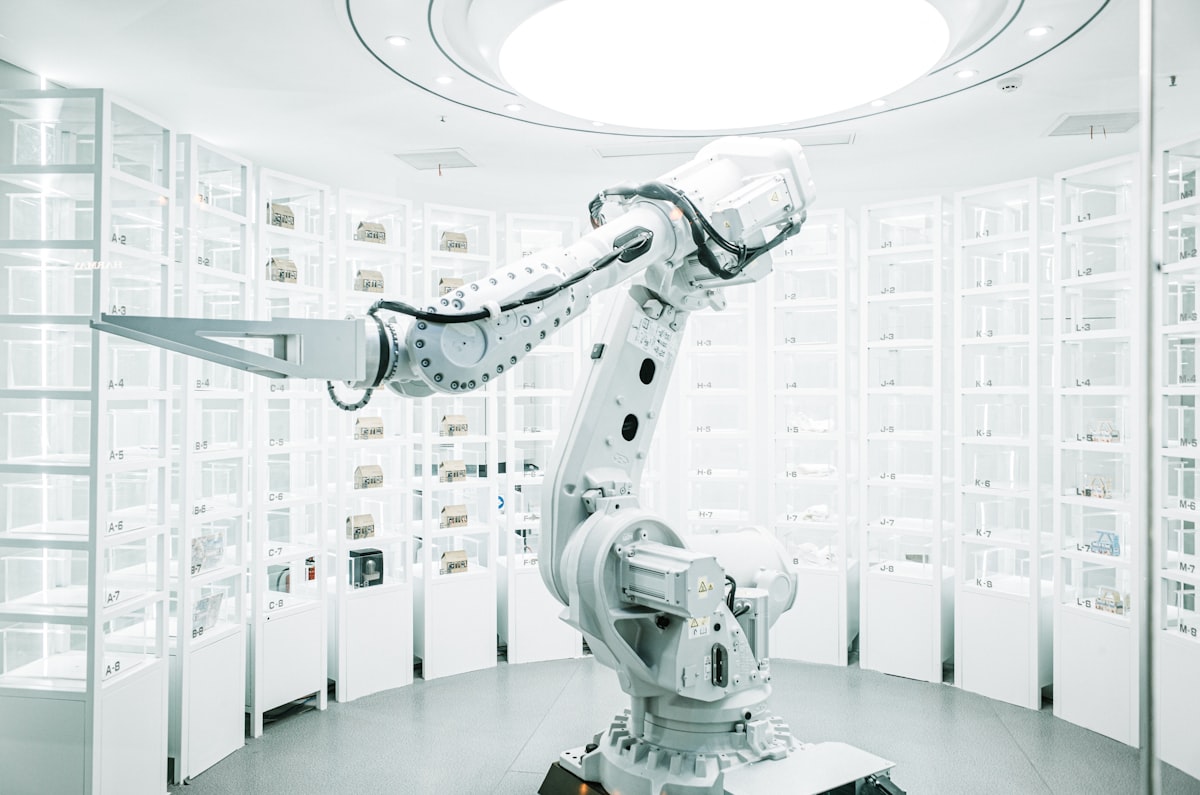
Chef Robotics meal robots are not here to steal anyone's job. Not yet, anyway. They are volunteers, of a sort. Inside a four-story building in San Francisco's Tenderloin district, two robotic arms spend a couple of hours each day scooping potato salad, dropping plops of food into trays, and occasionally making a mess that a human volunteer wipes clean before the meals get sealed and shipped out.
The building belongs to Project Open Hand, a nonprofit founded in 1985 by Ruth Brinker, a local grandmother and HIV-awareness advocate. What started as a response to the AIDS crisis has grown into an operation that prepares medically tailored meals for people with heart disease, diabetes, chronic kidney disease, and other conditions. But here is the part that keeps the CEO up at night: the volunteers stopped showing up.
A Kitchen Running on Empty
During the pandemic, the corporate volunteer groups that Project Open Hand had long relied on vanished. Companies that once sent teams of employees to assemble meal kits as part of sanctioned charity efforts pulled back. San Francisco has seen an AI boom since then, an influx of money and workers that has buoyed the city's economy. But that resurgence has not translated into the kind of corporate chivalry the nonprofit once depended on.
"We used to have so many corporate groups come in here. There are so many new businesses—AI businesses, biopharma businesses—that aren't engaged the way they were pre-pandemic, which is really unfortunate. I think we need to kind of figure that out, collectively."
That is Paul Hepfer, CEO of Project Open Hand, speaking to WIRED.
Not Faster, Just Present
Alma Caceres, a sous chef who works on the meal prep process, put it bluntly. The robots are not there because they outpace humans. They are there because the humans are missing. "It's not even that they're faster," she said. "It's that we don't have the volunteers."
Human volunteers had been able to fill around 500 meals every hour. The Chef Robotics meal robots, when things run smoothly, can add roughly another 200 on top of that. The math is simple, but the real win is that humans get redeployed to less monotonous tasks: chopping vegetables, cooking batches of plant-based protein, getting meals into delivery vehicles.
The Robot That Only Plates
Chef Robotics, a San Francisco company, makes what it calls "physical AI for the food industry." The automated arms focus on one thing: plating. No cooking, no chopping. Just the act of getting food onto a plate at scale. The company already has paying clients like Amy's Kitchen and Factor, the frozen-meal brand. It is also training its robots to handle more complex work, like assembling a hamburger piece by piece.
Rajat Bhageria, CEO of Chef Robotics, described the core insight behind the machines. The difference between a physics problem and a software problem turns out to be a robotic arm with the right motion path. "Having an arm and a scooping motion turns a physics problem—like how cooked is your onion—to a software problem—like do you have the right motion path? So it's a lot more scalable," he said.
The Chef Robotics meal robots can swap out fittings to handle around 70 different ingredients. But they are not elegant. The arms reach down like claw machines into trays of scoopable food, dropping portions into specific sections of each tray. They get their aim right most of the time. Sometimes they do not, and a scattering of frozen corn ends up on the floor, destined for a broom and a trash bin after the shift.
The Physics of Scooping
Bhageria is candid about the limits. Food resists simulation. It is sticky, malleable, wet. The best software model cannot fully capture what happens when a scoop of potato salad hits a tray at speed. One human volunteer stands ready, wiping stray bits off trays before sealing. As one volunteer noted, the robots are not any messier than the people they replaced.
"Food is weird. It's sticky, it's malleable, it's wet. Even the best simulation doesn't completely get it."
A BART Train Pitch
The partnership between the nonprofit and the robotics startup began in a fittingly San Francisco way: a chance conversation between employees from the two organizations on the Bay Area Rapid Transit. When the idea reached Hepfer, he decided the subscription fee was worth paying. Yes, Project Open Hand pays to rent the robots.
"Nonprofits often operate under a scarcity mindset, and I think that's a disservice to the people we serve, because then you're not looking for innovations or quality improvements," Hepfer said. "There's not a whole lot of robots, AI, and innovation in the Tenderloin, I would bet."
The Tenderloin has long been San Francisco's most fraught neighborhood, known for higher levels of crime, homelessness, and drug use. Stories pushing the narrative of a city caught in a doom loop were usually talking about this specific patch of blocks. The Chef Robotics meal robots represent something rare: a technology investment aimed squarely at serving people who depend on free, medically tailored food to survive.
Low-Salt Gravy on Top
Hepfer is hoping the experiment does more than fill meal trays. He wants it to catch the attention of the city's monied interests. "A lot of times people in the for-profit world think, 'Oh, that's a cute little nonprofit,'" he said. "I'm hoping that maybe the gravy on top of all this—the low-salt gravy on top—might be that people from the tech world might see that we are open to innovating and using technology and AI to improve the product we're providing for people's health."
Joseph Sobiesiak now helps run the meal assembly line. He first came to Project Open Hand in the early '90s needing its services. "I didn't die," he said. "And so now I'm here as a way to give back." When asked about the Chef Robotics meal robots, he was skeptical at first. Then he shrugged. He has come around, more or less. "I'm old-school. It's working better than it did at first. Things are definitely much faster than before."
Here is what the robots actually bring to the Tenderloin operation, stripped of hype:
- Two robotic arms, active only a couple of hours per day on an assembly line with a conveyor belt and a small team of human volunteers
- Roughly 200 additional meals per hour on top of the 500 humans can fill alone
- Interchangeable fittings that can handle around 70 different ingredients, all scoopable, all portioned into specific tray sections
- A subscription model: Project Open Hand pays a recurring fee to rent the machines, treating them as an operational expense rather than a capital purchase
But that framing misses something. Hepfer insists the machines do not offset the need for people. If anything, he wants the presence of the Chef Robotics meal robots to make the case that Project Open Hand deserves attention from San Francisco's tech money. The goal is not to replace volunteers. The goal is to remind the city that the nonprofit exists, that it is willing to try new things, and that it still needs hands, human or otherwise.
As reported by WIRED, the experiment is modest: two arms, a few hours a day, a mess on the floor, a volunteer with a rag. But in a neighborhood that rarely sees innovation spending, it counts as something unusual. A bet that technology can serve the people who need it most, even if the scoops are not always clean.
Frequently Asked Questions
What are Chef Robotics meal robots?
Chef Robotics meal robots are automated arms designed to plate food in commercial kitchens, handling scoopable ingredients to portion meals efficiently.
How do Chef Robotics meal robots help Project Open Hand?
They supplement human volunteers by adding about 200 meals per hour, allowing staff to focus on other tasks like cooking and delivery.
Are Chef Robotics meal robots replacing human jobs?
No, they fill gaps caused by volunteer shortages and redeploy humans to more skilled work, not replace them.
Frequently Asked Questions
What are Chef Robotics meal robots?
Chef Robotics meal robots are automated systems that prepare and serve meals, designed to address food insecurity in urban areas like San Francisco's Tenderloin.
How do these robots help the Tenderloin community?
They provide consistent, nutritious meals to residents, reducing food waste and labor costs while increasing access to affordable food.
Are the meals prepared by robots healthy?
Yes, the robots are programmed to follow recipes that meet nutritional guidelines, ensuring balanced and wholesome meals.
How do the robots operate in a busy neighborhood?
They are compact and efficient, using sensors and AI to navigate tight spaces and serve meals quickly without human intervention.
What impact have the robots had so far?
They have served thousands of meals, cut food waste by 30%, and inspired similar initiatives in other cities.
Chloe Dupont covers consumer technology, from the latest devices to the software shaping daily life. She focuses on how new tools fit into the real world and whether they live up to the promise.
💬 Comments (0)
No comments yet. Be the first!