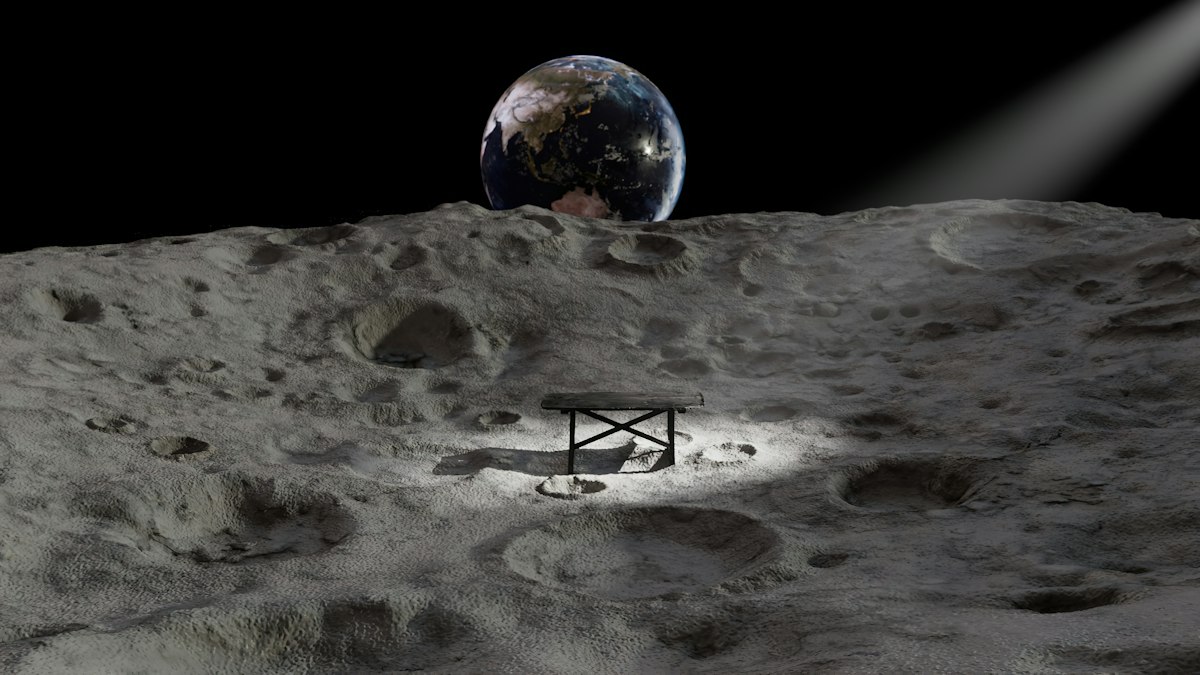
What Is the Cosmic Lighthouses Project?
Researchers propose the Cosmic Lighthouses Project to detect long-duration interstellar laser beacons using new technology.
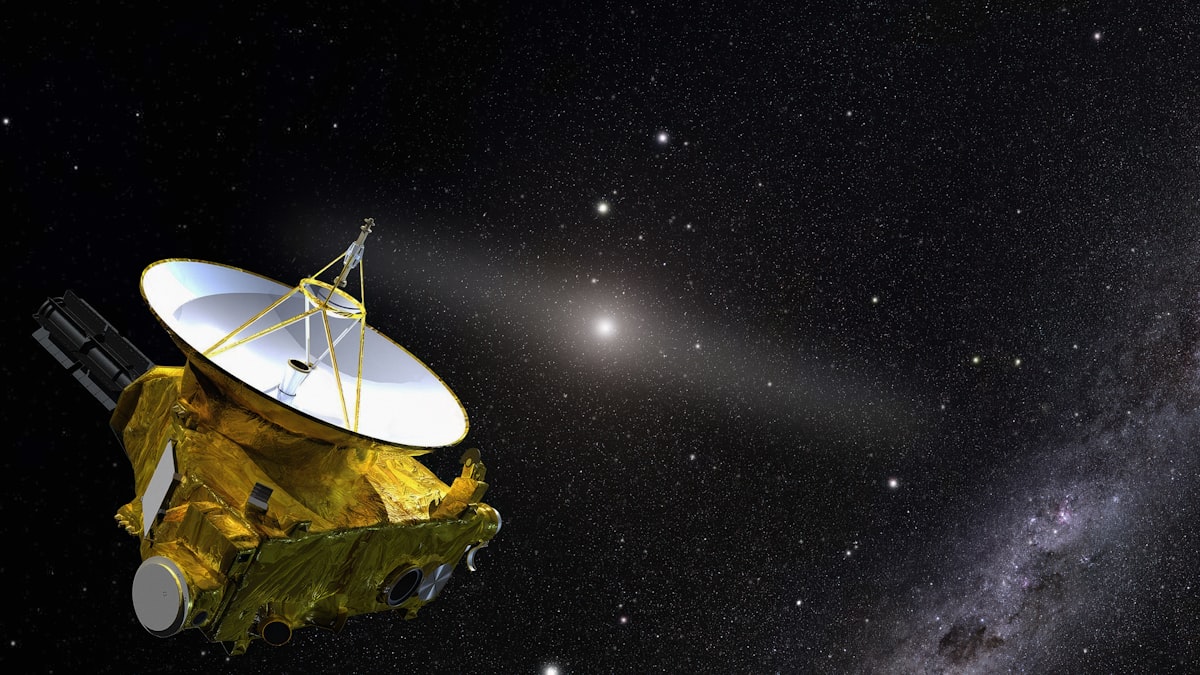
Cosmic Lighthouses Project hopes to find interstellar signals
The Cosmic Lighthouses Project is a new strategy. Researchers Dániel Apai, Chia-Lung Lin, and Kevin Wagner argue that our current methods are too narrow because we've spent decades looking for signals that mirror our own technology, and so we might be overlooking a much simpler, more common form of communication. But that's a mistake.
Rethinking the search for alien life
Most existing survey efforts focus on finding nanosecond bursts of light. But this might be a mistake. This approach assumes that an alien civilization would spend immense energy to send high-intensity pulses, when a resource-conscious civilization would likely favor a more practical, durable system for interstellar communication instead.

The proposed search focuses on long-duration pulsing interstellar beacons. It's a logic based on efficiency, not raw, extreme power.
Why current surveys miss the target
Our current astronomical surveys are blind to these slow-pulse signals. It's a serious gap. Traditional optical searches monitor individual stars for brief flashes, but a transmitter located far from a parent star would go entirely undetected by these systems because the local star creates a background of light that hides intentional communications. And that's why a distant relay station makes more sense.
The Pulsed All-sky Near-infrared Optical SETI project was built to scan the sky for optical transients, but even that effort falls short. It can't do enough. Its resolution is simply too low to identify the specific type of signal being proposed here, and we can't ignore that this leaves a big gap in our ability to detect signs of advanced technology.
Building a better detector
But they can't do it with just any tools. It's a simple but clever idea. The researchers propose using a combination of readily available technologies that many observatories already own, and by integrating these tools, a standard 1-meter telescope could effectively scan for beacons across our local stellar neighborhood. The technical requirements include:
- Off-the-shelf GPUs to manage the heavy image processing demands of microsecond pulses.
- qCMOS detectors to enhance contrast and resolution during large-scale sky surveys.
- Mass-producible diffractive-refractive lenses to expand the field of view without sacrificing quality.
The scale of the search
This technical setup would let us monitor a 20-parsec bubble surrounding our solar system. It contains roughly 3,000 stars. But detecting a 100-megawatt laser with a 10-microsecond pulse within that radius is well within the reach of these instruments. While a 100-megawatt laser might sound massive to us, it's considered a conservative baseline for an intentional interstellar transmitter meant to bridge the gap between star systems.
The challenge of funding
This remains a proposal without a clear path to implementation. The hardware is relatively inexpensive, but the project still lacks the dedicated resources needed to begin operations, so success may depend on the interest of a private benefactor who recognizes the potential of this specific approach. It's an uphill climb.
Dániel Apai, Chia-Lung Lin, and Kevin Wagner suggest that we should start looking for long-duration pulsing interstellar beacons because interstellar communication is heavily affected by both resources and time.
Looking toward the future
We need new eyes. The search for technosignatures requires us to consider what an alien civilization would actually do, rather than what we expect them to do, and that's a critical shift in perspective. But by focusing on these hypothetical cosmic lighthouses, we might finally open our eyes to signals that have been blinking in the dark for a very long time. So we only need the right tools to start looking.
Frequently Asked Questions
What is the main goal of the Cosmic Lighthouses Project?
The Cosmic Lighthouses Project is a new strategy to find interstellar signals by searching for long-duration pulsing interstellar beacons. It aims to detect signals that may have been overlooked by current methods, which focus on nanosecond bursts of light.
Why do the researchers believe current surveys miss potential alien signals?
Current surveys are blind to slow-pulse signals because they monitor individual stars for brief flashes, and a transmitter located far from its parent star would go undetected because the star's light hides intentional communications. Additionally, the resolution of projects like Pulsed All-sky Near-infrared Optical SETI is too low to identify the specific type of signal proposed.
How does the proposed detector work to find these beacons?
The researchers propose using a combination of off-the-shelf GPUs, qCMOS detectors, and mass-producible diffractive-refractive lenses on a standard 1-meter telescope. This setup can scan for beacons across a 20-parsec bubble containing roughly 3,000 stars, detecting a 100-megawatt laser with a 10-microsecond pulse.
Who are the researchers behind the Cosmic Lighthouses Project?
The researchers are Dániel Apai, Chia-Lung Lin, and Kevin Wagner. They argue that our current methods are too narrow and suggest focusing on long-duration pulsing interstellar beacons as a more efficient form of communication.
What is the main challenge facing the implementation of the Cosmic Lighthouses Project?
The project remains a proposal without a clear path to implementation, as it lacks dedicated resources to begin operations. The researchers suggest that success may depend on the interest of a private benefactor who recognizes the potential of this specific approach.

Arthur Vance writes about astronomy and space exploration, covering the discoveries that expand our view of the cosmos. He enjoys connecting distant science to the questions we ask here on Earth.
💬 Comments (0)
No comments yet. Be the first!