What Andromeda XXXVI Reveals About Dark Matter
Andromeda XXXVI, a recently discovered ultra-faint dwarf galaxy, helps resolve the "missing satellites problem" and tests the Lambda-CDM model.

Andromeda XXXVI: A Glimpse into Dark Matter's Domain
Andromeda XXXVI is a newly identified ultra-faint dwarf galaxy. It orbits our galactic neighbor, Andromeda, and it's offering astronomers a clearer view into the enigmatic nature of dark matter, so this discovery adds another piece to the puzzle of how large galaxies like Andromeda are populated by smaller satellite galaxies, a phenomenon intimately tied to the distribution and behavior of dark matter. But we've only just scratched the surface.
An Ultra-Faint Discovery
The Andromeda galaxy itself has been a celestial landmark for millennia, recognized even by the naked eye as a faint smudge. But its retinue of dwarf galaxies has proven far more elusive. Even with powerful telescopes, including those in orbit, pinpointing these dim companions remains a major challenge, and Andromeda XXXVI, or And XXXVI as it's known, is one such discovery characterized by its extremely low mass and luminosity. These ultra-faint dwarf galaxies are particularly compelling because they're among the most dark matter-dominated objects known. They're invaluable probes. So we're using them to understand this invisible cosmic scaffolding.
Astronomers had estimated that Andromeda hosts around 92 dwarf galaxies. Yet only about 40 had been confirmed before this latest finding. But now they've added Andromeda XXXVI to the list. Among those confirmed, 15 were categorized as ultra-faint, and this addition suggests that the population of very faint satellites around Andromeda may be even larger than we previously thought, so it's clear there's still much more to discover.
Unveiling the Cosmic Scaffolding
The Lambda-Cold Dark Matter model predicts it. Massive galaxies like Andromeda should be encircled by hundreds of smaller dark matter halos, each potentially hosting a dwarf galaxy, but the observed number of luminous satellites has historically fallen short of these predictions. So that's the "missing satellites problem.
Ultra-faint dwarf galaxies are the key. They're believed to resolve this issue because their extreme mass-to-light ratios indicate they reside within dark matter halos far more massive than their stellar content would suggest. So find more of these dim systems. Astronomers then bring observed satellite counts into closer agreement with the Lambda-CDM model, and that diminishes the apparent magnitude of the dwarf galaxy problem.
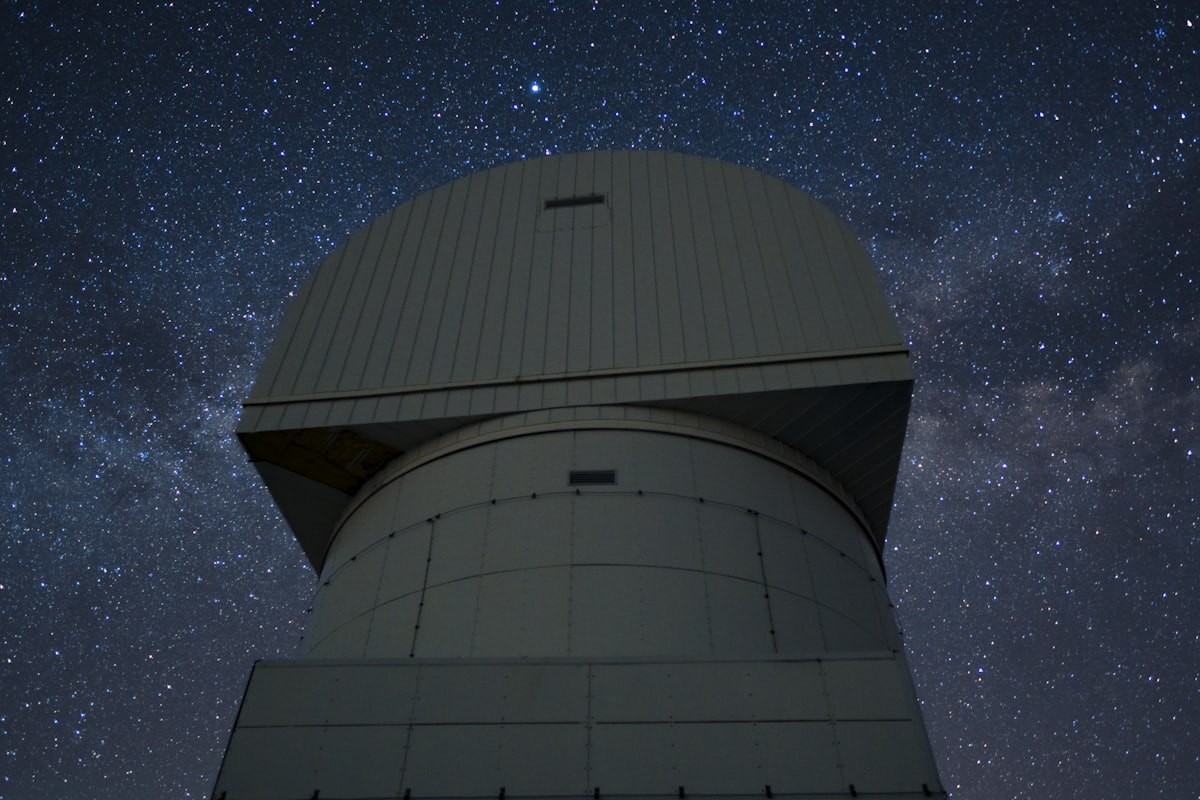
It's a tiny ghost of a galaxy. Deep imaging with the OSIRIS instrument on the powerful 10.4-meter Gran Telescopio Canarias allowed researchers to detect Andromeda XXXVI by identifying an overdensity of stars that was hinted at in previous surveys but only became clearly apparent with these advanced observations. But its size is shockingly small. So dim and faint that scientists could only pinpoint 46 of its constituent stars, a stark contrast to the thousands or many more typically found in other known dwarf galaxies.
"The discovery of And XXXVI adds to the faint end of M31’s satellite luminosity function, suggesting the presence of an even larger population of very faint satellites."
Probing Dark Matter's Nature
Andromeda XXXVI does more than bolster the Lambda-CDM model. It's a unique opportunity to test our fundamental understanding of dark matter itself. The Lambda-CDM model posits that dark matter is "cold" and collisionless, but ongoing research seeks to refine these properties, and the gravitational influence exerted by ultra-faint dwarf galaxies, inferred from their stellar content and the surrounding dark matter halo, serves as a direct test of these dark matter characteristics.
Isabel Santos Santos, a co-author of the study from the Leibniz Institute for Astrophysics Potsdam, highlighted the significance of this finding. It's a big deal. Within the framework of the standard cosmological model, the so-called Lambda Cold Dark Matter model, we expect galaxies like Andromeda to be surrounded by hundreds of such small companions, yet many of them have remained hidden until now due to their low luminosity. But each newly discovered ultra-faint dwarf galaxy helps us explore the limits of galaxy formation and put our cosmological models to the test.
Lead author Joanna Sakowska emphasized that each new discovery, like Andromeda XXXVI, indicates that the current census of these extremely faint galaxies is likely just the tip of the iceberg. They're more than just a hint of what's hidden. So these ancient systems, with their old and metal-poor stellar populations, could also hold clues about the early universe and the epoch of reionization.
Future Investigations
We don't fully understand it yet. But to truly grasp Andromeda XXXVI and its implications, astronomers need deeper imaging from space-based telescopes alongside more precise spectroscopic data to determine the galaxy's exact distance, age, and chemical makeup. That's vital. It'll show if its stars point to early quenching or if it's a "reionization fossil." So the hunt for more dim galactic halo residents continues, and it's refining our cosmic models.
```Frequently Asked Questions
What is Andromeda XXXVI and why is it significant?
Andromeda XXXVI is a newly identified ultra-faint dwarf galaxy orbiting Andromeda. It is significant because it offers astronomers a clearer view into the enigmatic nature of dark matter and adds to the understanding of how large galaxies are populated by smaller satellite galaxies.
How does Andromeda XXXVI help address the 'missing satellites problem'?
The Lambda-Cold Dark Matter model predicts hundreds of dwarf galaxies around Andromeda, but fewer have been observed. Ultra-faint dwarf galaxies like Andromeda XXXVI have extreme mass-to-light ratios indicating they reside within massive dark matter halos, so finding more of them brings observed satellite counts into closer agreement with the model.
How was Andromeda XXXVI discovered?
Deep imaging with the OSIRIS instrument on the 10.4-meter Gran Telescopio Canarias allowed researchers to detect Andromeda XXXVI by identifying an overdensity of stars that was hinted at in previous surveys. Only 46 of its constituent stars could be pinpointed, highlighting its extreme faintness.
Why are ultra-faint dwarf galaxies like Andromeda XXXVI valuable for testing dark matter properties?
These galaxies are among the most dark matter-dominated objects known, and their gravitational influence, inferred from stellar content and surrounding dark matter halo, serves as a direct test of dark matter characteristics. Studying them helps test the Lambda-CDM model's assumption that dark matter is cold and collisionless.
What future investigations are needed to understand Andromeda XXXVI better?
Deeper imaging from space-based telescopes and more precise spectroscopic data are needed to determine the galaxy's exact distance, age, and chemical makeup. This will help clarify if its stars point to early quenching or if it is a 'reionization fossil.'

Astrid Berg covers space and astronomy, from missions and launches to the science of the universe. She follows the ongoing effort to explore beyond our planet.
💬 Comments (0)
No comments yet. Be the first!