How James Webb Space Telescope Reshapes Cosmology
New James Webb Space Telescope data enables precise calculations that could disprove dark matter in the Bullet Cluster.
The Mechanics Of A Galactic Collision
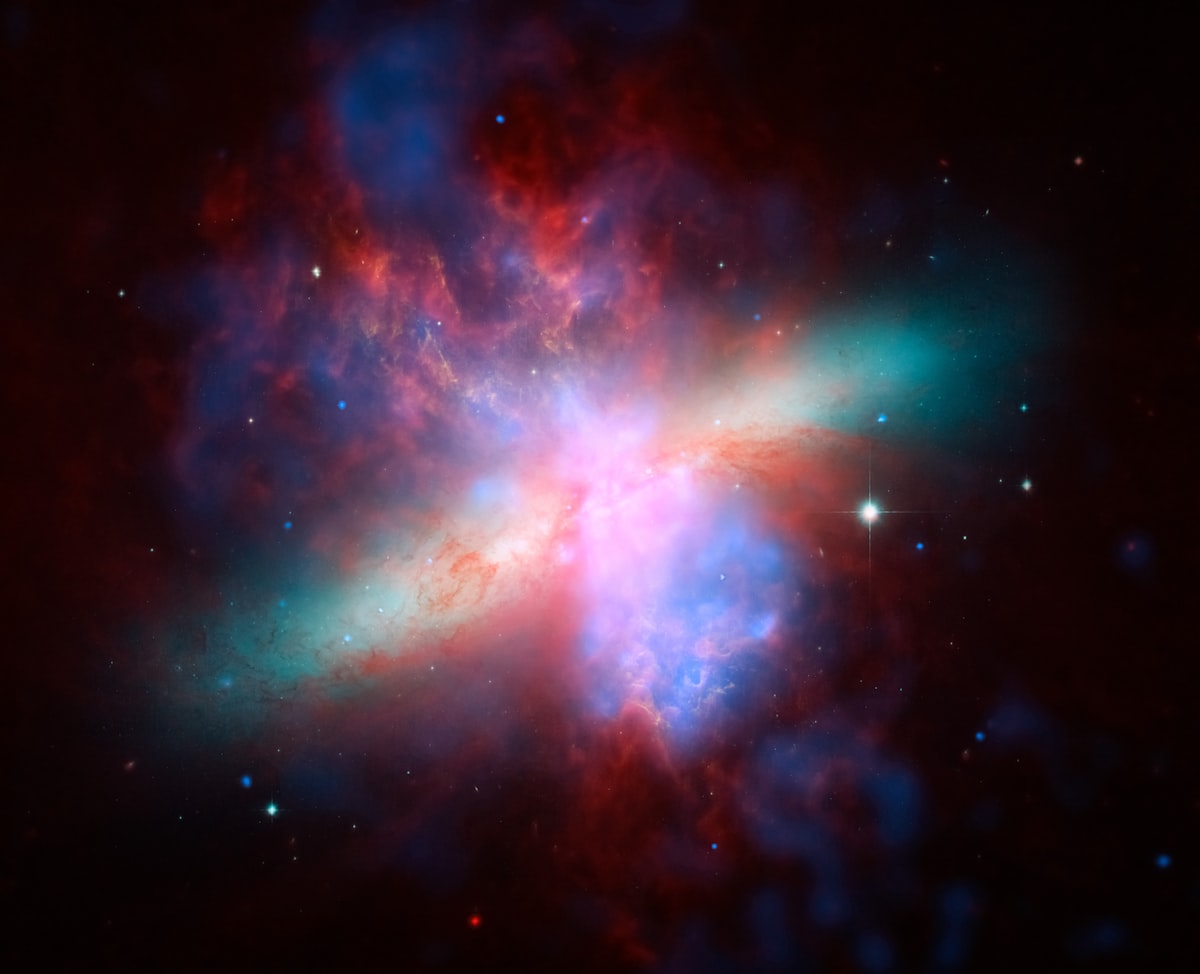
The Bullet Cluster collision occurred roughly 4 billion years ago. Two clusters, each containing hundreds of galaxies, impacted at speeds exceeding 2,500 km/s. The visible gas within these clusters, which accounts for the majority of the baryonic mass, interacted during the event. This interaction created friction, heating the gas and slowing its progress. These hot gas clouds remain visible today through X-ray spectrum observations. Because the individual stars within the galaxies were separated by vast distances, the galaxies passed through each other without direct physical interaction. This caused a spatial separation between the interstellar gas and the stellar components of the clusters. Conventional models have long pointed to the observed gravitational lensing in the Bullet Cluster as clear evidence for dark matter, as the lensing centers did not align with the luminous gas.Reassessing The Gravitational Lens
The James Webb Space Telescope provides a clearer view of the distortion affecting light from distant galaxies behind the cluster. These background objects appear as crescents due to the intense gravity of the foreground mass. A curious detail emerges from the observation of these lensing effects. The galaxy clusters themselves show strong lensing, yet they possess relatively low mass compared to the luminous gas clouds. If the conventional model were absolute, the gas clouds where mass is concentrated should exert the strongest gravitational pull. The fact that the clusters show stronger lensing suggests that substantial mass is hidden within the galactic structures themselves. This observation provides the necessary opening for alternative cosmological models to reconsider the requirement for dark matter in this specific environment.The Case For Alternative Dynamics
Modified Newtonian Dynamics, or MOND, offers an explanation that removes the need for dark matter by adjusting gravitational laws at low acceleration scales. Historically, this model struggled to explain the Bullet Cluster, which kept it on the fringes of science. However, new analysis suggests the cluster is consistent with these dynamics.However, we show in our study that, on the contrary, the Bullet Cluster is actually particularly consistent with the MOND scenario, said HISKP researcher Dong Zhang. 'If massive stars eventually burn up, they become neutron stars or black holes. Like dark matter, both are invisible and can only be detected by the huge gravitational forces that they exert. If massive stars eventually burn up, they become neutron stars or black holes. Like dark matter, both are invisible and can only be detected by the huge gravitational forces that they exert.
Accounting For Hidden Mass
The analysis indicates that the observed lensing might be explained by accounting for stellar remnants rather than an invisible substance. As massive stars reach the end of their life cycles, they transition into neutron stars or black holes. These objects exert strong gravitational force while remaining largely invisible to traditional detection methods. * The collision involved two clusters with hundreds of galaxies each. * Impacts occurred at speeds exceeding 2,500 km/s. * New data allows for more precise counts of stars and heavy elements. * Observed lensing aligns with the mass density of the galaxies and their remnants. The current standard model faces a difficult adjustment. Even if dark matter is retained, the required quantity would likely need to be reduced by around half, according to co-author Pavel Kroupa, to match these updated calculations.Strategic Implications For Cosmology
Looking at the wider sector, the reliance on high-resolution data from the James Webb Space Telescope continues to act as a catalyst for theoretical refinement. The deeper question is positioning. If the scientific community finds that stellar remnants account for the missing mass, the entire framework for dark matter research will require a structural shift. The industry is currently moving away from monolithic theories toward more nuanced, evidence-based models that prioritize observable stellar populations. From a competitive standpoint, this move favors researchers who can integrate precise observational data with alternative dynamical models. Future observations will likely focus on quantifying the density of these ghost-like stellar remnants across various clusters. The debate remains active, but the reliance on superior imaging technology ensures that empirical evidence will eventually dictate the trajectory of cosmological theory.
Frequently Asked Questions
What is the James Webb Space Telescope finding about the Bullet Cluster that challenges dark matter assumptions?
The James Webb Space Telescope provides a clearer view of gravitational lensing in the Bullet Cluster, showing that the galaxy clusters themselves exhibit strong lensing despite having relatively low mass compared to the luminous gas clouds. This suggests that substantial mass is hidden within the galactic structures, potentially explained by stellar remnants rather than dark matter.
Why does the Bullet Cluster observation allow for alternative cosmological models like MOND?
The observation that the clusters show stronger lensing than the gas clouds, where mass is concentrated in conventional models, provides an opening for alternative models. Modified Newtonian Dynamics (MOND) offers an explanation that removes the need for dark matter, and new analysis suggests the Bullet Cluster is consistent with the MOND scenario.
How does the James Webb Space Telescope help account for hidden mass in galaxy clusters?
The telescope's high-resolution data allows for more precise counts of stars and heavy elements, enabling an analysis that the observed lensing aligns with the mass density of galaxies and their stellar remnants. These remnants, such as neutron stars and black holes, are invisible but exert strong gravitational forces, potentially explaining the missing mass.
When did the Bullet Cluster collision occur, and what were its key characteristics?
The Bullet Cluster collision occurred roughly 4 billion years ago, involving two clusters impacting at speeds exceeding 2,500 km/s. The visible gas interacted and heated up, remaining visible in X-ray spectrum observations, while the galaxies passed through without direct interaction, creating spatial separation between gas and stars.
Who is the co-author suggesting that dark matter quantity may need to be reduced, and by how much?
Co-author Pavel Kroupa suggested that even if dark matter is retained, the required quantity would likely need to be reduced by around half to match the updated calculations based on the new data.

Leo Sokolov reports on spaceflight and the companies and agencies racing to reach orbit and beyond. He is captivated by the engineering that makes leaving Earth possible.
💬 Comments (0)
No comments yet. Be the first!