Sub-Neptune GJ 3090 b Orbits Backward
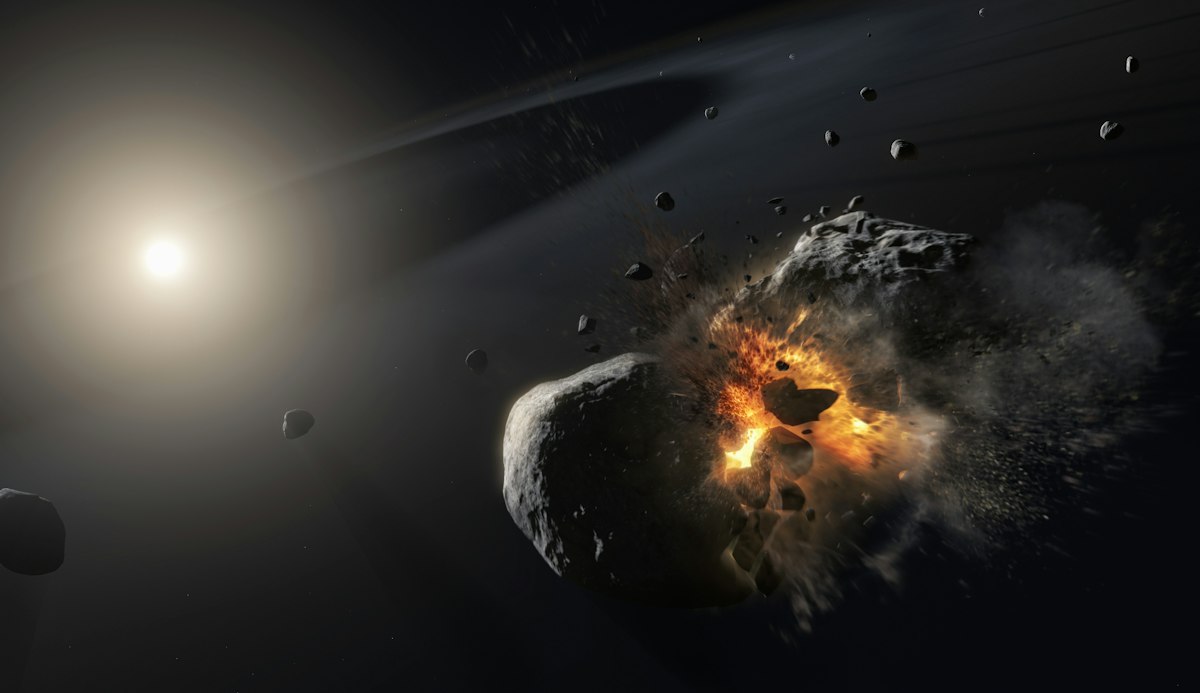
Astronomers found sub-Neptune GJ 3090 b orbiting backward around a red dwarf, the first such retrograde exoplanet around a red dwarf.
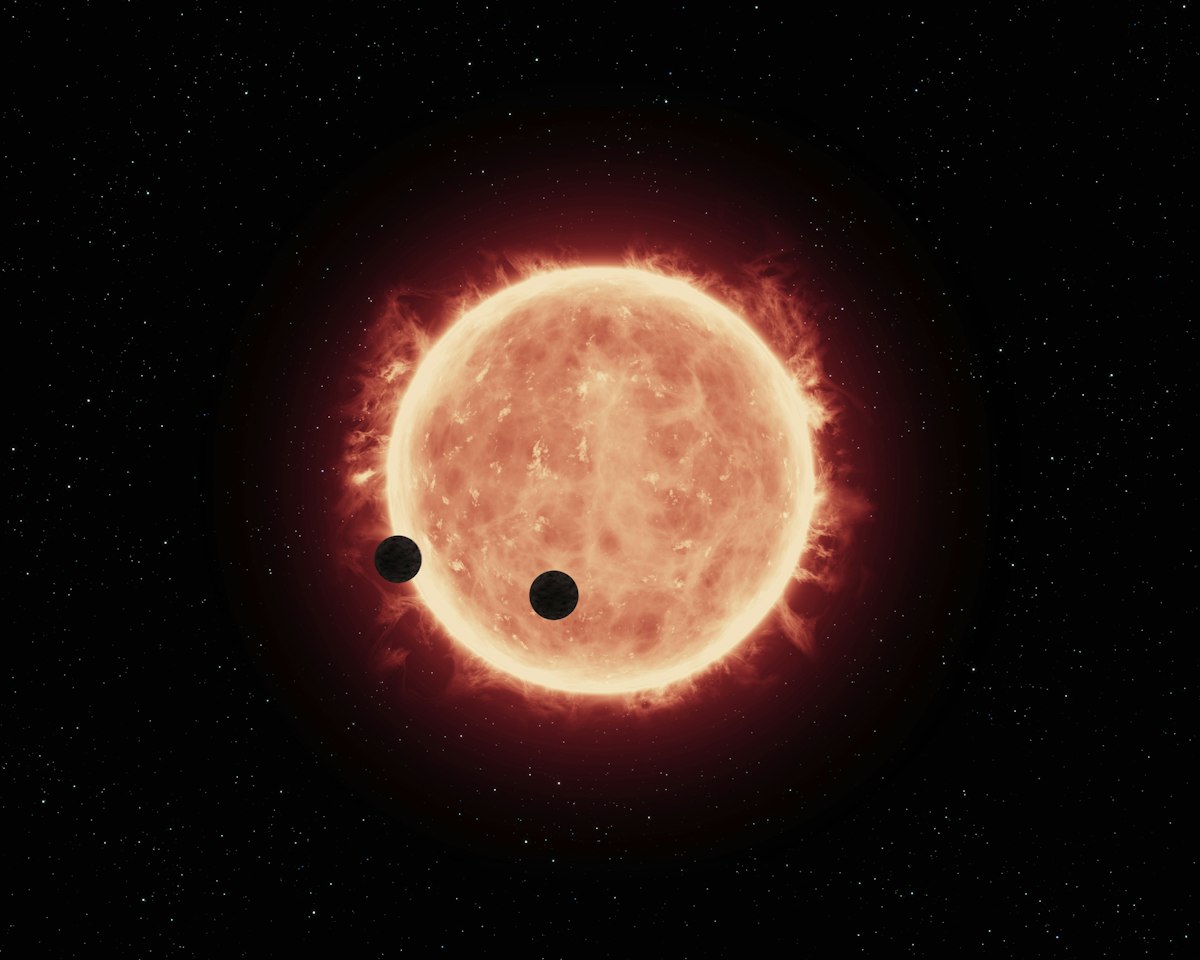
Sub-Neptune GJ 3090 b is orbiting its star the wrong way, and astronomers cannot yet explain how it got there. A team led by Yann Carteret, a PhD student at the University of Geneva, has mapped the orbital obliquity of this distant world and found it tilted roughly 136 degrees relative to its red dwarf host. Anything past 90 degrees means retrograde motion. This planet is not just a little off. It is moving backward.
The finding, published in Astronomy & Astrophysics, marks the first time an exoplanet has been caught orbiting opposite to the spin of its red dwarf parent. That alone would be notable. What makes it stranger still is the absence of any obvious gravitational culprit that could have flipped the orbit after the planet formed.
A Planet Four and a Half Times Earth's Mass
GJ 3090 b sits about 73 light-years away in the southern constellation Phoenix. It is a sub-Neptune, roughly 2.2 times the width of Earth and 4.5 times its mass. Its year lasts only about 2.9 days. The planet hugs its cool, dim red dwarf so closely that observing its transits became the natural way to probe the geometry of its orbit.
That is where the Rossiter-McLaughlin effect comes in. As a star rotates, the hemisphere spinning toward a telescope appears slightly blueshifted. The hemisphere turning away appears slightly redshifted. When a planet crosses the blue side first, it blocks that light and makes the star look redder. Then it crosses the red side and makes the star look bluer. The sequence tells you which way the planet is going.
Carteret's team watched GJ 3090 b transit five separate times using the 3.6m telescope at the European Southern Observatory in Chile. Every single transit ran the sequence backward. The planet crossed the redshifted hemisphere first, then the blueshifted one. Five for five. The orbital obliquity calculation that followed put the tilt at around 136 degrees.
Why Backward Orbits Usually Have a Backstory
No planet strays far. In our own solar system, none of them drift more than about 7 degrees out of alignment with the Sun's equator, a limit that holds whether you're looking at the giants or the small rocky worlds we've studied for centuries. Everything spins and orbits the same way. It's a tidy inheritance. And that order comes straight from the disk of gas and dust that birthed it all, so it's not as if the planets chose this path on their own. They can't help it.
When astronomers do find a misaligned or retrograde planet, there is usually a story behind it.
GJ 3090 b appears to lack all of those causes. The system does contain a second planet, and the researchers suspect it might also be moving in retrograde, though they lack the data to confirm that. But nothing in the system comes close to the mass required to drag GJ 3090 b into its current backward path through classical dynamical means.
That is the problem. The standard playbook for weird orbits does not work here.
The Disk That Came Back
With no lurking giant to blame, the authors reached for a different explanation. They call it a primordial disk flip.
The scenario goes like this. The star forms, and its original protoplanetary disk dissipates. Later, a fresh stream of gas and dust drifts in from the surrounding interstellar medium. Some of that material falls onto the star. Some of it potentially forms a second disk. If that incoming material arrives at the right angle, it retains its own angular momentum, which could point in the opposite direction from the star's rotation. A planet forming in that second disk would inherit the flipped spin.
There is some observational support for the ingredients. Astronomers have found what they call Peter Pan disks, which persist for tens of millions of years longer than standard stellar evolution models predict. GJ 3090 b might be what happens when one of those stubborn disks finally grows up and makes a planet.
The theory is intriguing, not proven. It will need more evidence before it moves from plausible to accepted.
A Technical Milestone, Not Just a Curiosity
Whatever the cause turns out to be, the measurement itself breaks new ground. It's a first. GJ 3090 b is the smallest exoplanet ever to have its orbital obliquity mapped around a red dwarf, and that fact matters because these stars host plenty of multi-planet systems that are waiting to be examined the same way, which means we've only just begun to see what this technique can reveal. And they're waiting.
The tools exist. The targets are plentiful. What the field needs now is more data points like this one, more obliquity measurements that can either reinforce the primordial disk flip idea or send theorists back to their models.
- GJ 3090 b orbits a red dwarf 73 light-years away in Phoenix.
- Its orbital period is about 2.9 days.
- Its obliquity is roughly 136 degrees, well past the 90-degree threshold for retrograde motion.
- Five transits all showed the reversed Rossiter-McLaughlin signature.
The backward planet is not the first exoplanet with a high obliquity. But it is the first around a red dwarf, and the first where the usual explanations fall short. That combination is what makes it worth watching.
- The system contains a second planet, possibly also retrograde, but data is insufficient to confirm.
- No massive companion exists to explain the orbit through classical dynamics.
- A primordial disk flip remains the leading hypothesis, unproven.
What Comes Next
More observations of multi-planet systems around red dwarfs are the obvious path forward. Each new obliquity measurement adds a data point. Enough of them, and patterns emerge. But here's what we've got to remember about all of this. The secrets of backwards-traveling planets will not stay locked forever, because every single measurement we collect, no matter how small or seemingly insignificant it might appear to anyone watching from the outside, brings us one step closer to understanding what's really going on out there. It's only a matter of time.
Frequently Asked Questions
What is Sub-Neptune GJ 3090 b, and what makes its orbit unusual?
Sub-Neptune GJ 3090 b is a planet roughly 2.2 times the width of Earth and 4.5 times its mass, located about 73 light-years away in the southern constellation Phoenix. Its orbital obliquity is tilted roughly 136 degrees relative to its red dwarf host, meaning it is moving backward in a retrograde orbit.
Who led the team that mapped the orbital obliquity of GJ 3090 b, and what did they publish?
A team led by Yann Carteret, a PhD student at the University of Geneva, mapped the orbital obliquity of this distant world. Their finding was published in Astronomy & Astrophysics and marks the first time an exoplanet has been caught orbiting opposite to the spin of its red dwarf parent.
How did astronomers determine that GJ 3090 b is orbiting backward?
Carteret's team watched GJ 3090 b transit five separate times using the 3.6m telescope at the European Southern Observatory in Chile, and every single transit ran the Rossiter-McLaughlin sequence backward. The planet crossed the redshifted hemisphere first, then the blueshifted one, and the orbital obliquity calculation that followed put the tilt at around 136 degrees.
Why is it difficult to explain GJ 3090 b's backward orbit using standard scenarios?
When astronomers find a misaligned or retrograde planet, there is usually a story behind it, such as a massive planet elsewhere in the system throwing its weight around or a companion star stirring the pot gravitationally. However, nothing in the GJ 3090 b system comes close to the mass required to drag the planet into its current backward path through classical dynamical means.
What alternative explanation do the authors propose for GJ 3090 b's retrograde orbit?
The authors propose a primordial disk flip, in which a fresh stream of gas and dust drifts in from the surrounding interstellar medium after the original protoplanetary disk dissipates. If that incoming material arrives at the right angle, it retains its own angular momentum pointing opposite to the star's rotation, and a planet forming in that second disk would inherit the flipped spin.

Arthur Vance writes about astronomy and space exploration, covering the discoveries that expand our view of the cosmos. He enjoys connecting distant science to the questions we ask here on Earth.
💬 Comments (0)
No comments yet. Be the first!