Stoke Space Raises $1 Billion for Nova Rocket
Stoke Space announced a $1 billion Series E round to fund its Nova rocket, targeting a debut launch in early 2027 and a larger Block 2 vehicle.

Stoke Space raises $1 billion in a Series E round co-led by Point72 Ventures and Spark Capital, pushing the company’s total funding to $2.3 billion. The Washington-based launch firm is using the cash to accelerate development of a larger Block 2 version of its Nova rocket while closing in on a debut launch targeted for early 2027.
It's staggering for a company that hasn't even attempted an orbital launch yet. But co-founder and Chief Executive Andy Lapsa insists the timing makes sense, arguing that the groundwork laid now will pay off long before competitors even realize the window is closing. Pathfinder, the first stage of the initial Nova vehicle, is nearly ready to ship to Florida. The bigger rocket, however, needs money right now to move from concept to hardware, and that's where the real gamble lies.
A rocket takes shape
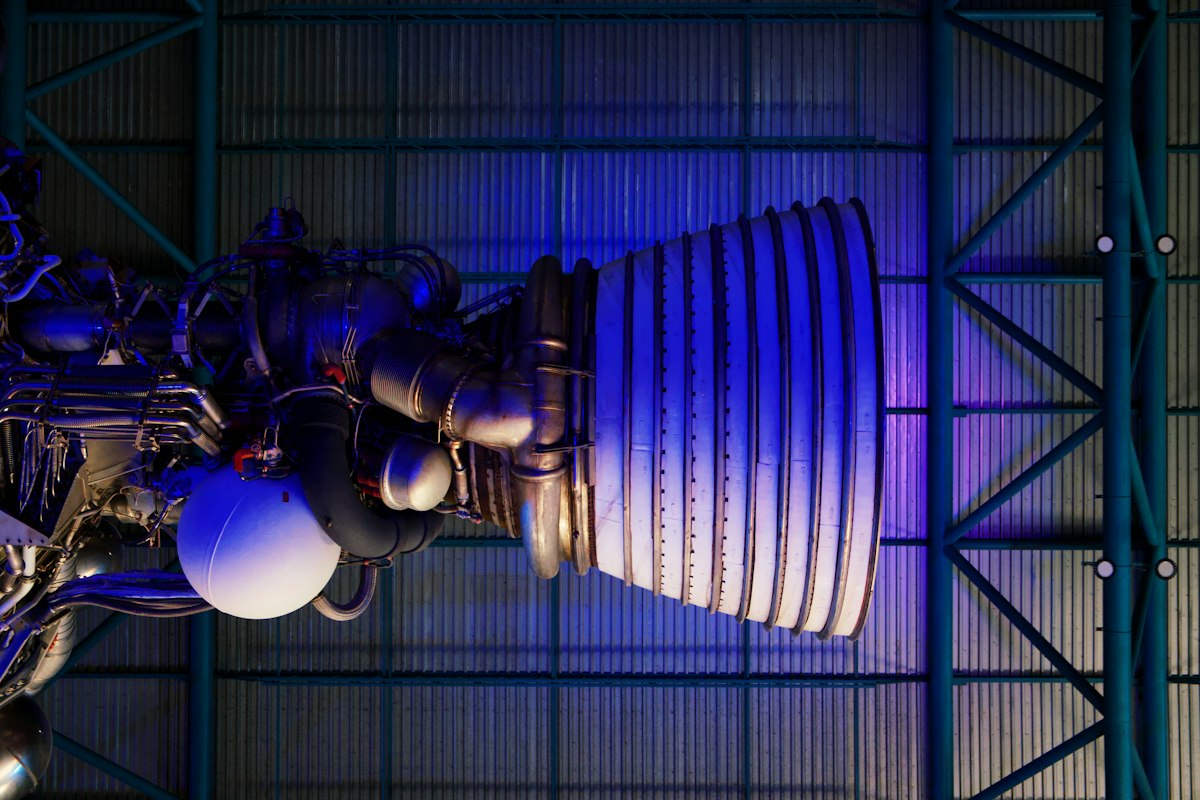
Nova Pathfinder can lift 3 metric tons in fully reusable mode. Sacrifice the booster, and that number jumps to 7 tons, a hefty increase for missions that demand extra cargo capacity without the luxury of saving hardware. The first stage runs on seven Zenith engines. They produce a combined 700,000 pounds of thrust. But the upper stage is the unusual part, because it features a ring of 24 thrusters circling a regeneratively cooled heat shield that's meant to survive reentry, a design that turns a typically fragile component into something far more durable. It's a different approach. So don't expect a standard rocket here.
Stoke completed a broad set of structural tests on the first stage earlier this summer. The stage will ship “pretty soon” to Cape Canaveral, Florida. After additional testing at the launch site, the vehicle will undergo a static fire test before being mated with the upper stage.
That upper stage is heading to Stoke’s test facility in Moses Lake, Washington, for its own structural tests and a hot fire test. Then it moves to Florida as well.
First launch target
Lapsa has finally put a date on it. For the first time since the company was founded in 2020, he publicly committed to a launch window, telling the team they're aiming for “early” 2027, a target that feels both concrete and ambitious. But he knows the truth. He's seen how rarely those dates hold up in this industry, where a single technical snag or supply chain hiccup can shove a release back by months, and he's learned not to bet the house on a calendar. So he's cautious. Early 2027 it is, for now.
“I feel good about that launch date. I think that’s pretty realistic. But as you know, in our industry, we’ll go when we’re ready.”
During a visit to the company’s factory in Kent, Washington, last fall, it was evident that Stoke is well past the PowerPoint stage. Flight hardware is in advanced assembly, and additional vehicles are already in the production flow. The Nova rocket is real hardware, not a render.
Block 2 goes bigger
Nova Pathfinder measures about 12.5 feet in diameter. That's slightly wider than a Falcon 9, but it's considerably shorter, which changes its whole profile on the pad. The Block 2 version jumps to a 15-foot diameter. And it will keep the methane-liquid-oxygen Zenith engines, just more of them. The upper stage continues to burn hydrogen and liquid oxygen, so the propulsion split stays familiar even as the vehicle grows. It's a simple tweak. But that extra width matters.
Lapsa says the biggest shift is in the second stage's shape. Pathfinder’s upper stage has a conical taper that limits payload fairing volume, so engineers couldn't fit larger cargo without sacrificing aerodynamic efficiency. Block 2 moves to a cylindrical design. But that's not all , it's a far simpler change, and the payoff is immediate. The new shape opens up far more usable space inside the fairing, which means heavier or bulkier payloads can ride without the old geometry's constraints. So the redesign tackles a real bottleneck.
The biggest change on the whole vehicle is the cylindrical second stage. That's what he said. Inside our walls for years, we've been wrestling with how to delete the taper on Pathfinder's upper stage, and I think we've got a pretty slick approach to doing that. So it's a real shift. But we can't just bolt it on. The whole design hinges on that one solution.
Stoke is targeting 2029 for the first Block 2 launch. That timeline puts it in direct competition with a crowded field of reusable rockets from SpaceX, Blue Origin’s New Glenn, Relativity Space’s Terran R, and Rocket Lab’s Neutron vehicle.
The demand problem
Satellite operators are in what's been described as panic mode over launch availability, and that anxiety isn't unfounded given the backlog of constellations waiting to reach orbit. Nova Pathfinder can help with some of that pressure. But it can't do the heavy lifting alone. To play a serious role in megaconstellations, Stoke needs the larger vehicle online, and that's the piece that will truly shift the calculus for customers who've been scrambling for any open slot on any rocket they can find. The pressure is real. So is the wait.
Lapsa is not worried about market saturation. He sees the bottleneck differently.
The space economy will grow exactly as fast as we can launch rockets, he argues. It will not grow faster. The mismatch between launch supply and demand, in his view, is enormous.
- Series E round co-led by Point72 Ventures and Spark Capital
- Total capital raised now stands at $2.3 billion
- Nova Pathfinder targets early 2027 for first launch
- Block 2 version aims for 2029 debut
Stoke has raised a fortune without a single orbital flight to its name. That's a striking fact. The company's progress on hardware is real, but so is the gap between ground testing and orbit, and that gap isn't just about physics or engineering,it's about time, money, and the unforgiving sequence of events that must all go right before a rocket ever leaves the pad. Every stage test, every static fire, every integration step carries the risk of delay. And delay, in this industry, can be fatal. So they push on, knowing the hardest miles still lie ahead.
Lapsa acknowledges as much. Problems happen during stage testing and final vehicle integration. He still sounds confident, though. The company has the money, the hardware, and the facilities. What remains is the hard part: actually getting Nova off the ground.
The industry will be watching closely, especially now that Stoke Space raises $1 billion and promises to spend it on going bigger. So the next two years will determine whether that confidence was justified, because the hardware has to fly, survive, and prove it can actually deliver on the promised economics. That's a heavy burden. Stoke Space raises $1 billion to build a rocket that could reshape small launch economics, but only if the hardware performs as designed, which is a very big if given the history of ambitious rocket startups. Stoke Space raises $1 billion with a clear plan: fly Pathfinder, learn from it, then scale up fast, and they've got no room for error in that sequence. Stoke Space raises $1 billion, and the clock is now ticking toward a launch pad in Florida. It's do or die.
Frequently Asked Questions
What is the primary use of the $1 billion raised by Stoke Space in its Series E round?
Stoke Space is using the cash to accelerate development of a larger Block 2 version of its Nova rocket. The company also aims to close in on a debut launch targeted for early 2027.
Why does Stoke Space need the Block 2 version of the Nova rocket to play a serious role in megaconstellations?
Nova Pathfinder can lift 3 metric tons in fully reusable mode, or 7 tons if the booster is sacrificed, but it cannot do the heavy lifting alone for megaconstellations. To play a serious role, Stoke needs the larger Block 2 vehicle online, which will shift the calculus for customers scrambling for launch slots.
How does the Block 2 version's upper stage design differ from that of Nova Pathfinder?
Nova Pathfinder's upper stage has a conical taper that limits payload fairing volume, while Block 2 moves to a cylindrical design. This change opens up far more usable space inside the fairing, allowing heavier or bulkier payloads without the old geometry's constraints.
When does Stoke Space target the first launch of Nova Pathfinder, and what is the target for the first Block 2 launch?
The first launch of Nova Pathfinder is targeted for early 2027, as publicly committed by CEO Andy Lapsa for the first time. The Block 2 version aims for a debut in 2029.
Who co-led the Series E round that raised $1 billion for Stoke Space?
The Series E round was co-led by Point72 Ventures and Spark Capital. This round pushed the company's total funding to $2.3 billion.

Astrid Berg covers space and astronomy, from missions and launches to the science of the universe. She follows the ongoing effort to explore beyond our planet.
💬 Comments (0)
No comments yet. Be the first!