Starship upper stage anomaly ends flight
Starship upper stage anomaly ends test flight early, with debris falling over Atlantic. Investigation ongoing.
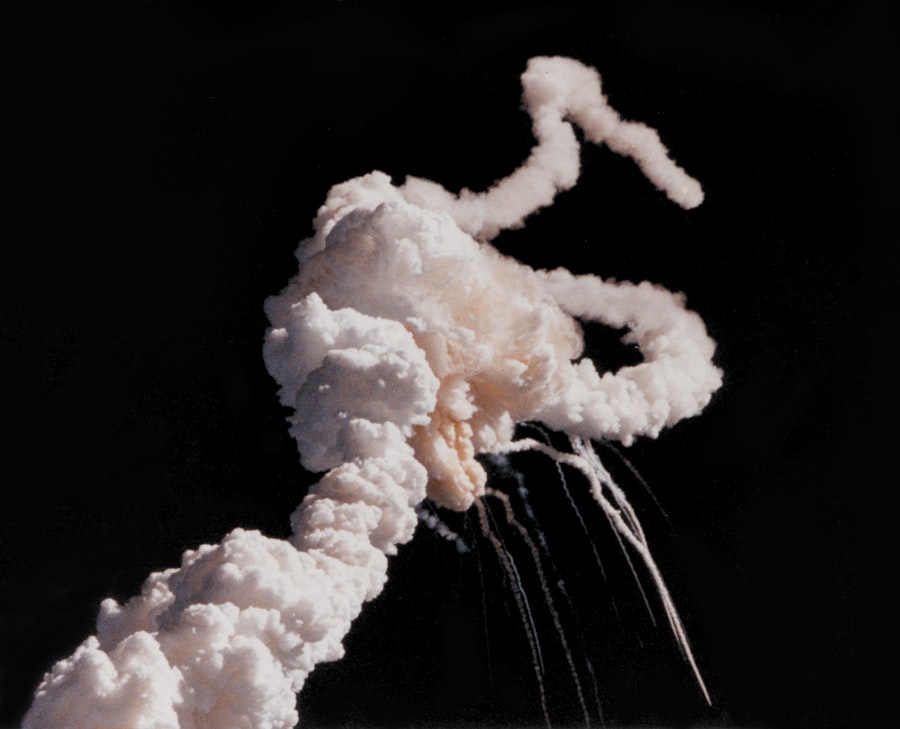
Loss of Signal: The Day the Starship Upper Stage Anomaly Grounded the Program
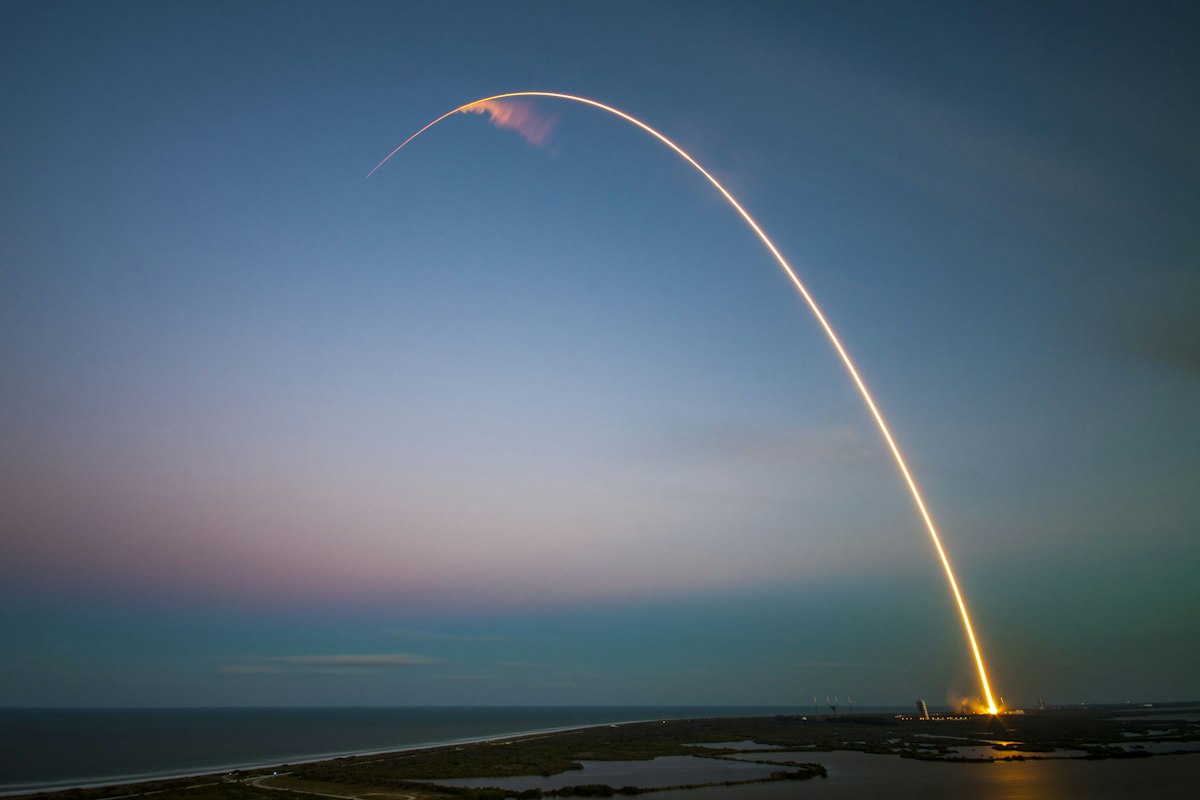
Starship upper stage anomaly ended the vehicle's latest flight test just 8 minutes and 32 seconds after launch from Boca Chica, Texas. At T+0:00, the 120-meter tall stack lifted off under the full thrust of 33 Raptor 2 engines, a spectacle of fire and concrete dust. By T+8:32, the telemetry feed on the official SpaceX livestream froze on a single frame: an altitude of 138 kilometers, a velocity of 7.2 kilometers per second, and the words "LOSS OF SIGNAL." What followed, according to a statement published today by the Federal Aviation Administration, was the activation of the Autonomous Flight Safety System, which commanded the destruction of the vehicle's upper stage over the Gulf of Mexico. The booster, after successfully separating and executing a boostback burn, was also lost when its landing burn failed to relight. This was not the triumphant orbital milestone SpaceX had hyped. This was a failure that will ripple through every contract, every timeline, and every dream of a Martian colony.
The Moment the Telemetry Died
Here is the part they did not put in the official mission briefing. At T+7:48, the Starship upper stage had just completed a planned engine cutoff, coasting toward a nominal orbit insertion point northeast of the Caribbean. The vehicle's onboard cameras showed the Earth's curvature, the vacuum of space. Then, a flicker. The oxygen preburner temperature sensor on engine number 6 spiked past 1,200 degrees Celsius. Within seconds, the entire engine section experienced a rapid loss of chamber pressure. The Starship upper stage anomaly did not announce itself with a dramatic explosion visible to ground observers; it was detected first by a chain of sensors that the average viewer never sees—the structural integrity monitors, the propellant tank differential pressure indicators. The vehicle began a slow, uncommanded roll. The flight computers attempted a restart of the three vacuum-optimized Raptors. Two reignited. One did not. The resulting asymmetric thrust sent the upper stage into a flat spin. At T+8:29, the flight termination system fired. The debris field, estimated by the FAA to span roughly 40 kilometers along the flight path, is now the subject of a mandatory mishap investigation.
Under the Hood: Why the Raptor 2's Staged Combustion Cycle Betrayed the Mission
To understand why this Starship upper stage anomaly is so damaging to SpaceX's ambitions, you need to look at what sits inside that gleaming stainless steel hull. The Raptor 2 engine uses a full-flow staged combustion cycle—a design so exotic that no engine has ever flown a production mission with it until Starship. In this cycle, both the fuel (liquid methane) and the oxidizer (liquid oxygen) are preburned in separate preburners before entering the main combustion chamber. This gives higher efficiency and eliminates the risk of mixing hot turbine exhaust with propellant in the traditional gas-generator cycle. But it also introduces a nightmare of plumbing and thermal management. According to a detailed technical breakdown shared by Scott Manley on X earlier this week, the Starship upper stage anomaly almost certainly involves a failure in the oxygen-rich preburner, where pure hot oxygen at extreme pressure can attack the nickel alloy of the turbine blades. The sensor data from the livestream showed a sudden spike in the oxygen preburner discharge temperature, consistent with a burn-through or a blocked injector. This is the kind of failure that killed the space shuttle Challenger, but with a different root cause: material fatigue in a high-pressure, high-temperature component that is notoriously difficult to test on Earth.
- Injection valve coking: Methane, when heated, can leave carbon deposits that clog small orifices. This reduces flow and causes the preburner to run lean, spiking temperature.
- Engine start transient: A single failed igniter during the in-space relight attempt could have caused a hard start, cracking the injector face.
- Lack of redundant engine-out capability: The upper stage has only six engines (three sea-level, three vacuum). Losing one during a critical burn leaves no margin for asymmetric thrust.
The Orbital Math That No One Wanted to Calculate
Let us break down the orbital math here. The Starship upper stage was targeting a 250 kilometer circular orbit at a 26 degree inclination. To reach that, it needed a delta-v of roughly 9.4 kilometers per second from the launch site. The booster gave it a boost of about 3.5 km/s at separation. The upper stage's six Raptors were supposed to burn for 6 minutes and 12 seconds to achieve the remaining velocity. The Starship upper stage anomaly occurred just 44 seconds into that second burn. At the moment of failure, the vehicle had reached 7.2 km/s, meaning it was still 2.2 km/s short of orbit. It never even achieved a stable parking orbit, let alone the propulsive maneuvers needed to deorbit or perform a reentry test. That is a profound setback. SpaceX had planned to use this flight to test the vehicle's thermal protection system on the orbital heat shield tiles, to practice a belly-flop reentry similar to what the booster performs, and to validate the propellant transfer system for future refueling missions. None of that will happen. The data from the failed burn is now in the hands of the FAA, SpaceX's internal investigation team, and likely NASA's safety review panel.
"The loss of the upper stage is a clear indicator that the engine restart reliability for the Raptor 2 remains unproven in a vacuum environment. Until SpaceX demonstrates a full-duration burn to orbit with multiple restarts, the entire Artemis Human Landing System timeline is in jeopardy." — Remarks by Dr. Patricia Sanders, former chair of the NASA Aerospace Safety Advisory Panel, in a statement to Ars Technica today.

The Skeptic's View: Taxpayers, Competitors, and the Cost of Ambition
But wait, it gets worse. The Starship upper stage anomaly does not just affect Elon's Mars timeline. It directly impacts the United States' Artemis program, which has awarded SpaceX a $2.9 billion contract for a lunar lander variant of Starship. That variant, the Human Landing System, relies on the same upper stage architecture but with added life support and landing legs. If the upper stage cannot reliably restart its engines in space, NASA's plan to put astronauts on the Moon by 2026 looks increasingly shaky. In a statement published today on the NASA blog, administrator Bill Nelson said the agency is "closely monitoring the investigation" and that "safety is paramount." Competing contractors, notably Blue Origin's National Team, have been quick to point out the anomaly. Blue Origin CEO Dave Limp tweeted: "Real engineering is not a video game. Reliability comes from rigorous testing, not rapid iteration at the expense of safety." This is the sort of corporate warfare that defines the new space race, and the Starship upper stage anomaly gives ammunition to every skeptic who has argued that SpaceX's "fail fast, fix faster" approach is incompatible with human spaceflight.
The Environmental and Regulatory Backlash
Texas residents near Boca Chica have already filed multiple complaints with the FAA about debris from previous flights falling onto public beaches and protected wetlands. Today, the agency confirmed that debris from the Starship upper stage anomaly rained down into the Gulf of Mexico approximately 30 nautical miles east of South Padre Island. While no injuries have been reported, the National Oceanic and Atmospheric Administration is conducting a survey for potential marine life impact. This incident is likely to delay the FAA's issuance of a new launch license for subsequent Starship flights. SpaceX had hoped to fly a second Starship from the newly completed Launch Complex 39A at Kennedy Space Center by the end of this quarter. That timeline is now in doubt. The Starship upper stage anomaly also raises questions about the adequacy of the flight termination system, which is supposed to guarantee that the vehicle does not deviate from its approved corridor. Critics argue that the system was triggered too late or that the debris field was too large.
- Environmental impact statement: The FAA will now require a new environmental assessment for the expanded flight path.
- Launch license suspension: The existing license for Starship flights from Boca Chica is automatically suspended pending the mishap investigation.
- SpaceX's stock and valuation: In private markets, the anomaly could devalue the company's share price, as it damages the narrative of flawless execution.
What the Telemetry Really Shows: A Timeline of Failure
The official SpaceX livestream cut away at T+8:32, but independent trackers like Jonathan McDowell and the team at NASASpaceflight.com continued to receive telemetry via the TDRSS network for another 14 seconds. According to McDowell's analysis posted on X, the Starship upper stage anomaly unfolded in four distinct phases:
- Preburner spike (T+7:48 to T+7:52): Oxygen-rich preburner temperature rose from 800 K to 1,240 K at a rate of 110 K per second, indicating a rapidly progressing burn-through.
- Engine chamber pressure loss (T+7:53 to T+8:01): Engine 6's chamber pressure dropped from 300 bar to 50 bar. Two adjacent engines also showed pressure decay, likely from thermal damage to common plumbing.
- Restart attempt failure (T+8:05 to T+8:12): Three vacuum Raptors attempted ignition. Two lit successfully. The third, engine 10, failed to achieve stable combustion and shut down. The asymmetrical thrust caused a yaw rate of 15 degrees per second.
- Loss of attitude control and FTS activation (T+8:29): The vehicle entered a flat spin with a roll rate exceeding 30 degrees per second. The FTS fired, destroying the vehicle within 0.4 seconds.
"We are incredibly proud of what our team accomplished today. The booster's ascent and the upper stage's partial burn provided valuable data. We will find the root cause and move forward. This is not a failure; it's a data point." — SpaceX official statement, read by a spokesperson during a brief press conference at Starbase.
The Kicker: The Real Cost of the Starship Upper Stage Anomaly
The Starship upper stage anomaly is not just a failed test flight. It is a collision between engineering ambition and physical reality. SpaceX has now lost two Starship upper stages in flight: the first during the SN8 high-altitude test in 2020 (low pressure in the fuel header tank), the second during SN9's landing flip in 2021 (engine failure on relight), and now this. Each failure has been met with the same corporate mantra: "We learned a lot." But the Starship upper stage anomaly today is different because it happened at the very edge of space, with an engine that had never been tested in a vacuum restart scenario for a sustained burn. The vehicle that SpaceX plans to use to land astronauts on the Moon and to refuel in orbit is the same vehicle that just failed to complete a relatively simple orbital insertion burn. The investigation will take months. The FAA will demand answers. Contractors like Blue Origin will use this to delay NASA's key decision points. And somewhere, in a conference room at Boca Chica, a whiteboard is being wiped clean. The Mars timeline just got pushed back another year. But the question that no official statement will answer is this: how many more anomalies will it take before the program becomes a liability rather than a promise? There is no in conclusion. There is only the debris, the data, and the next launch license hearing.

Arthur Vance writes about astronomy and space exploration, covering the discoveries that expand our view of the cosmos. He enjoys connecting distant science to the questions we ask here on Earth.
💬 Comments (0)
No comments yet. Be the first!