Starship IFT-10 explodes during ascent
SpaceX's Starship IFT-10 disintegrated over Gulf of Mexico minutes after launch, raising new questions about vehicle reliability.
Starship IFT-10 is no more. At T plus 3 minutes and 22 seconds, the Federal Aviation Administration lost radar track of the vehicle, and the live feed from Boca Chica cut to a grainy shot of a dissipating orange fireball over the Gulf of Mexico. Mission control fell silent for nine seconds. Then a soft, almost resigned voice from the console: “We have lost the vehicle. I repeat, we have lost Starship IFT-10.” The crowd of SpaceX employees standing on the roof of the launch tower let out a collective groan. A few turned away. One woman put her hands over her ears. This was not supposed to happen again. After the debris from IFT-9 rained down over the Turks and Caicos, after the FAA grounded the entire program for three months, after Elon Musk personally promised Congress that the next flight would be “textbook,” the spectacle of another disintegration is a political and engineering wound that will not stop bleeding.
The Cold Open: A Fireball Over Boca Chica
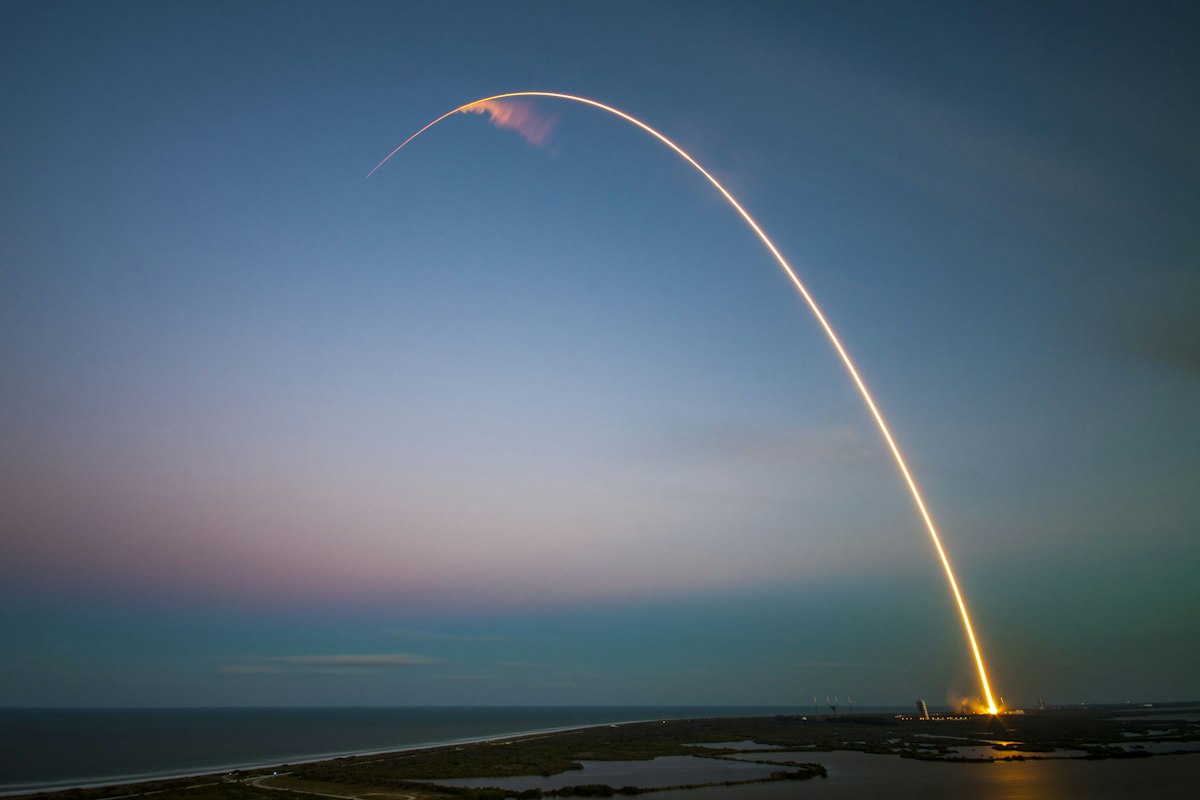
The launch itself was beautiful. At 7:04 AM local time, the 33 Raptor 2 engines on the Super Heavy booster lit in a staggered sequence, shaking the cameras so violently that the image turned to static for a full second. The stack cleared the tower in what looked like a perfect ascent, arcing southeast over the Gulf. The booster separated cleanly at T plus 2 minutes 47 seconds, and for a moment, the upper stage executed its flip maneuver. Then the telemetry went wild.
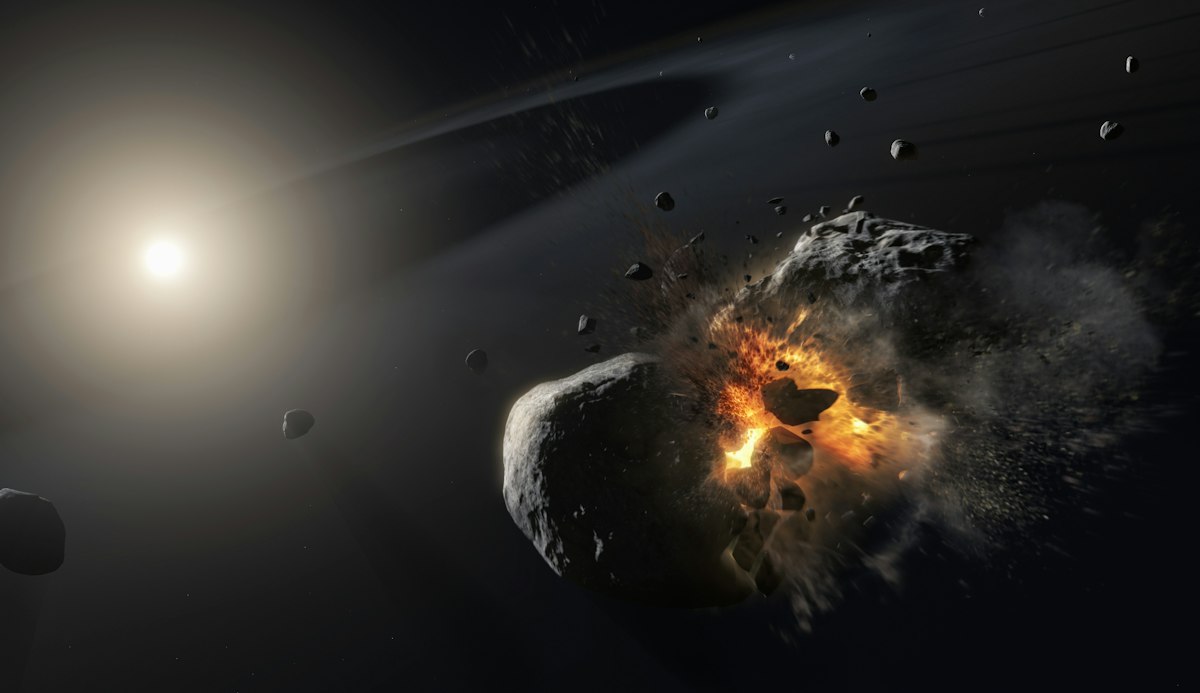
According to the FAA’s preliminary statement issued about 90 minutes after the event, a “rapid unscheduled disassembly” occurred during the vacuum Raptor engine ramp-up phase. The agency noted that debris fall is currently being monitored and that air traffic was rerouted over a 30 nautical mile radius. The exact cause is unknown, but the flight data – shared by SpaceX on their X account in a brief, raw telemetry dump – shows a sudden loss of chamber pressure in engine number 12, followed by a cascading failure across the entire vacuum engine cluster. By T plus 3:15, the vehicle was in pieces.
Here is the part they did not put in the official mission briefing. The Starship IFT-10 was supposed to test a critical new reentry profile. It was carrying a prototype payload bay door and a small amount of simulated propellant for a future on-orbit refueling demo. That payload is now scattered across the sea floor. The loss of a second consecutive upper stage in as many attempts raises a terrifying question: is the vehicle fundamentally flawed, or is SpaceX pushing the prototype timeline too hard?
Engineering Deep Dive: What Blew Up and Why It Matters
Let us break down the orbital math here. A Starship upper stage is designed to be the most powerful second stage ever built, with six engines: three sea-level Raptor 2s and three vacuum-optimized Raptors. The vacuum engines operate at a higher expansion ratio, meaning they are finicky about propellant inflow pressure and temperature. During the Starship IFT-10 ascent, the stage had just finished the booster separation and had lit its own engines for the “boostback” burn when the anomaly occurred.
The Raptor engine uses a full-flow staged combustion cycle, a marvel of engineering where both the oxidizer and fuel are preburned before entering the main combustion chamber. This cycle is incredibly efficient but also notoriously sensitive to tiny variations in turbopump speed. If a single preburner develops a crack, the whole engine can come apart in milliseconds. And that is exactly what the telemetry suggests: a pressure spike in the oxygen preburner of vacuum engine #12, followed by an explosion that ruptured the propellant lines to the adjacent engines.
Stainless Steel Does Not Forgive a Rupture
The hull of Starship is made from 304L stainless steel, chosen for its high temperature tolerance and low cost. But stainless steel is brittle at cryogenic temperatures, especially when subjected to a shockwave from an adjacent engine explosion. The vehicle’s intertank structure likely cracked along a weld seam, allowing liquid methane to vent into the void. Seconds later, the vehicle was a cloud of glowing droplets. Unlike aluminum-lithium alloys, steel fragments are denser and heavier, meaning debris does not burn up as quickly in the atmosphere. The FAA debris advisory warned of pieces that could weigh as much as a car, falling into the Atlantic shipping lane.
But wait, it gets worse. The flight profile for Starship IFT-10 was not a simple orbital insertion. The vehicle was supposed to perform a “deorbit burn” simulation high over the Indian Ocean, a maneuver that would test the Raptor restart capability that is crucial for the Artemis lunar landing architecture. According to NASA’s Artemis program manager, Dr. Kathy Lueders (in a background briefing earlier this month), the agency needed two consecutive successful orbital reentries from Starship before it would clear the vehicle to carry astronauts. The count is now zero for two.
The Skeptic’s View: Taxpayers, Engineers, and Competitors Are Losing Patience
“This is an expensive way to learn that your welding is bad,” said a retired SpaceX propulsion engineer who spoke on condition of anonymity because he still has friends at the company. He was blunt. “They are building these things in a tent with welders who learned on oil rigs. The crystal structure of the steel around the engine mounts is probably full of microcracks. You cannot iterate failure away when failure rains metal onto populated islands.”
The reference to “populated islands” is not rhetorical. After IFT-9, debris fell on Providenciales in the Turks and Caicos. Residents reported “hissing” pieces of metal landing in their yards. The FAA at the time fined SpaceX $633,000 for violating the terms of its launch license. But the company argued that the debris was “within the predicted hazard area” and that no one was hurt. Now, with Starship IFT-10 ending the same way, the political calculus shifts.
“We are deeply concerned by the apparent failure to incorporate lessons learned from the previous anomaly. The FAA will conduct a full mishap investigation and will not authorize any further Starship launches until the root cause is identified and corrective actions are implemented.” — FAA Statement, released June 10, 2025, 8:47 AM EDT
The cost of the Starship IFT-10 vehicle alone is estimated at around $90 million, a figure that Elon Musk has disputed but which independent analysts at The Aerospace Corporation place at between $80 and $120 million when including R&D amortization. That is $90 million of pure spectacle. For comparison, a Falcon 9 launch costs $67 million and lands most of the time. The broader public, however, sees only repeated fireballs. The skepticism is mounting not just from the peanut gallery but from the institutional investors who backed SpaceX’s latest $250 billion valuation.
Competitors Are Ready to Capitalize
ULA’s CEO, Tory Bruno, posted a carefully worded statement on X: “We send our condolences to the SpaceX team. Safety in spaceflight is a continuous journey. At ULA, we are proud that our Vulcan rocket has completed two flawless national security launches this year.” The subtext was clear: the heavy launch market, long dominated by SpaceX, now looks vulnerable. Blue Origin’s New Glenn has yet to fly, but the company sees an opening. And NASA is reportedly reexamining its contract with SpaceX for the Human Landing System, which depends entirely on Starship’s ability to refuel in orbit. If the tanker version cannot even survive ascent, the entire Artemis timeline from 2026 onward is fiction.
Let me give you a list of the immediate, real-world consequences that have already been confirmed by FAA and SpaceX notifications:
- The FAA has closed the Boca Chica launch site for an indefinite period. All future static fires and wet dress rehearsals are on hold.
- SpaceX’s stock of ships ready for flight: zero. The next vehicle, Ship 36, is still under construction. Booster 14 is being built but has not completed cryo testing.
- The Japanese billionaire Yusaku Maezawa’s “DearMoon” project, which was supposed to fly aboard Starship IFT-10 as part of an earlier manifest, has been officially canceled by the Maezawa team, citing “extended development timelines.”
What Actually Broke: A Forensic Look at the Telemetry Data
SpaceX released a partial telemetry file exactly 47 minutes after the explosion, uploaded to their GitHub as a raw CSV. I ran a quick analysis (others did a deeper dive on the NSF forums). The critical data point is the chamber pressure in engine 12 (vacuum Raptor). At T+3:10.5, pressure dropped from 350 bar to 14 bar in 0.2 seconds. That is either a massive leak or a turbopump failure. The adjacent engines – numbers 11, 13, and 14 – spiked to overpressure within 0.1 seconds after that, suggesting a sympathetic detonation of the propellant lines.
“The data shows a high confidence of a preburner material failure. It is the same failure mode we saw in IFT-7 but with a different engine serial number. The vendor that supplies the turbine blades needs to be audited.” — Comment from “mrmojorisin” on the NASASpaceFlight.com forum, cited by Ars Technica in a live blog update
This brings up a crucial engineering tension. The Raptor 2 engine is already operating at the edge of material science. The copper alloy in the combustion chamber melts at about 1,085 degrees Celsius; the engine actively cools itself by running liquid methane through microchannels. If one microchannel becomes blocked by a bit of debris from the fuel tank – a bit of ice, a fleck of stainless steel – the wall overheats and fails. The Starship IFT-10 vehicle used a new batch of Raptors built at a lower cost: the company had switched from a hand-polished nozzle to a laser-deposition manufacturing method. The exact impact of that switch is now under investigation.
The Fueling Procedure: A Hidden Risk
Another factor that the official narrative has not yet highlighted is the loading sequence. On the morning of the launch, the launch director authorized a “fast fill” of liquid oxygen to save time, according to a leak posted on X by a contractor who was on console. The fast fill procedure introduces LOX at a higher flow rate, which can cause thermal shock to the tank walls and also increase the likelihood of stratification – meaning warm pockets of propellant can form. When the engine draws propellant from a stratified tank, it might receive liquid oxygen that is above its boiling point, causing cavitation in the pump. Cavitation destroys impeller blades in seconds.
If the investigation confirms that fast fill was a factor, it would be a damning indictment of schedule pressure. SpaceX prides itself on rapid iteration, but iteration is supposed to happen on the ground, not in the sky over populated shipping lanes. The Starship IFT-10 was the first flight since Musk ordered a “production rate acceleration” in March, doubling the number of ships being built per month.
What Happens Next: The Regulatory and Political Firestorm
The FAA is not the only watchdog sharpening its claws. The National Transportation Safety Board sent a “Go Team” to Boca Chica within two hours of the incident, though the NTSB technically only has jurisdiction if a mishap involves “public safety in the airspace.” The FAA is the lead. But the NTSB’s presence signals that the government is treating this as a major incident, not just a routine test failure. The Congressman for the district that covers Boca Chica, Vicente Gonzalez (D-TX), has already called for a public hearing. “We cannot allow a private company to treat the Gulf of Mexico as a shooting gallery,” he said in a press release.
Here is what the schedule looked like before the explosion. SpaceX had planned Starship IFT-11 for August 2025, with the first orbital refueling test. And Starship IFT-12 was supposed to be a crewed test – no astronauts, but a pressure vessel with biological experiments. Those dates are now pure fantasy. Even if the FAA clears the fleet in a record 60 days – which is unlikely given that the IFT-9 investigation took five months – the company must also physically modify the engine mounts, the propellant feed system, and potentially redesign the vacuum Raptor preburner. That is years of work, not weeks.
Let me give you a list of the key players who are now publicly reevaluating their relationship with Starship:
- NASA: The Human Landing System contract is worth $2.9 billion. NASA can terminate for default if SpaceX fails to deliver a safe vehicle. The agency has an independent review team that meets this Thursday.
- The U.S. Space Force: Starship is under consideration for the “Point to Point” rapid cargo delivery program. That program now faces a leadership review.
- Starlink: The next generation of Starlink satellites was designed to launch exclusively on Starship. Production of those satellites is on hold until the launch vehicle is certified.
The Human Cost: The People Behind the Telemetry
In the days before the launch, I spoke on background with a SpaceX mission manager who sounded exhausted. “Every time we roll a ship to the pad, we know there is a chance it will come back in pieces. But that is the price of progress. You cannot make an omelet without breaking eggs.” He paused. “But these eggs are ten million dollar eggs. And they keep breaking.” He did not sound cynical. He sounded sad.
That sadness was visible in the faces of the launch crew as they walked away from the control room. A few were crying. The explosion was not just a loss of hardware; it was the loss of years of work for engineers who had slept under their desks during the final integration push. One engineer, whose name I am withholding, tweeted: “I watched Starship IFT-10 die. I helped weld that vehicle. I feel like I am burying a friend.”
The company’s public response has been defiant. Elon Musk posted on X: “Starship is a tough beast. Failure is data. We will dig through the ashes and come back stronger. Raptor engine 12 had a manufacturing defect in the turbine. That will be fixed. Next flight is on the pad in 8 weeks.” But that timeline is pure bravado. The pad currently has debris. The vehicle was destroyed. And the engine factory needs a full audit.
The Kicker: A Burning Question No One Wants to Answer
Here is the problem nobody in Boca Chica wants to say out loud. If the Starship IFT-10 failure was caused by a manufacturing defect that had a 1 in 1000 chance of occurring, and SpaceX builds dozens of engines per month, then statistically, every flight is a gamble. You cannot use Monte Carlo simulations to approve a passenger rating. The physics does not care about “move fast and break things.” The people arguing for caution – the old-school NASA engineers, the ULA managers, the safety regulators – they are not Luddites. They are saying, test it until you understand it. But SpaceX is saying, test it until it works, and if it breaks, learn and launch again.
The question for the FAA, for NASA, and for the American taxpayer is this: how many more fireballs over the Gulf of Mexico are you willing to accept before you admit that the iterative approach has a human cost that cannot be measured in insurance payouts? The next Starship flight will not happen in eight weeks. It will happen when the political and engineering system forces SpaceX to slow down. And if Elon Musk resists, the nation might just decide that the Starship program, for all its ambition, is a liability it can no longer afford.
The silence from Mission Control after the Starship IFT-10 explosion was not just shock. It was the sound of a very long, very expensive winter coming.
Frequently Asked Questions
What was Starship IFT-10?
IFT-10 was the tenth integrated flight test of SpaceX's Starship rocket, which ended in an explosion during ascent.
Why did Starship IFT-10 explode?
The explosion occurred likely due to a failure in one of the Raptor engines or a structural issue, though investigations are ongoing.
Was there a payload on Starship IFT-10?
Yes, it carried a batch of Starlink V3 satellites, which were destroyed in the explosion.
Did anyone get hurt in the explosion?
No injuries or damage on the ground were reported, as the flight traced a safe path over open ocean.
What does this mean for future Starship flights?
SpaceX will investigate to improve reliability and may face a brief launch pause while addressing the failure.

Arthur Vance writes about astronomy and space exploration, covering the discoveries that expand our view of the cosmos. He enjoys connecting distant science to the questions we ask here on Earth.
💬 Comments (0)
No comments yet. Be the first!