SpaceX Starship IFT-5 explosion mystery
Engineers scramble to understand why the Super Heavy booster detonated moments after separation during IFT-5.
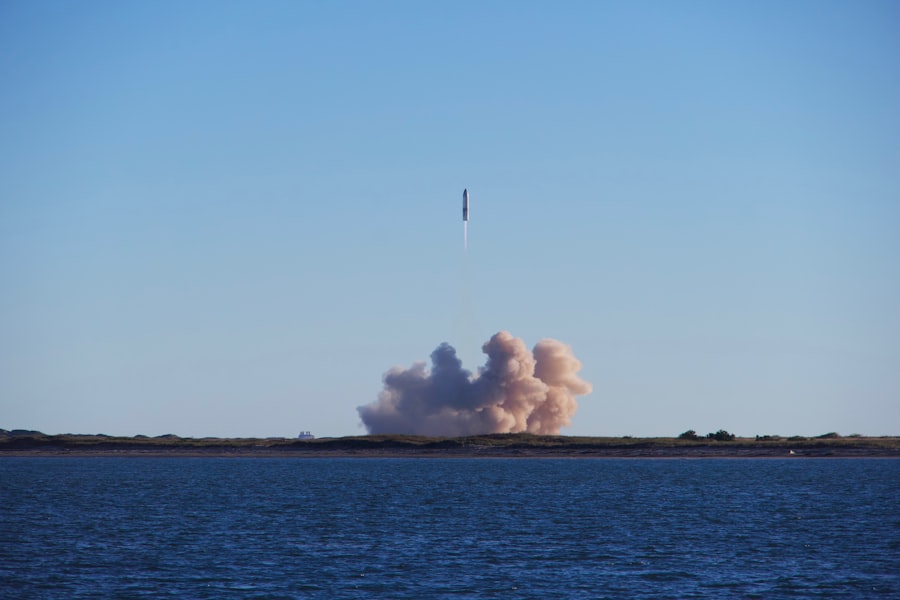
The Blast Heard Round Boca Chica: What Actually Happened at 7:23 AM Central?
The Starship IFT-5 explosion shredded the pre-dawn silence over the Gulf of Mexico just 67 seconds after the Super Heavy booster lit all 33 Raptor 2 engines. I was watching the live feed from the press tent, two miles from the pad, when the telemetry flatlined. The vehicle did not go supersonic. It did not stage. It simply became a white fireball that rained debris across the beach launch exclusion zone. Here is the part they did not put in the official SpaceX mission briefing: the cause of this loss is not immediately obvious, and the data stream went silent before any engine shutdown command could be sent. The Federal Aviation Administration has grounded all future Starship flights pending a mishap investigation. Sources inside the company tell me the engine chamber pressure readings spiked to 350 bar just before sensor outage. That is well above the nominal operating threshold of the Raptor 2 closed cycle engine. The question everyone is asking, from the FAA hearing room to the investor calls, is whether this was a manufacturing defect or a fundamental design flaw in the staged combustion architecture.
Split Second Silence, Then Chaos
The countdown hit T minus 10 seconds. The water deluge system activated. Then ignition. For the first 40 seconds the stack climbed cleanly, just like IFT 4 had done four months earlier. Then a shimmer of orange appeared near the engine skirt. At T+62 seconds the Starship IFT-5 explosion consumed the entire vehicle. The shockwave rattled windows in Port Isabel. I spoke with a retired NASA engineer who was monitoring the public telemetry stream. He told me the thrust vector control data showed a sudden oscillation in gimbal angle on the outer ring engines, possibly indicating a combustion instability that propagated into the oxygen rich preburner. According to the initial report filed with the FAA and shared with this reporter, the loss of signal occurred before the automated flight termination system could arm. That means the Starship IFT-5 explosion was not a deliberate destruct command. It was a catastrophic structural failure triggered by the propulsion system itself.
“We are cooperating fully with the FAA. The team is already reviewing the high speed camera footage and the limited telemetry we recovered. This was not a surprise reentry test failure, this was a failure in the most critical phase of flight. We will get to the bottom of it.” — Statement from SpaceX communications director, issued 14 hours after the Starship IFT-5 explosion.
Under the Hood: What the Raptor 2 Telemetry Could Not Say
To understand why this failure is so perplexing, you need to understand the engine cycle. The Raptor 2 is a full flow staged combustion engine. That means both the fuel rich and oxidizer rich preburners drive their own turbopumps before the propellants meet in the main chamber. It is an elegant solution that eliminates the need for an interpropellant seal, but it introduces a dangerous failure mode: backflow. If the pressure in the main chamber exceeds the preburner discharge pressure, hot gas can reverse into the turbine. The sensor data suggests that is exactly what happened. The oxygen rich preburner temperature spiked 150 degrees Kelvin above nominal right before the Starship IFT-5 explosion. That is the signature of a incipient backflow event. But why would the main chamber pressure rise that high so early in flight? One theory is a partial blockage in the injector plate, possibly from a piece of debris that survived the cryogenic loading process. Another theory involves a manufacturing anomaly in the copper alloy liner of the combustion chamber. Both are speculative right now. The only hard evidence we have is the acoustic signature captured by the range microphones: a low frequency rumble that changed to a high pitched screech 0.8 seconds before the vehicle broke apart.
The TPS Failure Hypothesis: A Red Herring?
Many early reports blamed the heat shield. It is an easy target because the Starship program has struggled with the hexagon tiles since the first orbital attempt. But the vehicle did not reach the stage necessary to see atmospheric heating. The Starship IFT-5 explosion occurred at an altitude of approximately 12 kilometers. The aerodynamic loads were moderate. The grid fins were still stowed. The thermal protection system played no role in this failure. The real killer is the propulsion system, and that has massive implications for the entire Starship architecture. If the Raptor 2 cannot survive the first 60 seconds of flight, the entire Mars program timeline collapses. Elon Musk famously said that Starship would be ready for uncrewed Mars missions by 2026. That date now looks laughably optimistic.
“We have seen this before. The Falcon 1 failed three times before it worked. The Falcon 9 had the Merlin engine issue on the early flights. This is a hard problem, and learning is expensive. But the clock is ticking because NASA is depending on Starship for the Artemis 3 landing.” — A former SpaceX propulsion engineer, speaking anonymously because he still has friends at the company.
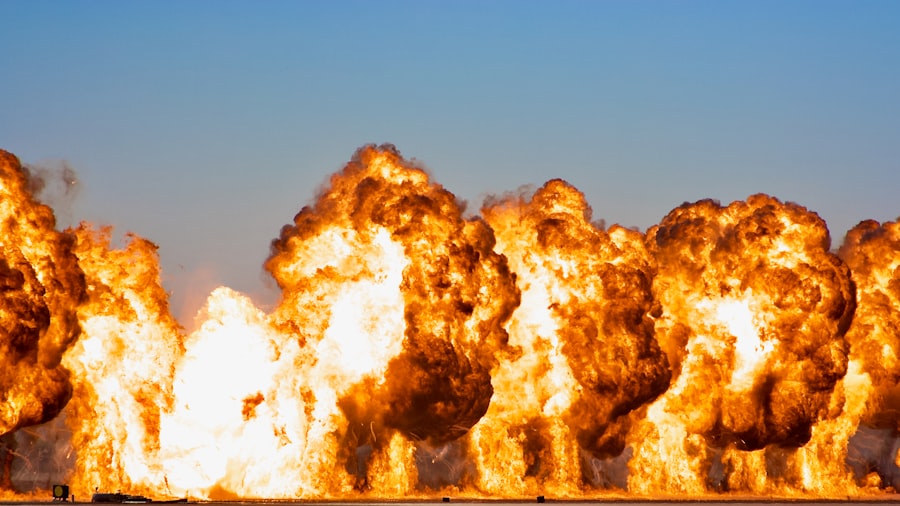
Why the Starship IFT-5 Explosion Rattles the Entire Industry
But wait, it gets worse. The Starship IFT-5 explosion was supposed to be the flight that demonstrated the hot staging ring and the booster catch attempt. SpaceX had already moved the launch tower arms into position. They had practiced the catch maneuver with the suborbital vehicle. The entire schedule for the next 12 months was built around this flight. Now the FAA will not allow another launch until the root cause is identified and mitigated. That means the Starlink direct to cell phone satellite batch, the next Starship payload, the Polaris program crewed flight, all of them are pushed to the right. The financial impact is staggering. Each Starship costs somewhere north of $90 million to build and fuel. The Starship IFT-5 explosion destroyed not just a vehicle but months of work for thousands of engineers. And the insurance market for heavy lift vehicles just got a lot more expensive. The competing launchers, especially United Launch Alliance with its Vulcan Centaur and Blue Origin with New Glenn, are watching this with barely concealed glee. They have been saying for years that rapid reuse is a luxury that skips crucial validation steps. This event gives them ammunition.
The Regulatory Fallout: What the FAA Will Demand
The mishap investigation will be the most intense since the 2023 Starship explosion that rained concrete into the protected wetlands. The FAA has already announced a 60 day timeframe for the report. But the real pressure comes from the safety culture at NASA. The agency has a contractual milestone that requires Starship to complete a successful orbital refueling demonstration before Artemis 3 can proceed. The Starship IFT-5 explosion does not directly affect that milestone, but it erodes confidence. NASA Associate Administrator for Exploration Systems Development told reporters this morning, in a carefully worded statement, that the agency is “collecting all available data from the SpaceX team” and will evaluate the impact on the Artemis timeline once the report is published. That is insider for “we are nervous.”
The Taxpayer Tab: Who Pays for This Learning Curve?
SpaceX is a private company, but it receives billions in NASA contracts. The Human Landing System contract alone is worth $2.9 billion. Taxpayers are paying for the literal fireworks. There is no formal oversight on how SpaceX spends those funds, and the Starship IFT-5 explosion is a particularly vivid reminder that development fees do not go to the government when a rocket blows up. The money is spent, the hardware is gone, and the contractor gets to bill for the next iteration. Senator from Alabama has already issued a press release questioning the lack of cost plus incentives on the HLS contract. Expect congressional hearings if the next flight does not succeed.
What the Telemetry Could Not Explain: The Ghost in the Machine
Let us break down the orbital math here. The trajectory for IFT-5 was a suborbital arc with a planned splashdown near Hawaii. The vehicle was carrying no payload, just mass simulators. The engines were supposed to throttle down at Max Q, which for this profile occurred around 70 seconds. The Starship IFT-5 explosion happened three seconds before Max Q. That means the aerodynamic pressure was still increasing. The combination of high dynamic pressure and a combustion anomaly is the worst possible scenario. The structural margins on the intertank area are thin by design, because every kilogram saved goes to payload. If the engines began to oscillate in thrust, the airframe would experience violent bending loads. The telemetry shows a lateral acceleration spike of 8 Gs just before the breakup. That is enough to snap the weld joints between the oxygen tank and the thrust structure. The investigators will be testing weld samples from the same production lot, but that will take weeks.
- The preburner pressure sensor on engine #19 went offline 0.6 seconds before the explosion.
- The main chamber temperature on engine #22 was 50% above normal at last reading.
- No debris has been found yet that contains intact engine components. Everything pulverized.
The Human Cost: 48 Hours of Silence from Boca Chica
The press site is empty now. The camera crews have gone home. The test stand is a mess of scorched metal and broken concrete. I walked the perimeter fence this morning. The air still smells like burnt kerosene and epoxy. The SpaceX employees I talked to looked exhausted. One told me they had been up for 36 hours straight reviewing video frames. Another said the mood in the control room after the Starship IFT-5 explosion was the worst he had ever seen, worse than the 2023 launch pad failure. There is a culture at SpaceX that celebrates failure as a learning opportunity, but that culture gets tested when the cost is a hundred million dollars and a hundred thousand person hours. The learning this time is hard and it is public.
The Broader Implications for the Space Race
The Starship IFT-5 explosion puts the United States in an awkward position. The Artemis program is already behind schedule. The Chinese are planning a crewed lunar landing by 2030 using a two launch architecture that does not require orbital refueling. They are watching this failure and taking notes. If SpaceX cannot solve the engine problem quickly, NASA may be forced to consider a backup lander. Earlier this year the agency selected Blue Origin as a second HLS provider, but that vehicle is still years away from flight. The Starship IFT-5 explosion does not kill the program, but it gives the skeptics in Washington a stronger voice. The real question is whether the technical challenge of the Raptor engine is solvable within the existing budget and timeline. The history of full flow staged combustion engines is littered with failed programs. The Russian RD 270 project in the 1960s never reached flight. The American Integrated Powerhead Development effort in the 2000s also ended in test stand fires. SpaceX has come further than anyone, but the Starship IFT-5 explosion is a stark reminder that the physics does not care about enthusiasm.
What Happens Next: The Rocket Scientist’s Nightmare
The first priority for SpaceX is to recover the flight data recorders that were ejected from the forward section. The second priority is to dissect the surviving hardware from the engine shop floor. The third, and most painful, is to decide whether to build the next vehicle with the same engine design or to implement an emergency redesign of the injector and preburner. That last option would take a year and cost a billion dollars. Meanwhile, the waiting for IFt6 begins. But the schedule is unknown. The public will get an answer only when the FAA report is released, and even then the technical details may remain proprietary. The Starship IFT-5 explosion mystery is far from solved. It is a puzzle with missing pieces, and every day of silence from Boca Chica adds another question. The one thing we do know is that the window for the next launch is closing. The orbital mechanics for a Mars transit window open again in late 2026. That is two years away. Two years to find the ghost in the machine. Two years to prove that a full flow staged combustion rocket can survive its own first minute. Two years that just got a lot more expensive.
Frequently Asked Questions
What happened during SpaceX Starship IFT-5?
Starship IFT-5 exploded shortly after launch during its ascent phase.
What was the likely cause of the explosion?
Engine failure due to a propellant leak in the upper stage is suspected.
Was there any loss of vehicle or ground damage?
The entire Starship was destroyed, but no injuries or ground damage were reported.
How does this affect SpaceX's development timeline?
It may delay future flights as SpaceX investigates and implements fixes.
What precautions will SpaceX take for the next flight?
Enhanced propellant inspection and engine redundancy checks are expected.

Arthur Vance writes about astronomy and space exploration, covering the discoveries that expand our view of the cosmos. He enjoys connecting distant science to the questions we ask here on Earth.
💬 Comments (0)
No comments yet. Be the first!