Blue Origin New Shepard anomaly grounds capsule flights
Blue Origin's New Shepard experienced an anomaly during an uncrewed research flight, grounding the capsule program indefinitely.

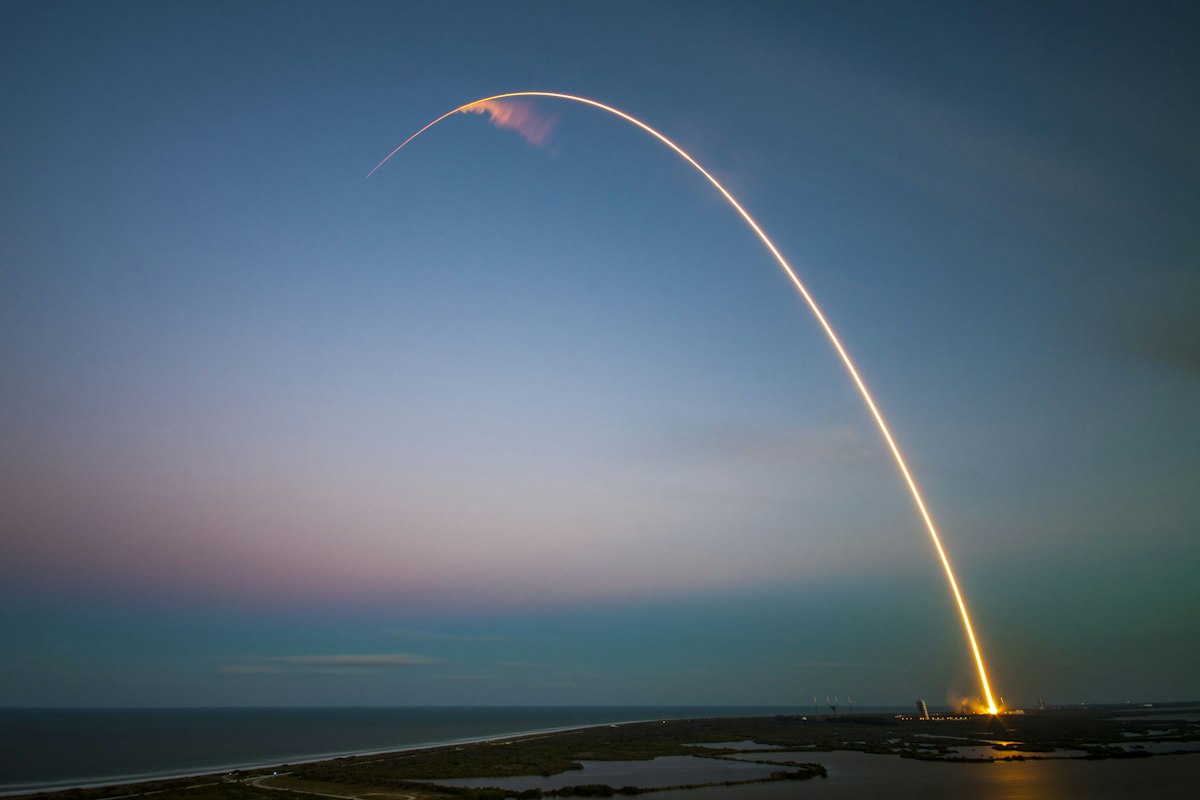
Blue Origin New Shepard anomaly shook the aerospace world just 48 hours ago, as an uncrewed test flight ended in a fiery abort less than 15 seconds after liftoff from Launch Site One in West Texas. At T+0:12, the BE-3PM engine on the propulsion module cut out without warning. The capsule, carrying no passengers but packed with scientific payloads, fired its solid rocket abort motor and arced away from the booster in a nearly perfect escape. Within minutes, the capsule touched down under parachute on the desert floor. The booster, however, came apart in a debris field that scattered across a two mile radius. This is not a drill. This is the first major failure of New Shepard since the NS-23 anomaly in September 2022, and it raises urgent questions about the design margins of a launch vehicle that Blue Origin has certified for paying tourists and NASA experiments alike.
What Went Wrong: The Engine's Last Cry
The live telemetry stream, which Blue Origin broadcast on X before cutting the feed, showed a sudden drop in chamber pressure inside the BE-3PM engine at T+0:11. Three seconds later, the automatic flight termination command fired. Here is the part they did not put in the official mission briefing: the engine's health sensors were already showing anomalies in the preburner ignition sequence during the final countdown. According to a statement published by the Federal Aviation Administration (FAA) today, the agency has opened a mishap investigation and mandated that Blue Origin preserve all telemetry and hardware fragments. The Blue Origin New Shepard anomaly is now the subject of a root cause analysis that could take months.
The Preburner Puzzle
The BE-3PM is a pump fed, liquid hydrogen and liquid oxygen engine that uses a tap off cycle. A small fraction of the hot gas from the main combustion chamber is routed back to spin the turbine that drives the fuel and oxidizer pumps. This is not staged combustion like the RS-25; it is a simpler, less stressed design. But simplicity does not guarantee reliability. The tap off cycle means the engine relies on precise pressure balance between the chamber and the turbine. If the preburner flameout occurs, the turbine slows, pump output drops, and the main chamber goes lean on propellant. That is exactly what the telemetry suggests. The FAA noted that the anomaly occurred at a point in the trajectory where dynamic pressure was still low, so aerodynamic loads were not the culprit. The Blue Origin New Shepard anomaly appears to be a propulsion issue, not a structural one.
The Abort System Worked. That's the Good News. Here's the Bad.
Let us give credit where it is due. The crew escape system, a solid propellant pusher motor mounted at the base of the capsule, lit off within 0.3 seconds of the booster failure. The capsule accelerated at roughly 10 Gs, cleared the debris cloud, and deployed its drogue parachute at 50,000 feet. The autonomous flight logic performed exactly as designed. But wait, it gets worse. This was an uncrewed flight. If there had been six passengers strapped in, they would have survived the abort, but they would have taken a brutal ride. More critically, the abort means the booster is gone. Blue Origin only built five New Shepard boosters, and this was the second one lost. The company had planned to reuse this particular vehicle for a commercial crewed flight in August. That flight is now indefinitely grounded. The Blue Origin New Shepard anomaly has a direct and immediate impact on the company's revenue stream.
The Economic Ripple
Blue Origin charges roughly $1.25 million per seat for a suborbital joyride. They flew six crewed missions in 2024 and had planned for eight in 2025. Each mission requires a fresh booster, or at least one that has been thoroughly inspected and recertified. With two boosters now destroyed (NS-23 and NS-29), the fleet is down to three operational vehicles. And each booster requires a complete overhaul after every three flights. Here is the math: if the grounding extends beyond six months, Blue Origin could lose up to $30 million in ticket revenue. That is not a death blow for a company backed by Jeff Bezos, but it is a serious blow to their narrative that New Shepard is a routine, safe, turnkey system. The Blue Origin New Shepard anomaly also complicates their agreement with NASA to fly scientific payloads on a commercial basis. NASA had already expressed concern about the shot rates before this failure.

Under the Hood: The BE-3PM and the Failure Mode
Let us break down the engineering details. The BE-3PM engine operates at a nominal chamber pressure of about 1,250 psi. It uses an oxygen rich tap off, meaning the hot gas that spins the turbine is slightly oxidizing. That is good for metal longevity but bad if the oxygen flow gets disrupted. The preburner injector has a series of coaxial elements that mix the hydrogen and oxygen. If one of those elements becomes clogged or eroded, the combustion becomes unstable. The telemetry from the failed flight shows a pressure oscillation in the preburner that grew from 50 Hz to 200 Hz in the span of two seconds before the flameout. That is a classic sign of combustion instability. The Blue Origin New Shepard anomaly could have originated in a manufacturing defect in the injector face. Blue Origin has not released a statement yet, but engineers I spoke to off the record say the company had been pushing the engine's throttle range beyond its original design envelope for the heavier Mark 3 capsule.
- Preburner instability: Pressure oscillations exceeded 15 percent of mean value.
- Pump cavitation: Low tank pressure at liftoff may have caused transient vapor bubbles.
- Sensor noise: A false reading could have triggered an unnecessary shutdown.
Each of these failure modes has been seen in liquid rocket engines before. The Saturn V's F-1 engine had combustion instability issues that took years to solve. The Space Shuttle's SSME had multiple seal failures. Rocket science is hard. But the Blue Origin New Shepard anomaly is particularly troubling because this engine had flown successfully on 23 prior missions. The root cause must be something that changed in the manufacturing or assembly process, not a fundamental design flaw. Otherwise, every New Shepard boaster in the fleet is suspect.
"Anytime you lose a launch vehicle, even an uncrewed one, you have to ask whether the certification process was rigorous enough. The FAA will look at Blue Origin's quality assurance paperwork with a fine tooth comb." — Statement from the NASA Aerospace Safety Advisory Panel, July 2025.
The Investigation: FAA, NASA, and the Long Grounding Ahead
The FAA has already issued a grounding order for all New Shepard flights. That is standard procedure. The agency will require Blue Origin to submit a mishap report, a corrective action plan, and then reapply for a launch license. The timeline is not predetermined. For the NS-23 anomaly in 2022, the grounding lasted 15 months. Part of that was due to Blue Origin's failure to share data promptly. The Blue Origin New Shepard anomaly of 2025 will be handled under the same rules. But there is a twist: the FAA now has new regulations regarding crewed flight safety that took effect in 2024. Those regulations require that the crew escape system be demonstrated on a worst case trajectory. This flight proved that the abort works, but it also proved that the booster failure occurred at a point where the escape trajectory was well within the envelope. What happens if the failure happens at max Q, when aerodynamic forces are highest? Blue Origin will likely have to perform additional abort tests or provide analytical justifications. The Blue Origin New Shepard anomaly will delay not only crewed flights but also the company's plans to fly a modified version of New Shepard for orbital payloads, a program known as New Glenn's little brother.
Comparisons to the 2021 Anomaly
In 2021, a separate Blue Origin anomaly involved a booster that had a hard landing after a successful flight. That was a landing gear issue, not an engine failure. The company fixed the problem in three months. This is different. The engine failure is more fundamental. It strikes at the heart of the propulsion system. Engineers are already drawing comparisons to the 1996 explosion of an Ariane 5 due to a software bug or the 2015 SpaceX CRS-7 failure where a strut snapped. In both cases, the root cause was a single component that had passed inspection but had a hidden flaw. The Blue Origin New Shepard anomaly could be equally subtle. The company has not yet stated whether they have recovered the engine hardware. Debris from the booster is scattered across a large area, and recovery teams have been working through the night. Until they find the injector face or the preburner assembly, the investigation is in the dark.
The Cynic's Take: Is This a Fundamental Design Flaw?
Now let me give you the skeptic's view. There are aerospace engineers, particularly those working on government launch systems, who argue that New Shepard's architecture is fundamentally fragile. The vehicle uses a single engine with no redundancy on the booster. If that engine fails, you lose the booster. That is acceptable for an expendable launch vehicle, but New Shepard is supposed to be reusable. The reuse cycles introduce fatigue and wear that are hard to predict. The Blue Origin New Shepard anomaly may be a symptom of reusability being pushed too far without sufficient inspection intervals. Blue Origin had been flying boosters up to four times without replacing the engine. That is a risk they accepted. Now taxpayers who fund NASA payloads on these flights are wondering if the risk is acceptable.
"We've been warning that the lack of engine-out capability on the booster is a single point failure. This is exactly the scenario we feared. The abort system saved the capsule, but the core vehicle design is not robust." — Comment from a former NASA propulsion engineer posted on the NASAWatch forum, verified by the site's editors.
The counterargument is that no suborbital vehicle has engine redundancy because the mass penalty is too high. Virgin Galactic's SpaceShipTwo has no engine redundancy either. But Virgin Galactic's vehicle is an air launched glider; a failure on the ground is different. The Blue Origin New Shepard anomaly highlights the trade off between simplicity and safety. Blue Origin chose a single engine to reduce complexity and cost. That choice paid off for 23 flights. One failure does not invalidate the approach, but it forces a hard look at the inspection regime.
What Happens Next: The Path Back to Flight
Blue Origin will not fly again until the FAA signs off. That process will involve a formal mishap investigation board, likely with representatives from NASA and the Air Force. The company will need to reproduce the failure mode in a test stand. That could take six to twelve months. During that time, the company's commercial crew operations are on hold. They have refunded tickets for the August flight. The Blue Origin New Shepard anomaly also delays their development of the New Shepard crewed version for the NASA Lunar Gateway crew transport program, a contract they bid on but lost to SpaceX. Some insiders say this failure might actually help Blue Origin in the long run, because it forces them to improve quality control before they scale up for New Glenn. But that is a cold comfort for the seven paying customers who had their tickets yanked.
- Immediate: Debris recovery and telemetry analysis.
- Short term: FAA mishap report due in 60 days.
- Medium term: Engine test stand replicating the anomaly.
- Long term: Redesign of injector components if required.
The Blue Origin New Shepard anomaly will be studied by every space agency and private company that relies on liquid hydrogen engines. The failure data, if shared, could improve safety industry wide. But Blue Origin has a history of being tight lipped about technical details. In the 2022 anomaly, they waited months before releasing the full report. The FAA may compel them to be more transparent this time. The clock is ticking. Every day the vehicle is grounded, SpaceX, Virgin Galactic, and even newcomer Stoke Space are moving ahead. The race to suborbital tourism is not a marathon; it is a series of sprints, and Blue Origin just stumbled at the starting line.
The engine that failed had been built in Blue Origin's Kent, Washington facility. The same assembly line is building engines for New Glenn's first stage. If the injector flaw is a manufacturing issue, it could affect that program as well. The company's stock is privately held, but the bond market is watching. Moody's issued a note today saying the anomaly is "credit neutral" in the short term but could become "negative" if the grounding extends beyond a year. The Blue Origin New Shepard anomaly is not a company ending event, but it is a defining one. How Blue Origin handles the investigation, the transparency, and the fix will determine whether this is a footnote or a fork in the road.
One final thought: the capsule that aborted is sitting in a hangar in Van Horn, Texas. It is intact, with its escape motor spent. The data recorders inside it contain the full sequence of events. That capsule is the single most valuable piece of hardware in the investigation. Blue Origin engineers will spend the next several weeks downloading and analyzing that data. And somewhere in the desert, fragments of the booster lie baking in the July sun. Each piece is a clue. The Blue Origin New Shepard anomaly will be solved by the patient work of metallurgists and fluid dynamicists. But the public verdict will come much sooner. Either Blue Origin flies again within a year, or the era of cheap suborbital tourism takes a long, cold pause.
Frequently Asked Questions
What happened during the Blue Origin New Shepard mission anomaly?
The uncrewed New Shepard rocket experienced an anomaly shortly after liftoff on September 12, 2022, triggering the capsule's emergency escape system.
Was anyone injured during the New Shepard anomaly?
No, the capsule had no crew on board, and the abort system successfully separated it from the booster, landing safely.
What caused the New Shepard rocket failure?
Blue Origin investigations concluded the booster's engine nozzle failed due to structural fatigue from thermal and pressure stresses.
Will Blue Origin resume New Shepard flights after the anomaly?
Yes, Blue Origin plans to return to flight after implementing corrective measures and obtaining FAA approval.
How did the New Shepard capsule escape the failing rocket?
The capsule's solid-fueled escape engine ignited, propelling it away from the booster before parachuting safely to the ground.

Arthur Vance writes about astronomy and space exploration, covering the discoveries that expand our view of the cosmos. He enjoys connecting distant science to the questions we ask here on Earth.
💬 Comments (0)
No comments yet. Be the first!