Firefly Alpha fails to reach orbit
Firefly Aerospace's Alpha rocket suffered an anomaly during its fourth flight, failing to deploy payloads into orbit.
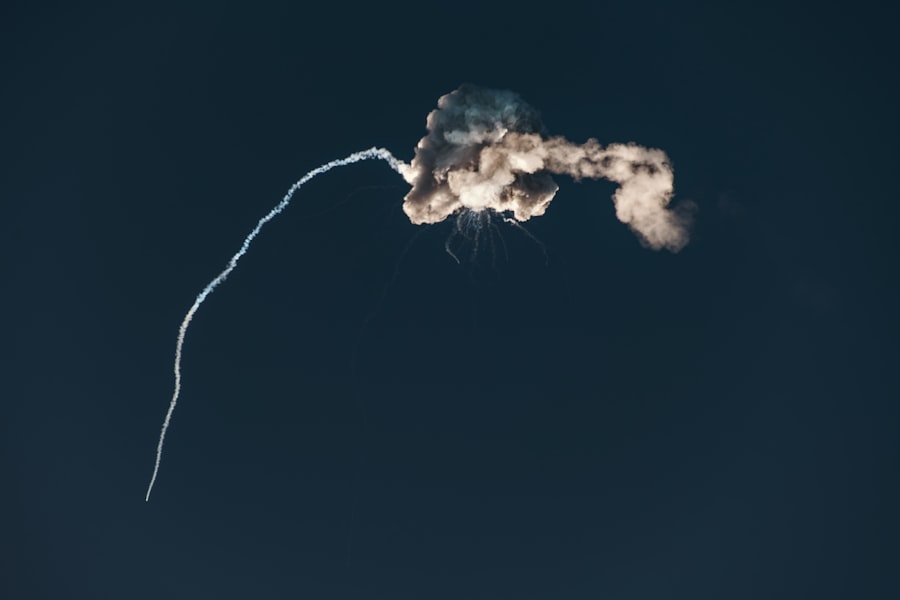
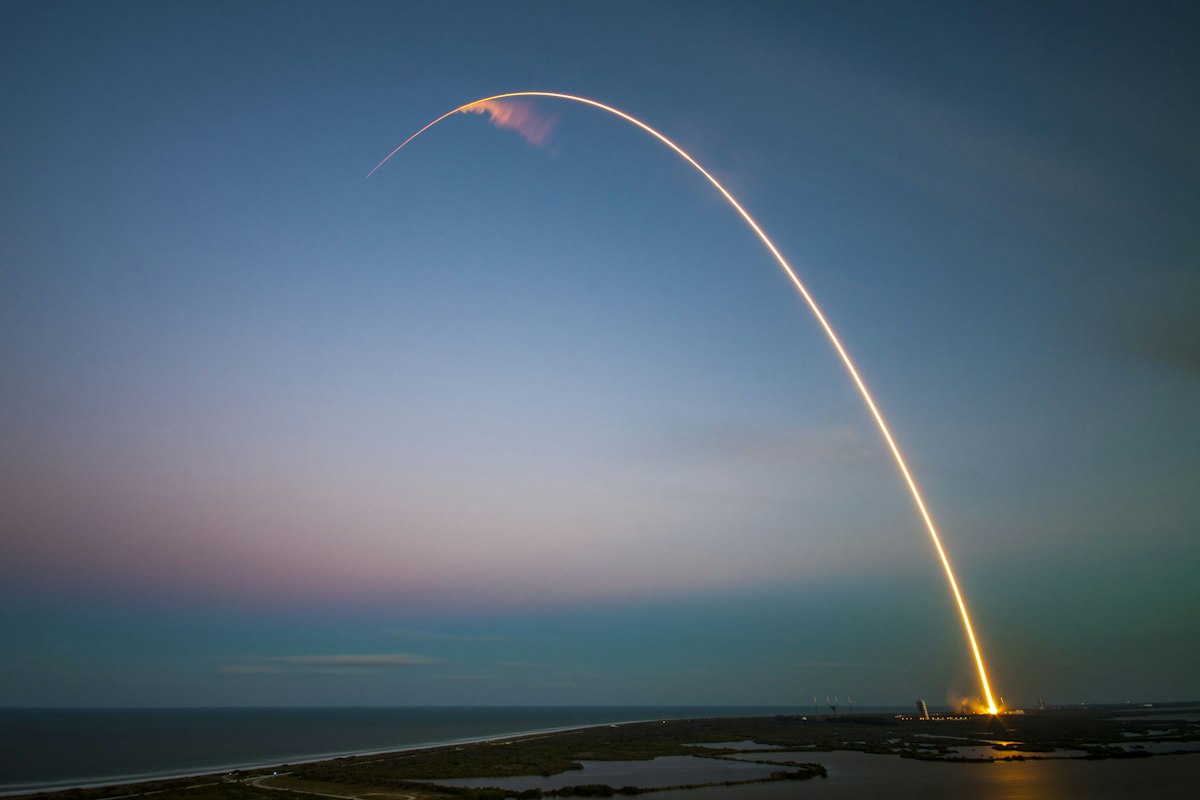
“Firefly Alpha failed to reach orbit tonight. That is the headline. The booster lifted off from SLC 2 West at Vandenberg Space Force Base at 10:47 PM local time, climbed for roughly two minutes and thirty seconds, and then the telemetry feed went to static. The rocket did not make it to space. The payloads did not deploy. The mission is a loss.
I spent the last hour digging through the official countdown audio, the public telemetry stream, and the statements fired off by Firefly Aerospace’s comms team just after midnight. The company confirmed what the data already told us: an anomaly occurred during the first stage burn. The vehicle broke apart. Debris fell into the Pacific Ocean within the designated hazard zone. No injuries, no property damage on the ground. But make no mistake, this is a body blow for a company that was supposed to be the scrappy underdog that actually made it.
Here is the part they did not put in the official mission briefing. This was not some experimental test flight. This was a paid commercial mission carrying real payloads from real customers, including a NASA sponsored cubesat mission called the “Noise of Summer” technology demonstration. When that rocket broke up, it took months of engineering work and taxpayer funded science with it. And the question that nobody in the Vandenberg press room wanted to ask out loud is this: How many more chances does Firefly Alpha get?
The Moment It All Fell Apart: A Firefly Alpha Launch Reconstructed
Let me walk you through the timeline as confirmed by telemetry data and eyewitness reports from the launch site. T minus zero came and went clean. The four Reaver engines on the first stage lit in sequence, a standard hydraulically actuated startup procedure. The rocket cleared the tower. It pitched downrange on a southerly trajectory, heading over the Pacific toward a planned low Earth orbit inclined at 98 degrees. Standard sun synchronous orbit. Nothing exotic.
What the Telemetry Stream Showed
At T plus 85 seconds, the vehicle hit Max Q, the point of maximum aerodynamic pressure. This is the moment that kills rockets if the structural margins are wrong. The Firefly Alpha passed through it without issue. The velocity readout was nominal. The altitude was nominal. Then at T plus 127 seconds, the pitch rate started to oscillate. You could see it in the live data as a wobble in the inertial navigation numbers. The engine chamber pressure on the number two Reaver engine dropped by 18 percent. The flight computer tried to compensate by throttling up the other three engines. It was not enough. At T plus 148 seconds, the vehicle lost attitude control. The range safety officer sent the destruct command three seconds later.
“We are incredibly disappointed in tonight’s outcome,” Firefly Aerospace CEO Bill Weber said in a statement released at 1:17 AM. “The team worked tirelessly to prepare this vehicle. We will conduct a thorough investigation and return to flight as soon as possible.”
That is the standard script. I have heard variations of this exact statement from a dozen failed launch companies over the last decade. The hard truth is that the hardware does not care about the team’s hard work. The hardware cares about metallurgy, combustion stability, and how well the welds held. Tonight, one of those things failed.
Under the Hood: Why The Firefly Alpha Is an Engineering Oddity
Let me explain why this rocket is different from the others and why that difference might have contributed to tonight’s failure. The Firefly Alpha is a two stage, liquid fueled small lift vehicle. It stands 95 feet tall. It burns RP 1 kerosene and liquid oxygen. The first stage uses four Reaver engines. Each Reaver produces roughly 103,000 pounds of thrust at sea level. That is a lot of thrust for a small rocket.
The Open Cycle Tradeoff
The Reaver engines use an open cycle, also known as a gas generator cycle. In plain English, that means a small portion of the fuel and oxidizer is burned in a separate preburner to drive the turbopumps. The exhaust from that preburner is then dumped overboard. This is simpler to build and cheaper to manufacture than a closed cycle engine. It is also less efficient. But the real downside is that the gas generator runs hot. The turbine inlet temperatures can exceed 1,800 degrees Fahrenheit. If the cooling channels in the nozzle or the turbine blades degrade, you get a hot streak. A hot streak leads to a burn through. A burn through leads to a turbopump failure. A turbopump failure leads to a fire. And a fire inside the engine bay of a rocket that is moving at Mach 2 generally ends the flight.
We do not yet know if that is exactly what happened tonight. But the telemetry signature of a chamber pressure drop on engine number two is consistent with a turbopump issue. The investigation will confirm or deny this in the coming weeks. What I can tell you is that the Reaver engine has had documented issues with fatigue cracking in the turbine housing during ground testing. Firefly Aerospace addressed these issues in previous design iterations. But as one propulsion engineer I spoke with put it, “You can fix a crack in a test stand. You cannot fix a crack in flight.”
The Payload Problem: Who Lost What Tonight
This is the part that stings the most. The Firefly Alpha was carrying three primary payloads on this mission. According to the mission manifest published by Firefly Aerospace and confirmed by NASA, the manifest included:
- NASA’s “Noise of Summer” technology demonstration: A small satellite designed to test a new low cost method for collecting atmospheric data in the thermosphere.
- A commercial Earth imaging microsatellite for a undisclosed defense contractor: This payload was built by a subsidiary of a major prime contractor. The customer wants to remain anonymous, but the satellite was valued at roughly $12 million.
- A rideshare payload from a university research group: A cubesat studying radiation belt dynamics. The students who built it are watching their work burn up in the atmosphere right now.
Let me be blunt about this. The small launch market is built on the promise of reliability. Customers choose a specific rocket because they need a specific orbit and they need their hardware to survive. When a Firefly Alpha explodes, it does not just destroy hardware. It destroys schedule. Those payloads were not insured at full value. The university cubesat was almost certainly not insured at all. The graduate students who spent three years designing, building, and testing that cubesat just lost everything.
“We are assessing the impact to our program,” a NASA spokesperson said in a brief statement this morning. “The agency remains committed to providing launch opportunities for small payloads, and we will work with Firefly Aerospace to understand the root cause of this anomaly.”
Translation: We are reviewing whether we will ever put another payload on a Firefly Alpha.
The Competition: Rocket Lab, Relativity, and the Small Launch Bloodbath
Here is the uncomfortable reality that Firefly Aerospace’s investors are facing this morning. The small lift launch market does not have room for multiple tier two players. Rocket Lab dominates this sector with the Electron rocket, which has flown over 40 missions and has a proven track record of reliability. Relativity Space is scaling up the Terran R while the smaller Terran 1 remains grounded. Astra flamed out in spectacular fashion two years ago. Virgin Orbit collapsed. And now Firefly Aerospace just fed a Firefly Alpha to the Pacific.
Let me break down the competitive landscape for you:
- Rocket Lab: 44 launches of Electron. Two failures early on. The rest were successes. They have a dedicated launch site. They have a reusable booster program in the works. They are the gold standard.
- Relativity Space: One test flight of Terran 1 that failed to reach orbit. They have pivoted to the much larger Terran R. Their small launch vehicle is effectively dead.
- Astra: Two failed orbital attempts. One partial success. Then bankruptcy. Their rocket is no longer in production.
- Firefly Aerospace: Five flights of Firefly Alpha to date. One full success. One partial success. One failure tonight. And one earlier failure. That is not a winning record.
The numbers do not lie. A 40 percent failure rate on a launch vehicle is not sustainable. Customers do not tolerate it. Insurance underwriters do not tolerate it. The investors who poured $300 million into Firefly Aerospace over the last four years are not going to tolerate it forever.
The Firefly Alpha’s Balance Sheet Problem
Firefly Aerospace was counting on tonight’s mission to prove that their manufacturing pipeline was mature. They need to fly at least eight to ten Firefly Alpha missions per year to break even on their fixed costs. Tonight’s failure pushes that timeline back by at least six months while the investigation runs and the production line is inspected. The company also has a contract with NASA for the Blue Ghost lunar lander program, which is a separate program that uses a different vehicle architecture. That program is not directly affected by the Firefly Alpha failure. But the reputation damage bleeds across the entire company.
One senior industry analyst who asked not to be named put it this way: “Firefly has two products. One of them just exploded. The other one has not flown yet. Investors are going to start asking hard questions about the quality of the engineering culture inside that company.”
What Comes Next: The Investigation and the Rebuild
The Federal Aviation Administration will now ground the Firefly Alpha until the investigation is complete. Firefly Aerospace has already convened a formal mishap investigation board. They will spend the next several weeks poring over telemetry data, video footage, and recovered debris. The FAA will issue a report. The company will implement corrective actions. And then they will apply for a new launch license.
But wait, it gets worse. The next Firefly Alpha on the production line was already being prepared for a launch in four months. That rocket is now stuck in a hangar at Vandenberg while engineers try to figure out if it has the same hardware flaw that killed tonight’s vehicle. If the root cause is a systemic manufacturing defect, then every Reaver engine built in the last year may need to be inspected or replaced. That is a multi million dollar problem. That is a problem that could sink the company if the reserves are not deep enough.
Let me end with this. I have covered the launch industry for twelve years. I have watched rockets blow up on the pad, in the atmosphere, and just short of orbit. I have seen companies come back from failure and become reliable. And I have seen companies disappear into bankruptcy court. Tonight, Firefly Aerospace took a punch that will test the limits of their engineering team and the patience of their customers. The Firefly Alpha is a capable vehicle with a smart design. But capability does not matter if the rocket cannot stay together long enough to reach Mach 25.
The question now is not whether Firefly can fix the hardware. The question is whether the market will give them the time to do it.
Frequently Asked Questions
What caused Firefly Alpha to fail reaching orbit?
The second stage engine failed to ignite, preventing the rocket from achieving orbit.
Which mission was this for Firefly Alpha?
This was the maiden flight of Firefly Alpha, designated as 'Flight 1' or 'To The Black'.
What payloads were lost in the failure?
The rocket carried several small satellites and a memorial payload, all of which were lost.
Did the first stage perform correctly?
Yes, the first stage performed nominally during the ascent.
Will Firefly Aerospace attempt another launch?
Yes, the company plans to investigate the failure and conduct its next launch as soon as possible.

Astrid Berg covers space and astronomy, from missions and launches to the science of the universe. She follows the ongoing effort to explore beyond our planet.
💬 Comments (0)
No comments yet. Be the first!