Starship Static Fire Test: A Critical Pre-Launch Milestone
SpaceX's Starship static fire test is the final major hurdle before its next orbital flight, testing all 33 Raptor engines under launch-like conditions.
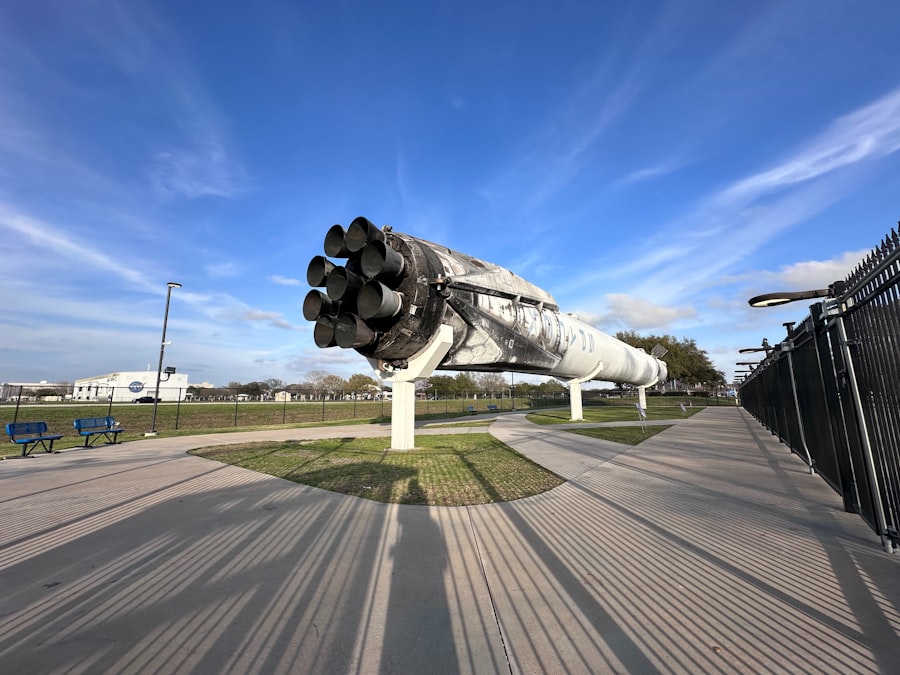
Starship static fire test erupted at SpaceX's Starbase facility in Boca Chica, Texas, just after dawn local time today, a controlled blast of raw power that shook the ground for miles and signaled a critical step toward the rocket's next orbital attempt. Inside the mission control trailer, a tense silence was broken by the roar transmitted from pad cameras, followed by a chorus of "All engines nominal" as data scrolled across screens. This wasn't a launch, but in many ways, it was just as critical, a moment where the entire fourth integrated flight test campaign hung on the performance of 33 Raptor engines firing while bolted to the ground.
The Thunderclap Over Boca Chica: A Live Account
At approximately 8:00 AM CDT, the launch command was given. For a planned six-second duration, the Super Heavy booster, known as Booster 11, unleashed a fury of methane and liquid oxygen combustion, producing a staggering 16 million pounds of thrust. The plume, a concentrated jet of fire and exhaust, drilled into the steel plate of the orbital launch mount, creating a shockwave that rolled across the wetlands. For residents in Port Isabel, ten miles away, it was a palpable reminder that the world's most powerful rocket was again knocking on the door of space. This particular Starship static fire test was distinct, it was a full-duration firing of all 33 Raptor engines on the Super Heavy booster, a key milestone that had to be passed before regulators would even consider a launch license.
Decoding the Data Stream
Within seconds of the test concluding, the real work began. Engineers pored over terabytes of data from thousands of sensors. The key metrics were chamber pressure in each engine, turbine spin rates, propellant feed line stability, and the performance of the novel electrical thrust vector control system that steers the booster. According to telemetry data shared on X by SpaceX following the event, all 33 Raptor engines completed the full-duration burn. "Successful static fire test of Super Heavy!" the company stated, posting a slow-motion video of the event. This public confirmation is a rare glimpse into the green-lit status of the vehicle's core propulsion system.
Under the Hood: What a Static Fire Test Really Means
To the casual observer, a static fire test looks like a launch that goes nowhere. But for engineers, it's the ultimate dress rehearsal, a chance to verify the entire pre-launch sequence without the irreversible commitment of flight. This Starship static fire test is the culmination of weeks of delicate work, from stacking the vehicle to loading over 10 million pounds of cryogenic propellant. The term "static fire" is almost a misnomer, it's a violently dynamic event where every valve, turbine, and weld is subjected to the exact stresses it will see at liftoff, minus the motion.
Let's break down the orbital math here. The Raptor engines at the heart of this test are full-flow staged combustion engines, a complex cycle only previously flown on the Soviet Energomash RD-170 series. In this setup, both the fuel (methane) and oxidizer (liquid oxygen) are spun through separate pre-burners before being fully combusted in the main chamber. This squeezes out every ounce of efficiency, but it introduces monstrous complexity, with turbines spinning at insane speeds and components enduring extreme pressures. A static fire test is the only way to prove this ballet of machinery works in concert. A single anomaly in one pre-burner could cascade into a rapid unscheduled disassembly on the pad, which is why today's full-duration test was so closely watched.
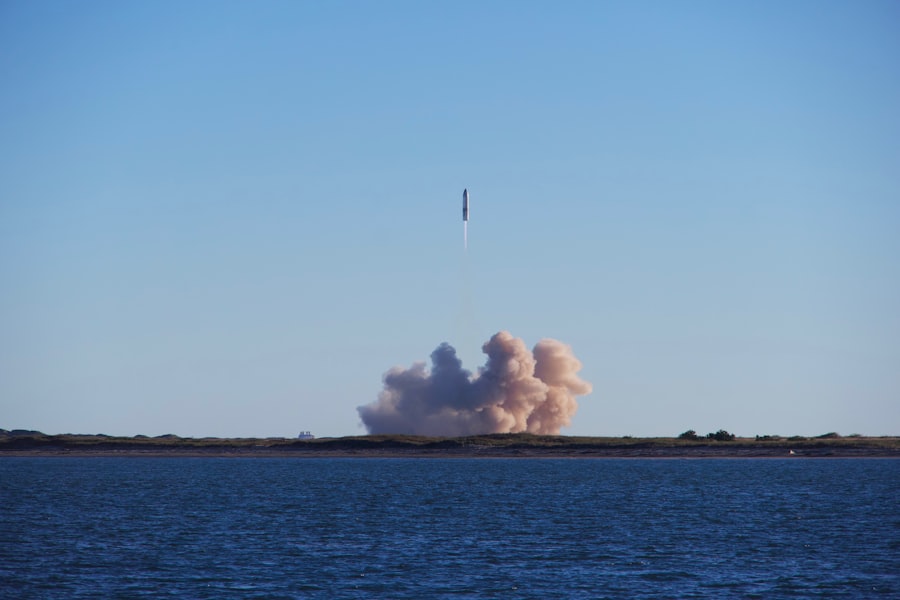
The Numbers Don't Lie: Engineering and Telemetry
Success in aerospace is binary. The vehicle either performs within parameters or it doesn't. For this Starship static fire test, the parameters were exceptionally tight. The 33 Raptor 2 engines needed to throttle in unison, their combined exhaust maintaining stability against the launch mount's water-deluge system. The performance of that deluge system, designed to suppress acoustic energy and prevent pad damage, was also under scrutiny. Initial footage suggests it performed well, with no visible debris ejected as seen in the first integrated flight test that carved a crater into the launch site.
- Engine Cluster Synchronization: Coordinating 33 independent, throttleable engines is a software and hardware nightmare. The test validates the controller algorithms that prevent destructive harmonic vibrations.
- Cryogenic Propellant Load: The test requires a full wet dress rehearsal, confirming that the quick-disconnect umbilicals can retract safely and that the tanks maintain structural integrity under flight-like pressures.
- Thrust Vector Control (TVC): The booster uses an electric motor system to gimbal the engines for steering. The static fire test checks that this system can move the engines against the force of their own exhaust plume.
Here is the part they didn't put in the official mission briefing, the test is as much about the ground systems as the rocket. The orbital launch mount, reinforced after previous tests, is a piece of flight hardware itself. Its ability to channel that colossal exhaust plume away from the vehicle's base without causing damage is critical. The post-test inspection of the pad will take days, searching for any cracks or erosion in the steel plating that could pose a risk during actual launch.
"Static fire testing is the moment of truth for propulsion and ground systems. It's where we transition from theory and component testing to integrated vehicle readiness. A successful test, like today's, is a massive confidence builder for the team." This sentiment was echoed by a SpaceX engineer in a background briefing to NASA's Artemis team, as noted in a summary report published by the agency last week regarding Starship's role as the Human Landing System.
The Critics' Chorus: Why This Test Matters Beyond SpaceX
But wait, it gets worse, at least from the perspective of SpaceX's competitors and some federal watchdogs. Every successful Starship static fire test brings the vehicle closer to operational status, and that prospect triggers a range of concerns. For NASA, which is banking on a modified Starship variant to land astronauts on the Moon for the Artemis III mission, the test is a relief but also a reminder of the tight schedule. The Government Accountability Office (GAO) has consistently flagged the delayed development of Starship as a top risk to the Artemis timeline. A report from the GAO in March 2024 stated, "The complexity of the Starship system, which is necessary for the human landing system, presents significant schedule and technical risks for a 2026 lunar landing."
The Taxpayer and Environmental Ledger
For critics in Congress and environmental groups, the Starship static fire test is another loud, disruptive event with a high-stakes financial backdrop. The SpaceX HLS contract is worth roughly $4.2 billion, and the company's rapid, iterative testing approach, while effective, is seen as wasteful by old-space standards. Every test, including this static fire, consumes resources and incurs wear on infrastructure paid for by private capital, but the ultimate lunar mission is funded by public dollars. Environmental coalitions have filed ongoing lawsuits against the FAA for its environmental review of Starbase operations, citing the impact of launches and tests on local wildlife and the repetitive noise pollution affecting communities. A successful test accelerates the program, but also intensifies these legal and political battles.
The Global Race: Watching from Moscow, Beijing, and Beyond
In conference rooms in Beijing and Moscow, analysts are dissecting the footage of this Starship static fire test with a mix of admiration and alarm. The sheer scale of Starship's payload capacity, once operational, threatens to upend the global launch market and redefine strategic access to space. China's national space administration is pursuing its own super-heavy lift rocket, the Long March 9, but it is years behind. The Russian space program, hobbled by sanctions, has no comparable vehicle in development. A successful series of tests positions SpaceX, and by extension the United States, with a monopolistic advantage in heavy-lift capability, a point not lost on geopolitical strategists. The static fire test is a technological flex that resonates far beyond engineering circles.
As noted by European Space Agency Director General Josef Aschbacher in a press conference earlier this year, "The pace of development demonstrated by new commercial players is forcing a reckoning within traditional space agencies. We must adapt our processes or risk becoming irrelevant." The spectacle of a fully successful Starship static fire test is a prime catalyst for that reckoning.
The Road to Orbit: What Comes After the Fire?
With the roar of the Starship static fire test still echoing, the path forward is both clear and fraught. The immediate next step is a thorough data review, followed by the installation of the Ship upper stage, which itself will undergo separate testing. Then, the fully stacked vehicle will likely undergo another wet dress rehearsal and potentially a second, shorter static fire test with both stages integrated. Only then will SpaceX finalize its launch license application with the Federal Aviation Administration (FAA).
- Flight Four Objectives: The next flight aims to achieve a controlled re-entry and splashdown of both the booster and the Ship, building on the partial successes of Flight 3, which saw the Ship reach space but break apart during re-entry.
- The Heat Shield Crucible: A key focus is the performance of Starship's novel hexagonal heat shield tiles during atmospheric re-entry, a phase that destroyed the previous vehicle.
- In-Engine Ignition: Future tests must demonstrate the ability to re-ignite Raptor engines in space for orbital maneuvers, a necessity for the Moon mission profile.
Let's be clear, the success of this Starship static fire test does not guarantee success for the upcoming fourth integrated flight. It simply removes one of the largest known unknowns, the performance of the booster's propulsion system at liftoff. The list of remaining challenges is long, from staging in flight to managing the thermal dynamics of re-entry. But for the team at Starbase, the sound of 33 Raptors humming in unison is the sweetest music, a confirmation that their machine is alive and ready for the next, greater challenge. The static fire test is a punctuation mark in a long sentence, one that ends with the goal of making life multiplanetary. Today, that sentence got a decisive exclamation point. The clock is now ticking toward the next window, and the world is watching, again, to see if the vehicle that just held fire can finally tame it all the way to orbit and back.

Leo Sokolov reports on spaceflight and the companies and agencies racing to reach orbit and beyond. He is captivated by the engineering that makes leaving Earth possible.
💬 Comments (0)
No comments yet. Be the first!