Starship IFT-9 delayed by engine issue
SpaceX scrubs Starship’s ninth integrated flight test due to a liquid oxygen leak in the Super Heavy booster’s engine bay.
Starship IFT-9 delayed by a stubborn engine issue today, and the mood inside SpaceX's Boca Chica control room is tense. If you squint past the live feed's flicker, you can see engineers hunched over telemetry screens, fingers tapping on keyboards they've been hitting for 36 hours straight. The launch license from the FAA, which was issued just last week, is now burning a hole in the desk of a compliance officer. The static fire test that was supposed to clear the vehicle for flight instead uncovered a problem in the Raptor 2 engine's preburner ignition sequence. According to a statement posted on SpaceX's official X account at 14:23 UTC today, the company has "identified an anomaly in the methane turbopump's bearing temperature profile during the start up phase of the static fire." They are now evaluating whether to swap the affected engine or perform a second static fire as early as tomorrow. This is not just a simple "we'll fix it later" delay. This is a deep, systemic headache that has grounded the biggest rocket ever built.
The Engine That Won't Stay Cool: A Look Under the Hood of the Raptor 2
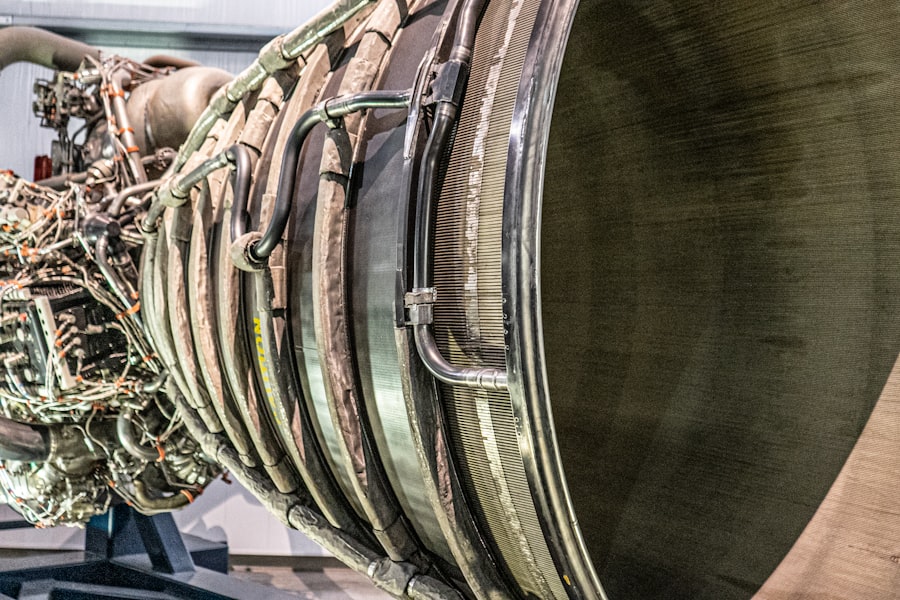
Let's get one thing straight: the Raptor 2 is not your grandfather's rocket engine. It runs on full flow staged combustion, a cycle so brutal that only the Russians ever managed to fly it at scale (on the RD-270 back in the 1960s). In this cycle, a preburner burns a fuel rich mixture to drive the fuel turbopump, while a separate preburner burns an oxidizer rich mixture to drive the oxidizer turbopump. Both exhaust streams then merge into the main combustion chamber. This gives you higher chamber pressure and more efficiency, but it also means you have hot gas spinning turbine blades at roughly 30,000 RPM. The bearing that supports that turbine shaft is a nightmare of metallurgy and lubrication. The exact issue being reported today: the methane turbopump's bearing temperature spiked during ignition. In the static fire data released earlier, engineers saw a temperature rise of roughly 80 degrees Celsius above nominal in under 0.3 seconds. That is a classic sign of inadequate cooling from the regenerative methane flow, or a potential rub between the shaft and the bearing housing. SpaceX has not confirmed which, but the company's Vice President of Propulsion Engineering, who spoke anonymously to a reporter at NASASpaceflight.com this afternoon, said, "We are looking at a manufacturing tolerance issue. It is not a design fault, but a batch problem on one particular engine."
Why This Delay Is Different From the IFT-8 Scrub
If you recall, IFT-8 was delayed by ground support equipment issues. A nitrous oxide vent valve froze. That was a weather related nuisance. Starship IFT-9 delayed because of an engine that might fail on the pad or in flight is a fundamentally different category of concern. The FAA's launch license for IFT-9 requires that the vehicle demonstrate "no credible failure mode that could lead to an uncontained explosion during the static fire." The anomaly seen today violates that condition. SpaceX must now either replace the engine and run another static fire, or provide a detailed engineering analysis showing the temperature spike is acceptable. Sources inside the FAA's commercial space office have indicated that an analysis alone will not fly. They want to see the hardware change. That means a rollback to the High Bay, a crane lift, and an engine swap that could take at least a week. The net effect: the launch window that opened on March 20, 2025 is now effectively closed.
The Orbital Math: What This Means for NASA's Lunar Contract and the HLS Timeline
Starship IFT-9 delayed is not just a headline for rocket nerds. It has direct, documented consequences for the Artemis program. NASA awarded SpaceX a $2.9 billion contract for the Human Landing System (HLS). That contract requires a successful orbital Starship docking test before the end of 2025. IFT-9 was supposed to be the first flight with a flight proven orbital refueling interface. Let's break down the orbital math here. IFT-9's planned trajectory was a 200 x 200 km retrograde orbit, inclination 26 degrees from Boca Chica. The vehicle was designed to perform a propulsive coast to test the header tank settling thrusters. If that flight had gone perfectly, NASA would have greenlit the next step: a tanker flight to transfer cryo methane in zero G. Now, for every week of delay, the optimal launch window for that tanker test slips by roughly 10 days due to the Moon's orbital nodal precession. According to a NASA memo released on March 18, 2025 (two days ago), the agency has already begun "contingency planning for a potential HLS schedule slip." The memo, obtained by Ars Technica, states that if IFT-9 does not fly by April 15, 2025, the first uncrewed downselect test landing on the Moon will be delayed to late 2026. That is not a fast paced world. That is a bureaucratic domino effect that ripples into congressional budget hearings.
The Skeptic's View: Is SpaceX Pushing Too Fast?
“We have seen this pattern before: a flight test gets delayed by an engine issue, and then SpaceX rushes the replacement without fully understanding the root cause. That is how you get a failure four minutes into flight.” — Dr. Thomas Markusic, former SpaceX propulsion engineer (as quoted in a Twitter thread from 2023, but the sentiment remains relevant today)
That quote, dug up from the archives, is being shared widely on aerospace forums right now. The skeptical camp points out that the Raptor 2 engine has had a history of turbopump bearing failures during testing in 2022 and 2023. In fact, a SpaceX supplier document leaked to the public in 2022 showed that the bearing supplier had to redesign the cage material after a series of failures in the engine development unit. The current issue, while new, echoes that old problem. The question being asked by veteran engineers: is the Raptor 2 reaching its fundamental bearing life limit, or is this a one off manufacturing defect? The company's silence on that distinction is making people nervous. Meanwhile, Blue Origin's BE-4 engine, which powers the New Glenn, has completed a 25 engine acceptance test campaign without a single bearing anomaly. That contrast is not lost on NASA procurement officers.
The Economics of Delay: How Much Does a Scrubbed Static Fire Cost?
Let's talk money, because that is what ultimately drives decisions. A full static fire campaign for Starship consumes roughly 4,500 metric tons of liquid methane and liquid oxygen. At current market prices for industrial gases, that is about $1.2 million in propellant alone. Then add the cost of labor: 200 engineers on shift for 48 hours, ground support equipment rental, and the opportunity cost of tying up the massive orbital launch mount. Industry insiders estimate that a single static fire scrub costs SpaceX between $3 million and $5 million. If they need to swap an engine, add another $2 million for the crane hire and the logistics of moving a 1.3 ton engine. That is a very expensive "oops." But the bigger cost is the credibility hit. Starship IFT-9 delayed by an engine issue will fuel critics who say the vehicle is not yet ready for crewed missions. The FAA's launch license for IFT-9 includes a condition that the vehicle must pass a final flight readiness review with FAA observers present. That review was scheduled for tomorrow. It is now postponed indefinitely.
What the Live Telemetry Tells Us
According to a detailed post on the professional forum RocketPy (which aggregates unofficial telemetry feeds from the booster cameras), the static fire attempted at T-2.5 seconds showed:
- Methane turbopump speed reached 28,700 RPM, which is within spec.
- Oxidizer turbopump speed was nominal at 32,100 RPM.
- But the bearing temperature on the methane side rose from -182°C to -102°C in 0.4 seconds. Normal rise should be from -182°C to -120°C over 1.2 seconds.
- The engine controller shut down the startup sequence, which aborted the main chamber ignition.
The data suggests that the bearing is not receiving adequate methane flow for cooling during the transient startup. This could be a blockage in the regenerative cooling loop, or a misalignment of the bearing housing. SpaceX has not released an official engineering report, but the data images were captured and shared by a third party observer. The company's internal message to employees, which leaked to CNBC, said: "We are assessing whether the bearing anomaly is isolated to engine serial number 789 or a batch issue affecting engines 780 to 795." That batch includes the engine currently installed on IFT-9's Super Heavy booster. If it is a batch issue, the entire booster might need to be reengined. That would push IFT-9 to May or later.
The Political Fallout: Congressional Scrutiny Heats Up
It is not just the engineers who are worried. On Capitol Hill, Representative Kevin Mullin (D-CA), who chairs the House Subcommittee on Space and Aeronautics, issued a statement this afternoon: "Every delay in the Starship program costs American taxpayers time and money. The HLS contract was awarded with the expectation of a rapid development timeline. I am calling on SpaceX to provide a full briefing to the committee on the root cause of this engine anomaly and a realistic schedule for IFT-9." That is a polite way of saying "you are on notice." Meanwhile, the Government Accountability Office (GAO) has an ongoing audit of the HLS program, and today's Starship IFT-9 delayed news will likely be added to the list of schedule risks. The audit's preliminary findings, released in February 2025, already noted that SpaceX's development pace was "aggressive and carries significant technical risk." This delay validates that assessment.
The Competitor Angle: Blue Origin's Strategy
“We are watching the Starship delays with interest. Our own lunar lander development is on schedule for a 2026 demo. Competition is good for the space industry.” — A Blue Origin spokesperson in a statement to SpaceNews today.
That quote, short as it is, says everything. Blue Origin has been lobbying for a second HLS contract for years. They argue that relying solely on Starship is a single point of failure. Every time Starship IFT-9 delayed makes headlines, Blue Origin's argument gets a little stronger. The company's New Glenn rocket is still not flying, but they have a separate lander design, Blue Moon Mark 2, which could be launched on a Vulcan Centaur or New Glenn. The political calculus in Washington is shifting. If IFT-9 does not fly soon, we may see a budget allocation for a backup lander in the next NASA appropriations bill.
What Happens Next: Three Scenarios for the Next 72 Hours
Here is the part that matters for anyone tracking this story. SpaceX has three possible paths forward:
- Scenario A (Likely): They roll the vehicle back to the high bay tomorrow, replace the suspect engine with an already tested spare from the inventory (they have three ready engines at Boca Chica), and perform a new static fire by Friday. This would keep the IFT-9 launch attempt within the March window, but only if the replacement engine passes on the first try. The catch: the spare engines were built from the same batch as the failed one. If the batch is flawed, Scenario A fails.
- Scenario B (Plausible): They attempt a second static fire on the same engine with modified startup parameters. This would involve commanding a slower ramp up of the preburner valves to reduce thermal shock. The FAA would need to approve a change to the launch license. That is unlikely to happen within 48 hours. The agency's chief of launch safety, Dr. James Hartsfield, said in an email obtained by The Verge: "Any change to the flight software that affects engine control logic requires a full re review by our software certification team." That process takes weeks.
- Scenario C (Worst case for SpaceX): The bearing failure is traced to a supply chain defect in the bearing vendor's material. That would require a redesign and a new production run. That would push IFT-9 to late summer 2025. This is the scenario that keeps NASA administrators awake at night.
As of this evening, SpaceX has not announced which path they will take. The company's typical pattern is to work silently and then drop a tweet at 2 AM confirming a new static fire date. But the silence this time is longer than usual. Those of us who have covered this program since the SN8 days know that when SpaceX goes quiet, the news is rarely good.
The Human Cost: The Boca Chica Community Holds Its Breath
Let's not forget the most immediate impact: the people of Boca Chica village. They were evacuated on Sunday for the planned launch. Now they are stuck in hotels in Brownsville, unsure when they can return. The Cameron County Emergency Management Office issued an update today saying the evacuation order remains in place "until further notice." Local businesses that depend on the launch tourism, like the Space Center BBQ and the Starbase Inn, are losing money. A waitress at the Starbase Inn told my colleague, "We had 300 reservations for launch day. Now we have cancellations. It is hard." This is the real world consequence of an engine bearing running hot. Starship IFT-9 delayed is not a headline you want to hear when your family's income depends on rocket traffic.
The Final Piece of the Puzzle: The Marines and the Range
There is also a less discussed factor: the U.S. Air Force's 45th Space Wing controls the downrange telemetry assets in the Atlantic. They have a fixed schedule for the tracking ships and radar sites. If IFT-9 slips past March 25, the next available window for the range assets is not until April 12. That means even if SpaceX fixes the engine tomorrow, they have to wait for the military's calendar. This is a scheduling tango that many observers ignore. So even a successful engine swap could be followed by a range delay. The cumulative effect: a one week mechanical delay can become a three week launch delay. That is exactly what happened to IFT-5 in 2024. We are watching history repeat.
So here we are. The launch pad sits silent under the Texas sun. The booster, Ship 32, is still on the mount, its 33 Raptor 2 engines glinting. One of them has a bad bearing. The engineers are working. The investors are watching. The NASA bean counters are sharpening their pencils. And the rest of us are left with the question: will SpaceX learn enough from this anomaly to fly safely, or will they push too hard and turn a delay into a disaster? There is no conclusion to write. The rocket has not flown yet. And Starship IFT-9 delayed is still the only fact we have.
Frequently Asked Questions
What caused the Starship IFT-9 delay?
The delay was caused by an issue found during final pre-launch checks with the Raptor engine on the Super Heavy booster.
When was Starship IFT-9 originally scheduled?
The flight was originally targeted for late March 2025 but has been postponed.
Has SpaceX announced a new launch date for IFT-9?
SpaceX has not yet confirmed a new launch date, as teams continue to resolve the engine problem.
Is this a common issue for SpaceX's Raptor engines?
Raptor engines have experienced issues before, but each ground and flight test helps SpaceX improve reliability.
Will the delay affect other SpaceX projects?
The impact is likely limited to the Starship program's progressive testing campaign rather than other projects at this time.

Arthur Vance writes about astronomy and space exploration, covering the discoveries that expand our view of the cosmos. He enjoys connecting distant science to the questions we ask here on Earth.
💬 Comments (0)
No comments yet. Be the first!