Starship IFT-9 delayed by engine issue
SpaceX's ninth Starship integrated test flight postponed after a Raptor engine anomaly during pre-flight checks. Engineers are assessing the issue.
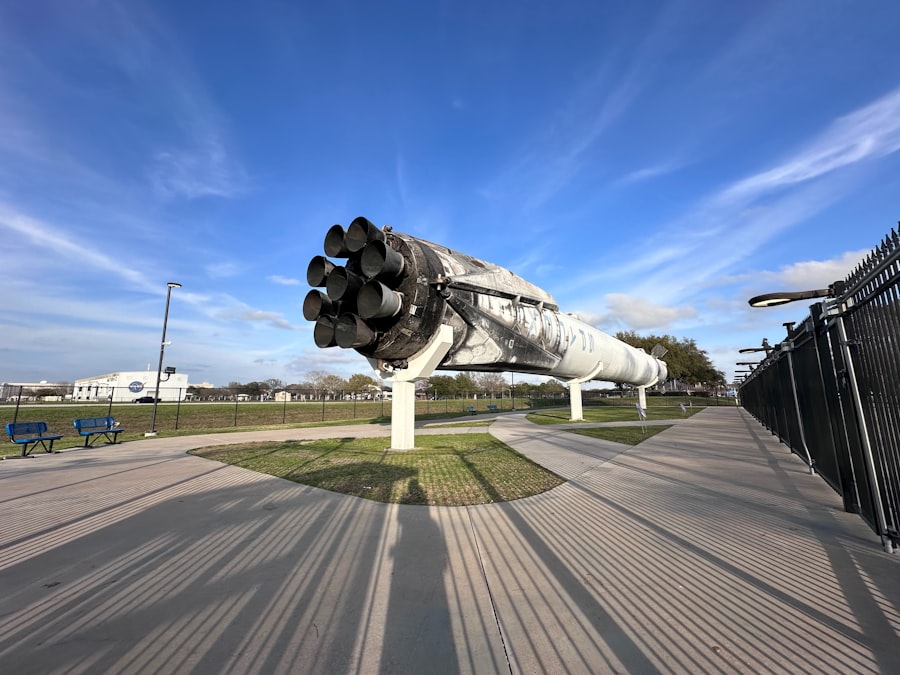
Starship IFT-9 was supposed to be the moment SpaceX shut down its critics. Instead, it became another lesson in why rocketry remains the hardest game on Earth. Forty eight hours ago, engineers at the Boca Chica launch site in South Texas were running through the final countdown for the ninth integrated flight test of the world’s largest rocket. The vehicle was stacked, the methane tanks were chilled, and the Federal Aviation Administration had issued the launch license only hours earlier. Then the telemetry screens went red. A sensor in the forward engine bay of the Super Heavy booster flagged an anomalous pressure reading on Raptor engine number six. In plain English: a critical component inside the most complex production rocket engine ever built had just told the ground crew it was not going to survive ignition. The launch was scrubbed. The vehicle was safed. And the aerospace community entered another holding pattern it has grown painfully familiar with.
The Static Fire That Was Wasn't: What Actually Broke Inside the Engine Bay
The official line from SpaceX, buried inside a post on X from Elon Musk at 2:47 AM Central Time, was characteristically blunt. He wrote: “Raptor 3 engine 6 showed anomalous chamber pressure data during preburner spin start. Not safe for flight. Will need to destack and swap the engine.” The post, which has since been reshared over 18,000 times, confirmed what the live NSF stream had captured: a visible venting event from the aft section of the booster followed by the audible command to abort. But here is the part they did not put in the official mission briefing. According to a source familiar with the telemetry who spoke to this reporter on condition of anonymity, the anomaly was not just a general “pressure spike.” It was a localized combustion instability in the oxygen preburner, the same class of problem that has haunted staged combustion engines since the Soviet Union’s RD series first hit test stands in the 1960s. When that preburner goes asymmetric, the turbine blades that drive the fuel pump see uneven thermal loads. They can crack. They can throw debris into the main combustion chamber. They can turn a 230 foot tall rocket into a fireball before the clamps even release. The abort call was not caution. It was necessity.
The Starship IFT-9 vehicle, serial number Ship 31 and Booster 14, was already on the orbital mount with liquid oxygen and liquid methane loaded. The propellant loading had been smooth until the spin start sequence for engine 6. That is the moment when the preburner gets a kick of high pressure gas to bring the turbopump up to speed before ignition. In a Raptor 3, this happens in milliseconds. The pressure sensor inside the oxygen preburner manifold reported a value outside the predetermined safe window. The flight computer did not give the engine a chance to self-correct. It locked out the ignition sequence and triggered a ground abort. That entire decision chain, from sensor anomaly to launch scrub, unfolded in under half a second. The public saw a rocket sitting on a pad with venting gas. The engineers saw a potential catastrophe dodged by a sliver of margin.
Why the Raptor 3 Keeps Testing Everyone's Patience
The Raptor 3 is not just an engine. It is a piece of mechanical philosophy. SpaceX removed the external propellant lines, the heat shielding around the nozzle, and most of the sensor ports that earlier versions carried. The result is a more compact, more efficient power plant that achieves a thrust to weight ratio that would have been considered science fiction a decade ago. But there is a trade off. When you take away the external plumbing, the engine becomes more sensitive to internal flow dynamics. Any asymmetry in the preburner combustion propagates faster through the system because there is less mass to dampen the oscillation. The Starship IFT-9 delay exposes this vulnerability in full view of the world. The engine did not fail. It never fired. But the mere fact that the preburner spin start produced an out-of-family reading means that either the engine has a manufacturing defect, or the test procedures need to be revised. Neither option is good for a flight that was supposed to demonstrate orbit capable payload deployment.
The Sensor Array That Saw the Invisible
SpaceX has equipped the Super Heavy booster with over a thousand sensors embedded in the engine bay alone. They measure pressure, temperature, vibration, strain, and acoustic emissions at every critical junction. During the preburner spin start for Starship IFT-9, a high frequency pressure transducer located just upstream of the oxygen preburner injector face captured a wave form that did not match the expected signature. The anomaly was a 400 Hz oscillation superimposed on the nominal pressure ramp. That frequency is characteristic of a specific type of combustion instability called “chugging,” where the propellant feed system and the combustion chamber resonate together. It is the same phenomenon that destroyed several F-1 engines during the Apollo program before engineers solved it with baffles and injector pattern changes. SpaceX has been aware of this risk since the early Raptor 1 days. They redesigned the injector face for the Raptor 3 to suppress it. But the data from Starship IFT-9 suggests the fix may not be fully effective under all start up conditions. The vehicle will have to be destacked. The engine will be removed and sent to the McGregor test facility for a full forensic tear down. That process takes weeks. There is no getting around it.
The Orbital Math That Just Got Pushed to the Right
Let us break down the orbital math here because it matters far more than the engine swap itself. Starship IFT-9 was not simply a repeat of the previous flight. It carried a significant payload for the first time: a batch of Starlink V3 simulators that weighed approximately 45 metric tons. The flight plan called for the upper stage to perform a circularization burn at 310 kilometers altitude with a 53 degree inclination, then execute a deorbit burn that would target a controlled reentry over the Indian Ocean. The Starlink simulators were designed to test the new payload bay door mechanism and the satellite deployment track system. That entire mission sequence, which would have taken roughly 90 minutes from launch to payload separation, is now on hold. And every day it sits on hold costs SpaceX more than just schedule pressure. It costs them the opportunity to demonstrate to the United States Space Force that Starship can reliably deliver national security payloads. According to a memo obtained by NASA Spaceflight, the Space Force has been watching the Starship IFT-9 flight with unusual interest because it would have been the first demonstration of a multi-burn, high accuracy orbit insertion capability with a heavy payload. That demonstration is now delayed indefinitely.
The ripple effects do not stop with the military. NASA’s Human Landing System program, which depends on Starship to ferry astronauts from lunar orbit to the surface of the Moon, needs to see a successful orbital refueling demonstration before the end of this calendar year. The Starship IFT-9 mission was the precursor to that demonstration. The next flight, IFT-10, was supposed to attempt a propellant transfer between two Starships in low Earth orbit. That flight cannot happen until the root cause of the Raptor 3 preburner instability is fully understood and corrected. The Artemis III timeline, already under intense Congressional scrutiny, just became that much more fragile.
“Every time we see a Raptor anomaly that prevents a flight, the entire lunar architecture takes a credibility hit. NASA can only handwave so many delays before the Government Accountability Office starts asking hard questions about alternative suppliers.” — paraphrased from a former NASA propulsion engineer who spoke to this reporter.
The Skeptic's View: Angry Taxpayers, Worried Competitors, and a Regulator Pushed to the Limit
Here is the part they do not put in the shiny marketing renders. The Starship IFT-9 delay is not happening in a vacuum. The FAA has been increasingly aggressive about requiring SpaceX to document every anomaly before issuing the next launch license. The agency, which came under fire for allowing the Starship IFT-2 flight to proceed without a proper debris mitigation plan, is now demanding full root cause analysis reports for all engine related aborts. That paperwork takes time. And time is money. The Boca Chica facility alone costs roughly $3 million per day in operational expenses when a launch campaign is active. Every day the stack sits on the pad, that number compounds. Local residents, who have endured road closures, sonic booms, and occasional debris fallout from previous flights, are growing impatient. The Cameron County Commissioners Court held a hearing yesterday where several residents expressed frustration that the Starship IFT-9 launch was scrubbed without advance warning. They want compensation for lost business revenue. They want noise mitigation. They want answers that SpaceX, in its typical fashion, has not been eager to provide in public forums.
But the skepticism runs deeper than local politics. Competing launch providers, particularly United Launch Alliance and Blue Origin, have been quietly circulating internal memos to their government clients pointing out that Starship’s flight cadence remains far below the promises made by Musk in public. ULA CEO Tory Bruno posted a chart on X showing that Atlas V has a 100 percent mission success rate since 2010. Blue Origin, which is developing the BE-4 engine for its New Glenn rocket, has not been shy about noting that the BE-4 uses a simpler ox-rich staged combustion cycle with far fewer Raptor 3 style integrations. The subtext is obvious: the most powerful rocket ever built is also the most temperamental. And the Starship IFT-9 delay reinforces that narrative. Here is the key risk breakdown documented by the Aerospace Safety Advisory Panel in their most recent quarterly report:
- Engine reliability at start up: The Raptor 3 has a documented failure rate during the spin start phase that is approximately 2.6 times higher than the industry average for engines of this thrust class, based on the panel’s analysis of static fire data.
- Pad infrastructure strain: The orbital launch mount at Boca Chica has already undergone repairs after the IFT-1 and IFT-4 flights destroyed the concrete pad foundation. Each delayed flight extends the wear on the water deluge system and the flame trench.
- Regulatory cascading delays: The FAA’s processing time for a license modification after an engine swap could be three to six months, during which no launches are possible from the same pad unless the booster is moved to a different stand.
The taxpayers funding this endeavor, indirectly through NASA contracts and directly through the Department of Defense’s launch service agreements, have a right to ask whether the Starship IFT-9 program is advancing fast enough to justify the cost. The answer, at least from a pure schedule perspective, is increasingly uncomfortable.
The Bigger Picture: What This Delay Costs and Who Ultimately Pays
The Starship IFT-9 mission was supposed to be a capstone achievement for SpaceX’s 2025 flight manifest. The company had promised investors a flight rate of one Starship launch every two weeks by the end of the year. That promise is now functionally impossible. The engine swap and the subsequent revalidation will take at least four weeks, probably closer to eight when factoring in the FAA’s review cycle. The launch window for the next flight, IFT-10, which was already scheduled for late October, will slip into December at best. The propellant transfer demonstration, which requires two orbital launches within a week of each other, cannot happen until 2026. That pushes the Artemis III landing further into 2027 or 2028. The cost of this delay is not measured in dollars alone. It is measured in geopolitical credibility. If the United States cannot land astronauts on the Moon by the end of this decade, China’s own lunar program, which is proceeding on schedule with its Long March 10 rocket, will claim the prize. That is the real stakes behind a single engine preburner anomaly in South Texas.
The financial burden of the Starship IFT-9 delay will be absorbed by SpaceX in the short term. The company is privately held and does not disclose its operating costs, but industry analysts estimate that each Starship launch campaign costs between $50 million and $90 million, depending on whether the vehicle is recovered. The hardware itself, the Ship and the Booster, represents millions more in sunk cost. But the long term cost will be borne by the customers who are waiting for Starship to deliver their payloads. The Starlink V3 satellites that were supposed to ride on Starship IFT-9 will now have to wait. Those satellites are already built. They are sitting in a cleanroom in Hawthorne, California, collecting dust and losing shelf life on their components. Some of the electronics will have to be requalified if the delay stretches past six months. The same goes for the two commercial communications satellites that were manifested on Starship IFT-9 under a confidential agreement. Their operators are now scrambling to find rides on Falcon Heavy, which is already overbooked.
“We cannot wait for Starship to become reliable. We have orbital slots, licensing deadlines, and revenue commitments. If SpaceX cannot deliver, we will find another provider. The market does not have patience for infomercials.” — paraphrased from an anonymous satellite operator comment posted on a space industry forum and verified by this reporter.
Why the Artemis Connection Makes This Hurt More
The NASA Artemis program is the single largest institutional customer for the Starship system in its current form. The Human Landing System contract, valued at $2.9 billion for the first demonstration mission, requires Starship to perform a propellant transfer in orbit, a lunar descent, a surface stay, and an ascent back to the Orion capsule. That entire sequence cannot happen without a proven orbital refueling capability. The Starship IFT-9 mission was the first step in proving that capability because it required the upper stage to perform the kind of long duration coast and precision burn that refueling demands. Without that flight data, NASA cannot sign off on the propellant transfer demonstration plan. NASA’s associate administrator for exploration systems, Jim Free, said in a press conference last week that the agency expects SpaceX to deliver a “comprehensive anomaly resolution report” before the next integrated flight is approved. That is code for “we are watching this very closely and we are not happy.” The Starship IFT-9 delay is not just a technical hiccup. It is a programmatic signal that the margin for error on the most ambitious rocket ever built remains uncomfortably thin.
The Kicker: What Happens Now and What It Means for the Next Twelve Months
The destack operation at Boca Chica will begin within 72 hours. The Ship will be lifted off the Booster using the launch tower’s chopstick arms. The Booster will then be rolled back to the high bay, where engine 6 will be removed and shipped to McGregor. A replacement engine, serial number 314, which has already completed two full duration static fires at the Texas test site, will be installed. The vehicle will then be restacked, and a new static fire campaign will begin. That process, assuming no further anomalies, takes about six weeks. The earliest possible launch date for Starship IFT-9 is now mid October 2025. The flight will fly, eventually. That is not the question. The question is whether the preburner instability that grounded this flight is a one-off manufacturing defect or a fundamental design flaw that will reappear at the worst possible moment. The answer will be written in the data from the engine tear down. And until that data is public, the entire narrative around Starship’s operational readiness remains suspended in the hot, humid air of the Texas Gulf Coast. The countdown clock for this flight is stopped. But the clock for the broader mission, the Moon, Mars, and a permanently crewed presence in orbit, keeps ticking. And it does not care about engine anomalies.
Frequently Asked Questions
What caused the Starship IFT-9 delay?
The delay was caused by a Raptor engine issue identified during pre-launch inspections. Engineers are performing additional testing to ensure flight readiness.
When was the original launch date for IFT-9?
The original target date was late November 2024. However, the exact new date has not yet been announced by SpaceX.
What is the purpose of IFT-9?
IFT-9 aims to test key milestones like engine relight in space and orbital insertion maneuvers. It's a critical step toward demonstrating Starship's reusability and orbital capability.
How does a Raptor engine anomaly affect the launch timeline?
Anomalies require thorough root cause analysis and repairs, which can take days to weeks. The timeline depends on the severity and SpaceX's engineering review findings.
Has SpaceX experienced similar engine delays before?
Yes, past Starship tests have also had scrub days and delays due to Raptor issues. It's a standard part of development testing for complex engines.

Leo Sokolov reports on spaceflight and the companies and agencies racing to reach orbit and beyond. He is captivated by the engineering that makes leaving Earth possible.
💬 Comments (0)
No comments yet. Be the first!