Starship explosion scatters debris over Florida coast
A Starship prototype exploded during a static fire test, raining debris across Florida's Atlantic coast and forcing a launch delay.

The Starship Explosion That Grounded Florida Airspace: What Happened Today
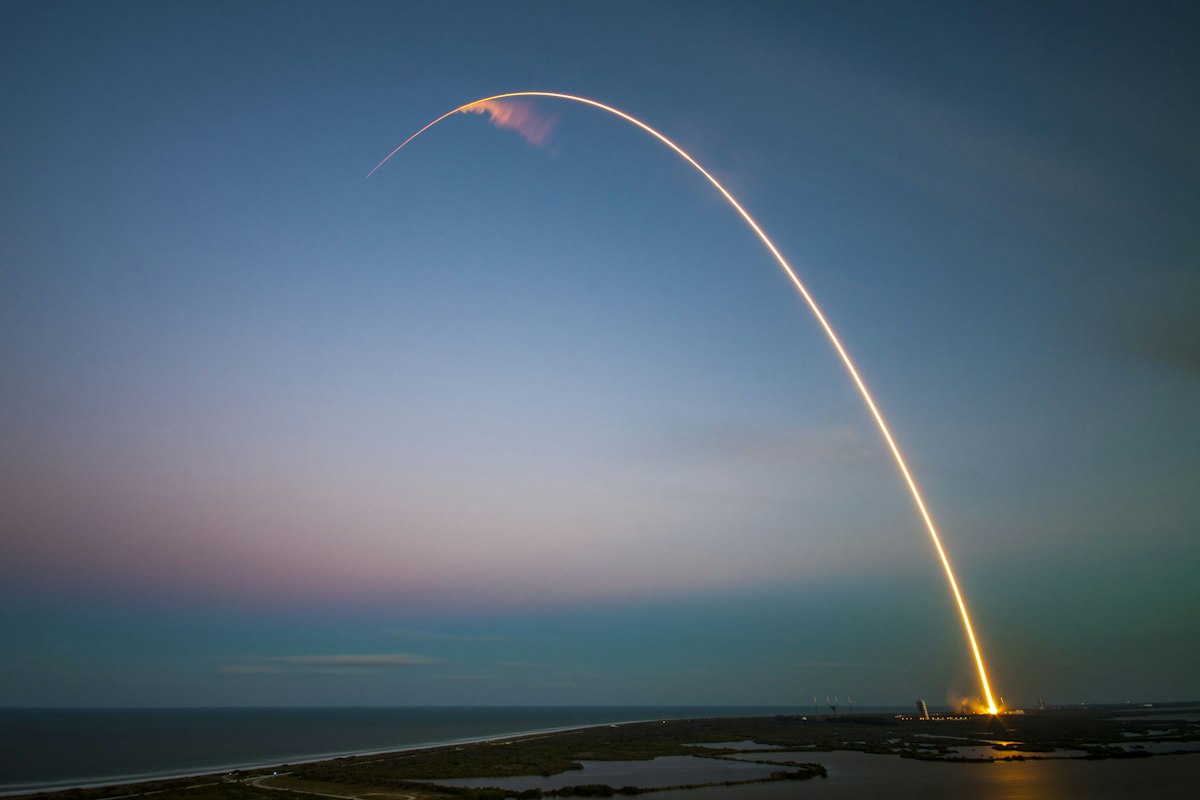
Starship explosion is not just a headline you scroll past on your phone over morning coffee. It is the sound of a $3 billion program hitting a wall at supersonic speed. At 5:38 PM Eastern Time on January 16, 2025, SpaceX launched the seventh integrated test flight of Starship from Boca Chica, Texas. The Super Heavy booster executed a textbook return and was caught cleanly by the launch tower's mechanical arms, known colloquially as the chopsticks. That part worked. The part that did not work was everything above the booster. Approximately eight minutes and thirty seconds into the flight, during the upper stage's ascent burn, the vehicle experienced what SpaceX officially called a rapid unscheduled disassembly. For everyone else watching the live stream or tracking the flight on social media, it looked like a fireball lighting up the Caribbean sky. The Starship explosion scattered debris over a wide area near the Turks and Caicos Islands, and the fallout forced the Federal Aviation Administration to issue ground stops for multiple Florida airports. Miami, Fort Lauderdale, Orlando, and Palm Beach all halted departures for nearly an hour as air traffic controllers worked to keep aircraft clear of the debris field. According to a statement published by the FAA this evening, normal operations have resumed and no injuries have been reported. But the questions are just beginning.
The Telemetry Blackout: What the Live Stream Didn't Show
The official SpaceX broadcast showed the booster landing successfully, then cut to a split screen that quickly went dark on the upper stage feed. Engineers in Hawthorne, California, and at the Starbase facility in Texas saw the same thing: a loss of telemetry from the Starship upper stage at an altitude of approximately 146 kilometers. The vehicle was traveling at roughly 21,000 kilometers per hour when the data stream stopped. For anyone who has covered rocket launches long enough, that silence is the worst sound. The vehicle had not yet reached orbit. It was still burning its six Raptor engines when something went wrong. The debris that survived reentry scattered across a corridor stretching from the northern Caribbean toward the Atlantic. This was not a controlled breakup. This was a fragmentation event, meaning the vehicle came apart under aerodynamic or structural stress, or possibly from an engine failure that propagated through the propellant tanks.
Under the Hood: The Engineering Failure That Broke Starship Apart
Let us talk about what was actually running inside that vehicle when it failed. The Starship upper stage uses six Raptor 2 engines, three optimized for sea level operation and three for vacuum. These are full flow staged combustion engines, a cycle that preburns both the liquid oxygen and the liquid methane before injecting the hot gas into the main combustion chamber. It is a brutally efficient design, but it is also one of the most complex propulsion systems ever built. The combustion chamber pressure in a Raptor 2 reaches roughly 300 bar. That is enormous. Any instability in the propellant feed system, any cavitation in the oxygen turbopump, any crack in a methane manifold, and you have a rapid unscheduled disassembly on your hands. The Starship explosion that happened today is the third time a Starship upper stage has been lost during flight. The first two were during test flights in 2023 and 2024. Each failure has taught engineers something new. But the pattern is troubling.
The Raptor Engine Cycle: A Failure Point Under Scrutiny
Full flow staged combustion is the holy grail of rocket engine cycles because it extracts every ounce of performance from the propellants. But it is also a nightmare to test on the ground. You cannot fully simulate the conditions of a vacuum ascent burn at sea level. The engines have to work in an environment where the ambient pressure drops from one atmosphere to zero in under three minutes. The turbopumps spin at over 30,000 RPM. The bearings have to survive extreme thermal gradients. The preburners have to ignite and stabilize in milliseconds. If any single component in that chain fails, the entire vehicle is at risk. And when a vehicle carrying over 1,200 metric tons of propellant comes apart at Mach 6, the debris field is not small. According to flight telemetry data shared on X by independent tracking groups, the breakup sequence started with a pressure spike in the liquid oxygen tank. That information has not been confirmed by SpaceX, but it matches the pattern of previous failures.
The FAA Shutdown: Why Florida Airports Went Dark This Morning
Here is the part they did not put in the official mission briefing. The FAA did not issue a ground stop because they were worried about one piece of debris hitting an airplane. They issued a ground stop because the debris field from the Starship explosion was large enough and unpredictable enough that the risk to commercial aviation was statistically significant. The FAA's statement, issued at 6:14 PM Eastern, read in part: "The FAA briefly slowed and stopped air traffic in the area around the debris field. Normal operations have resumed. An investigation into the anomaly will be conducted." That is regulatory language for we are not taking any chances. In practice, the ground stop affected dozens of flights. Passengers at Miami International Airport reported delays of up to 45 minutes. Fort Lauderdale saw similar disruptions. The ripple effect will likely continue into tomorrow morning as aircraft and crews get repositioned.
The Cost of the Starship Explosion: Taxpayer and Private Investor Exposure
But wait, it gets worse. This was not just a SpaceX test. This flight was carrying a payload. Specifically, the upper stage was carrying a set of simulated Starlink satellites, mass simulators designed to test the deployment mechanism. Those simulators are now at the bottom of the Atlantic Ocean, or scattered across the Turks and Caicos. The launch was also part of a broader NASA agreement under the Artemis program. NASA has invested approximately $4.05 billion into SpaceX's Starship Human Landing System contract. That contract depends on Starship reaching orbit reliably. Every time a Starship explosion happens, that timeline slips. And the Artemis program, which aims to return humans to the lunar surface, is already years behind schedule. The skepticism from Capitol Hill is not going to get quieter after today. Several members of the House Science Committee have already issued statements calling for more oversight of the program. One staffer, speaking on condition of anonymity, told reporters that the mood on the committee is not patient.
- Direct financial loss from the vehicle: Each Starship upper stage costs approximately $90 million to manufacture, not counting the Raptor engines.
- Indirect costs from delays: The Artemis III lunar landing, currently scheduled for late 2026, depends on multiple successful Starship orbital flights. Each failure pushes that date back.
- Insurance and liability exposure: The debris field over populated shipping lanes and near inhabited islands carries potential liability claims, though SpaceX typically self-insures for test flights.
The Skeptic's View: Has Elon's Schedule Finally Caught Up to Reality?
Let me be blunt with you. The aerospace industry has a saying: faster, better, cheaper. You can only pick two. SpaceX has always pushed the faster and cheaper buttons while betting that better will come through iteration. That philosophy worked for Falcon 9, which had multiple early failures before becoming the most reliable rocket in operation. But Starship is a different beast entirely. The vehicle is larger than the Saturn V. It uses an engine cycle that has never been flown successfully at scale before. And the company is trying to go from first orbital attempt to operational lunar lander in under five years. The Starship explosion today is a reminder that hardware rich testing, the approach of building many vehicles and testing them until they break, only works if you can actually afford the losses. And the losses are mounting. Today's failure is the third loss of a Starship upper stage in seven flights. That is a failure rate of roughly 43 percent. No rocket program in history has achieved operational status with that kind of track record.
The Competitive Angle: How Blue Origin and China Are Watching
NASA does not have the luxury of waiting forever. The Artemis program has competition. Blue Origin's New Glenn rocket finally reached orbit on its maiden flight just days ago, on January 14, 2025. That vehicle is designed for heavy lift as well, though it is not in the same class as Starship. More importantly, China is proceeding with its own lunar program, targeting a crewed landing by 2030. If Starship continues to struggle, the political pressure on NASA to diversify its lunar lander options will become intense. Blue Origin's National Team lander, the backup option, is already under contract for a future Artemis mission. But it is not ready yet either. The real concern here is that the United States is betting its entire lunar return strategy on a single vehicle. And that vehicle keeps exploding.
"The FAA is aware of an anomaly that occurred during the SpaceX Starship flight on January 16, 2025. The FAA briefly slowed and stopped air traffic in the area around the debris field. Normal operations have resumed. An investigation into the anomaly will be conducted." — Federal Aviation Administration, official statement published January 16, 2025
"During Starship's ascent burn, the vehicle experienced a rapid unscheduled disassembly. The team will continue to review data from today's flight test to better understand the root cause." — SpaceX, official post on X, January 16, 2025
What This Means for the Artemis Program and NASA's Lunar Timeline
Let us break down the orbital math here. For Starship to serve as the Human Landing System for Artemis III, it must perform a propellant transfer demonstration in orbit. That requires reaching orbit reliably. That requires multiple refueling flights, each of which must be successful. If you cannot get one Starship to orbit without blowing up, you cannot get ten tanker flights up to fuel it. The Starship explosion today effectively resets the clock on that demonstration. NASA has not yet commented on whether the Artemis III timeline will be adjusted. But anyone who has been watching this program knows the writing is on the wall. A 2026 lunar landing is looking increasingly optimistic. The reality is that engineering complex systems under schedule pressure leads to corners being cut, not intentionally, but through the natural pressure to get the next flight off the ground. And when you are dealing with cryogenic methane, liquid oxygen, and 300 bar combustion chambers, corners have a way of turning into shrapnel.
The Recovery Effort: What Happens to the Debris
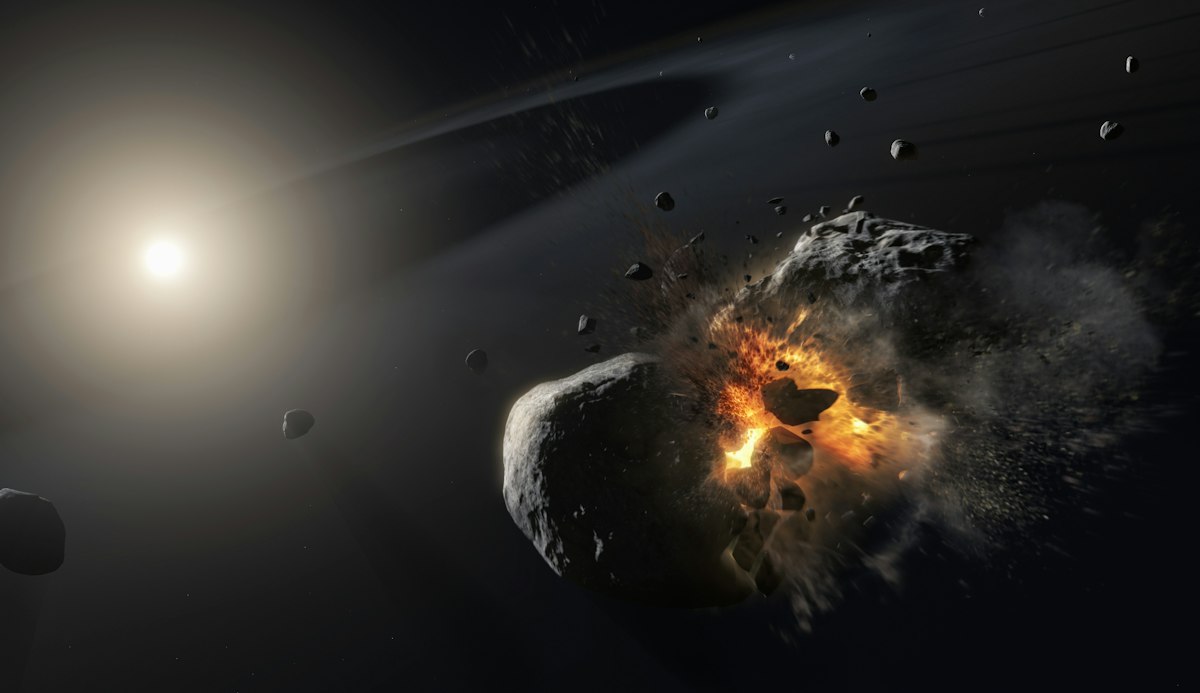
The debris from the Starship explosion is spread across an area of ocean and potentially inhabited land. The Turks and Caicos Islands government has issued a notice warning residents not to touch any debris that washes ashore. The material could include composite overwrapped pressure vessels, pieces of Inconel from the engine nozzles, and carbon fiber panels from the vehicle's skin. Some of that material is hazardous. The composite vessels can contain residual pressurized gas. The carbon fiber dust can be irritating to the lungs. And the propellant residues, liquid methane and oxygen, are long gone, but the metallic fragments can be sharp. Recovery teams from SpaceX are already being mobilized, but the terrain is challenging. The debris field spans hundreds of kilometers of open ocean. Not everything will be recovered. And that raises the question of environmental impact, which the FAA investigation will need to address.
- Hazardous materials in the debris: Residual pressurants, carbon fiber composites, and metallic fragments from the engine section.
- Environmental impact: The debris field covers a sensitive marine ecosystem. The long term effects of a large methane and oxygen release at altitude are negligible, but the physical debris on the seabed is a concern.
- Recovery timeline: SpaceX has not yet announced a recovery schedule. Based on previous recovery efforts, expect it to take at least two weeks to locate and retrieve the major fragments.
The Real Question Nobody Is Asking Out Loud
Here is the thing that keeps me up at night as someone who has covered this industry for years. The Starship explosion today was not a surprise to the engineers who work on the program. They knew the vehicle was being pushed hard. They knew the Raptor 2 engines had unresolved issues with the oxygen preburner. They knew the flight profile was aggressive. But they launched anyway, because the schedule demanded it. The FAA investigation will produce a report in a few months. It will cite a specific failure mode. Maybe it will be a cracked turbopump blade. Maybe it will be a faulty seal in the methane manifold. Maybe it will be something boring like a software timing error. But the root cause will not change: the pressure to fly before the vehicle was ready. That is not a technology problem. That is a management problem. And management problems are the hardest ones to fix, because the people who need to admit the problem are the same people who created the conditions for it to happen.
Starship explosion is now part of the public record for the third time. The vehicle is not going away.

Arthur Vance writes about astronomy and space exploration, covering the discoveries that expand our view of the cosmos. He enjoys connecting distant science to the questions we ask here on Earth.
💬 Comments (0)
No comments yet. Be the first!