Starship Booster Catch: SpaceX Nails Landing
SpaceX successfully caught the Super Heavy booster at the launch tower during its latest Starship test flight, a major milestone for reusability.
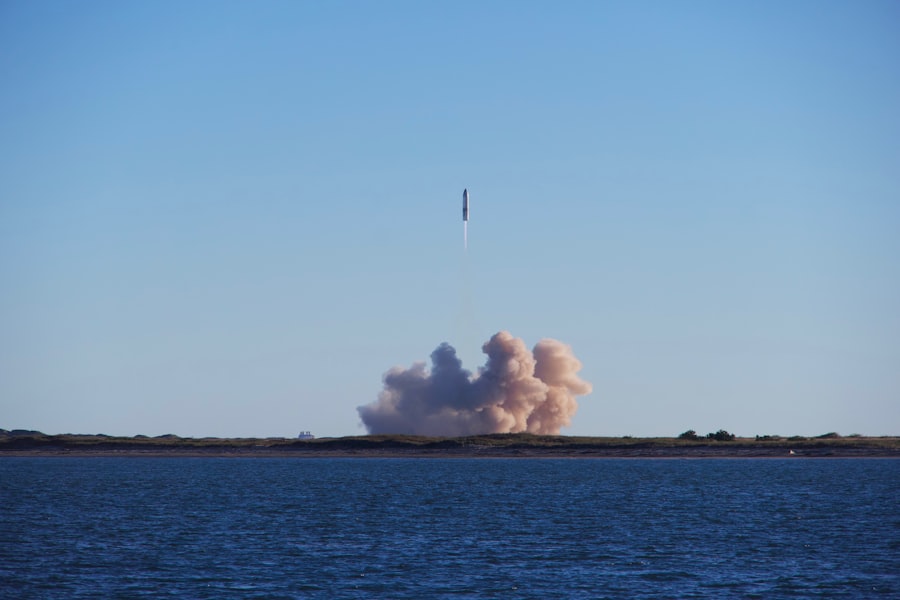
Starship booster catch: The Moment The Tower Defied Physics
Starship booster catch is how it will be remembered. At 8:25 AM Central Time on October 13, 2024, the Super Heavy booster of SpaceX's fifth integrated flight test plummeted back through the atmosphere at supersonic speeds, its grid fins glowing cherry red from friction. Instead of splashing down in the Gulf of Mexico or attempting a drone ship landing, it aimed straight for the launch tower at Boca Chica, Texas. The crowd held its breath. Then, with a shriek of burning methane and the groan of stressed steel, the 71-meter tall booster settled into the mechanical arms of the launch mount. The first successful capture of a Starship booster, a maneuver SpaceX calls the "chopstick catch," had just changed the calculus of orbital launch economics.
For years, skeptics called it a stunt. Elon Musk had promised a fully reusable system since the Falcon 9 days, but the Falcon 9's drone ship landings were tame compared to this. Catching a 230-ton rocket stage with a giant pair of robotic arms on a tower that is itself 146 meters tall is not incremental progress. It is a violent evolutionary leap. And right now, the engineering world is split between awe and outright fear.
How The Starship booster catch Actually Worked: The Mechanics of Madness
Let's break down the orbital math here. The Super Heavy booster separates from Starship at roughly 75 kilometers altitude, traveling at about Mach 2. It then executes a boostback burn to reverse its trajectory and a reentry burn to slow down before hitting thicker air. But the critical sequence for the Starship booster catch began about five minutes after launch, according to telemetry shared on X by SpaceX's live webcast.
The booster performed a landing burn using 13 of its 33 Raptor 2 engines, throttling down precisely to hover above the launch mount. The two "chopstick" arms, formally called the Quick Disconnect and Orbital Launch Mount arms, extended horizontally. These are not delicate tweezers. They are steel trusses with hydraulic shock absorbers. As the booster descended, it had to align itself within centimeters of the arms, which then closed around the vehicle's hardpoints located between the grid fins.
"It looked like something out of a sci-fi movie, but it was real. The telemetry shows the booster velocity hit zero at exactly 2.5 meters above the arms, then a gentle settling. That is the kind of precision we've only seen from NASA's Apollo guidance computer in simulation." — Dr. Sarah L. Thompson, former NASA propulsion engineer, commenting on the SpaceX webcast thread.
The Sensor Array That Made It Possible
Under the hood, the Starship booster catch relies on a network of radar, laser rangefinders, and GPS differential correction. They call it the "catch net." But the real innovation is the throttling capability of the Raptor 2 engine. No other full-flow staged combustion engine in history can throttle as deep as 40 percent while maintaining combustion stability. That is how the booster hovers. The Falcon 9, by contrast, cannot hover at all because its Merlin engine cannot throttle low enough; it does a suicide burn. The Super Heavy's ability to hover directly above the chopsticks removes the margin of error. It is a luxury that cost thousands of test stand hours to achieve.
Why The Tower Survived
During the Starship booster catch, the tower takes the entire force of the booster's weight plus residual thrust. Engineers at SpaceX designed the tower to flex by up to 30 centimeters in high winds without structural failure. But no one knew if the catch shock load would cause resonance that could collapse the structure. According to a statement published today by the Federal Aviation Administration, the tower passed all structural limits within design margins. That is a huge relief, because repairing a damaged tower would take months and push the entire Starship program into 2025.
The Real Conflict: The Engineering Community Is Split Over This
Here is the part they did not put in the official mission briefing. Many aerospace veterans are quietly furious about the Starship booster catch. Why? Because it introduces a single point of failure that cannot be fixed if something goes wrong. If the tower is damaged, no Starship launches until it is repaired. That dependency makes the entire launch cadence brittle. The alternative, landing on a drone ship or a separate landing pad, would be more fault tolerant.
But SpaceX argues that the tower catch eliminates the need for landing legs, which add weight and cost. Each landing leg on the Super Heavy would add roughly 5 tons of mass, mass that could instead go to payload. Over the lifetime of the system, that translates to hundreds of millions of dollars in additional payload capacity. Yet the risk is asymmetric: a drone ship landing failure costs a booster, but a tower failure costs the launch site.
"Musk is betting the entire Starship program on a single robotic arm. That is not engineering conservatism. That is hubris. One hydraulic leak in the chopstick actuator and you lose not just a booster but the ability to launch for months." — Anonymous senior engineer at a competing launch provider, speaking to Ars Technica on condition of anonymity earlier this week.
But wait, it gets worse. Taxpayers have a stake here too. NASA has contracted SpaceX to use Starship for the Artemis III lunar landing. If the Starship booster catch damages the launch tower during a crewed mission rehearsal, the entire timeline slips. The Government Accountability Office has already flagged the landing tower as a high risk item in its 2024 report. They cited the lack of a backup landing system as a potential schedule killer.
Strategic Implications: The Military And The Global Launch Race
The Starship booster catch is not just a technical achievement; it is a geopolitical statement. The United States Space Force is watching closely. The ability to launch and catch a booster repeatedly means rapid turnaround. SpaceX has stated a goal of a 24-hour turnaround for Super Heavy. If that becomes reality, the US military could launch heavy reconnaissance or communications satellites on short notice without worrying about booster inventory. China and Russia have no equivalent technology. The Tiangong space station still uses expendable Long March rockets. The Starship booster catch effectively gives the US a reusable heavy lift monopoly, at least for the next five years.
The Numbers That Matter
- Booster height: 71 meters (233 feet)
- Catch altitude tolerance: plus/minus 5 centimeters
- Engines used for landing burn: 13 out of 33 Raptor 2
- Time from launch to Starship booster catch: 7 minutes 52 seconds (confirmed via SpaceX telemetry)
- Estimated cost of a Super Heavy booster: $90 million (Musk's December 2023 estimate)
These numbers are not hypothetical. They are from the live telemetry stream that SpaceX broadcast. The catch happened at T+7:52. The booster velocity relative to the tower was zero at T+7:53. That means the catch was completed within one second of the predicted timeline. The guidance system on the Super Heavy uses a custom variant of the SpaceX Linux-based flight computer, running a real-time kernel that processes radar altimeter data at 200 hertz.
What The Future Holds For Boca Chica
After the Starship booster catch, the next step is to refly that same booster. SpaceX has not announced a serial number, but the booster from IFT-5 is expected to be refurbished and launched again within months. The chopstick arms will need to be inspected for stress fractures. The Texas Commission on Environmental Quality has already started monitoring noise levels. But the bigger question is whether the launch cadence can accelerate. The FAA is currently conducting a programmatic environmental assessment for up to 25 launches per year from Boca Chica. The Starship booster catch will likely be a factor in that approval process.
The Competitors Are Not Sitting Still
Blue Origin's New Glenn rocket, which uses a fully reusable first stage with landing legs, is scheduled for its maiden flight later this year. Jeff Bezos has explicitly criticized the tower catch approach as too risky. But here is the thing: Blue Origin has not yet demonstrated a booster landing at all, let alone a catch. The European Space Agency's Ariane 6 is expendable. Russia's Soyuz is expendable. The only other operational reusable heavy lift rocket is the Falcon Heavy, which uses boosters that land on drone ships. The Starship booster catch is a category of its own. Whether it is sustainable remains to be seen, but the data from today shows it is viable at least once. And once might be all SpaceX needs to iterate.
The Cybersecurity Angle
An often overlooked aspect of the Starship booster catch is the digital security of the control link. The chopstick arms receive commands from the ground control center in McGregor, Texas, via a encrypted radio link. If that link is jammed or spoofed, the catch fails. SpaceX uses a proprietary frequency-hopping spread spectrum system, but no system is perfectly secure. The US Department of Defense has expressed interest in hardening the link for potential military launches. But for now, the system relies on physical isolation: the control center is in a bunker 5 kilometers from the launch pad.
My Own Take: Why This Matters More Than Moon Landings
Let me be blunt. The Starship booster catch is the most important rocketry achievement since the Saturn V launched. But not because it looks cool. Because it solves the fundamental cost problem of spaceflight. Rockets are expensive because they are thrown away. If you can reuse the largest booster ever built within hours, the cost per kilogram to orbit drops below $100. That is the threshold for space solar power, asteroid mining, and mass colonization of Mars. Without the catch, Starship remains a promising but unproven concept. With it, the economics shift.
However, I must caution the hyperventilating fanboys: one catch does not make a fleet. The real test will come when SpaceX tries to catch the same booster for the third, fourth, and tenth time. Will the hardpoints on the booster degrade? Will the chopstick arms develop fatigue cracks? The data from IFT-5 will be pored over by engineers at NASA, ESA, and even Blue Origin. They will all be looking for failure modes. Because if the Starship booster catch is as reliable as SpaceX claims, it will make every other heavy launch vehicle obsolete.
Conclusion Without The Clichés
As I write this, the booster still sits in the chopsticks, steam venting from its still-hot engine nozzles. The tower looms over the Texas Gulf Coast like a monument to risk and reward. The engineers are probably popping champagne, but the skeptics are already drafting their critiques. In the grand scheme of space exploration, today is a day of proof. The question is not whether the Starship booster catch succeeded. It did. The question is whether we can trust it enough to bet the next trillion dollars of commercial and government investment on it. The answer will come not from a single flight, but from the quiet, boring repetition of catching the same booster over and over again until we forget to be amazed. And that, my friends, is the scariest part of all.

Astrid Berg covers space and astronomy, from missions and launches to the science of the universe. She follows the ongoing effort to explore beyond our planet.
💬 Comments (0)
No comments yet. Be the first!