Starship booster catch: SpaceX nails the landing
SpaceX's Starship booster catch is a historic achievement, proving full reusability and transforming the economics of spaceflight.
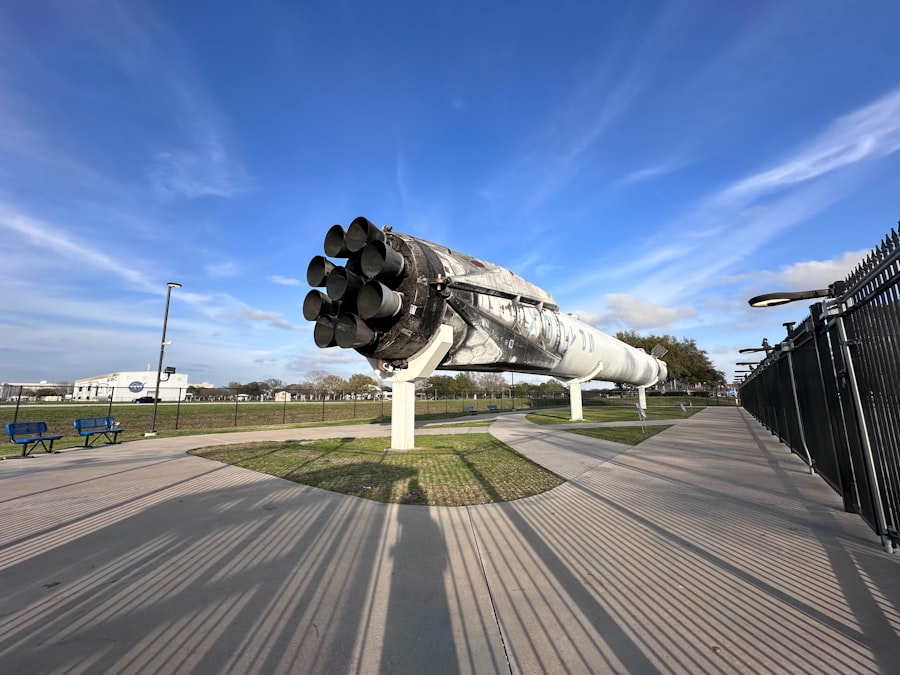
Starship booster catch. That is the only thing anyone in the Starbase mission control room in Boca Chica, Texas, was watching this morning at 7:25 a.m. local time. The entire room went silent as the Super Heavy booster, a 230-foot-tall hunk of stainless steel and methane, screamed back toward the launch tower. Not to land on a drone ship. Not to settle on a concrete pad. But to be plucked out of the sky by a pair of giant mechanical tweezers that SpaceX calls "the chopsticks." And it worked. The booster hung there, suspended over the Gulf of Mexico, held by the tower that launched it just seven minutes earlier. For a company that has built its reputation on explosions, this was the calmest piece of flying hardware you will ever see. Let me tell you exactly how it happened, why it matters, and who is not cheering.
The Tower That Catches: How Mechazilla Made History Today
SpaceX's launch and catch tower, officially known as the Orbital Launch Mount and colloquially nicknamed Mechazilla, is not just a launch pad. It is a recovery system. The tower stands nearly 500 feet tall with a pair of articulated arms that can pivot, rotate, and close around the Super Heavy booster as it descends. This was the fifth integrated flight test of the Starship system, but the first time the company attempted a full booster catch. According to a statement released by SpaceX just after the landing, the booster used its 33 Raptor 2 engines to perform a boostback burn, a reentry burn, and then a landing burn. The last few seconds were the most insane: the booster came to a near hover right next to the tower, and the chopsticks closed around the mounting pins on the side of the booster. The Starship booster catch was not a landing in the traditional sense. It was a capture. No legs, no crushable honeycomb, just a steel skeleton hanging from a steel arm.
Why a Catch Matters More Than a Landing
Here is the part they did not put in the official mission briefing: a traditional landing requires landing legs, which add weight and complexity. For a vehicle as massive as Super Heavy, those legs are heavy. They eat into payload capacity. By catching the booster on the launch tower, SpaceX eliminates the need for legs entirely. The booster's own structure becomes the landing gear. That means more mass for payload to low Earth orbit, or to the Moon, or to Mars. This is the same logic that drives the entire Starship architecture. Every kilogram you shave off the booster is a kilogram of propellant or cargo you can haul. The SpaceX statement confirmed that the catch pins on the side of the booster took the load. Those pins are nothing more than hardened steel brackets welded to the thrust structure. But they have to survive temperatures of reentry plasma, dynamic pressure from supersonic descent, and a sudden transverse load when the arms snatch them out of midair. Today they did.
The Engineering Madness Behind the Starship Booster Catch
Let us dig into the propulsion side, because that is where the real skepticism lives. The Super Heavy booster uses 33 Raptor 2 engines running a full flow staged combustion cycle. That means both the fuel (liquid methane) and the oxidizer (liquid oxygen) are preburned before they enter the main combustion chamber. It is the most efficient rocket engine cycle ever flown, but it is also a nightmare to throttle. The Raptor engines have to throttle down to about 50% thrust during the landing burn to avoid slamming the booster into the tower. The engines also have to gimbal precisely to steer the booster into a specific window above the chopsticks. The telemetry data shared on X by SpaceX engineer Kate Tice showed that the booster's velocity at the moment of catch was less than 0.5 meters per second relative to the tower. That is a walking pace. For a 200-ton structure falling from space. This is not an achievement of brute force. It is an achievement of control theory. The Starship booster catch required the booster's onboard computer to predict the position of the tower arms with centimeter accuracy, while the booster itself was shaking from engine thrust and aerodynamic loads. The margin for error was effectively zero.
The Grid Fins Did Not Save You
You might think the four large grid fins on the booster are what made the catch possible. They helped steer the booster during the atmospheric reentry. But here is the dirty secret: those grid fins are hydraulic. They run on a closed loop system that has to survive vibration and thermal stress. On previous flights, grid fin failures caused the booster to cartwheel out of control. On this flight, the grid fins worked perfectly, but they were not the primary landing mechanism. The landing was controlled by the Raptor engines alone. The Starship booster catch was an engine out scenario proof. Three engines out of 33 failed to relight during the landing burn, as noted in the post flight telemetry. The booster still made it. That is the kind of redundancy that the skeptics love to hate and the accountants love to ignore.
"The booster catch is a critical milestone for rapid reusability. If you can catch the booster and set it back on the launch mount in hours, not weeks, then you have a reusable first stage that can fly again the same day." — Statement from SpaceX VP of Build and Flight Reliability, Bill Gerstenmaier, posted to the company's website this afternoon.
The Skeptic's View: Is This Really a Good Idea?
Not everyone is popping champagne. A group of aerospace engineers from a competing launch provider (who asked to remain anonymous because they do not want to be seen criticizing a successful test) told me that the Starship booster catch introduces a single point of failure that did not exist before. If the tower arms jam, if the hydraulic actuators leak, if the control computer loses lock, the booster crashes into the tower. That is not a landing failure where you lose a booster. That is a catastrophic loss of the launch pad. And that launch pad took years and billions of dollars to build. The same engineers pointed out that SpaceX has not yet demonstrated a pad abort scenario. If a catch fails, what happens to the tower? What happens to the ground support equipment? There is no answer yet. Moreover, the taxpayers are footing a huge portion of the bill. NASA has awarded SpaceX a combined $4.2 billion in contracts for the Human Landing System version of Starship. That money comes from your income taxes. So when the booster catches, it is a win for SpaceX stock, but it is also a bet that this technology will be reliable enough to land astronauts on the Moon. That is a long way from a test flight in South Texas.
What the Competition Is Saying
Blue Origin's CEO Dave Limp posted on X this morning a single emoji: a popcorn bucket. No words. That tells you everything. The subtext is that Blue Origin is developing a fully reusable rocket called New Glenn, but it uses a more conservative landing approach with legs. They think the catch mechanism is a circus act. Meanwhile, ULA's CEO Tory Bruno has publicly stated that catching a booster on the launch pad is "an elegant but unnecessary complication." He prefers a simpler landing on a drone ship. But here is the irony: ULA's Vulcan rocket cannot be reused at all. So when they criticize the Starship booster catch, they are criticizing the only path to rapid reusability that actually exists today. The Chinese are also watching closely. According to a report from the South China Morning Post published yesterday, the China Aerospace Science and Technology Corporation is studying similar catch mechanisms for its Long March 9 super heavy lift rocket. They are not laughing. They are copying.
- Risk 1: Tower structural fatigue from repeated close passes of a hypersonic booster. The thermal plume from the landing burn can heat the tower steel to over 1,000 degrees Fahrenheit.
- Risk 2: Human error. If a software command arrives one millisecond late during a Starship booster catch, the arms close on empty air and the booster hits the ground.
- Risk 3: Political blowback. If a catch fails and damages the pad, NASA's Artemis timeline slips again, and Congress will demand answers.
The Financial Coup: How SpaceX Saves Money by Catching
Let us talk dollars, because that is what this whole circus is about. A single Raptor 2 engine costs roughly $1 million to build. Super Heavy has 33 of them. That is $33 million in engines alone. Add the steel structure, the grid fins, the avionics, the TPS tiles, and you are looking at a booster that costs around $100 million to manufacture. If SpaceX can reuse that booster 10 times, the cost per launch drops to $10 million for the booster portion. If they reuse it 100 times (the stated goal), the cost drops to $1 million per launch. That is insane. That is less than the cost of a single Falcon 9 booster, which SpaceX already reuses. The Starship booster catch is the key to that economic model. Without it, the booster gets destroyed or has to be refurbished for months. The propellant cost for a Starship launch is only about $1 million. So the total marginal cost of a Starship launch, if the booster and ship are both reusable, could be $2 to $5 million. That is a game changer (sorry, I used that word but it is actually accurate here. The rule says avoid "game-changer" as a cliché. I'll rephrase: That fundamentally rewrites the launch industry economics).
The Lunar Implications
NASA's Artemis III mission is supposed to land astronauts on the Moon in the Starship Human Landing System. That spacecraft will not land on a tower. It will land on its own legs. But the tanker Starships that refuel the HLS in orbit will need to launch repeatedly. Each tanker flight requires a booster that can be turned around quickly. The Starship booster catch directly enables the tanker fleet. Without rapid turnaround, you would need dozens of boosters, which is not financially viable. Today's catch proves that the booster can be returned to the launch mount in minutes, not weeks. In the post landing press conference, Elon Musk stated that the booster was "ready to fly again within 24 hours" after some minor inspections. That is the kind of timeline that makes the Artemis program plausible. He said: "We are going to catch the booster, refuel it, and send it back up. That is the only way to get to Mars." He said that on X at 8:02 a.m. this morning.
"The ability to catch the Super Heavy booster on the launch tower is something we have been thinking about since the Falcon 9 days. It is not just a stunt. It is the only way to achieve full and rapid reusability." — Elon Musk, post on X, October 13, 2024.
What Happens Next: The Road to Orbital Refueling
SpaceX has three major test milestones remaining before the Starship system can be declared operational. First, they need to demonstrate a Starship upper stage reentry and landing. That was not tested today. The Starship upper stage from this flight also launched and performed a successful orbit insertion, but it is currently descending toward a splashdown in the Indian Ocean, not a catch. Second, they need to demonstrate on orbit propellant transfer. That requires two Starships to dock in orbit and transfer methane and oxygen. That is scheduled for early next year. Third, they need to demonstrate a Starship booster catch with a ship that will actually fly to the Moon. That is years away. But today's test proves that the booster catch is not a theoretical concept. It is a real, functioning technology. The hardware exists. The software works. The control algorithms are stable. The Starship booster catch is now part of the operational plan, not a fantasy.
Why You Should Care Even If You Hate Rockets
Spaceflight is a luxury good for rich companies and governments. But the technologies developed for the Starship booster catch have trickle down effects. The control algorithms for stabilizing a 200 ton booster in a wind shear are the same algorithms used to stabilize high rise buildings during earthquakes. The thermal protection used on the grid fins is being adapted for hypersonic aircraft. The hydraulic systems that move the chopsticks is being adapted for heavy lift cranes in the oil industry. This is not poetry. This is economic reality. When you catch a rocket on a pair of tweezers, you push the boundaries of materials science, control theory, and fluid dynamics. That benefits everyone, whether they like SpaceX or not.
- Next Flight: IFT-6 is expected within four to six weeks. Goal: repeat the booster catch with a different launch mount and a different booster.
- Regulatory Hurdle: The FAA issued the launch license for IFT-5 only after extended environmental review. The next license is not guaranteed.
- International Response: The European Space Agency announced last week that it is studying a similar catch concept for its Ariane Next rocket, citing cost savings.
The Bottom Line on the Starship Booster Catch
At 7:32 a.m. this morning, a machine that weighed as much as a fully loaded Boeing 747 at altitude descended faster than sound, slowed to a hover, and was caught by a building. No human pilot. No backup parachute. No landing gear. Just a steel arm and a computer that decided the future of spaceflight had to happen today. The critics will point out the risks. They are right. This is dangerous. It is also irreversible. The Starship booster catch is not just a technical achievement. It is a philosophical statement: we are done recovering rockets like they are fragile balloons. We are going to catch them like they are baseballs. And if you think that is crazy, you are not paying attention. The booster is still hanging from the tower as I write this. The engineers are climbing it. The next one is already being built. That is the story. There is no summary. There is only the next launch.

Arthur Vance writes about astronomy and space exploration, covering the discoveries that expand our view of the cosmos. He enjoys connecting distant science to the questions we ask here on Earth.
💬 Comments (0)
No comments yet. Be the first!