SpaceX's Orbital Data Centers E-Waste
SpaceX's proposed satellite megaconstellation would create a new category of e-waste, with 200,000 decommissioned yearly.
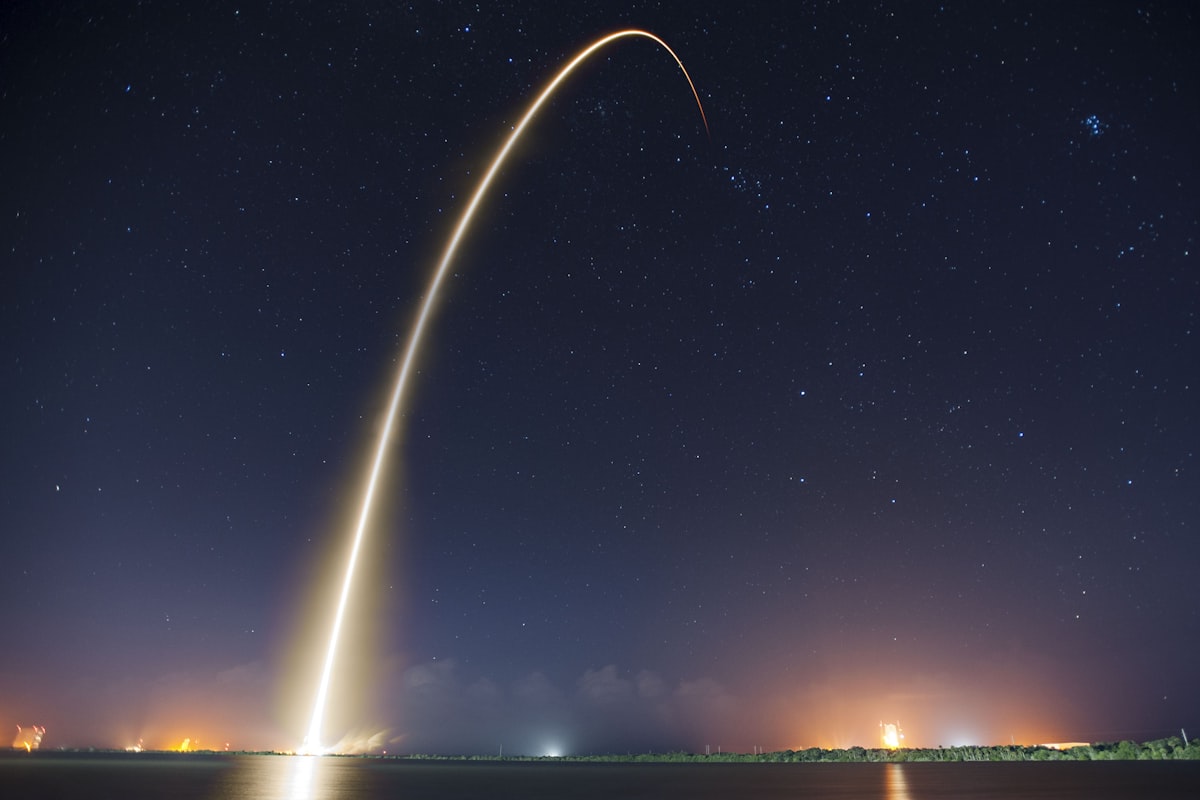
SpaceX’s Orbital Data Centers Could Create a
Brand New Kind of E-Waste
Elon Musk’s pitch for a million-strong AI data center satellite megaconstellation may not be practical or economical. But it might be unique. That’s the closest we’ve come to a scheme that would export a considerable amount of valuable materials into space, and that’s something worth pausing over. Humans aren’t doing a great job of material sustainability. Normally we’re talking about stuff escaping a recycling pipeline, not escaping Earth’s gravitational pull, yet here we are, facing a plan that could send tons of rare resources beyond our atmosphere for good. It’s a strange twist. We can’t even keep our waste in check down here. So this idea, wild as it sounds, flips the problem on its head.
The Scale of the Problem Is Hard to Grasp
The commercial space sector loves talking about the allure of mining asteroids for precious metals to bring back to Earth. But under what circumstances are we going to be willing to do that in reverse? We're not there yet. Starlink alone has doubled the mass of objects in low-Earth orbit, and this orbital data center constellation would dwarf that, pushing at least some satellites away from Earth for disposal. So it's a giant leap backward.
Here's the math on those SpaceX AI1 satellites. It's brutal. Given the roughly five-year expected lifetime for data center GPUs, about 200,000 of the 1 million proposed satellites would be decommissioned each year, and that churn never stops. Based on the May 29 FCC filing, about 40,000 would definitely deorbit and burn up in the atmosphere each cycle. So those materials would largely be dispersed throughout the atmosphere, turning a resource into a diffuse contaminant that slowly settles over the globe, a quiet rain of metal. One related issue: the aluminum would cause an unknown amount of ozone depletion over a period of decades. We can't ignore that.
Some or all of the remaining 160,000 satellites would be moved outward into a distant "disposal" orbit, instead. They're lost from a material life cycle point of view, and that's a final, unalterable verdict for every single one of them, no matter which path we choose. So either way, they can't come back.
Counting the Cost of a Million GPUs
We can't tally the material without full, detailed specs for these satellites. But focusing solely on the GPUs, ignoring solar panels, cooling systems, and the rest of the server and networking devices, at least gives us a starting point that’s honest about its limits. It's a rough measure. Still, a rough measure beats nothing at all.
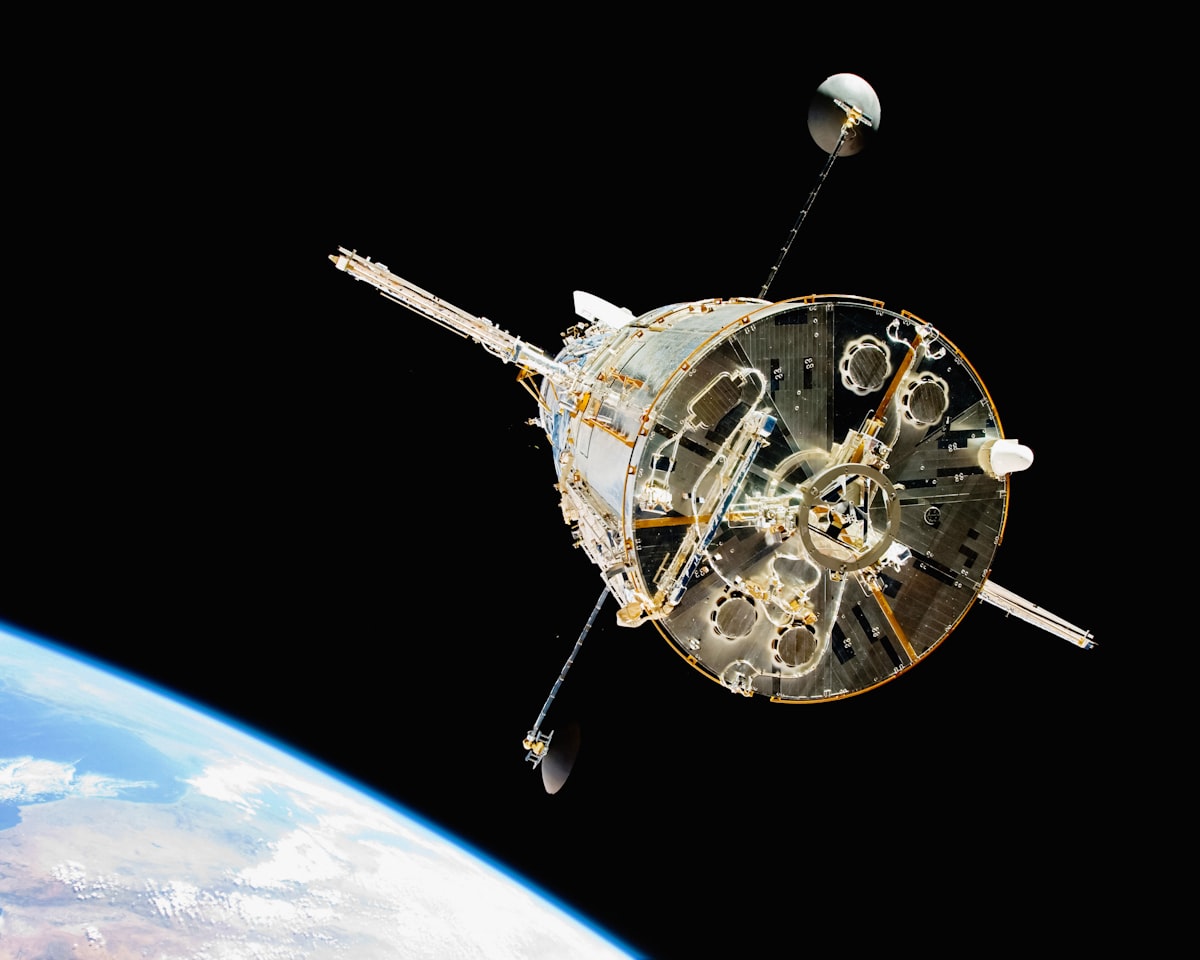
Musk has described these satellites as using a modified Nvidia Vera Rubin NVL72 rack, which contains 72 GPUs. It's a slightly older card, sure. But a May study on the material footprint of LLMs provided a full chemical analysis of an A100, covering 32 elements, and that analysis gives us a concrete starting point for understanding the hardware's physical demands. The massive air-cooled heatsink on that card accounted for 88 percent of its mass, so we'll simply have to exclude it, since the satellite will obviously require another type of cooling that hasn't been defined. That's the catch. We can't say what replaces it.
What One Year of Decommissioning Actually Looks Like
Using the extremely conservative assumption that each AI1 satellite was simply composed of 72 naked A100 GPUs taped together, we can estimate the material exported to space, or vaporized so thoroughly that it might as well have been, each year. The numbers are staggering.
- 1,000 tons of copper
- 170 kilograms of gold
- Almost 2 tons of silver
- Over 20 tons each of bismuth and titanium
- Over 2 tons of palladium
- 76 kilograms of thallium
Unsurprisingly, some of these elements are rounding errors compared to what we mine each year. But that's still about 1 percent of global annual palladium and thallium. We're ejecting that into space, a remarkable amount when you consider how scarce these metals are on Earth and how much effort goes into extracting them. It's a staggering loss.
Earth’s Neighborhood Inconvenience Store
Consider the alternative. Calculate the size of an asteroid you'd have to mine to recover the amounts of these elements being lost. But here's the catch, as a 2023 study notes, there are only a few elements that can be found at a higher concentration in asteroids compared to ores on Earth, like the platinum group metals. That's a slim list. So the math gets stark.
Using average chemistry and densities for a couple different types of asteroids, common CM-group carbonaceous chondrites and rarer iron-rich M-type asteroids, some of the elements lost could be found in modestly sized bodies. The platinum, for example, equates to the contents of an asteroid 16 to 43 meters in diameter. The 180 kilograms of cobalt could be recovered from an asteroid about 3 to 6 meters across.
But it would take a 140-190-meter asteroid to collect that much copper. That's a big rock. Something in the 225-300-meter range would be needed for an equivalent amount of silver and barium, while a 530-meter asteroid would be required to match the tin haul, and that's before you even consider the logistics of hauling it back. So this extraction would have to be repeated annually to balance the losses from the satellite constellation. It's a monumental task.
Most of these elements are too low in value to be proposed targets for asteroid mining. But that doesn't mean the idea is dead. It's been suggested that spacecraft materials like aluminum and titanium might someday be mined in space for use in space, since hauling them up from Earth's gravity well is expensive, and building structures in orbit could get cheaper with local sources. So we can't rule it out. And that's a big if.
The Moon Factory Idea Doesn’t Solve It
SpaceX floated this idea in an SEC filing. They're planning lunar-based manufacturing, including factories to build large-scale AI compute satellites. We've got the details. The company expects to use raw materials from the Moon to construct most of the mass of those satellites, while shipping chips and other lower-mass elements from Earth. That's the plan. So it's a bold bet on off-world production. And they're not shy about it.
It’s technically possible to mine aluminum and titanium on the Moon. It doesn’t necessarily follow that it’s cheaper to manufacture satellites on the Moon just because it would reduce the weight launched from Earth’s surface. Of course, you’d first have to launch an entire moonbase and mining operation and satellite factory up there.
There are a number of questions about all this that one would not have to answer if one were building servers on Earth, deploying them in data centers inside humble buildings, and responsibly processing e-waste for recycling in a few years when they die of email-summary-related causes. Or even better, pushing some equipment to the secondary market if it has useful life left.
In addition to the cost of putting something in orbit, there is a cost to not getting it back.
Who Will Write the Environmental Review?
Will there someday be an environmental review for space projects that includes an evaluation of the mass of materials it proposes to remove from the Earth system? The legal framework for extracting minerals from space has been much discussed. But congested orbits full of junk, or junk reentering the atmosphere, may not be the only space disposal concern on the horizon if projects of this size are ever seriously pursued.
SpaceX's orbital data centers force a reckoning with material stewardship that has never been relevant before. We've always thought of waste as something that stays here, in a landfill, in the ocean, in the air. But ejecting it beyond Earth's gravity well changes the equation entirely. It's a question we can't ignore. And the sheer volume of precious and semi-precious metals involved makes it worth asking now, before the first satellite is ever launched, because once those structures are in orbit, we'll have no easy way to reclaim what we've sent up.
Frequently Asked Questions
What is the primary concern about SpaceX's orbital data centers according to the article?
The article's primary concern is that the proposed megaconstellation could export valuable materials into space, creating a new kind of e-waste. It highlights that materials would be lost from Earth's material life cycle, either dispersed in the atmosphere or placed in distant disposal orbits.
How many AI1 satellites are proposed, and what happens to them annually based on a five-year lifetime?
The article mentions a proposed 1 million AI1 satellites. With a five-year expected lifetime for GPUs, about 200,000 satellites would be decommissioned each year, with 40,000 deorbiting and burning up, and the remaining 160,000 moved to a disposal orbit.
Why is the aluminum from deorbiting satellites considered a problem?
The aluminum from deorbiting satellites is a problem because it would cause an unknown amount of ozone depletion over decades. The article states that as satellites burn up, materials disperse as a diffuse contaminant, slowly settling over the globe.
What are the estimated amounts of copper and gold lost per year from decommissioning, using the article's assumptions?
Using the conservative assumption of 72 naked A100 GPUs per satellite, the article estimates annual losses of 1,000 tons of copper and 170 kilograms of gold. These figures are based on the material composition of the GPUs.
Does the article mention any potential solution involving the Moon?
Yes, the article mentions SpaceX's plan for lunar-based manufacturing to build AI compute satellites, using raw materials from the Moon for most of their mass. However, it questions the economic feasibility, noting the need to launch a moonbase and mining operation first.

Astrid Berg covers space and astronomy, from missions and launches to the science of the universe. She follows the ongoing effort to explore beyond our planet.
💬 Comments (0)
No comments yet. Be the first!