Some Comets are Naked, and One Just Got Caught Photo-Bombing
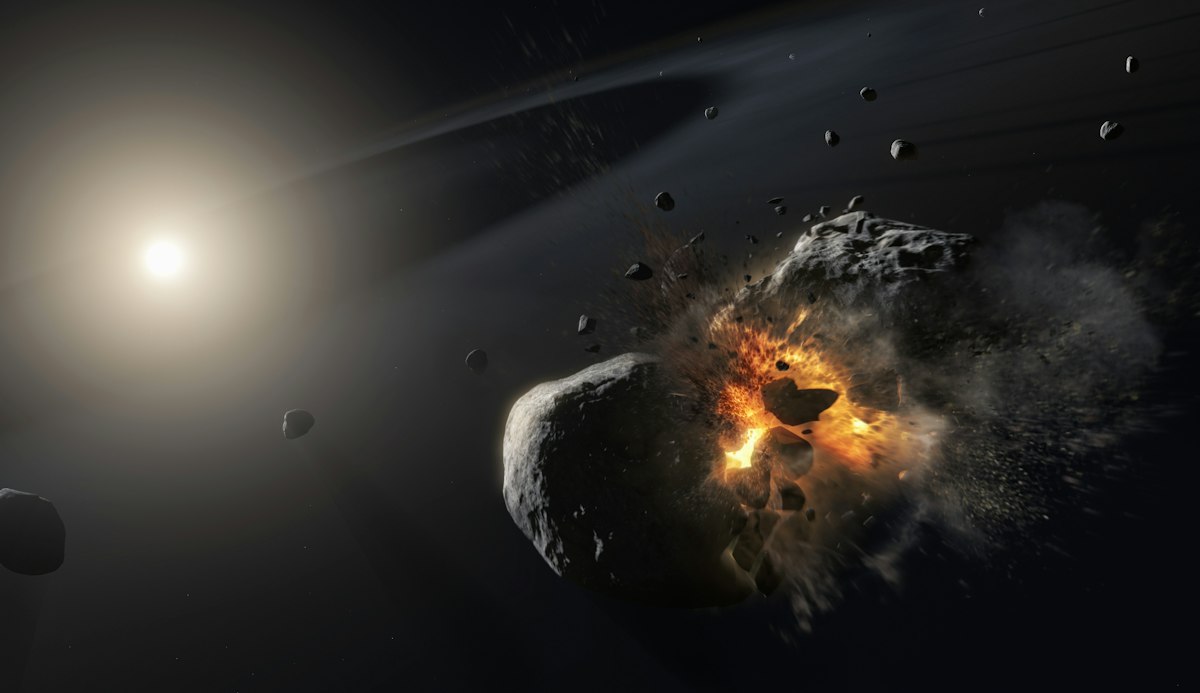
Astronomers used the Subaru Telescope's archive to study comet 28P/Neujmin, a 'naked' comet with virtually no coma, revealing its surface differs from asteroids.

Comet 28P/Neujmin Just Photo-Bombed an Archive
Comet 28P/Neujmin has been hiding in plain sight. Japanese scientists found it lurking in old images from the Subaru Telescope, and the discovery is reshaping how we think about comets and asteroids. But here's the kicker: the find came not from a new observation, but from digging through a massive archive of data collected over decades, and that archive's sheer size meant no one had ever bothered to sift through all of it until now. So they did. And what they uncovered changes the game.
Perched atop Mauna Kea in Hawaii, the Subaru Telescope has been scanning the sky since 1998, an 8.2-meter giant whose cameras have captured countless images over the decades. Those images hold secrets. And a team led by Takafumi Ootsubo from the Chiba Institute of Technology went hunting for one specific object: comet 28P/Neujmin. They found it. The results are now published in the Publications of the Astronomical Society of Japan, but the hunt itself was the real triumph, a needle buried in a haystack of starlight that took years of patient sifting to locate.
Why This Comet Is So Weird
Comet 28P/Neujmin isn't your typical comet. Most comets grow a fuzzy coma when they approach the Sun, as heat releases volatile gases, and that coma hides the nucleus, making it hard to study the actual body. But this comet is different. At large distances from the Sun, it has virtually no coma. Astronomers call it a "naked" comet, and it's a rare sight. So it's a naked comet, plain and simple.
This comet circles the Sun every 18 years, and at roughly 21 kilometers across, it's a heavyweight among the Jupiter family comets, a group defined by their chaotic orbits and frequent close passes by the giant planet. But here's the twist. It doesn't look like a comet at all. Instead, its surface is dark, rocky, and utterly devoid of the bright, fuzzy coma that typically marks these icy wanderers, so astronomers have to keep reminding themselves that it's not just another asteroid. It's big. It's fast. And it's hiding in plain sight.
"We present an observational study of the nucleus of comet 28P/Neujmin at a heliocentric distance exceeding 10 au, where coma contamination is effectively minimized," the authors write.
The observations happened at more than 10 astronomical units from the Sun. That's a staggering distance, one where the comet sits so far from our star that the coma, the hazy cloud of gas and dust that usually shrouds the nucleus, is essentially absent, leaving nothing to obscure the view. So researchers got a clear look at the bare core. It's a rare sight. But at that remove, the comet's true shape finally stood out.
The Opposition Effect Reveals the Surface
The team used Subaru's Hyper Suprime-Cam to observe the comet at a very favorable angle. They were looking for something called the opposition effect, which is a surge in brightness that happens when an object is viewed from the same angle as the Sun shines on it. When that happens, shadows disappear and the whole surface appears uniformly bright.
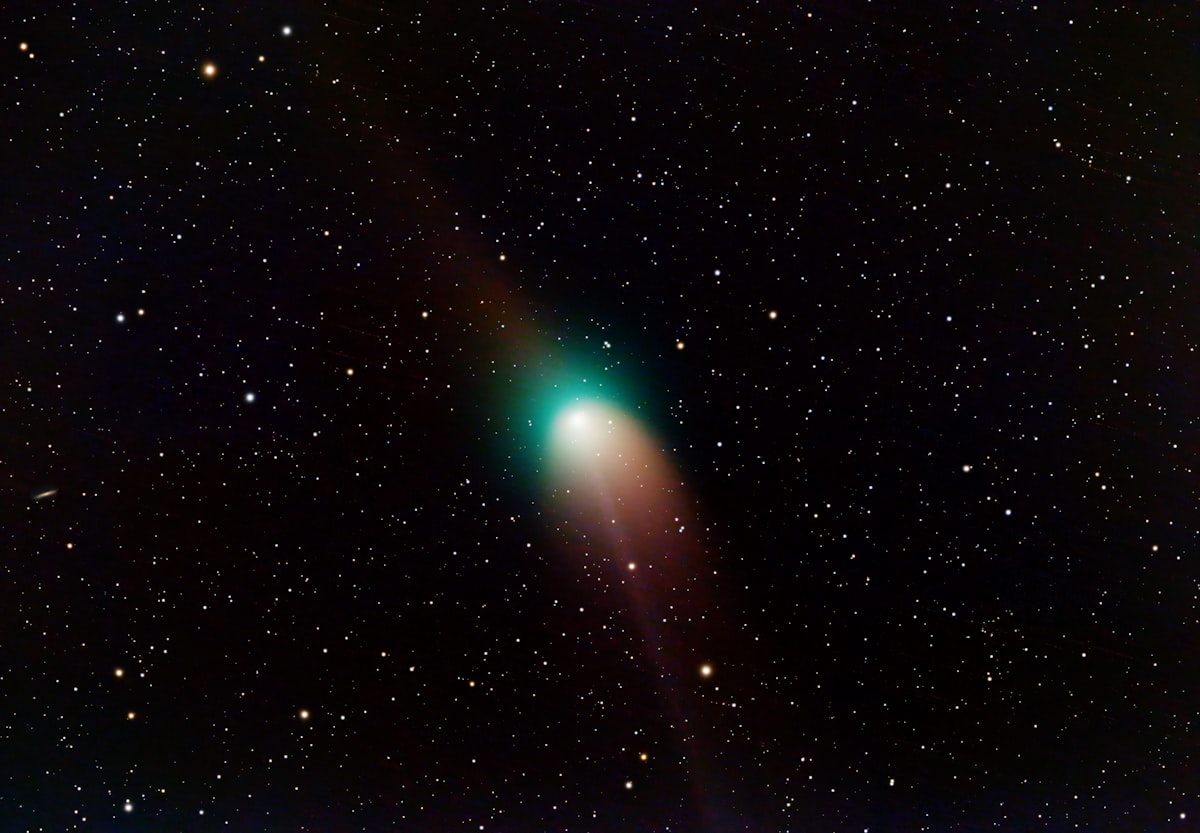
That brightness surge has a distinct shape. It's all about surface properties, like albedo and grain size, and how those factors scatter light in ways that reveal the physical character of the object. But by measuring that curve, scientists can learn about the surface structure without actually touching the thing, and that's a trick that works from a distance. So don't underestimate the curve.
The results were surprising. Comet 28P/Neujmin's colors match those of D-type asteroids almost perfectly, and that's consistent with earlier spectroscopy we've already done. But the opposition effect revealed something else. It's a real puzzle. The comet's surface structure is different from C-type and D-type asteroids, and the grain packing and small-scale porosity don't match any of the standard models we've tested so far.
Fluffier Than Expected
Comet 28P/Neujmin is fluffier than it looks. It's more loosely packed than similar asteroids, and that physical reality stands in stark contrast to what its spectrum suggests, even though the spectrum itself closely resembles those same asteroid types. But the structure tells a different story.
"The Subaru HSC observations suggest that, although the nucleus color resembles that of D-type asteroids, the surface microstructure of comet 28P's nucleus likely differs from those of C- and D-type asteroids," the authors write.
That distinction matters. It suggests that comets and asteroids may have formed in similar environments but evolved differently. Or perhaps they formed differently but ended up looking alike. Either way, the old dividing line between icy comets and rocky asteroids is getting blurry.
What This Means for Solar System History
For decades, the classic story went like this: comets were icy wanderers from the frozen outer reaches, while asteroids were rocky debris from the inner solar system. They came from different places, born under different conditions. But recent observations have muddied that picture. It's not so simple anymore. We've found rocky material on comet surfaces, icy compounds on asteroids, and even objects that blur the line entirely, forcing us to rethink the neat categories we once took for granted. So the old binary is dead.
"Some asteroids contain water and hydrated minerals, while signs of hydrated silicates have been detected on comet nuclei," the researchers explain.
D-type asteroids look almost identical to comets, at least in terms of their spectral signatures and composition. So they're spectral twins, practically. Jupiter family comets, like 28P/Neujmin, share similarities with Jupiter Trojan asteroids, and that overlap isn't just a surface coincidence, it runs deep into their chemical makeup and light-reflecting traits. But the groups could be siblings, just on different orbits.
The opposition effect is a key tool for figuring out which taxonomic group of asteroids, if any, cometary nuclei most closely resemble. That's why this study matters. It gives researchers a way to compare surface properties directly.
Old Images, New Discoveries
The Subaru Telescope has been operating for more than two decades, and its archive of images is vast, a genuine treasure trove for astronomers who mine it for hidden celestial gems. It's a goldmine. So the team behind this study searched that archive specifically for images of comet 28P/Neujmin, combing through years of data with precision and patience. They found what they needed without making new observations.
That's the beauty of astronomical archives. Data collected years ago can answer questions that weren't even asked at the time. The images don't look like much at first glance, but they contain enough information to understand the comet's surface and how it differs from asteroids.
The history of the Solar System spans about 4.5 billion years. That's a long time, and a lot has happened. Understanding it requires better evidence from powerful telescopes. Sometimes that evidence comes from unexpected places, like archived images of a naked comet photo-bombing old observations.
Comet 28P/Neujmin isn't the most famous object in the sky. But it's helping scientists understand the deep connections between the building blocks of our cosmic neighborhood, and that work is far from finished as researchers keep digging into the data. There's much more to learn. For now, this naked comet has given astronomers a new way to think about the boundaries between comets and asteroids, and that's a shift they can't ignore.
Frequently Asked Questions
What is unique about comet 28P/Neujmin that makes it different from typical comets?
Comet 28P/Neujmin is a 'naked' comet because at large distances from the Sun it has virtually no coma, unlike most comets that grow a fuzzy coma when approaching the Sun. This lack of coma allows astronomers to study its bare nucleus without the obscuring haze.
How was comet 28P/Neujmin discovered in the Subaru Telescope archive?
A team led by Takafumi Ootsubo from the Chiba Institute of Technology searched through old images from the Subaru Telescope's archive, which contains data collected over decades. They specifically combed through the archive for images of comet 28P/Neujmin and found it without making new observations.
What did the opposition effect reveal about the surface of comet 28P/Neujmin?
The opposition effect, a surge in brightness when the comet is viewed from the same angle as the Sun, revealed that the comet's surface structure differs from C-type and D-type asteroids. The grain packing and small-scale porosity do not match any standard models tested, indicating the comet is fluffier and more loosely packed than similar asteroids.
When and where were the observations of comet 28P/Neujmin made?
The observations were made using the Subaru Telescope's Hyper Suprime-Cam, located atop Mauna Kea in Hawaii. They occurred when comet 28P/Neujmin was at a heliocentric distance exceeding 10 astronomical units from the Sun, a distance where coma contamination is minimized.
How does comet 28P/Neujmin resemble and differ from D-type asteroids?
Comet 28P/Neujmin's colors match those of D-type asteroids almost perfectly, and its spectrum is consistent with earlier spectroscopy of D-type asteroids. However, the opposition effect shows its surface microstructure likely differs from C- and D-type asteroids, making its physical structure unlike those asteroid types despite the spectral similarity.

Arthur Vance writes about astronomy and space exploration, covering the discoveries that expand our view of the cosmos. He enjoys connecting distant science to the questions we ask here on Earth.
💬 Comments (0)
No comments yet. Be the first!