What Rindler Horizon Means for You
Ever wondered if you could outrun a signal? It turns out, under constant acceleration, you can create your own 'horizon,' limiting what you can see.

It's not just an abstract physics concept confined to black holes. But what a Rindler horizon means for you might surprise you, since it's a direct consequence of how you move through the universe, especially if you're accelerating. Think about that.
Your Accelerating Universe: A Shrinking View
Imagine you're on a spaceship, really pushing the engines. You're not just cruising at constant speed. Instead, you're constantly getting faster, and this relentless acceleration changes what you can see, creating a boundary, a horizon, just for you. So it's a personal limit.
This is the Rindler horizon. It’s named after Wolfgang Rindler, a physicist who deeply explored relativity and understood that a horizon isn't just about gravity, like around a black hole, but can also be about motion itself. So it’s about how your own acceleration cuts off your view of certain events in the universe.
The Speed Limit You Can't Break
We all know you can't travel faster than light. But it's not about breaking that cosmic speed limit, and it's not about reaching anything close to that barrier,instead, it's about the profound effect of constant acceleration, even if you never get all that close to light speed.
Think about a signal sent from a distant star. If you're sitting still, that signal will reach you. But it won't be so simple if you're moving at a steady speed, because it will eventually catch up, though taking longer to do so.
But when you accelerate, things get weird. It's a perpetual chase, since the signal has to not only cover the distance but also overcome your ever-increasing speed.
The light signal is always closing the gap. But your acceleration means you're always just a little bit ahead of where you were a moment ago, so the gap shrinks but it never quite closes. So any signal sent from far enough away at a particular time will simply never reach you.
- Your constant acceleration creates a boundary.
- Signals originating too far away cannot reach you.
- Events beyond this boundary become permanently inaccessible.
- This horizon is a direct consequence of your motion, not just gravity.
The Horizon You Can't See
This Rindler horizon effectively walls off a portion of the universe from your perspective. But it's a horizon built by your own motion through spacetime, so you can't see past it and you can't receive signals from it. You are completely cut off.
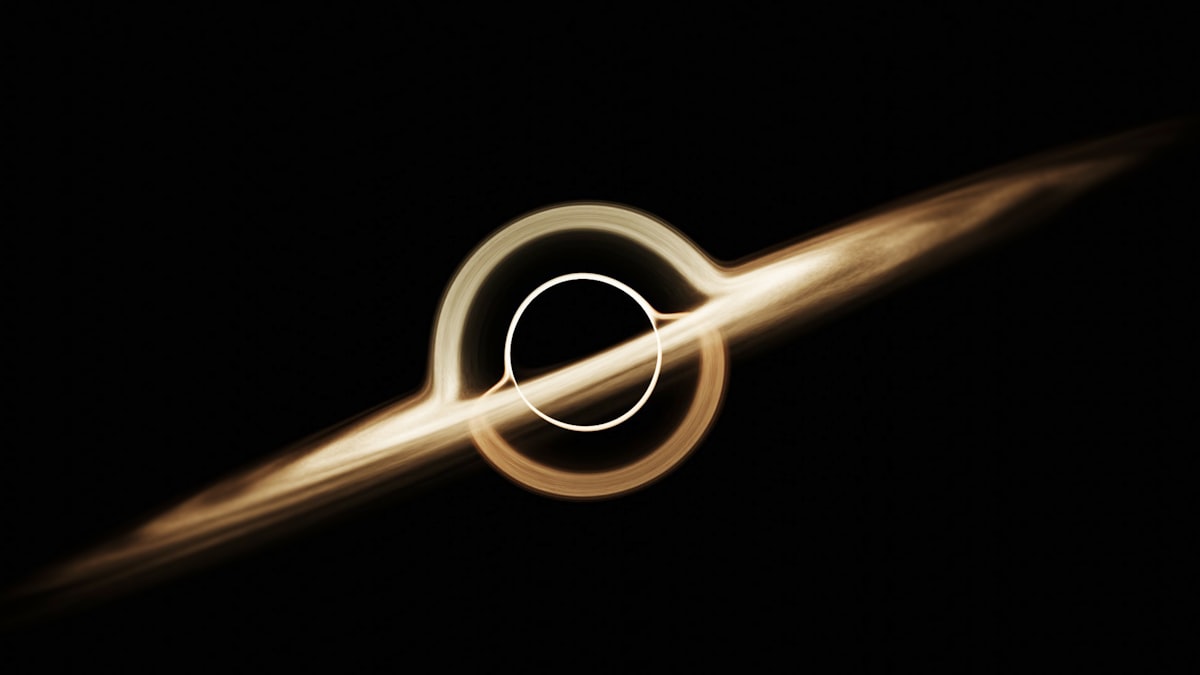
It’s a mind-bending idea. The simple act of accelerating your ship carves out a region of the cosmos that you will never experience. You could be accelerating for an eternity, and still, certain future events will remain forever beyond your reach and your sight.
Wolfgang Rindler's work helps us understand these limits. He recognized the Schwarzschild radius around black holes as a boundary, a simple but profound line where gravity becomes inescapable. But he also saw how acceleration could create its own kind of horizon. That's the Rindler horizon.
This has profound implications. It means our perception of reality isn't absolute, and it depends on our frame of reference and on how we are moving. So it's not fixed.
So the next time you think about acceleration, remember the Rindler horizon. It's a stark reminder. The universe isn't just what we see, but also what our motion allows us to perceive through the very fabric of spacetime itself.
The Takeaway for Your Universe
You're on a long, accelerating journey. But understand that part of the universe is already out of bounds, and your accelerating ship is actively hiding pieces of reality from you. It creates your own personal Rindler horizon. It's an inescapable feature of traveling through the cosmos at high accelerations.
```Frequently Asked Questions
What is a Rindler horizon according to the article?
A Rindler horizon is a boundary created by constant acceleration that cuts off your view of certain events in the universe. It is a personal limit that makes signals from far enough away permanently inaccessible, as your acceleration prevents them from ever reaching you.
Why does constant acceleration create a horizon?
Constant acceleration creates a horizon because as you accelerate, any light signal from a distant source must not only cover the distance but also overcome your ever-increasing speed. The signal always closes the gap, but your acceleration keeps you just ahead, so the gap shrinks but never closes, meaning signals from far enough away never reach you.
How does the Rindler horizon affect what you can see?
The Rindler horizon walls off a portion of the universe from your perspective, so you cannot see past it or receive signals from it. You are completely cut off, and even if you accelerate for eternity, certain future events remain forever beyond your reach and sight.
When does a Rindler horizon become relevant?
A Rindler horizon becomes relevant whenever you are accelerating, not just when moving at constant speed. It is an inescapable feature of traveling through the cosmos at high accelerations, actively hiding pieces of reality from you.
Who is the Rindler horizon named after and what did he recognize?
The Rindler horizon is named after physicist Wolfgang Rindler, who deeply explored relativity and understood that a horizon can be about motion, not just gravity. He recognized the Schwarzschild radius around black holes as a boundary where gravity becomes inescapable, but also saw how acceleration could create its own kind of horizon.

Astrid Berg covers space and astronomy, from missions and launches to the science of the universe. She follows the ongoing effort to explore beyond our planet.
💬 Comments (0)
No comments yet. Be the first!