NASA Starshade Would Enable Astronomers To Directly Image Rocky Exoworlds
A NASA-led team proposes the Hybrid Observatory for Earth-like Exoplanets (HOEE), using an orbital starshade with ground telescopes to directly image rocky exoworlds.
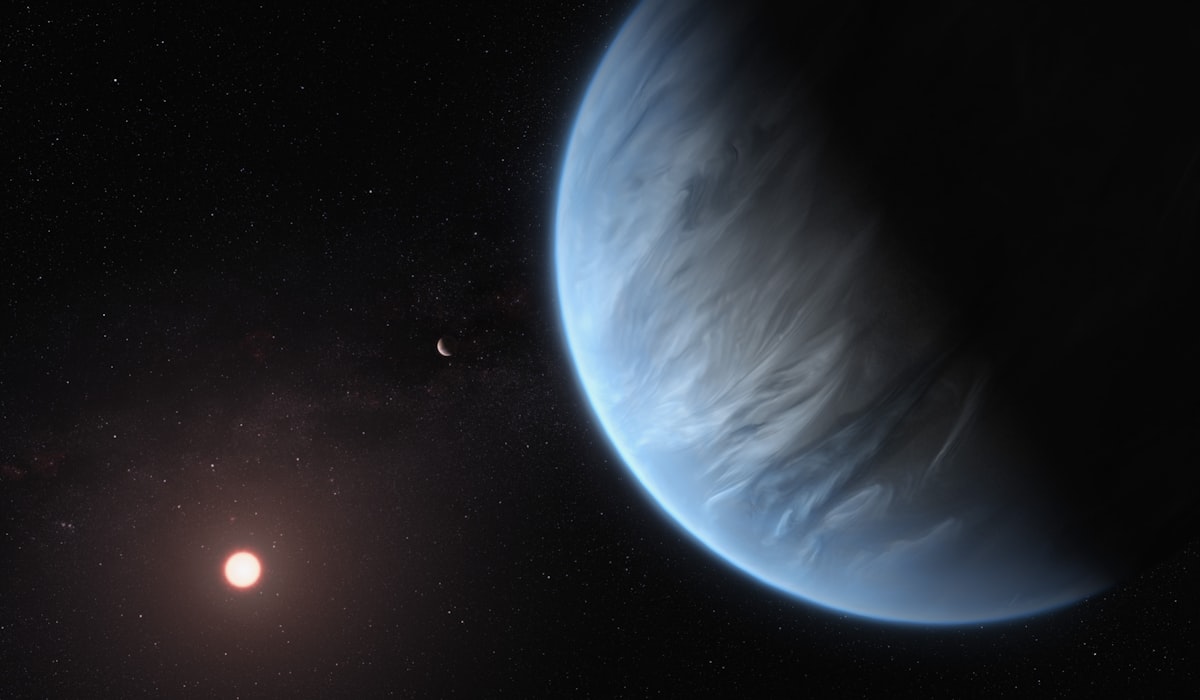
NASA Starshade could finally give astronomers the tool they need. It bypasses the limitations of current space-based instruments by pairing an orbital occulter with the next generation of giant ground-based telescopes, and so the concept creates what its developers call a hybrid observatory capable of seeing Earth-like worlds in optical light. It's a big step. But they can't do it alone.
The plan hinges on a simple but brutal physics problem. A rocky planet orbiting a nearby star is roughly a billion times fainter than the star itself in optical wavelengths, and that's a staggering gap that makes direct observation from the ground almost laughable in its difficulty. Blocking that stellar glare is nearly impossible. So existing direct imaging efforts have focused on young, massive planets that glow in infrared, because those are the only ones bright enough to stand out against the cosmic noise. NASA Starshade would change that calculus. It intercepts starlight before it ever reaches the telescope's mirror, casting what project scientist Vladimir Airapetian describes as a "perfect shadow." It's a trick we can't pull off from Earth.
A Hybrid Observatory Takes Shape
The HOEE team wants to park a starshade about 175,000 kilometers away in an elliptical Earth orbit. That's a huge distance. Position it precisely on the line of sight between the telescope and the target star, and the occulter creates an artificial eclipse, blocking the parent star's light while allowing reflected light from any orbiting planets to pass through and reach the ground-based instrument below. So the shade acts like a cosmic visor. It's a clever trick. But the real challenge lies in that exact positioning, because a slight drift of even a few kilometers could ruin the alignment, and we've only got one shot at this from Earth's moving perch.
That ground instrument would likely be the European Southern Observatory's Extremely Large Telescope, currently under construction in northern Chile and scheduled for scientific first light by late 2030. The pairing makes sense. So the ELT's massive aperture would collect enough photons to detect faint rocky worlds, but it can't do that unless the starshade suppresses the stellar noise first.
The Hardware Behind the Shadow
This is not a small piece of hardware. The starshade would feature 48 petals, each 24.5 meters long, surrounding a 50-meter-diameter central disk. The petal geometry is critical, it shapes the diffraction of starlight so that a deep shadow forms behind the occulter, allowing the telescope to see planets that would otherwise be lost in the glare.
Positioning is equally demanding. The starshade must hold its location within six meters of accuracy while hovering tens of thousands of kilometers away. That requires microthrusters, most likely powered by hot hydrogen gas, firing continuously to maintain the precise alignment needed for observation.
The concept calls for a long elliptical astro-stationary orbit that matches Earth's rotation, so the starshade stays fixed relative to the ground telescope. It's a clever trick. Chemical propulsion would handle station-keeping, while solar electric propulsion would manage retargeting between different star systems, and that division of labor keeps the whole setup efficient over long missions. But don't mistake it for simple. The orbit's shape is the real key here.
Why Existing Instruments Fall Short
Current space telescopes can't do this job. NASA's James Webb Space Telescope, with its Near Infrared Camera, and the planned Roman Space Telescope's Coronagraph Instrument both focus on infrared wavelengths, and that's a fundamental limitation. Neither is capable of directly observing Earth-like exoplanets in optical light, the wavelength range where reflected sunlight from a rocky world would be most visible. So the gap remains.
That gap matters. The scientific payoff of optical observations is enormous, and direct imaging in optical light would let astronomers separate individual planets within a system, distinguishing one Earth-sized world from another and from the host star itself. The sharpness of the images would be a major step forward. So the sensitivity could, in principle, detect an exo-Earth within the first minute of observation, and that's a staggering prospect.
Chasing Auroras and Life Signatures
Airapetian's team has a specific target in mind. They're hunting for active stars that flare often enough to spark extrasolar auroras on rocky planets orbiting solar-type F, G, and K stars, and ideally those stars would be in their first billion years of hydrogen-burning life, young enough that any planets circling them might still be developing the conditions for life. But that's the sweet spot. So the search is narrow.
We're chasing the spectral lines from red and green auroras. Those would signal that the atmospheres of these planets can support nitrogen and oxygen, Airapetian said. But they're not just pretty lights. Those auroral signatures, generated by stellar activity interacting with planetary magnetic fields and atmospheres, would be a definitive indicator that a rocky world has the atmospheric chemistry needed for life as we know it, and that's a huge deal. So we've got our eyes on the sky, and it's all about finding that chemical spark.
The broader goal is to survey planetary systems within about twenty light years of Earth, looking for potential exo-Earths circling sun-like stars that might host precursors of life or even primitive life forms.
That framing misses something important. The starshade approach is not just about seeing planets, it's about seeing them fast. A hybrid system like HOEE could be built and deployed using existing technology, rather than waiting for next-generation space telescopes that may not fly for decades.
We need something more efficient, and we need it now. That's what Airapetian told me in Paris, sitting across the table with a quiet urgency that made the city's usual chatter fade into the background. But he wasn't proposing a single new telescope. He's pushing for a hybrid observatory, one that can observe the exoplanetary system in optical light. It's available today, not some distant dream. That's the whole point.
Cost and Feasibility
Projected costs land in the billion-dollar range. That puts HOEE in the same financial bracket as major space science missions, but well below the price tag of a purpose-built space telescope with similar capabilities, so it's a bargain by cosmic standards. The final occulter design would likely use an inflatable structure to keep total launch mass under 1,500 kilograms, which lets the starshade collapse efficiently into a standard launch vehicle's payload fairing. And that's no small trick.
They've already submitted their Phase B application to NASA's advanced concepts program. But don't hold your breath for an answer until 2027. That's when they expect word back on whether the concept moves forward. The paper itself, which describes the entire idea in detail, appeared in the journal Nature Astronomy back in 2026, giving the scientific community a concrete foundation to examine. So the waiting game has officially begun.
The Long Road to Reality
For decades, the starshade concept was dismissed as technically beautiful but practically impossible. It couldn't be done. The precision requirements seemed unachievable, and the sheer size of the occulter made it seem like science fiction, a dream that belonged in the pages of a novel rather than the budget of a space agency. But advances in materials, deployment mechanisms, and precision control have changed that assessment. So we're taking it seriously now.
"Today, through NASA funding, that dream is becoming a buildable reality," Airapetian said.
The path forward still requires the ELT to reach first light. It's a brutal gauntlet, one that also demands the NIAC funding come through and the starshade survive its journey from concept to flight hardware, where so many good ideas go to die. But the pieces are now in place. And the promise of seeing actual rocky planets around nearby stars, not just inferring their existence, is closer than it's ever been. We can't wait.
The starshade would hover directly on the line of sight between the ground telescope and the target star, offering continuous fine alignment on the celestial target.
That continuous alignment is the key breakthrough. It's the whole game. Ground-based telescopes have adaptive optics to correct atmospheric distortion, but they cannot block starlight on their own, so the starshade steps in to handle that problem in space, creating conditions that allow the ELT to do what no current instrument can. See a rocky world circling a distant sun. But that's the prize.
If HOEE comes together as planned, astronomers will finally have a practical way to image Earth-like exoplanets directly, opening a window onto worlds that have until now been invisible to us.
Frequently Asked Questions
What is the NASA Starshade concept and how does it work?
The NASA Starshade is an orbital occulter paired with ground-based telescopes to create a hybrid observatory. It intercepts starlight before it reaches the telescope, casting a 'perfect shadow' to block the parent star's light while allowing reflected light from planets to pass through.
Why are current space telescopes like JWST unable to directly image rocky exoplanets in optical light?
Current space telescopes like JWST and the Roman Space Telescope focus on infrared wavelengths, which is a fundamental limitation. They are not capable of directly observing Earth-like exoplanets in optical light, the wavelength range where reflected sunlight from a rocky world would be most visible.
How does the hybrid observatory maintain precise alignment for observations?
The starshade must hold its location within six meters of accuracy while hovering tens of thousands of kilometers away. This is achieved using microthrusters, most likely powered by hot hydrogen gas, firing continuously to maintain the precise alignment needed for observation.
When can we expect to know if the NASA Starshade concept will move forward?
The team has submitted their Phase B application to NASA's advanced concepts program, but the answer is not expected until 2027. The concept paper appeared in the journal Nature Astronomy in 2026, providing a foundation for scientific review.
What scientific goal does the NASA Starshade team aim to achieve with auroral signatures?
The team is hunting for active stars that flare often to spark extrasolar auroras on rocky planets. They are chasing spectral lines from red and green auroras, which would signal that atmospheres can support nitrogen and oxygen, indicating atmospheric chemistry needed for life as we know it.

Astrid Berg covers space and astronomy, from missions and launches to the science of the universe. She follows the ongoing effort to explore beyond our planet.
💬 Comments (0)
No comments yet. Be the first!