Inside the PROMISE rover Strategic Debate
Analyzing the debate over the PROMISE rover and whether repurposing Mars hardware truly saves NASA money for its Moon Base.

PROMISE rover planning is driving a deep strategic debate within the space sector. It's a fight over how to balance rapid execution against established scientific priorities. The proposal to convert an engineering model of a Mars rover into a lunar exploration asset has brought long-standing questions about hardware reuse, budget realities, and institutional momentum to the forefront, and those questions aren't going away anytime soon. But at its core, the conversation exposes two opposing philosophies on how to achieve momentum in space exploration. One side is speed-first and pragmatic. The other favors a highly structured, long-term scientific planning model, and they can't seem to find common ground. So the real choice is stark: move fast, or plan carefully. It's a tension that defines the entire endeavor.
The Lunar Pantry Strategy
The concept behind the initiative rests on a strategy of rapid adaptation. Rather than designing a lunar vehicle from the ground up, the plan calls for adapting existing hardware to support upcoming lunar base efforts. The core idea is to identify existing engineering assets across various agency centers that can be repurposed to secure quick operational successes on the surface of the moon. Read alongside recent announcements, the picture clarifies.
Jared Isaacman has championed this approach. It's a pragmatic way to use existing investments. He described the effort as raiding the pantry at every agency center for payloads that could support lunar base development. From a competitive standpoint, this strategy aims to deliver major operational capabilities in short order, and it seeks to bypass the traditional, multi-year design cycles that typically precede planetary surface missions. The argument relies heavily on existing hardware. Proponents think that can yield swift, visible victories at the lunar south pole. So don't wait for a decade. They can't ignore that hardware's already there.
The Technical Realities of Adaptation
But there's a catch. Converting a platform built as an engineering model for Mars into a flight-ready lunar vehicle isn't a simple swap of parts, and that reality sits heavy on the shoulders of anyone who's ever tried to bridge the gap between a ground testbed and the unforgiving vacuum of space. The engineering model in question is OPTIMISM, currently at the Jet Propulsion Laboratory. It's served as a critical testbed for the Perseverance rover. Translating this ground-based system into a spaceflight-rated vehicle requires solving several difficult engineering and logistical challenges, and those challenges don't yield to quick fixes or clever workarounds, because every subsystem must be re-evaluated for launch loads, thermal extremes, radiation tolerance, and the simple fact that no one will be there to reboot it if something goes wrong. So the gap between Mars and the Moon is wider than it looks.
- Space-Rated Components: The engineering model currently lacks many of the specialized components required to survive and operate in the harsh lunar environment, including a dedicated communications system.
- Scientific Instrumentation: There are no flight-ready instruments currently installed on the model, meaning payloads must be adapted, certified, and integrated.
- Power Generation: Perseverance relies on a radioisotope thermoelectric generator for power, and while a spare generator exists, integrating it onto a lunar lander and certifying the launch vehicle presents substantial technical hurdles.
The deeper question is positioning. Strip away the marketing and the calculation is straightforward. A detailed analysis of these technical demands suggests that the mission is far from an inexpensive project.
The Conflict of Scientific Priorities
This massive projected price tag has ignited a debate over resource allocation. It's a fight about priorities. Opponents of the plan argue that a mission of this scale would consume funds that are desperately needed elsewhere, siphoning away dollars from programs that serve communities and scientific needs far beyond the launchpad. So the space policy community has raised concerns that funding this project would directly threaten established, peer-reviewed scientific priorities that have been carefully mapped out across the wider planetary science portfolio, and they can't afford to lose that ground.
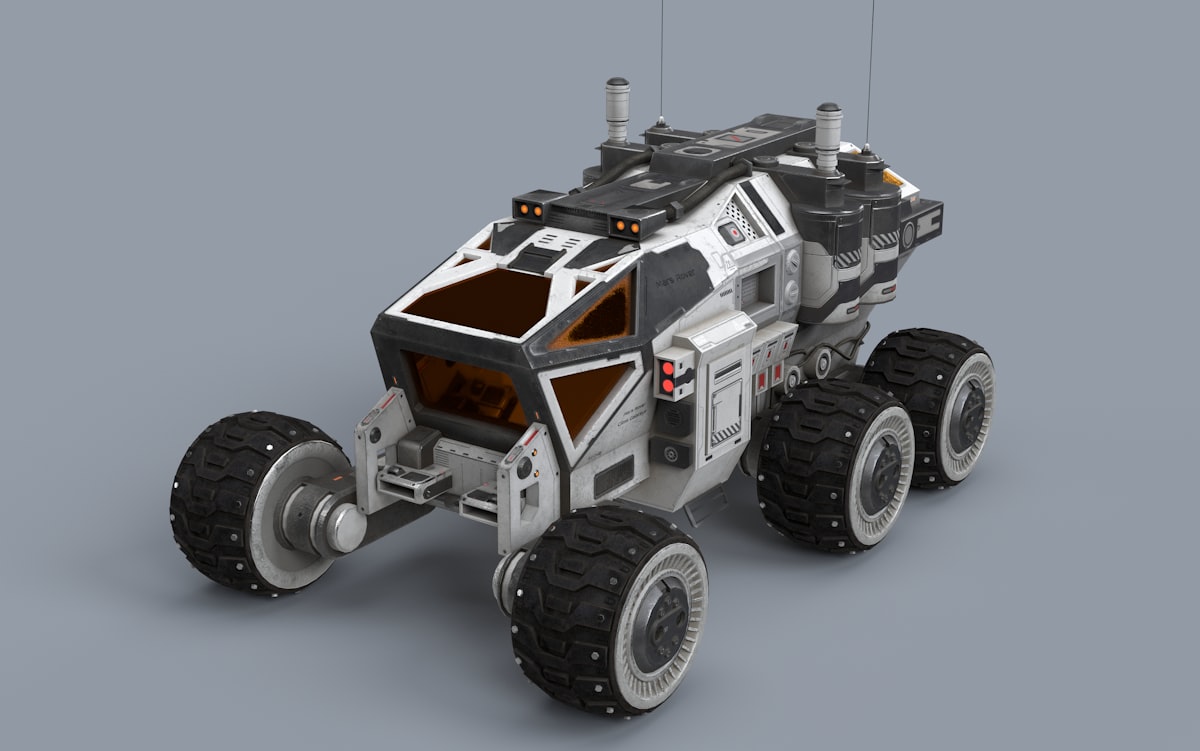
Clearly, this mission is far from a 'freebie,' and will consume ample resources that might otherwise be available to pursue established scientific priorities in NASA's scientific portfolio.
, Casey Dreier, Chief of Space Policy, The Planetary Society
The financial costs are only part of the story. Repurposing the OPTIMISM model would strip the active Curiosity and Perseverance Mars missions of their primary ground-testing platform, and that could quietly inflate the operational risks for those ongoing efforts. It's a dangerous trade. But the second sacrifice stings just as much. Using the nation's single spare radioisotope thermoelectric generator for a lunar mission would effectively rule it out for future deep-space exploration, and that's a decision with teeth. Outer solar system missions can't run on sunlight. They depend entirely on these nuclear power sources, so this choice would echo through planetary science for decades. Don't mistake that for a minor detail. We're talking about long-lasting consequences, and they're not pretty.
Debating the Value of Nuclear Fuel
Jared Isaacman has pushed back hard against those cost projections. He says if the PROMISE rover's development costs hit even twenty percent of the low-end estimate, the mission simply won't fly, plain and simple. But he defended the logic of reusing existing hardware, pointing out that both the physical systems and the decaying plutonium-238 fuel represent major taxpayer investments that shouldn't be left idle. That's the real issue.
Isaacman emphasized that plutonium-238 fuel continues to decay and lose roughly two percent of its potential energy each year. That's a slow bleed. He questioned the wisdom of allowing this critical resource to waste away while waiting for future missions that don't currently exist, and from his perspective, the agency must focus on near-term execution rather than waiting for long-term consensus. So he stated that under the current administration, the focus should be on taking action to secure frequent wins for the lunar base, which in turn makes it easier to advocate for more resources to conduct science in the future. We can't afford that wait.
The Impact on Future Missions
The debate over the power source is further complicated by broader agency delays. It's a messy situation. Budget challenges have already forced a postponement of the call for proposals for the next New Frontiers planetary science mission, and that delay doesn't just push back a schedule, it ripples through every planning assumption they've made. So this line of medium-class planetary exploration missions represents the exact type of project that would typically benefit from or require a nuclear power source. But we can't ignore the timing.
Strategic Decisions Ahead
Louise Prockter, director of the planetary science division, confirmed that the ongoing assessment of nuclear power availability is one of the key factors in delaying the New Frontiers call, which is now projected for fiscal year 2027. The agency is currently working to understand how the reorganization of its nuclear programs and the availability of nuclear power will affect the list of candidate missions. Wait for it. A decision on whether nuclear power will be available for those proposals is expected soon. And that adds another layer of complexity to the strategic path of the PROMISE rover, a path that already twists through uncertain budgets, shifting timelines, and the hard reality that nothing moves without power. It's a lot. But they're pushing forward.
Frequently Asked Questions
What is the PROMISE rover strategy for lunar exploration?
The PROMISE rover strategy involves adapting existing hardware, specifically the OPTIMISM engineering model of the Perseverance rover, for lunar exploration. The goal is to repurpose existing assets to achieve quick operational successes on the lunar surface, rather than designing a new vehicle from scratch.
Why do opponents of the PROMISE rover plan argue against it?
Opponents argue that the mission's projected cost of $723 million to $1.33 billion would consume funds needed for established scientific priorities. They also note that repurposing the OPTIMISM model would strip the active Mars missions of their ground-testing platform and use the single spare radioisotope thermoelectric generator, which could impact future deep-space missions.
How does Jared Isaacman defend the reuse of existing hardware and nuclear fuel?
Isaacman defends the reuse by pointing out that both the physical systems and the decaying plutonium-238 fuel represent major taxpayer investments that shouldn't be left idle. He emphasizes that plutonium-238 loses about two percent of its potential energy each year, so waiting for future missions wastes a critical resource. He believes the focus should be on near-term execution to secure frequent wins for the lunar base.
When is the New Frontiers call for proposals projected to be issued?
The New Frontiers call for proposals is projected for fiscal year 2027. This delay is partly due to budget challenges and the ongoing assessment of nuclear power availability, which is a key factor in the postponement.
What technical challenges are associated with converting the OPTIMISM model for lunar use?
Converting the OPTIMISM model requires solving challenges such as adding space-rated components like a communications system, integrating flight-ready scientific instruments, and adapting power generation since Perseverance uses a radioisotope thermoelectric generator. Every subsystem must be re-evaluated for launch loads, thermal extremes, radiation tolerance, and the lack of on-site rebooting capability.

Leo Sokolov reports on spaceflight and the companies and agencies racing to reach orbit and beyond. He is captivated by the engineering that makes leaving Earth possible.
💬 Comments (0)
No comments yet. Be the first!