NASA Chief: China May Bar Access to Moon's South Pole
NASA Administrator Jared Isaacman said China's Chang'e 7 mission to the lunar south pole could deny access to the Shackleton crater's ice-rich terrain.
NASA chief Jared Isaacman is worried that China could lock the United States out of the most valuable real estate on the Moon. Speaking Wednesday evening at the Off World conference in Houston, the NASA administrator said Beijing’s robotic ambitions at the lunar south pole represent a direct challenge to American access at the Shackleton Crater, a site both nations covet for its suspected water ice.
His comments landed less than a month after China quietly pushed back the launch of its Chang’e 7 mission to the lunar south pole until early next year. Beijing offered no detailed reason for the slip. Isaacman treated the delay as a stroke of luck.
China’s Delay Buys NASA Breathing Room
“They are targeting the exact same location on lunar south pole,” Isaacman said. “We may have dodged a bullet with the Chang’e 7 mission a couple of weeks ago because that would have gone to the Shackleton crater.”
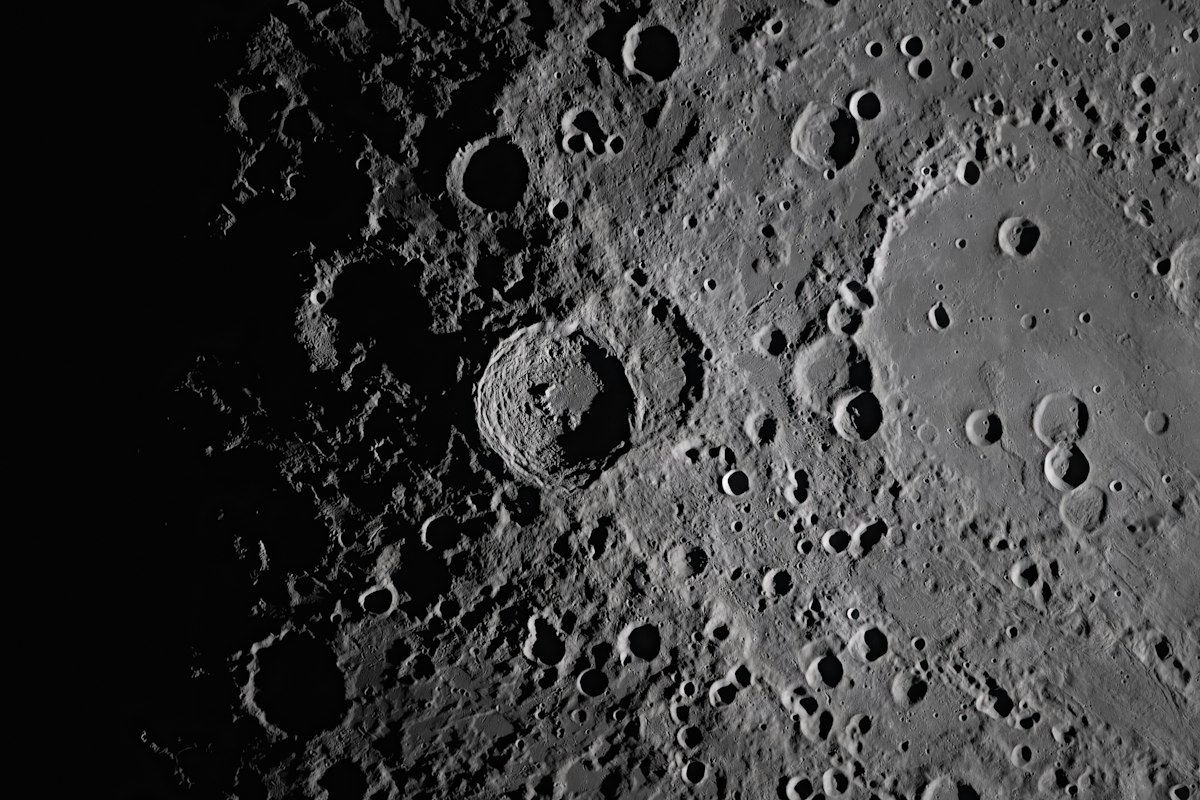
That crater sits at the center of the race. Its high rims cast permanent shadows. Scientists call them cold traps. Inside those shadowed pockets, water ice and other useful materials are thought to have built up over billions of years, and that slow accumulation is what makes these dark, frozen corners so valuable to anyone planning to stay. For any nation hoping to sustain people on the Moon, that ice is the prize. It means drinking water, breathable oxygen, and rocket propellant. We don't have to haul supplies from Earth.
The catch? The Moon only offers so much of this terrain. Both NASA and China have built their long-term settlement plans around a handful of square miles near the south pole, a modest patch of ground that, once claimed and covered with hardware, could end up deciding which country writes the rules for everyone else who ever comes after them. Whoever plants infrastructure there first sets the terms. And we've got no do-overs. It's that simple.
What Chang’e 7 Would Have Brought
The NASA chief didn't mince words. China packed serious hardware. Chang'e 7 carries rovers and hopping drones capable of covering ground and reaching terrain that wheeled vehicles cannot, a combination that gives Beijing options no previous mission has had near the lunar pole. That mobility could have let China shut others out. And it's the most interesting spots near the pole that everyone wants.
“It has rovers, it has hopper drones like we now have in development but didn’t eight months ago, and could have potentially denied access to some of the most interesting spots,” he said.
He framed China’s south pole push as a rehearsal for something larger. In his telling, Beijing wants to interact with the water ice and sharpen the skills it will need for its own Neil Armstrong moment. That moment, he predicted, will not happen on the Moon at all.
“Except it won’t be on the Moon, it’ll be on Mars,” Isaacman said.
Why the Poles Are So Hard to Reach
No country has ever soft landed a spacecraft at either lunar pole. The polar regions are far trickier to reach than the equatorial zones where past missions touched down. So that difficulty is exactly why the Chang’e 7 delay matters. It opens a window for NASA to arrive first. That window comes with the debut launch of Blue Origin’s Blue Moon Mark 1 vehicle, a large lander that would ferry two NASA probes to the south pole, possibly as early as spring 2027, if the schedule holds and the hardware is ready.
Getting there first is not just about bragging rights. Isaacman and other US officials have begun warning that China could declare exclusion zones around its landing sites, squeezing out robotic probes and eventually crewed missions. No treaty language prevents that outcome in practice, and the south pole’s limited prime acreage makes the stakes unusually high.
The Case for Caring Who Lands First
Not everyone buys the urgency. A running debate in Washington asks whether it even matters if NASA returns astronauts to the Moon after China does. After all, Beijing would only be repeating what the United States accomplished in 1969 with Apollo.
Isaacman argues the symbolism carries real geopolitical weight. That matters. It matters especially for nations still deciding which superpower to align with, because they're watching every launch and every landing and every headline, and they're weighing what it means for their own future. If China reaches the Moon next, he said, every other country will start asking harder questions. And they don't stop there. We've seen it before.
“Like, whose security guarantee should I trust? Should I trust the United States and NATO? Should I trust China if they’re the emerging technical superpower here? Whose technology should I buy? Whose military hardware should I buy? Whose standards should I adhere to? Who am I listening to on AI? Am I listening to the United States or am I listening to China on that? All of that’s on the table.”
The NASA chief placed part of the blame on decades of American policy drift. He said US space failures stretch back to the Reagan administration and estimated that NASA has burned through $100 billion across multiple presidencies, both Democratic and Republican, without a lasting result.
How China Closed the Gap
China’s trajectory tells a different story. Its first human spaceflight came in 2003. In the two decades since, it has expanded its capabilities to the point where it now rivals the United States in space. Beijing has set a target of landing its first astronauts on the Moon by or before 2030, and it is making considerable progress on the crewed spacecraft, rocket, and lander needed to get them there.
Isaacman made clear he thinks the race should never have existed. Policy missteps let the gap narrow. Not Chinese aggression. But he doesn't pretend the stakes vanish, because even though he believes this contest was a mistake from the start and that America's own failures, not any rival's strength, allowed the distance between them to shrink, he still sees no way to ignore the consequences of losing. And they're real.
- China delayed Chang’e 7 to the lunar south pole until early next year without a detailed explanation.
- Shackleton Crater holds cold traps that may contain water ice and other useful materials.
- Blue Origin’s Blue Moon Mark 1 could carry two NASA probes to the south pole as early as spring 2027.
- China aims to land astronauts on the Moon by or before 2030.
“If you come up short with who comes down the ladder first, the impact is felt around the world,” Isaacman said.
For now, the NASA chief’s message is simple. The delay of Chang’e 7 handed Washington a rare opening at the south pole. Whether NASA can seize it before China’s next launch window arrives is the question that will define the next phase of lunar exploration.
Frequently Asked Questions
What did the NASA chief say about China and the Moon's south pole?
The NASA chief warned that China may bar access to the Moon's south pole. He suggested China could claim the resource-rich region for itself.
Why is the Moon's south pole important?
The south pole is believed to contain water ice that could support future lunar bases. It is also a prime target for scientific research and resource extraction.
Has China responded to these claims?
China has not directly responded to the NASA chief's specific allegation. However, China has stated its lunar exploration is for peaceful purposes.
What is NASA doing to compete in the lunar south pole?
NASA is leading the Artemis program to return astronauts to the Moon, including the south pole. The agency aims to establish a sustainable presence there.
Could China legally block access to the Moon's south pole?
The Outer Space Treaty prohibits national appropriation of celestial bodies, so no country can legally claim the Moon. However, enforcement and interpretation remain contentious.

Arthur Vance writes about astronomy and space exploration, covering the discoveries that expand our view of the cosmos. He enjoys connecting distant science to the questions we ask here on Earth.
💬 Comments (0)
No comments yet. Be the first!